Process
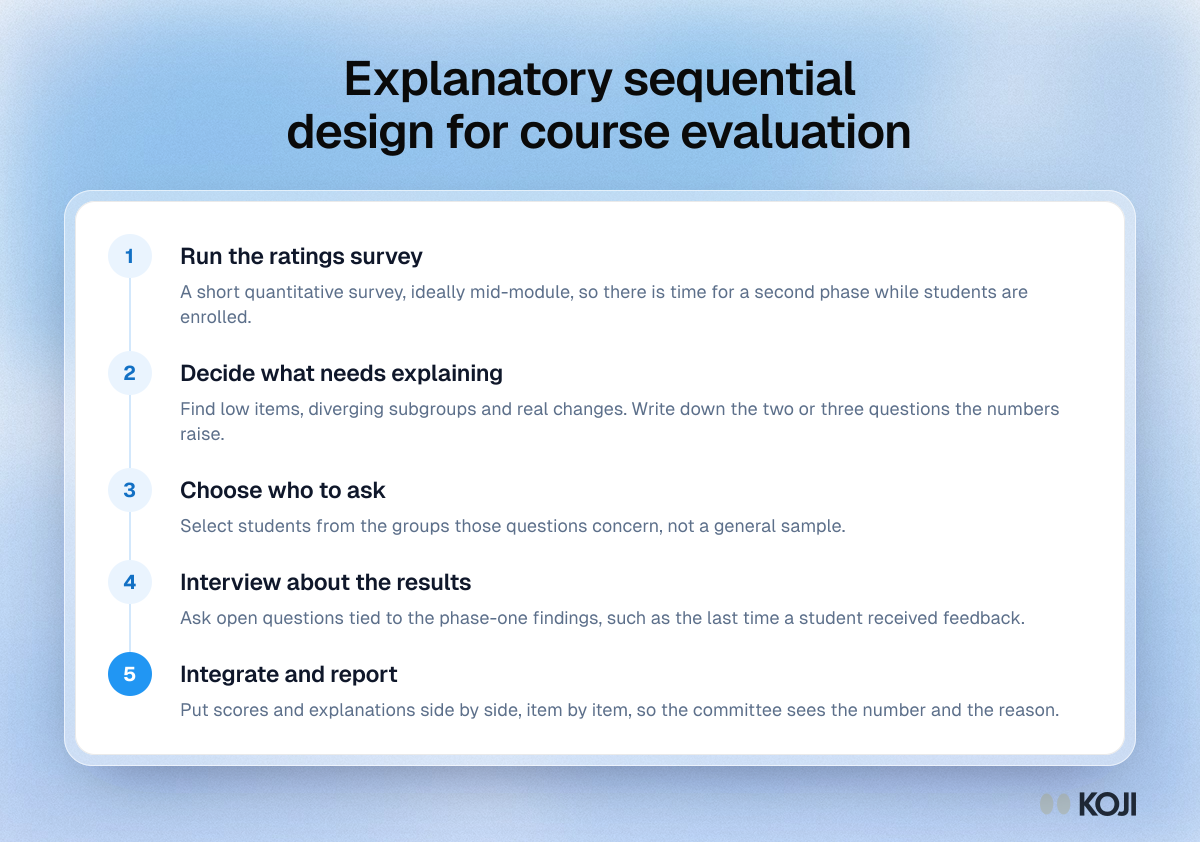
Explanatory sequential design for course evaluation
Ratings first, then targeted interviews that explain them
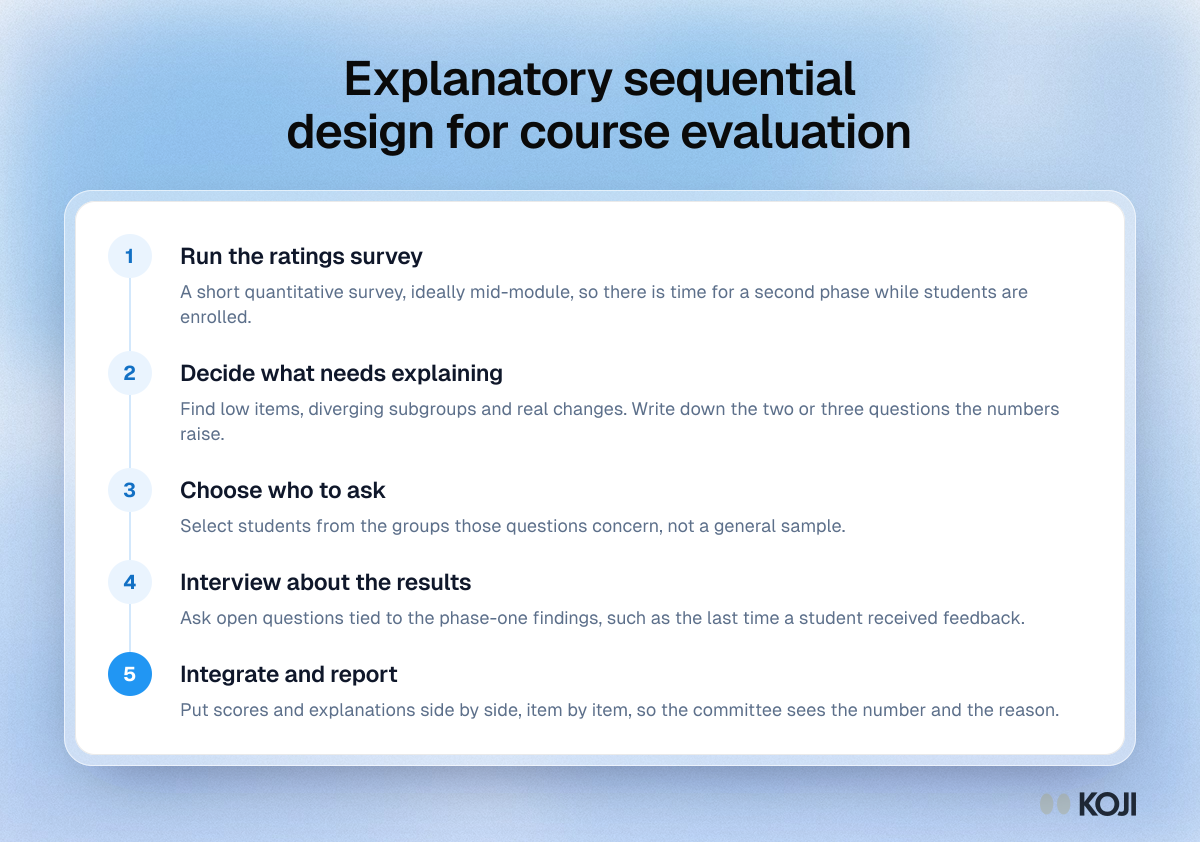
A five-step process for running a course evaluation as an explanatory sequential mixed-methods design: a ratings survey first, then interviews with selected students to explain the results that need it. It is for programme leads and quality teams who find that comment boxes rarely explain the scores. It follows the design described by Creswell and Plano Clark. Koji can run both phases, with personal invite links for the targeted second phase.
What's in this process
- Run the ratings survey: A short quantitative survey, ideally mid-module, so there is time for a second phase while students are enrolled.
- Decide what needs explaining: Find low items, diverging subgroups and real changes. Write down the two or three questions the numbers raise.
- Choose who to ask: Select students from the groups those questions concern, not a general sample.
- Interview about the results: Ask open questions tied to the phase-one findings, such as the last time a student received feedback.
- Integrate and report: Put scores and explanations side by side, item by item, so the committee sees the number and the reason.
Use this image
Free to use in your docs, decks and posts under CC BY 4.0, as long as you credit Koji with a link to this page. To embed it, paste this into your page:
html
<a href="https://www.koji.so/visuals/explanatory-sequential-design-course-evaluation-steps"><img src="https://www.koji.so/visuals/explanatory-sequential-design-course-evaluation-steps/explanatory-sequential-design-course-evaluation-steps.png" alt="Process diagram with five steps for an explanatory sequential course evaluation, from the ratings survey to an integrated committee report." width="1200" height="842" /></a>
<p>Source: <a href="https://www.koji.so/visuals/explanatory-sequential-design-course-evaluation-steps">Explanatory sequential design for course evaluation</a>, Koji</p>