Koji
PricingEnterprise
Sign inCreate a study

Free to save and share

Frameworks and cheat sheets for customer research

Every framework, checklist and comparison from our guides, as an image you can download, drop into a deck or share with your team.
All (12)Reference table (4)Framework (3)Process (4)Checklist (1)
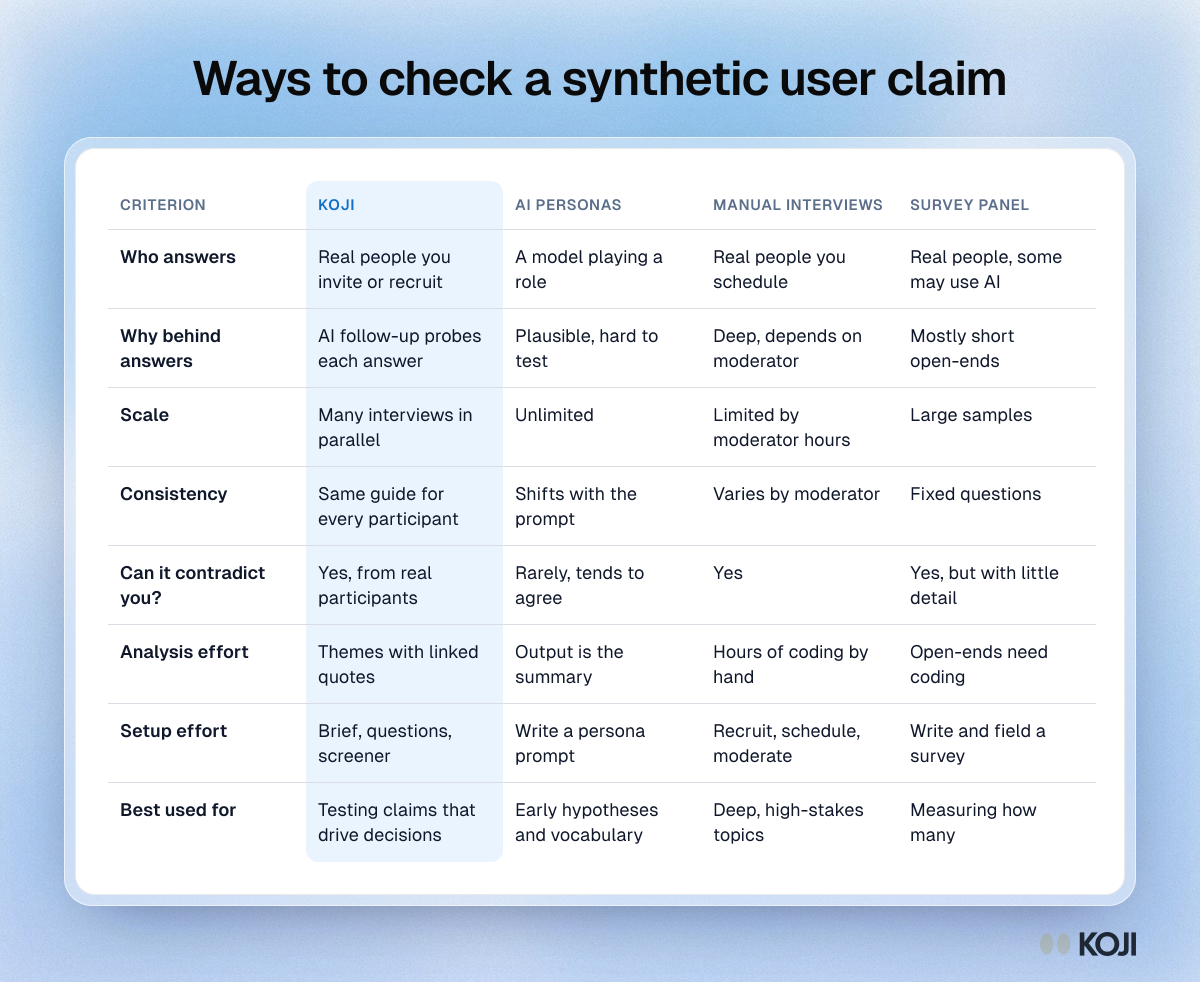
Table comparing Koji, AI personas, manual interviews and survey panels for checking a synthetic user claim, on who answers, depth, scale and analysis effort.

Reference table

Ways to check a synthetic user claim
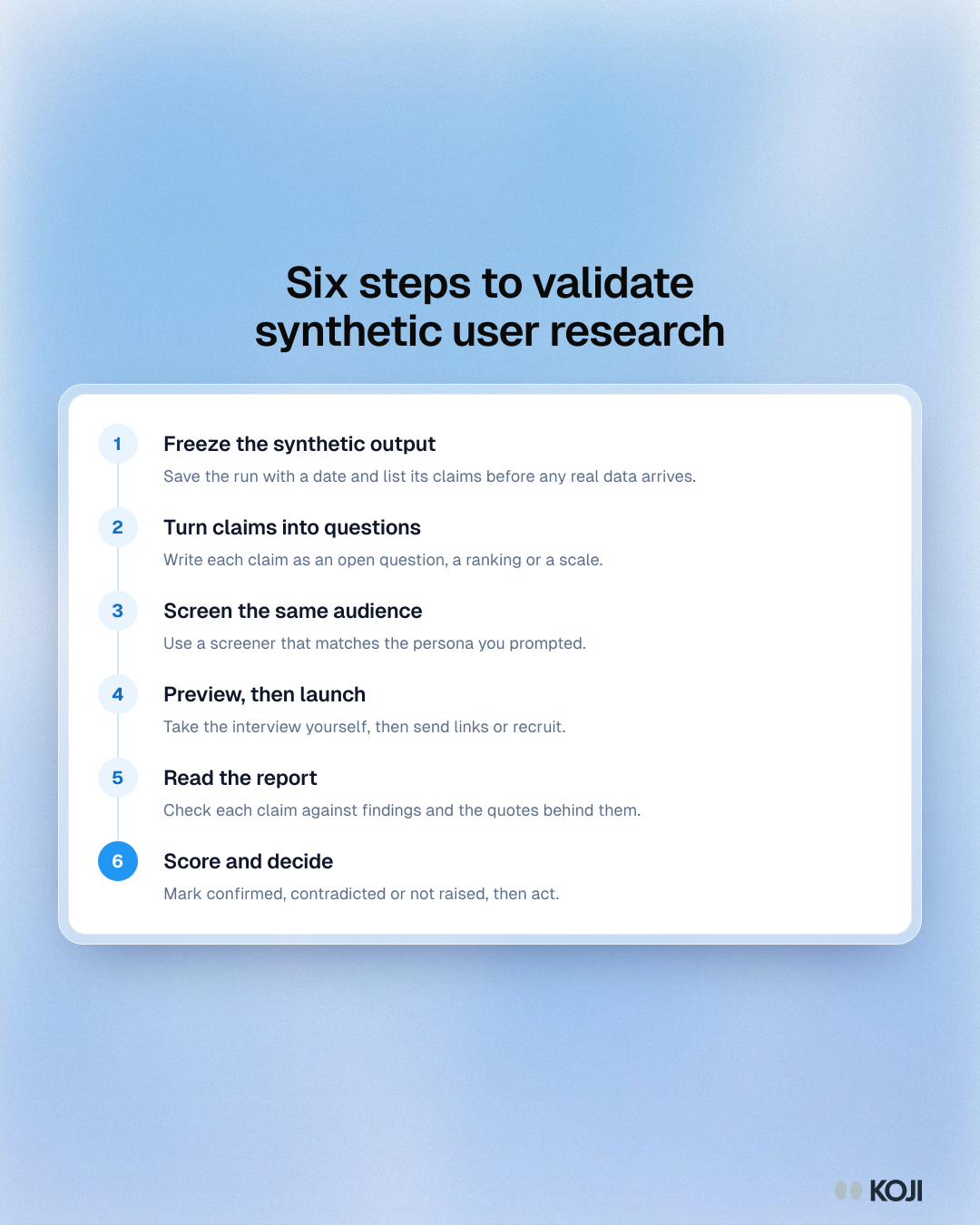
Process showing six steps to validate synthetic user research with real participants: freeze the output, write questions, screen, preview, read and score.
Process

Six steps to validate synthetic user research

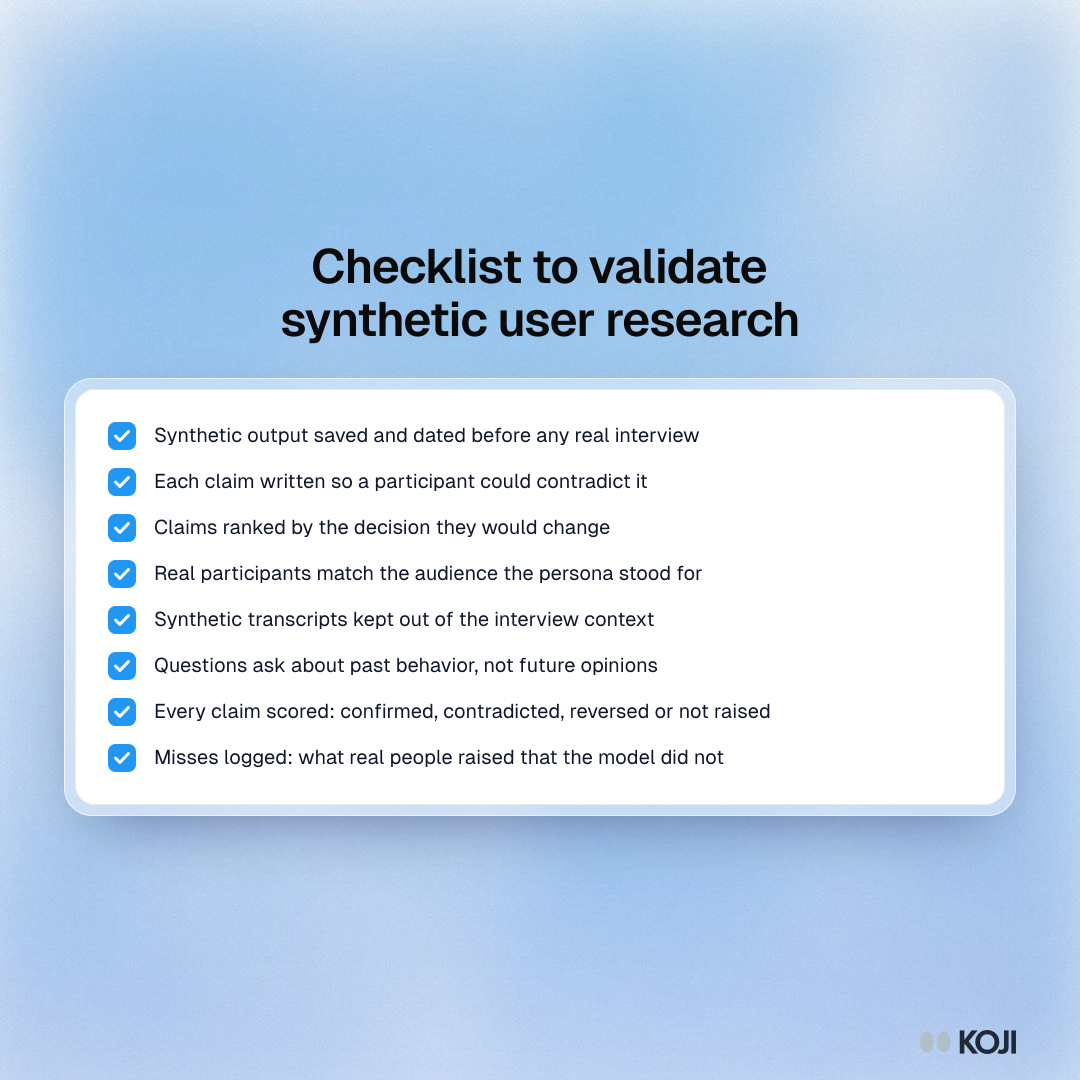
Checklist of eight steps for validating synthetic user research with real participants, from saving the AI output to logging what the model missed.

Checklist

Checklist to validate synthetic user research
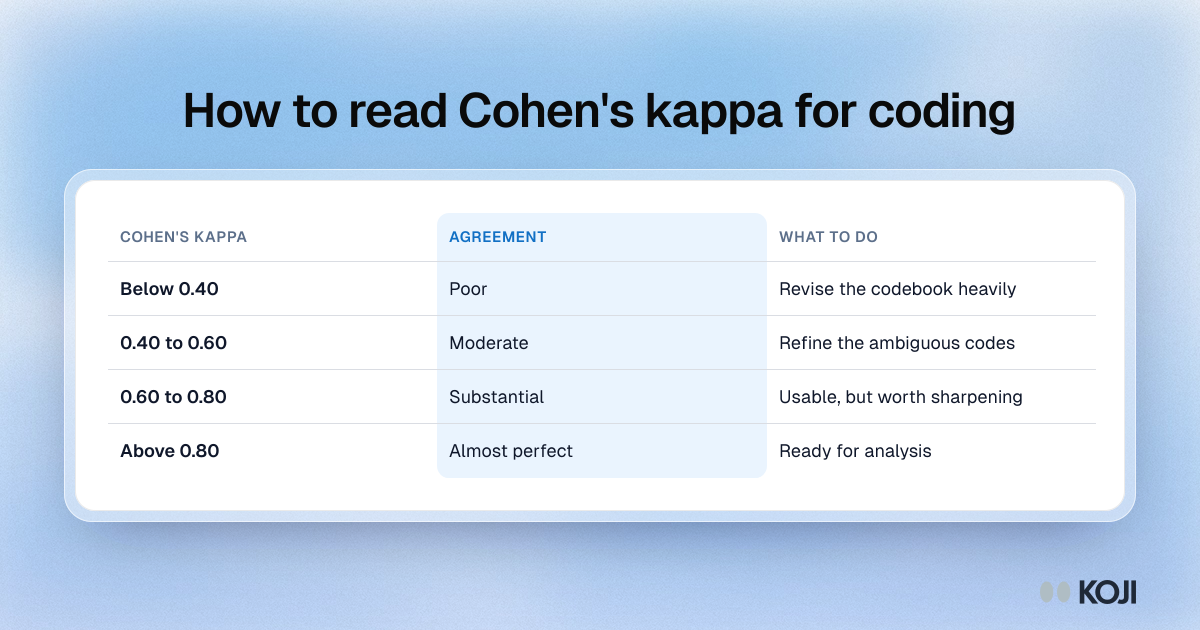
Table of Cohen's kappa thresholds for inter-coder agreement, from poor below 0.40 to almost perfect above 0.80, with what to do at each level.

Reference table

How to read Cohen's kappa for coding
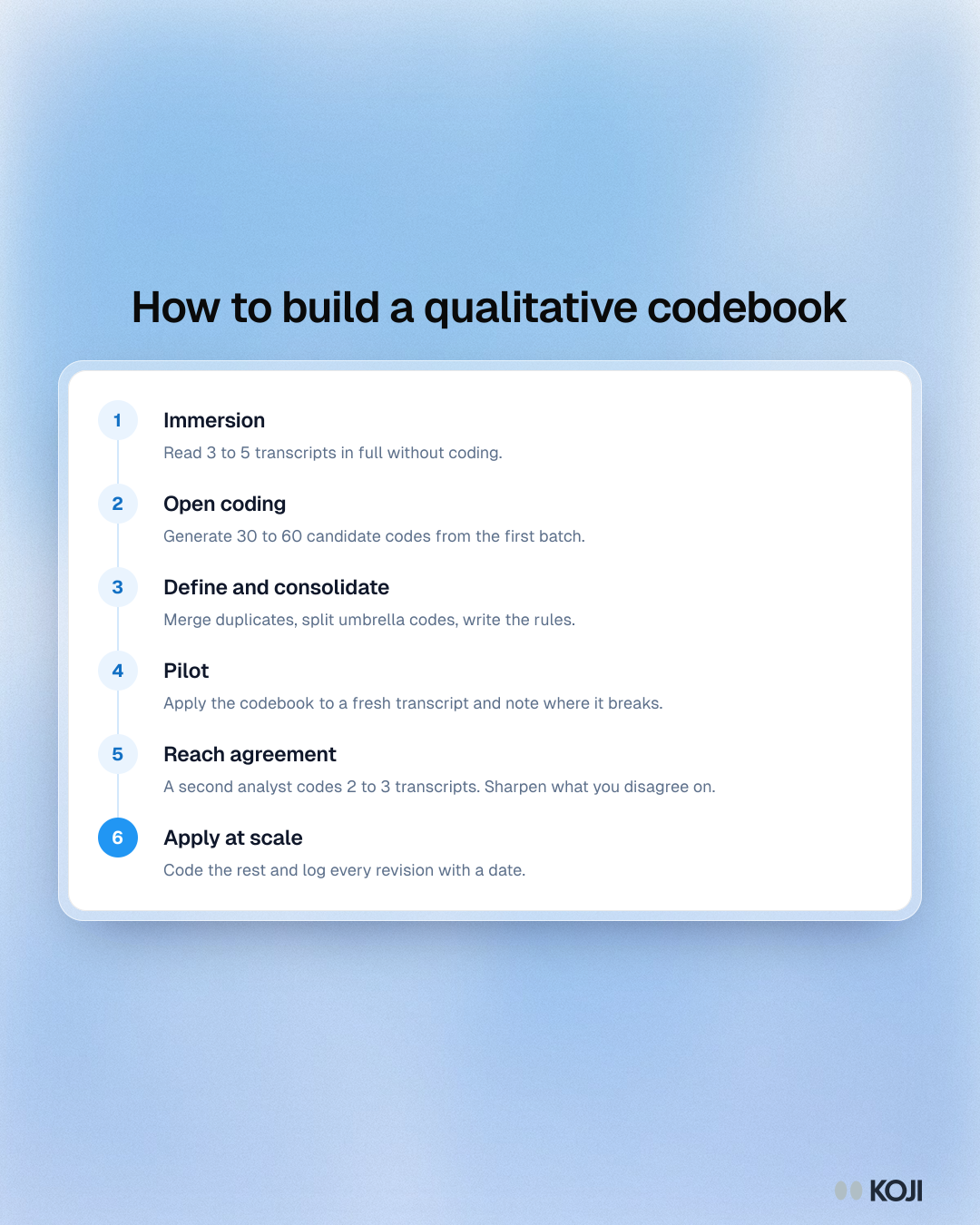
Process showing six phases for building a qualitative codebook: immersion, open coding, define and consolidate, pilot, reach agreement and apply at scale.

Process

How to build a qualitative codebook
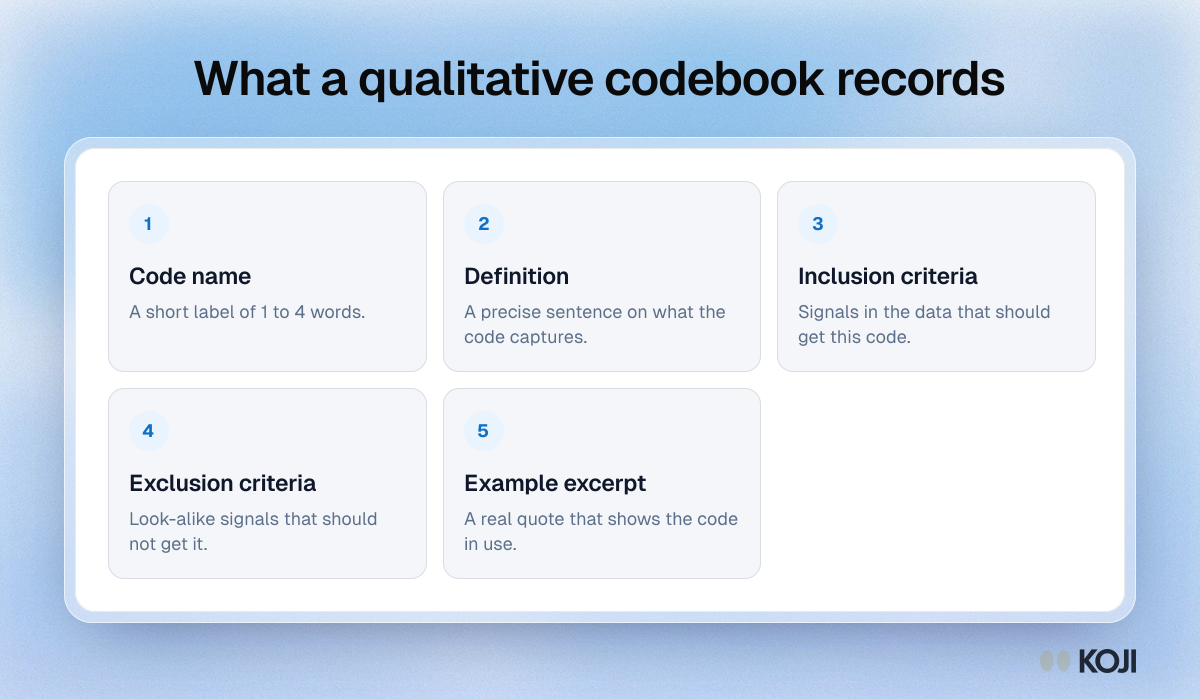
Framework listing the five columns of a qualitative codebook: code name, definition, inclusion criteria, exclusion criteria and an example excerpt.

Framework

What a qualitative codebook records
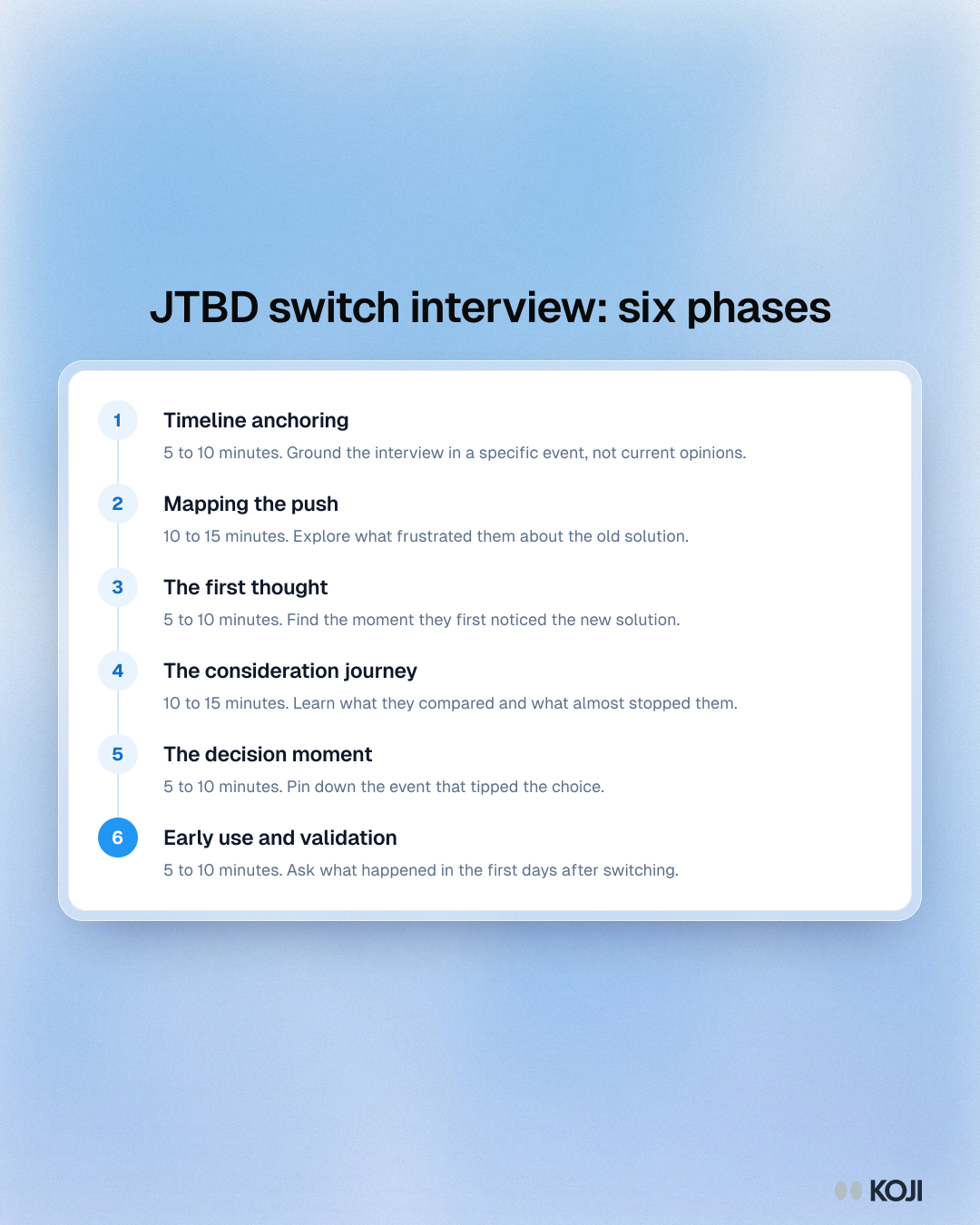
Process showing the six phases of a Jobs to Be Done switch interview, from timeline anchoring to early use, with a time guide for each phase.

Process

JTBD switch interview: six phases
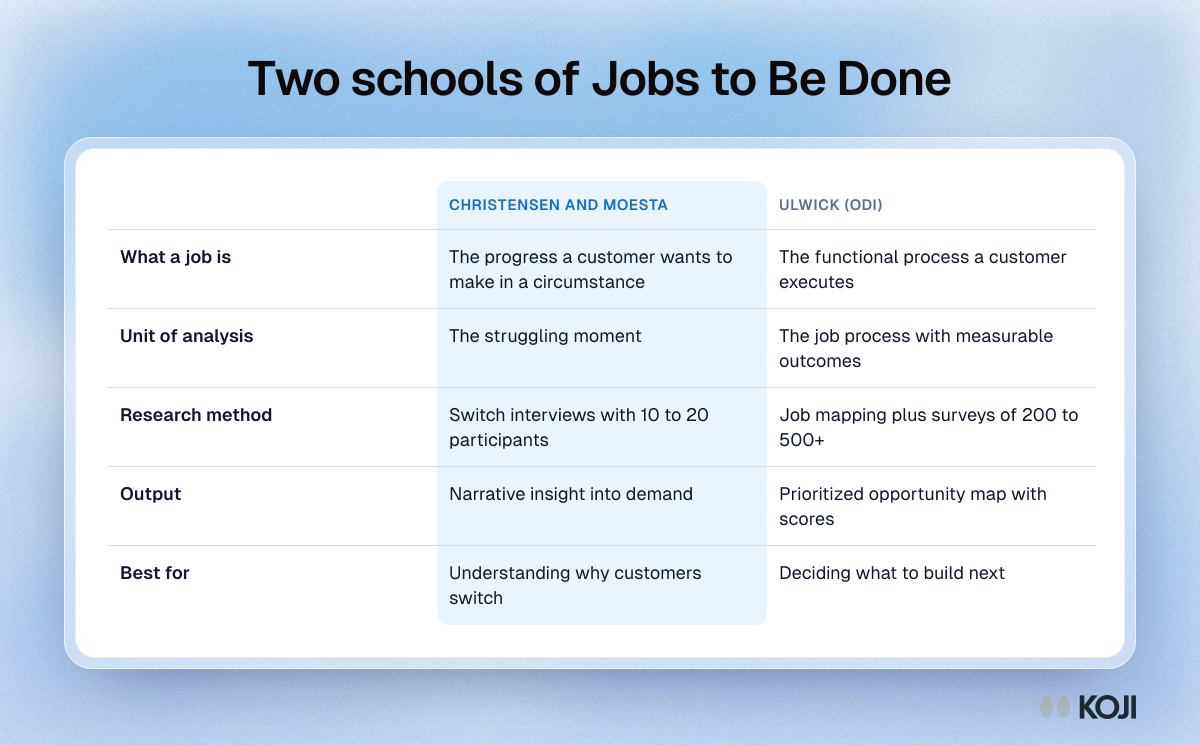
Table comparing the two schools of Jobs to Be Done, Christensen and Moesta against Ulwick's ODI, on definition, method, output and best use.

Reference table

Two schools of Jobs to Be Done
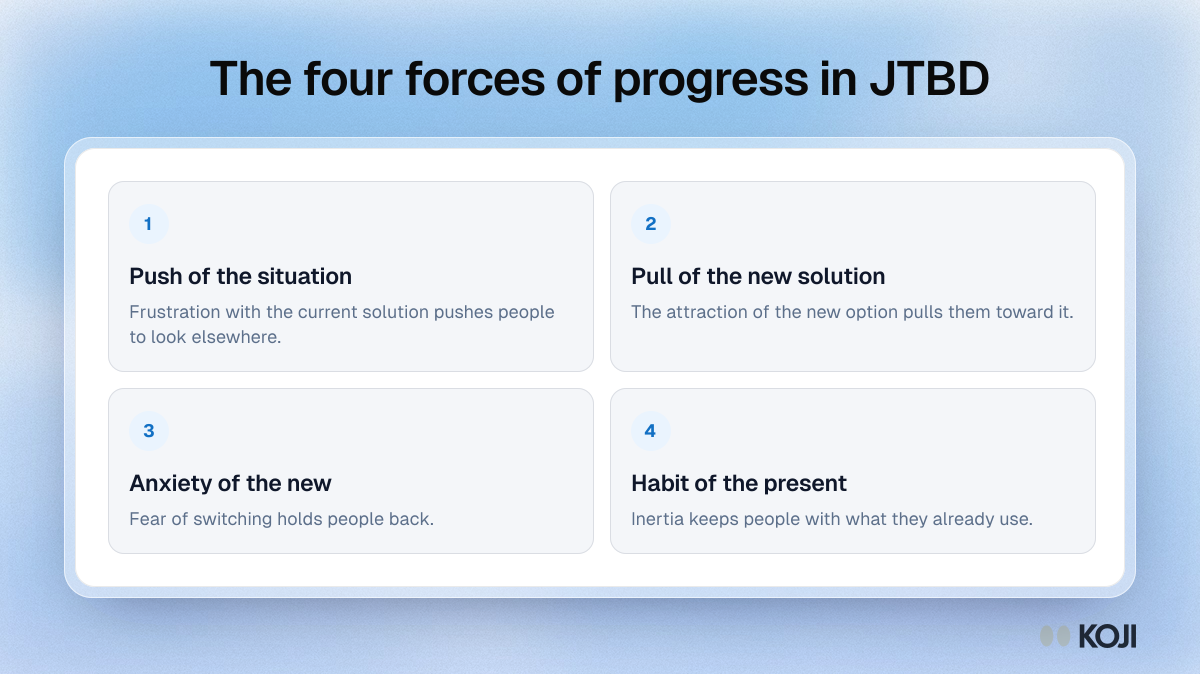
Framework of the four forces of progress in Jobs to Be Done: push of the situation, pull of the new solution, anxiety of the new and habit of the present.

Framework

The four forces of progress in JTBD
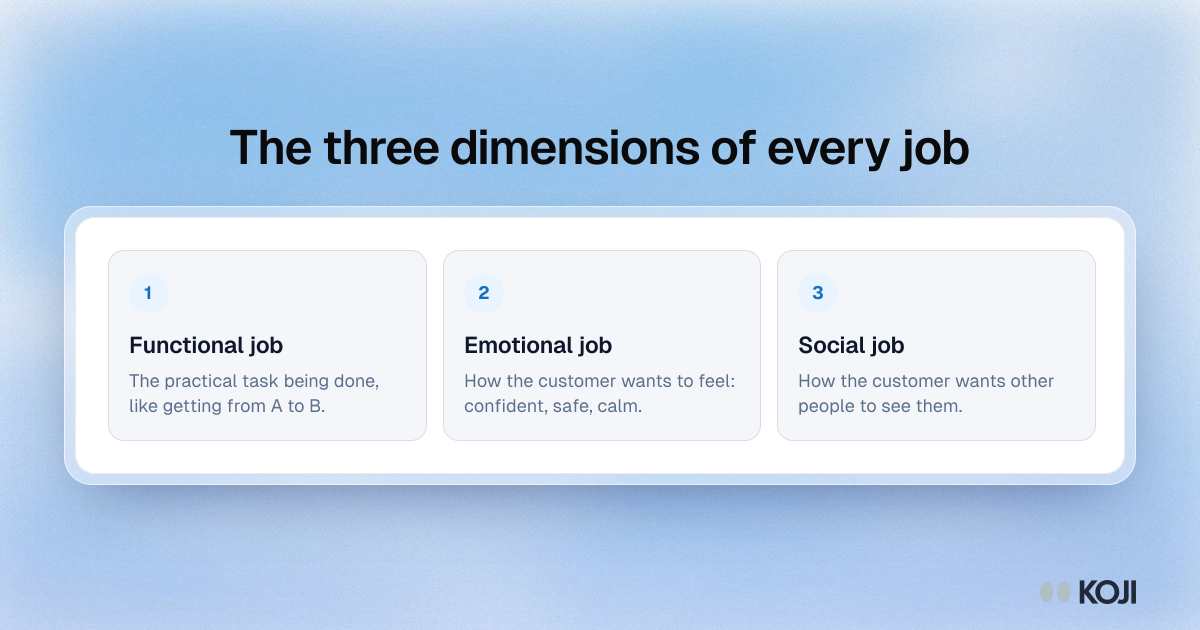
Framework showing the three dimensions of a job in Jobs to Be Done: the functional job, the emotional job and the social job.

Framework

The three dimensions of every job
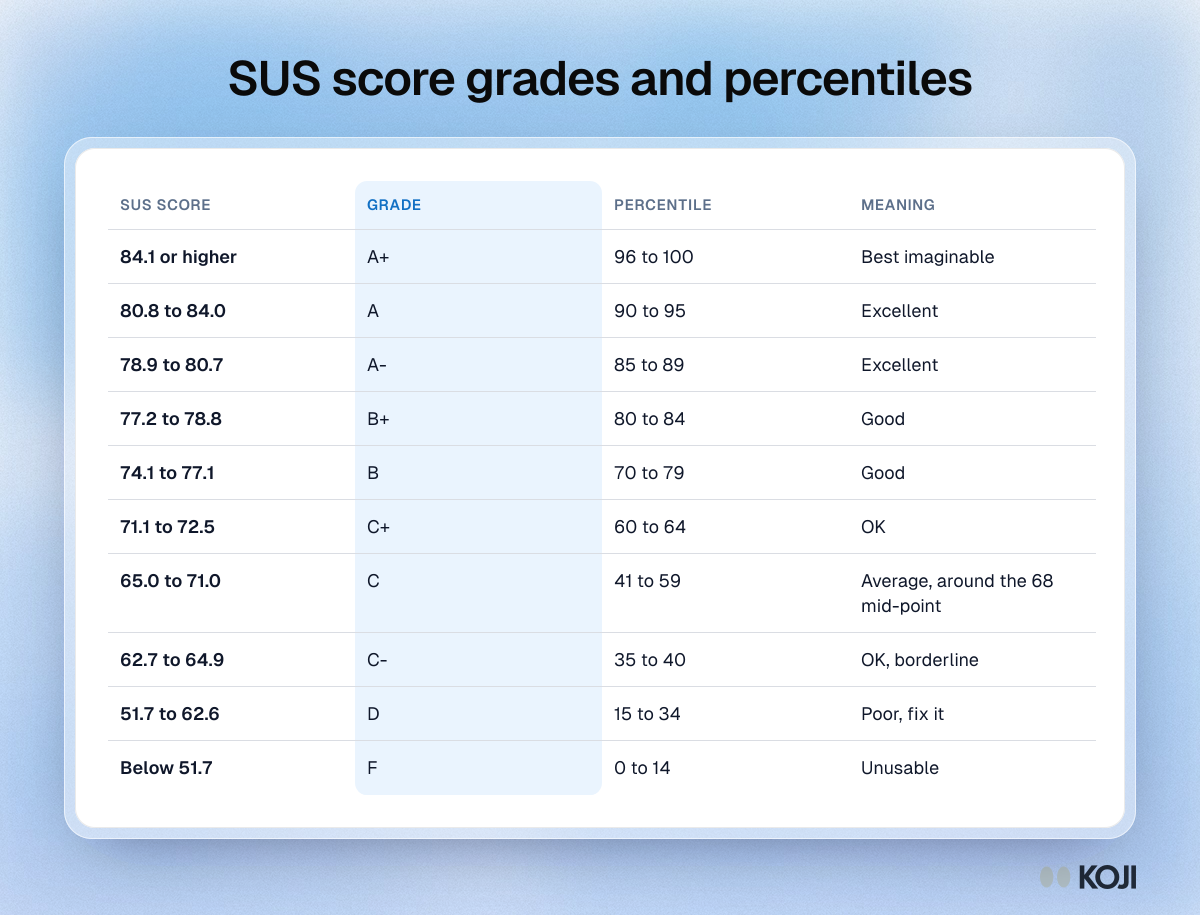
Table of System Usability Scale scores with letter grade, percentile and meaning, from A+ at 84.1 or higher down to F below 51.7, with 68 as the average.

Reference table

SUS score grades and percentiles
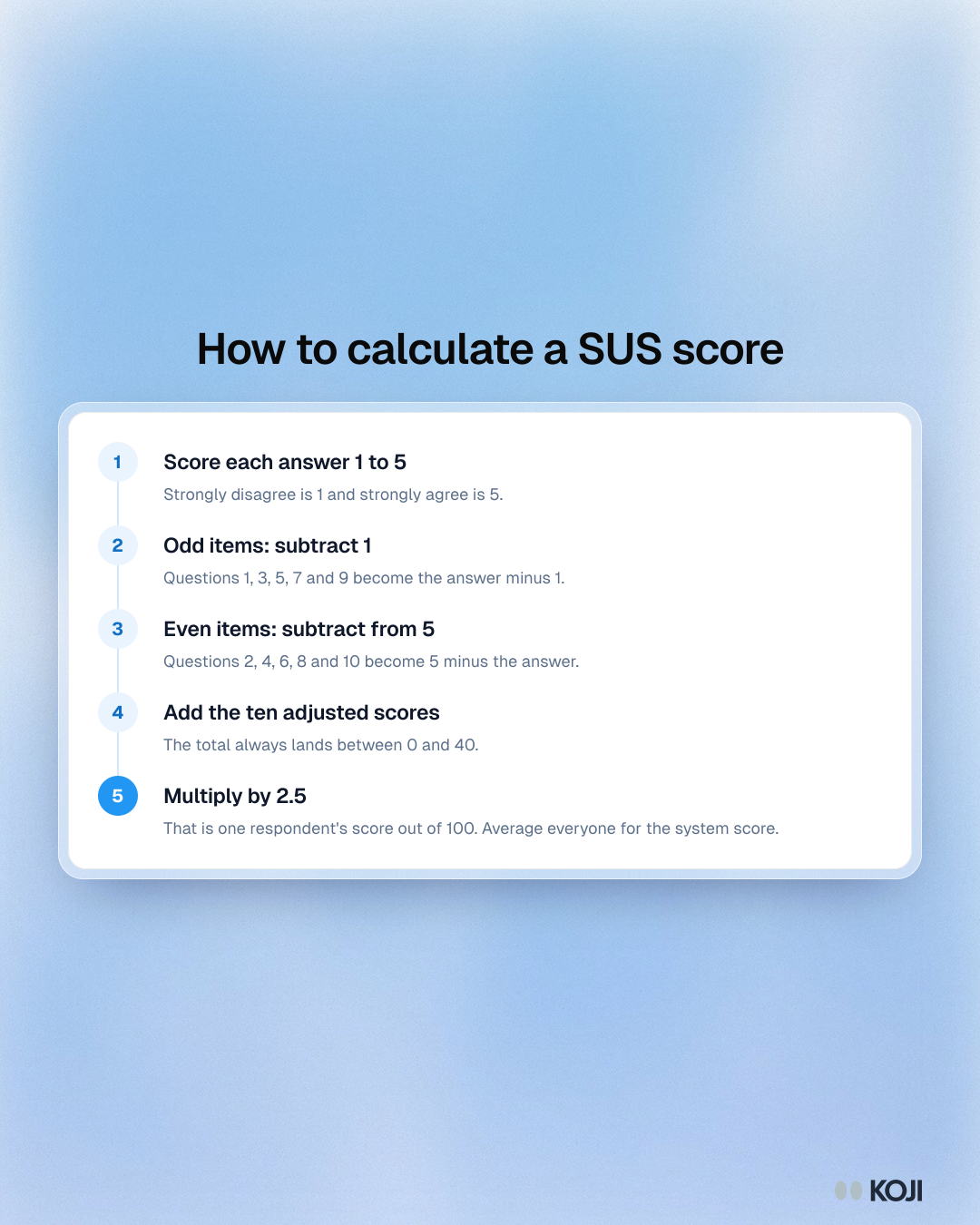
Process showing five steps to calculate a System Usability Scale score: convert answers, adjust odd and even items, add them up and multiply by 2.5.

Process

How to calculate a SUS score

Koji

AI-native customer research. Made in Amsterdam, built by researchers.

Product

  • How it works
  • Capabilities
  • Pricing
  • Enterprise
  • Docs
  • Frameworks & cheat sheets

For teams

  • Product managers
  • Researchers
  • Founders
  • Marketing
  • Agencies
  • Use case library

Company

  • About
  • Blog
  • Careers
  • Press
  • Contact

Legal

  • Privacy
  • Terms
  • Security
  • Compliance
GDPRGDPRCompliantUSHIPAABAAHIPAABAA availableAUDITSOC 2TYPE IISOC 2 Type IIControls verified by AikidoISO/IEC270012022ISO 27001:2022Controls verified by AikidoCSFHITRUSTAUDITHITRUSTControls verified by Aikido
© 2026 Koji Labs B.V.GDPR-compliant · EU data residency · No AI training on your data