Free to save and share

Frameworks and cheat sheets for customer research

Every framework, checklist and comparison from our guides, as an image you can download, drop into a deck or share with your team.
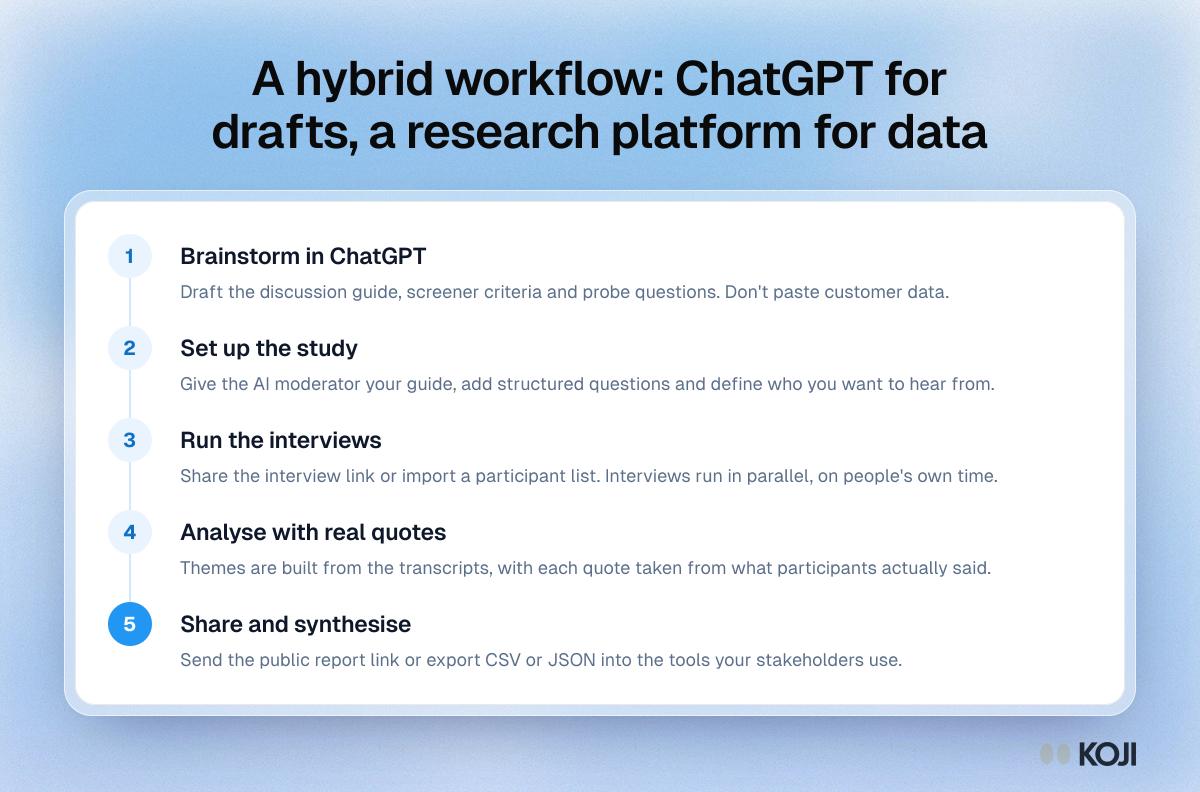
Process of a five-step hybrid research workflow: brainstorm in ChatGPT, set up the study, run interviews, analyse with quotes from the transcript, then share.

Process

A hybrid workflow: ChatGPT for drafts, a research platform for data
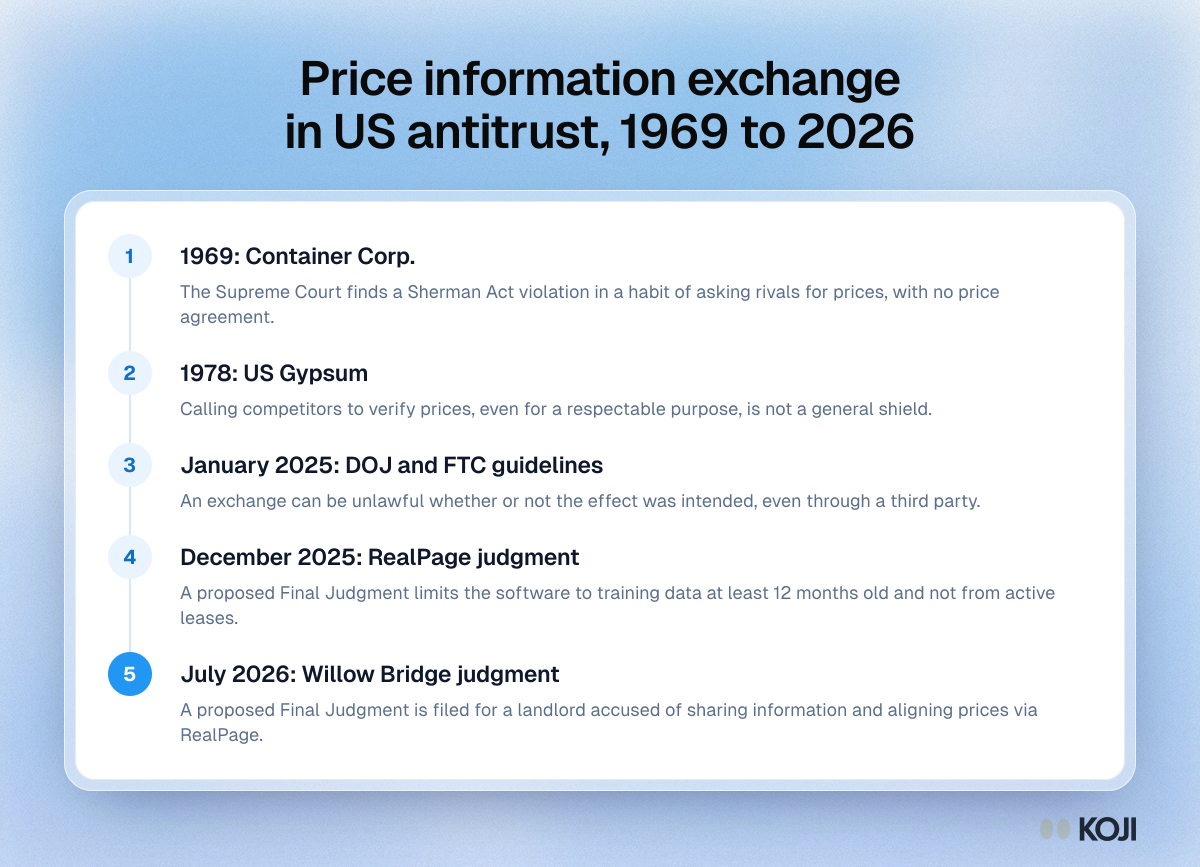
Timeline of five US antitrust milestones on sharing price information, from Container Corp. in 1969 to the 2026 Willow Bridge proposed judgment.

Process

Price information exchange in US antitrust, 1969 to 2026
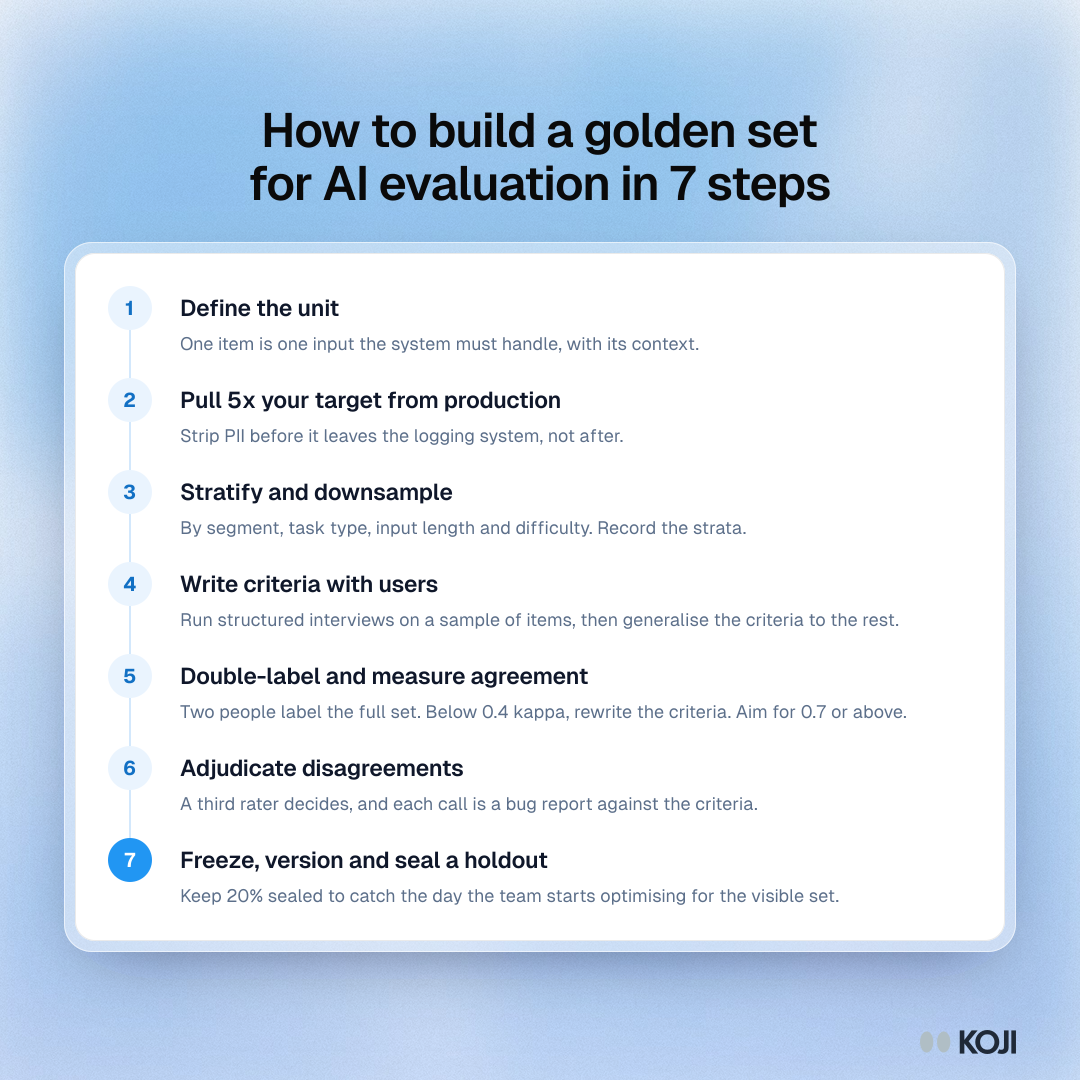
Process showing seven steps to build an AI evaluation golden set, from defining the unit and sampling production to double-labelling and a sealed holdout.

Process

How to build a golden set for AI evaluation in 7 steps
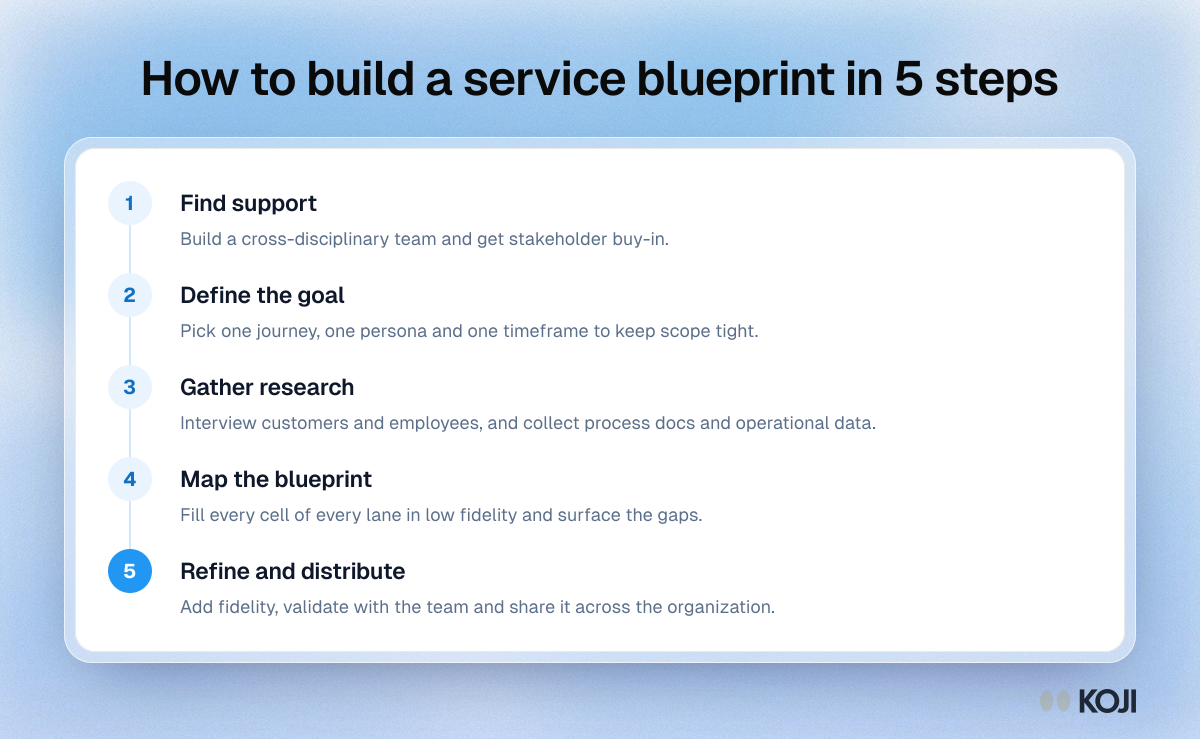
Process showing five steps to build a service blueprint: find support, define the goal, gather research, map the blueprint, refine and distribute.

Process

How to build a service blueprint in 5 steps
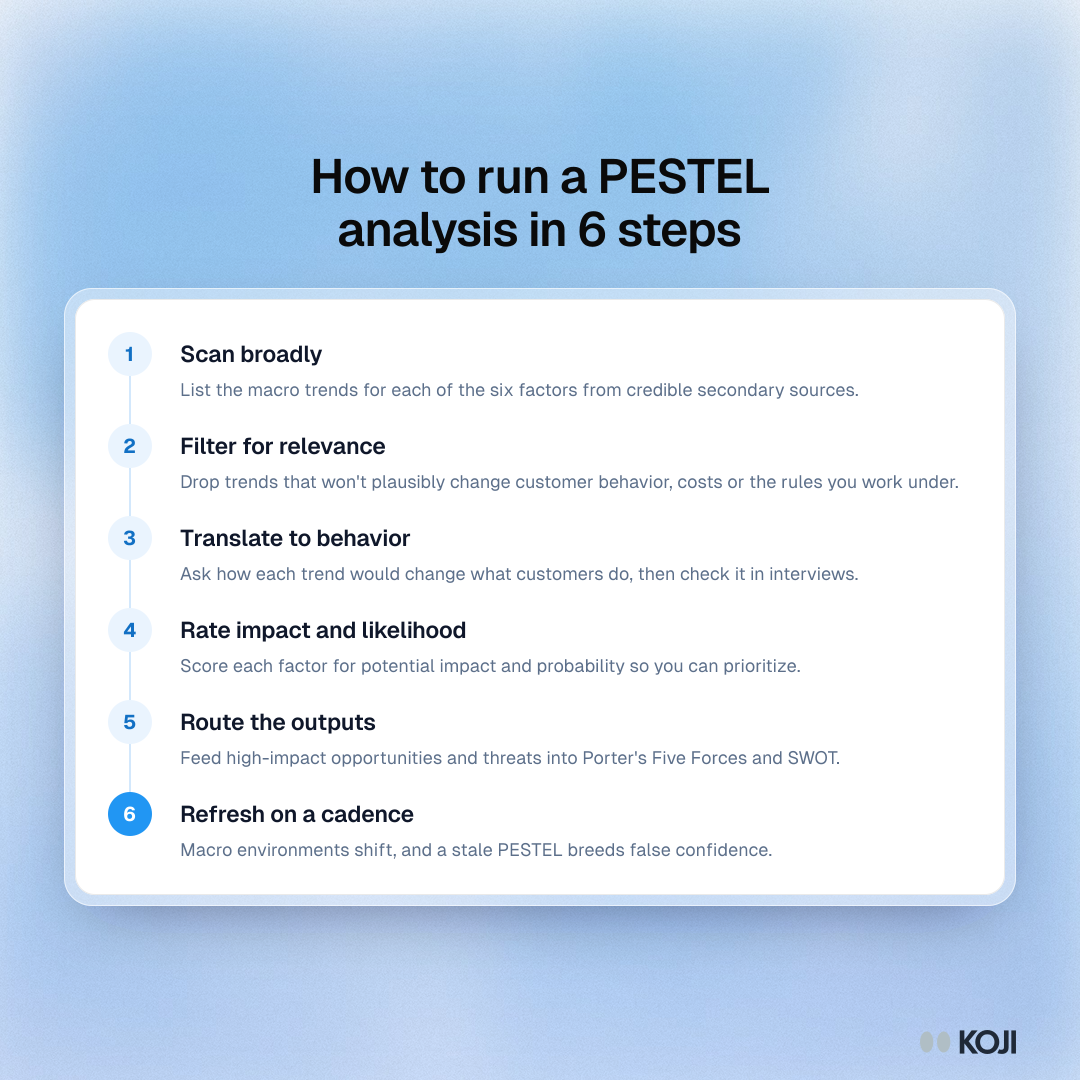
Process showing six steps of a PESTEL analysis: scan broadly, filter for relevance, translate to behavior, rate impact, route outputs and refresh.

Process

How to run a PESTEL analysis in 6 steps
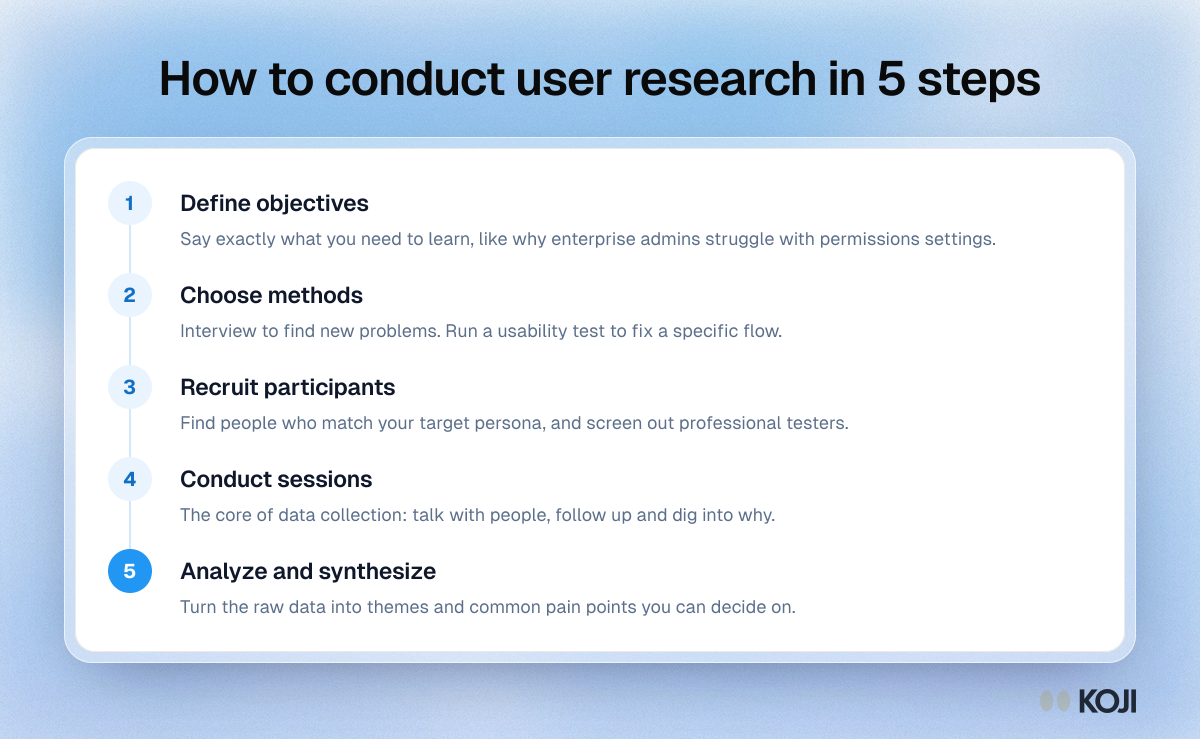
Process showing the five steps of user research: define objectives, choose methods, recruit participants, conduct sessions, analyze and synthesize.

Process

How to conduct user research in 5 steps
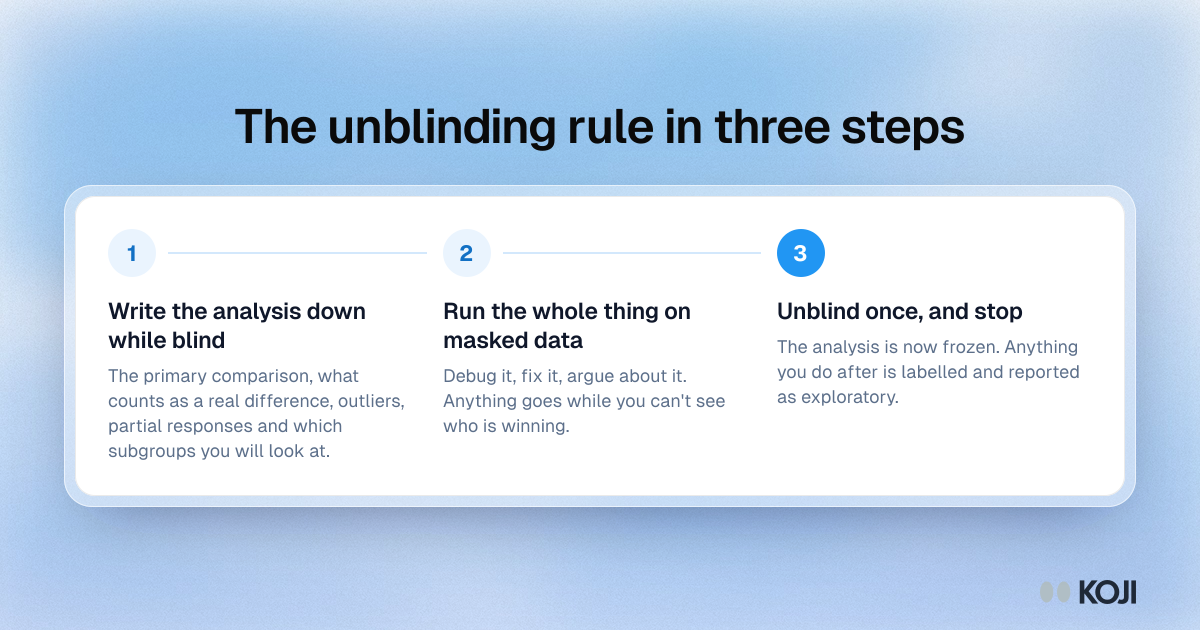
Process of the three-step unblinding rule: write the analysis plan while blind, run it on masked data, then unblind once and freeze it.

Process

The unblinding rule in three steps
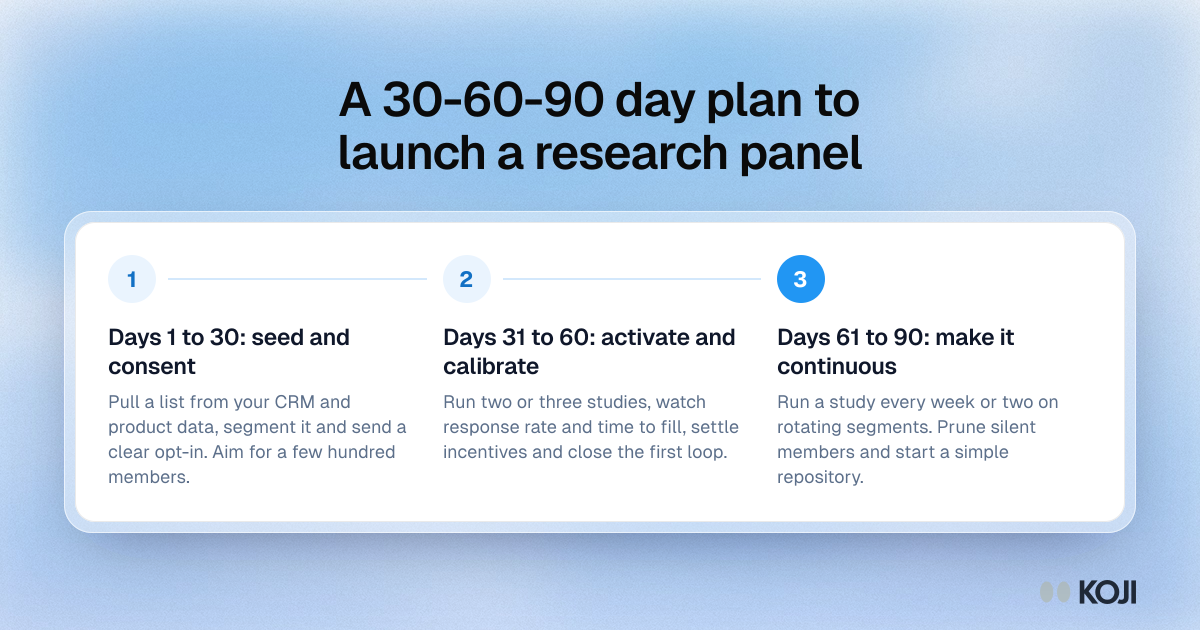
Timeline of a 30-60-90 day research panel rollout: seed and get consent, then run and calibrate first studies, then move to a regular cadence.

Process

A 30-60-90 day plan to launch a research panel
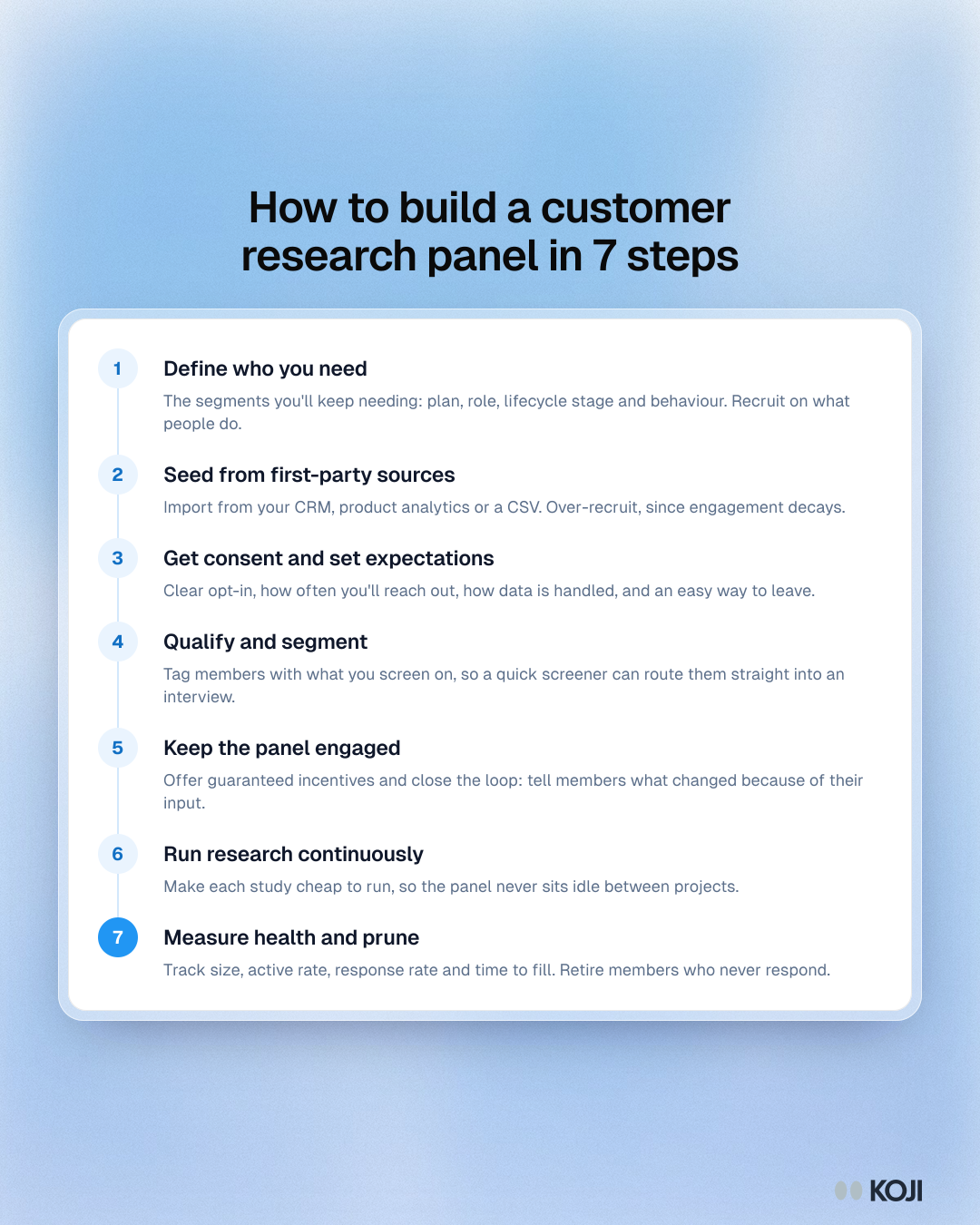
Process of seven steps to build a customer research panel, from defining segments and seeding from your CRM to keeping members engaged and pruning.

Process

How to build a customer research panel in 7 steps
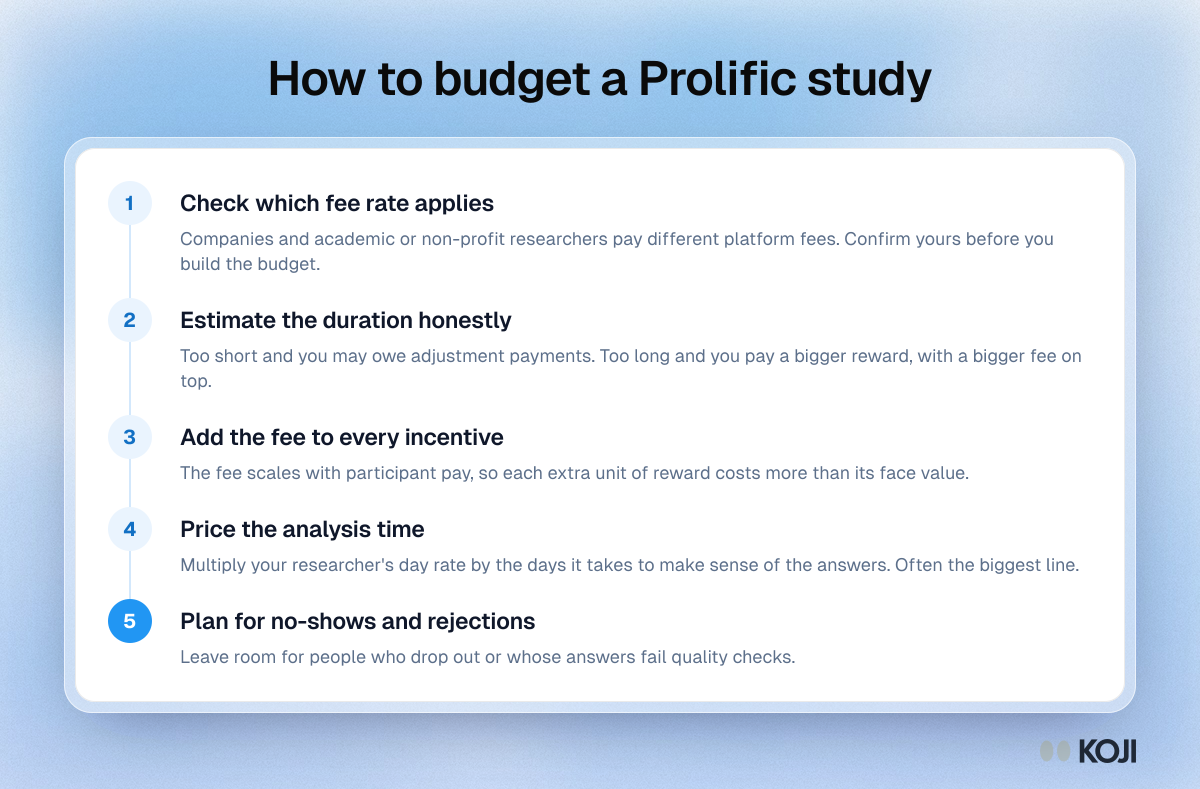
Process for budgeting a Prolific study in five steps, from checking which fee rate applies to pricing the analysis time

Process

How to budget a Prolific study
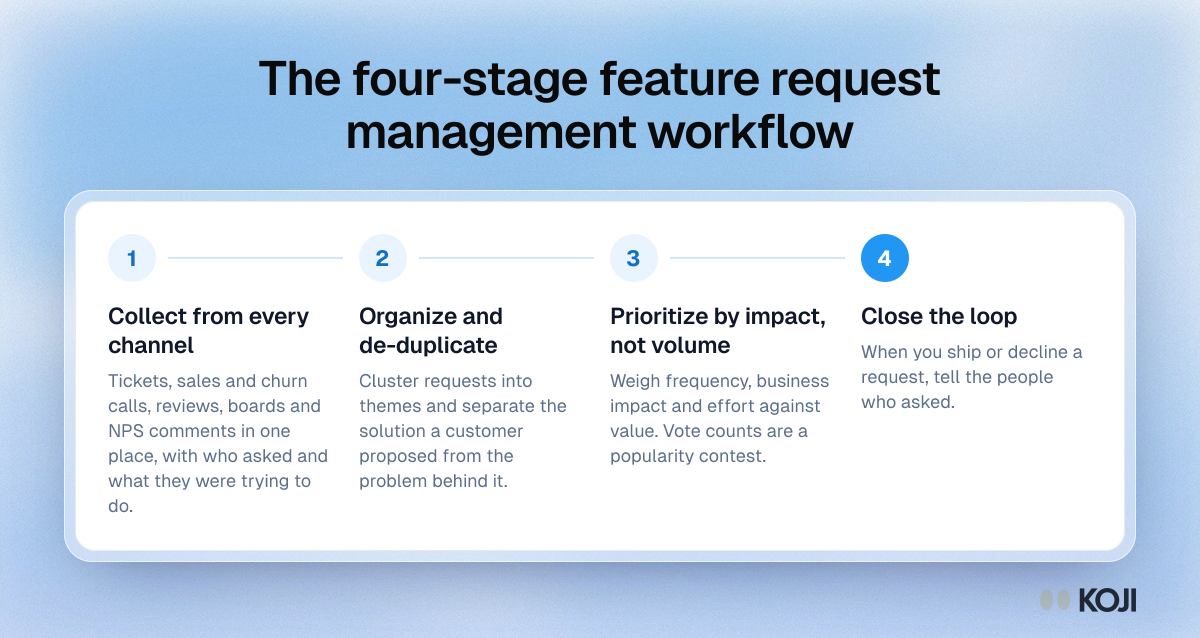
Process of the four stages of feature request management: collect from every channel, organize and de-duplicate, prioritize by impact, close the loop.

Process

The four-stage feature request management workflow
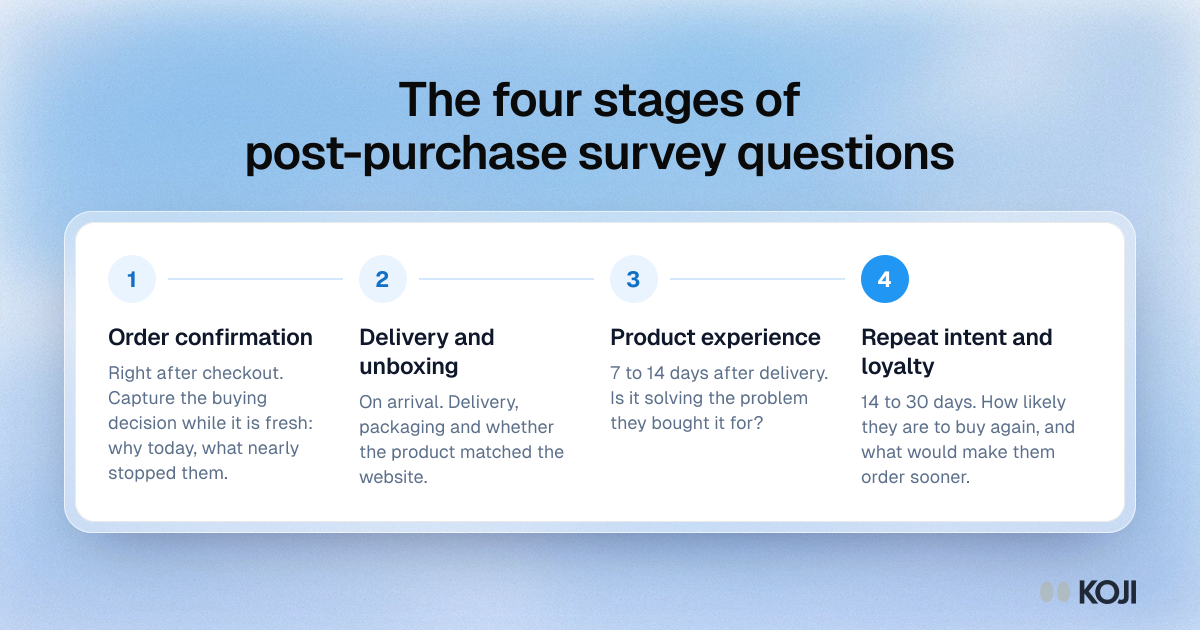
Process of four post-purchase survey stages: order confirmation, delivery and unboxing, product experience at 7 to 14 days, repeat intent at 14 to 30 days.

Process

The four stages of post-purchase survey questions
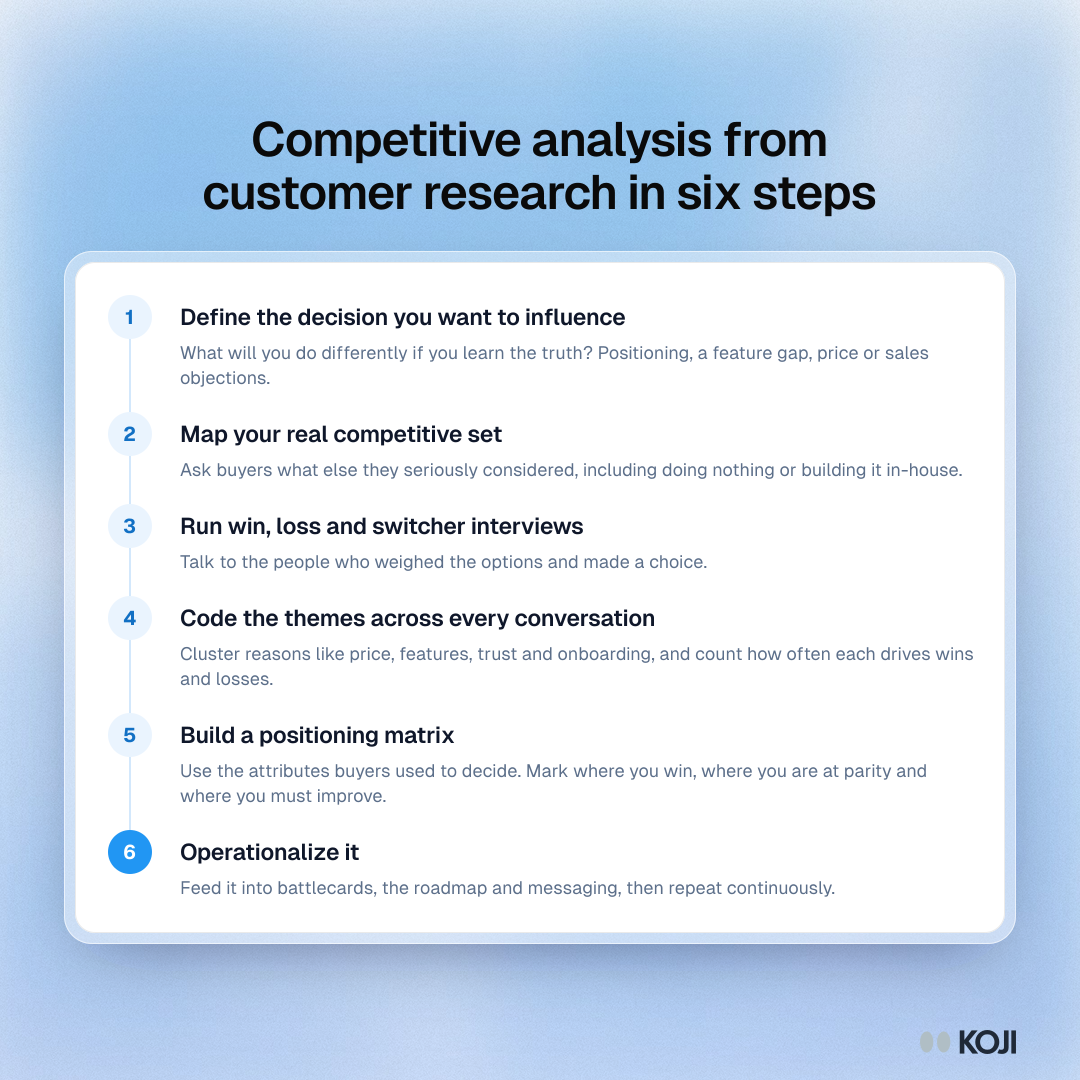
Process for competitive analysis built on customer research: define the decision, map the real set, interview, code themes, position, operationalize.

Process

Competitive analysis from customer research in six steps
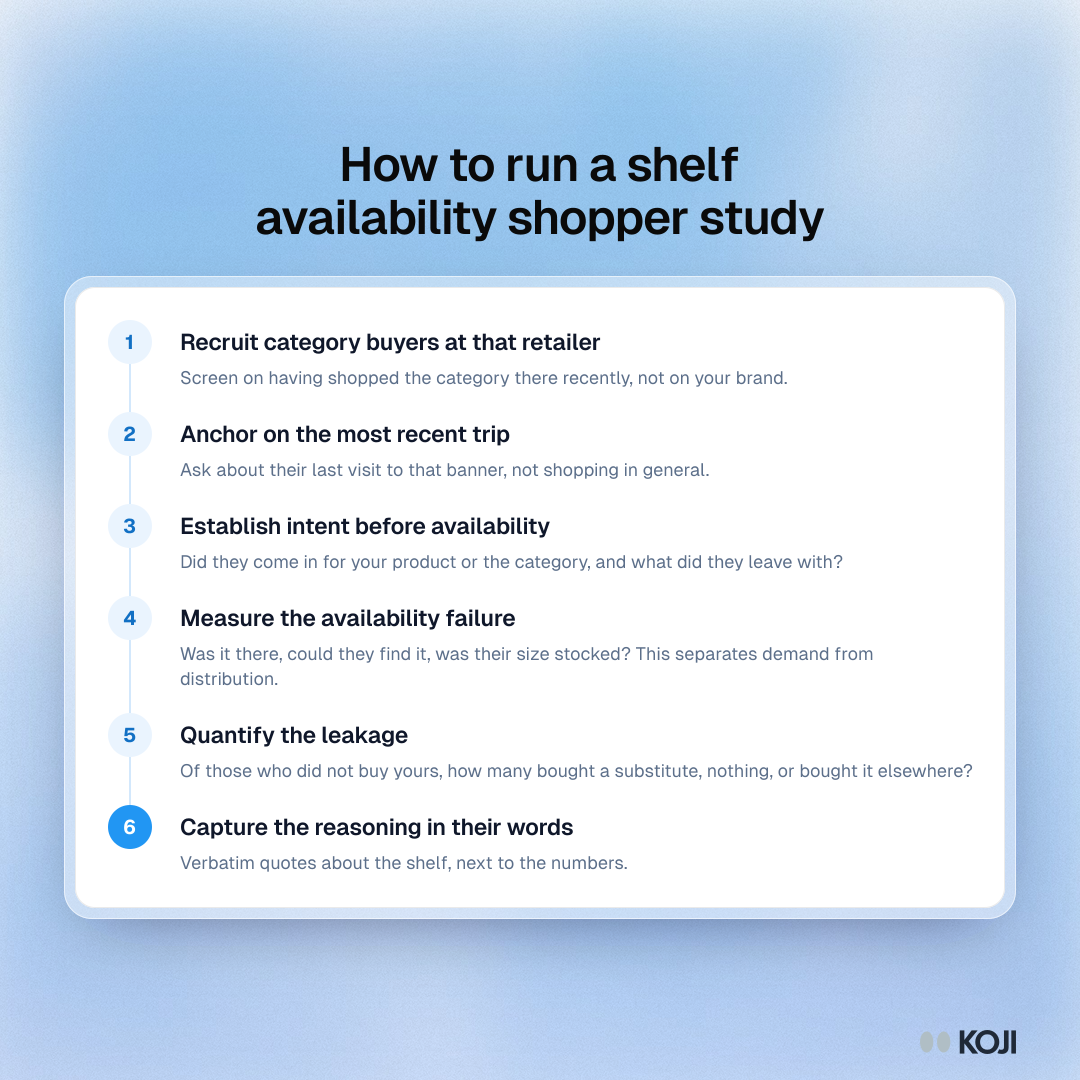
Process for a shelf availability study in six steps: recruit category buyers, anchor on the last trip, intent, availability, leakage, shopper words.

Process

How to run a shelf availability shopper study
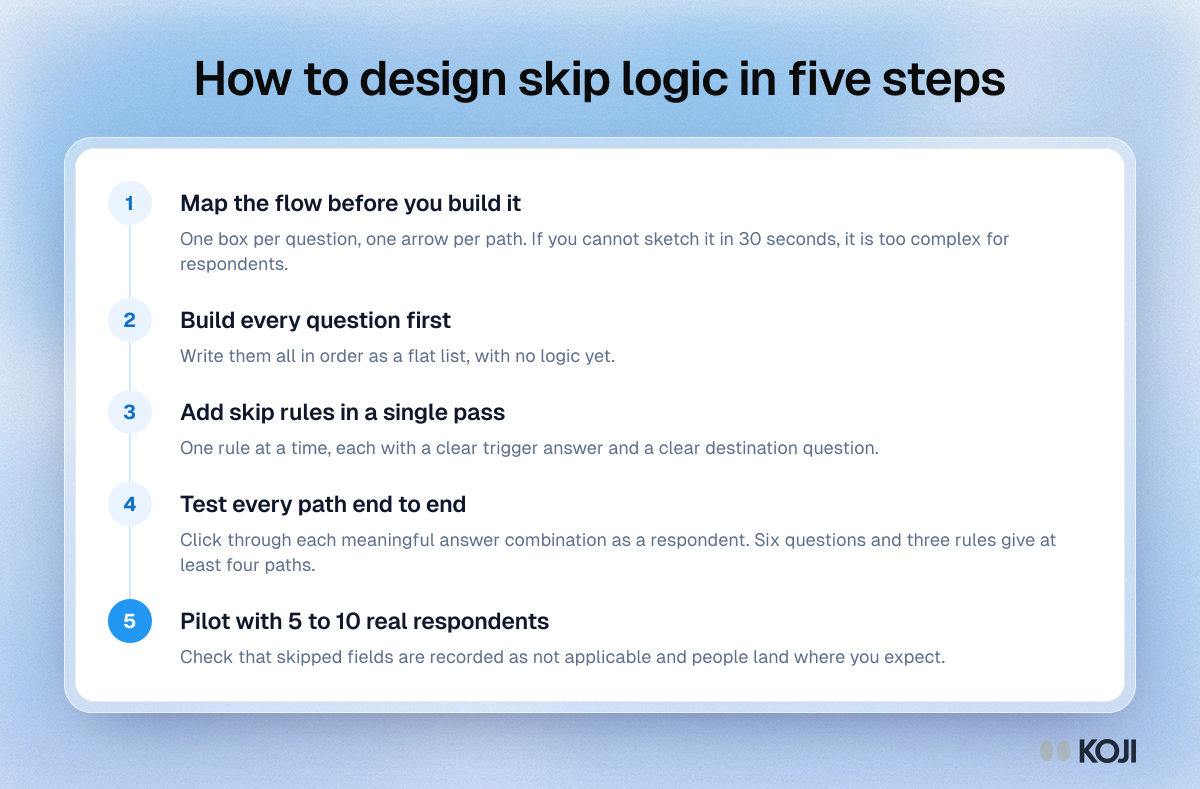
Process for designing survey skip logic: map the flow, build every question, add rules in one pass, test every path, pilot with real respondents.

Process

How to design skip logic in five steps
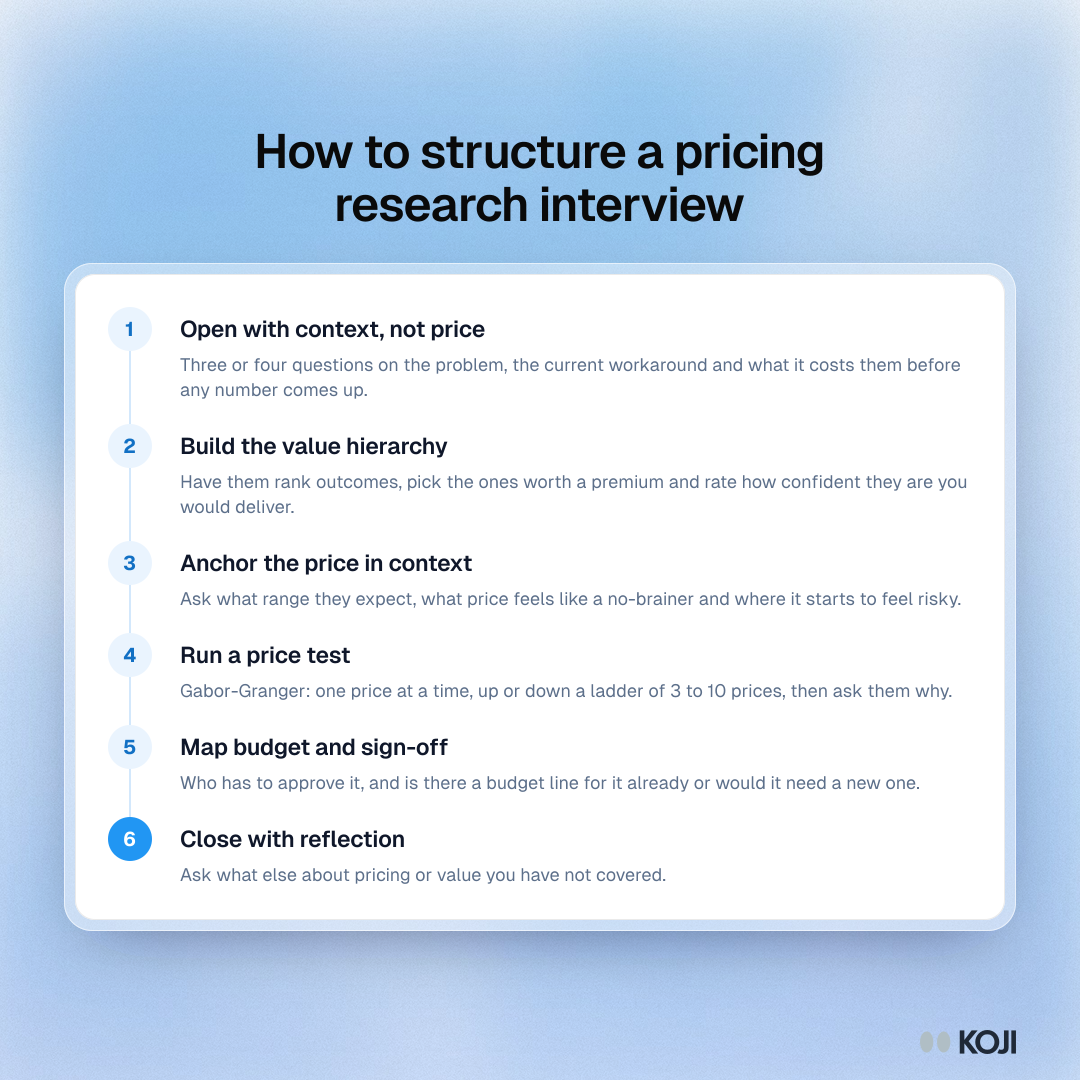
Process showing the six parts of a pricing interview: opening context, value hierarchy, price anchoring, price test, budget and decision, closing.

Process

How to structure a pricing research interview
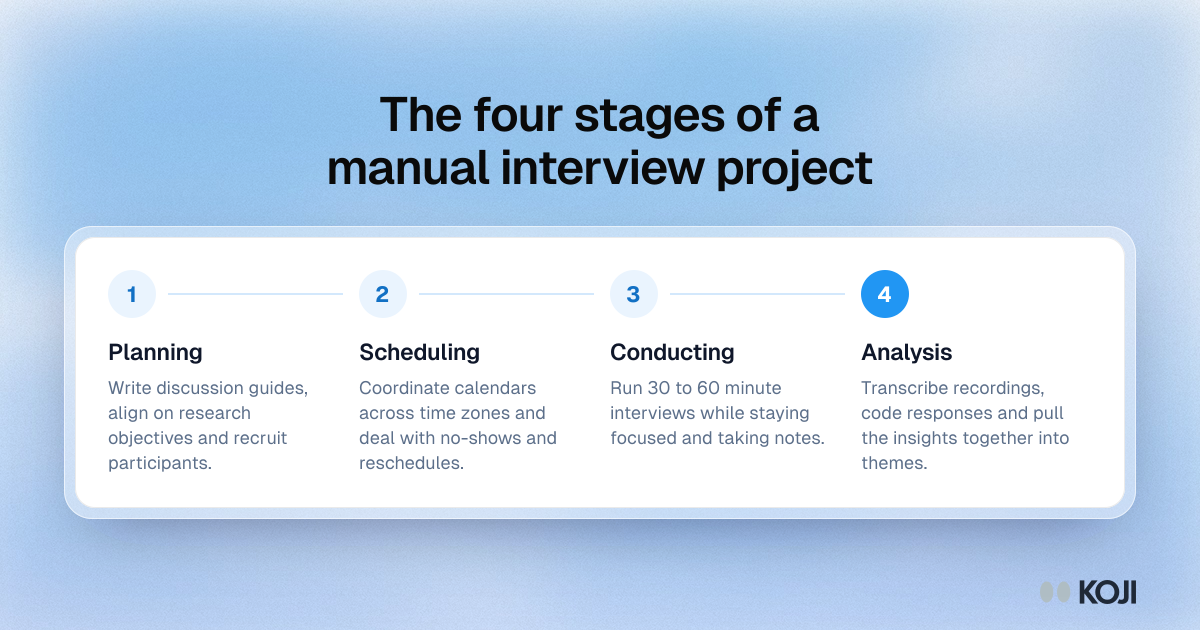
Process of the four stages of a manual customer interview project: planning, scheduling, conducting and analysis, with the work each stage involves.

Process

The four stages of a manual interview project
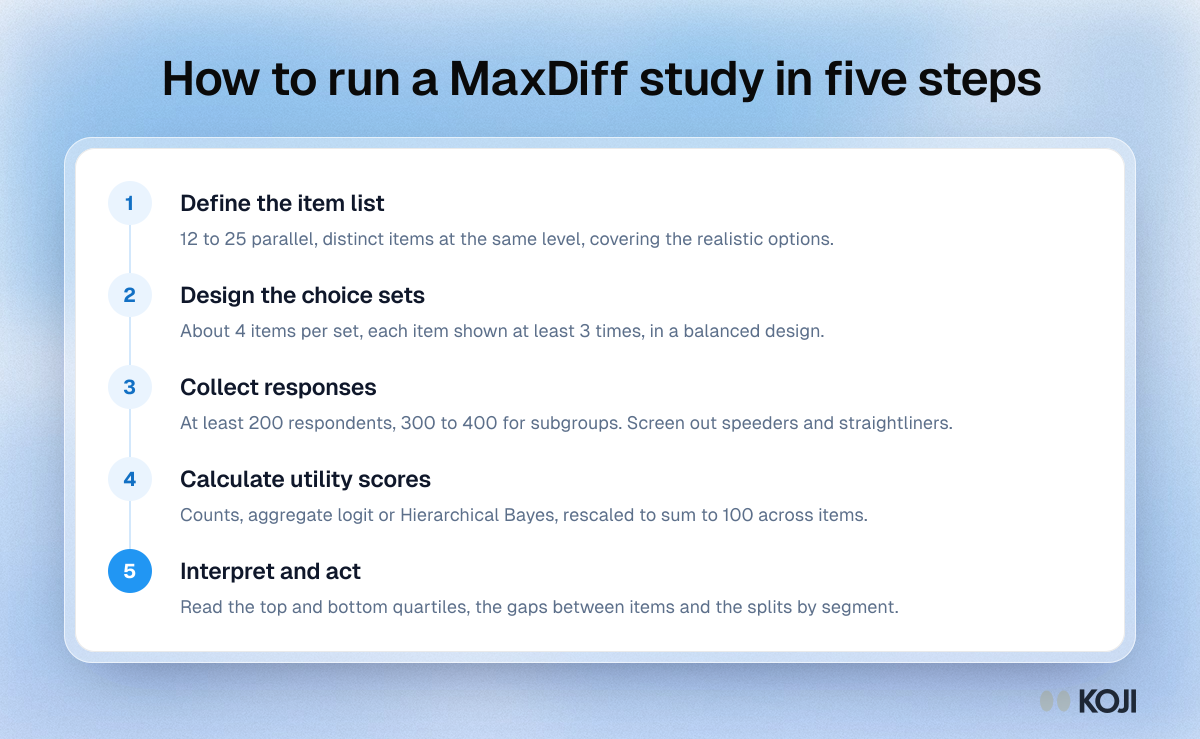
Process showing five steps to run a MaxDiff study: define the items, design choice sets, collect responses, calculate utility scores and act on them.

Process

How to run a MaxDiff study in five steps
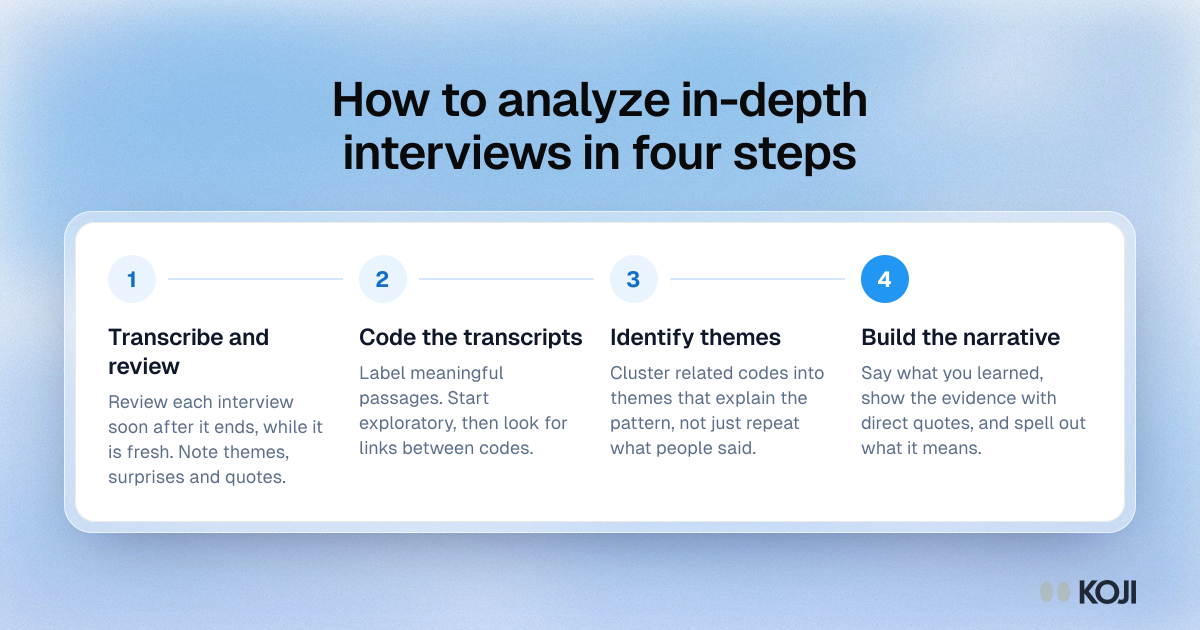
Process showing four steps to analyze in-depth interviews: transcribe and review, code the transcripts, identify themes and build the narrative.

Process

How to analyze in-depth interviews in four steps
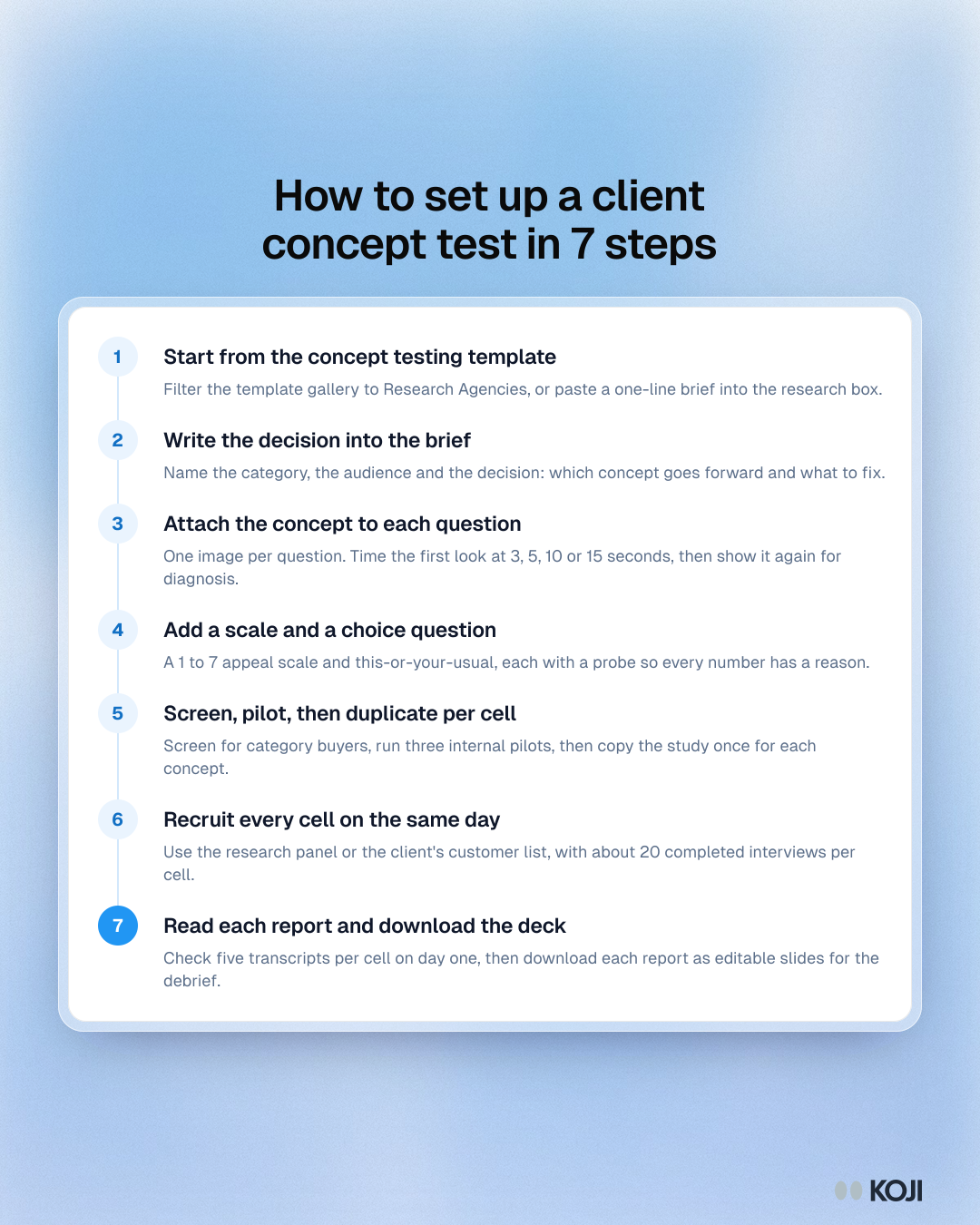
Process for setting up an agency concept test in seven steps, from starting from the concept testing template to downloading the debrief deck.

Process

How to set up a client concept test in 7 steps
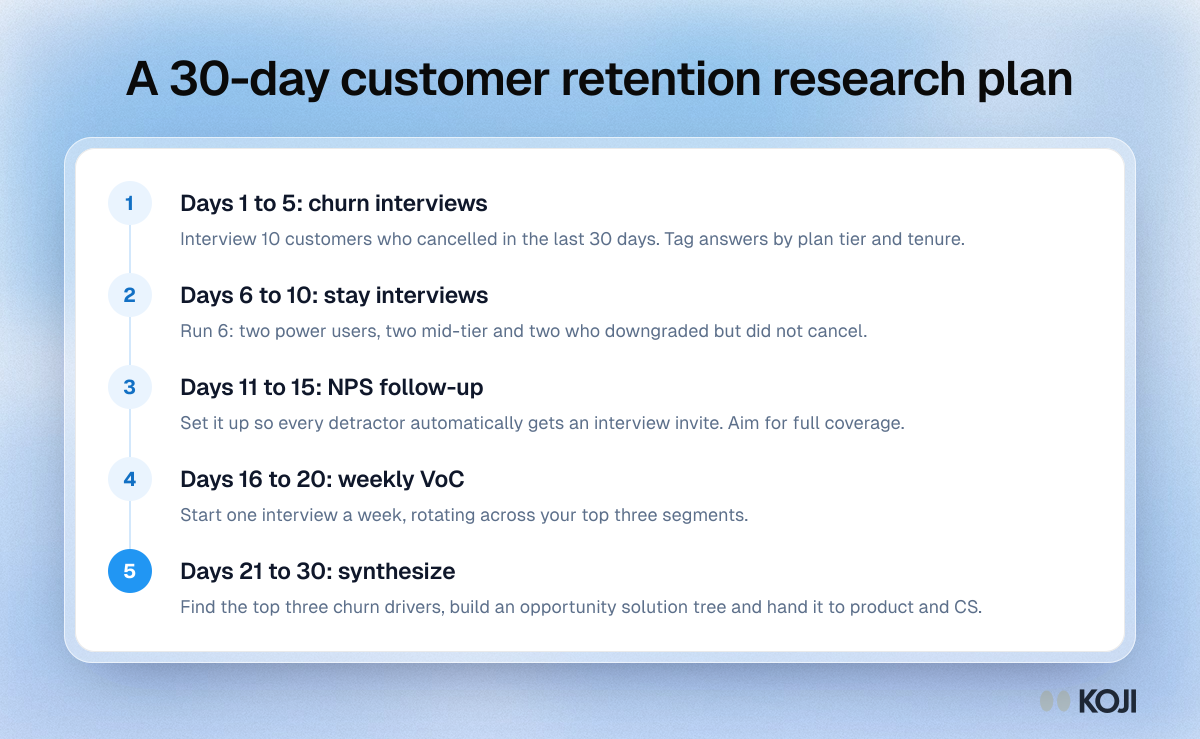
Process of a 30-day retention research plan: churn interviews, stay interviews, NPS follow-up, a weekly VoC cadence and synthesis of the top churn drivers.

Process

A 30-day customer retention research plan
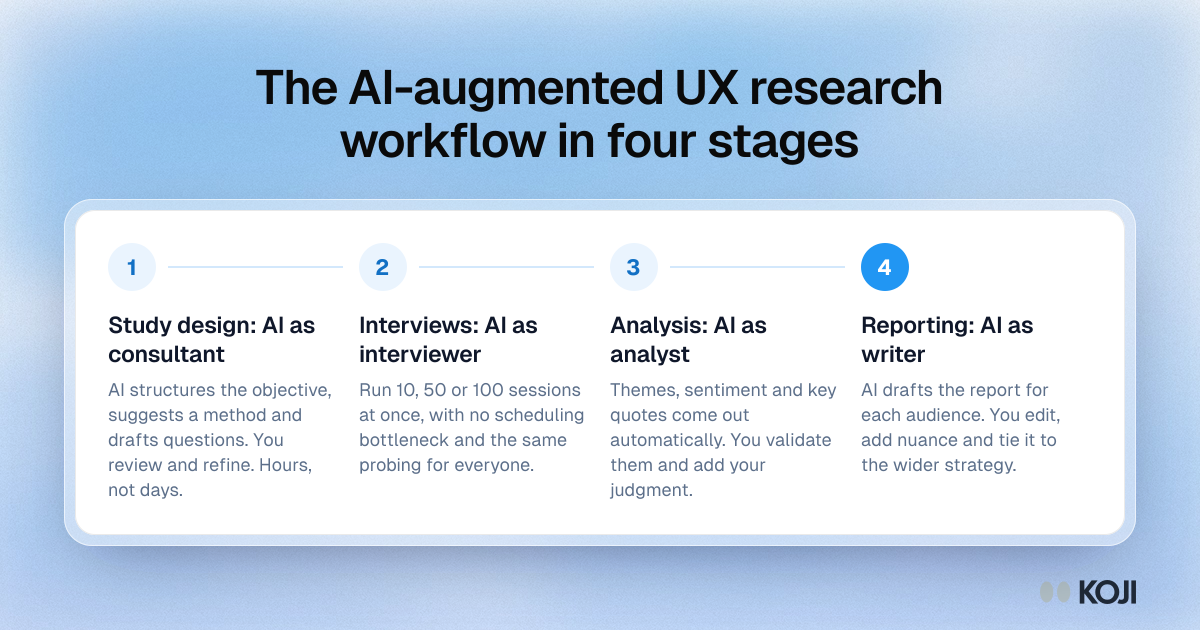
Process showing four stages of an AI-augmented UX research workflow: study design, interviews, analysis and reporting, with what AI and the researcher do.

Process

The AI-augmented UX research workflow in four stages
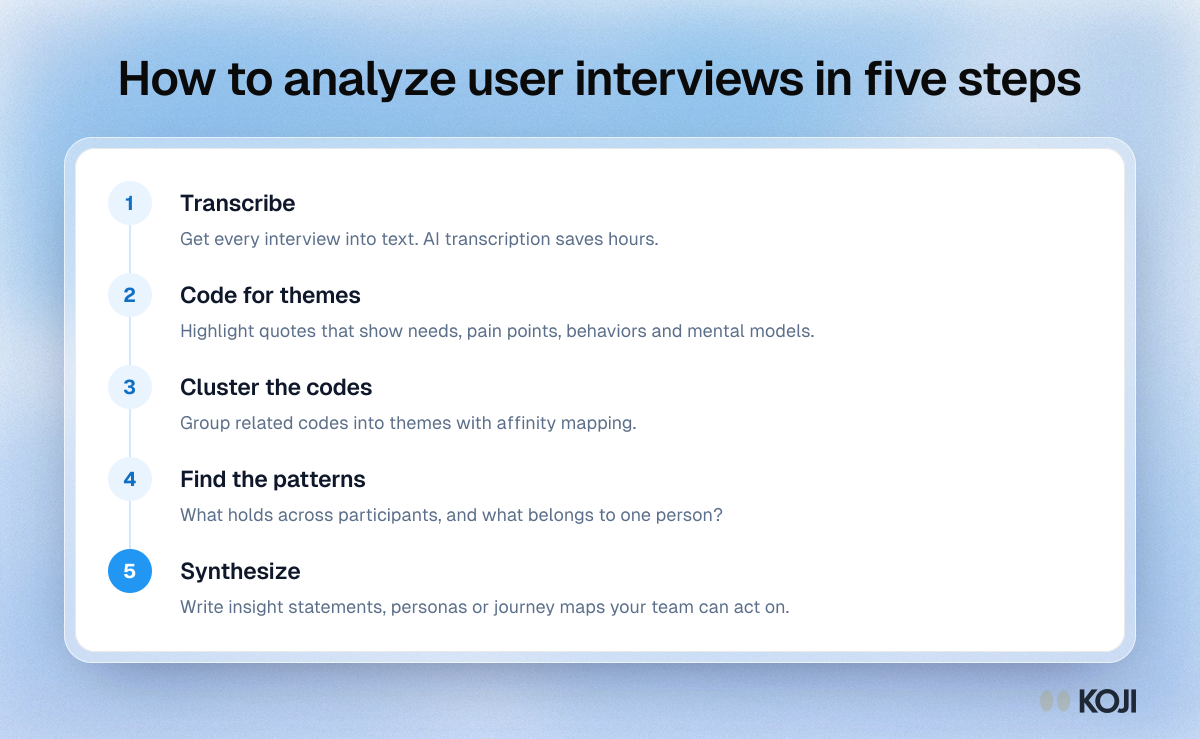
Process showing five steps to analyze user interviews: transcribe, code for themes, cluster codes with affinity mapping, find patterns and synthesize.

Process

How to analyze user interviews in five steps
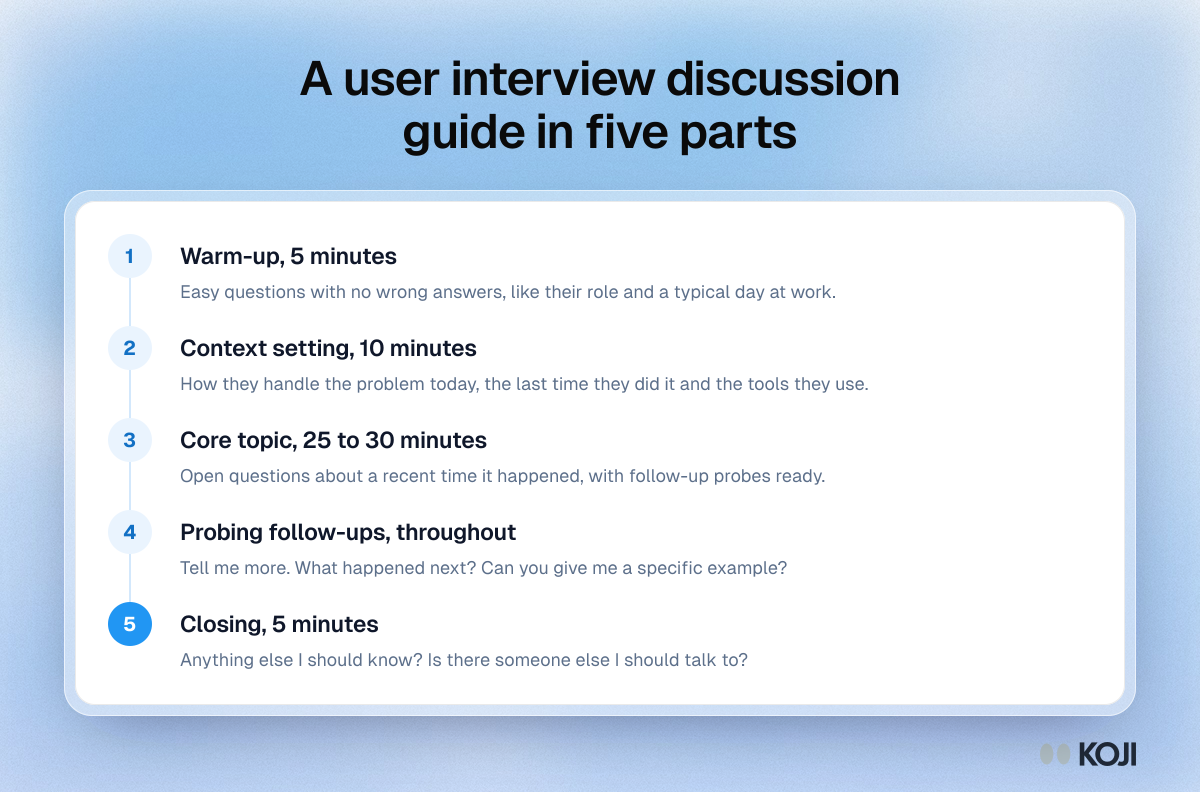
Process showing a five-part user interview discussion guide: warm-up, context setting, core topic, probing follow-ups and closing, with timings.

Process

A user interview discussion guide in five parts
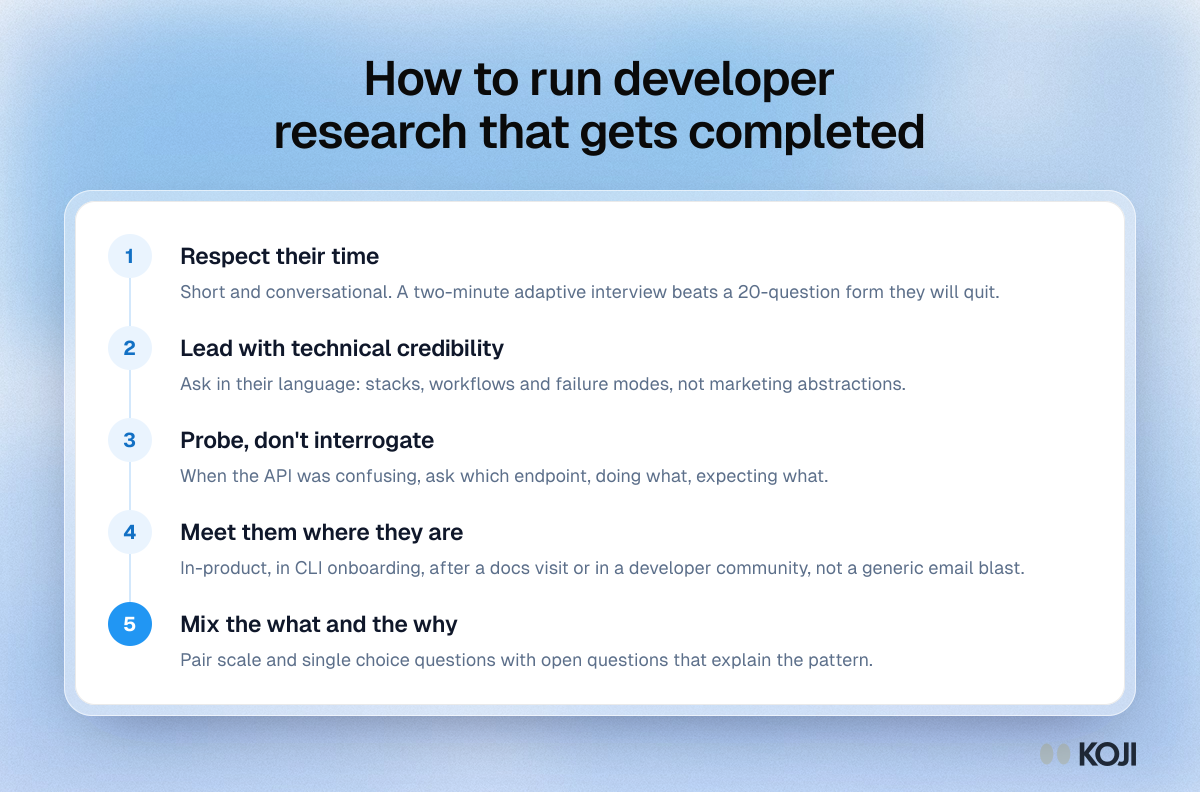
Process showing five steps for user research with developers: respect their time, sound technical, probe, meet them where they work and mix what with why.

Process

How to run developer research that gets completed
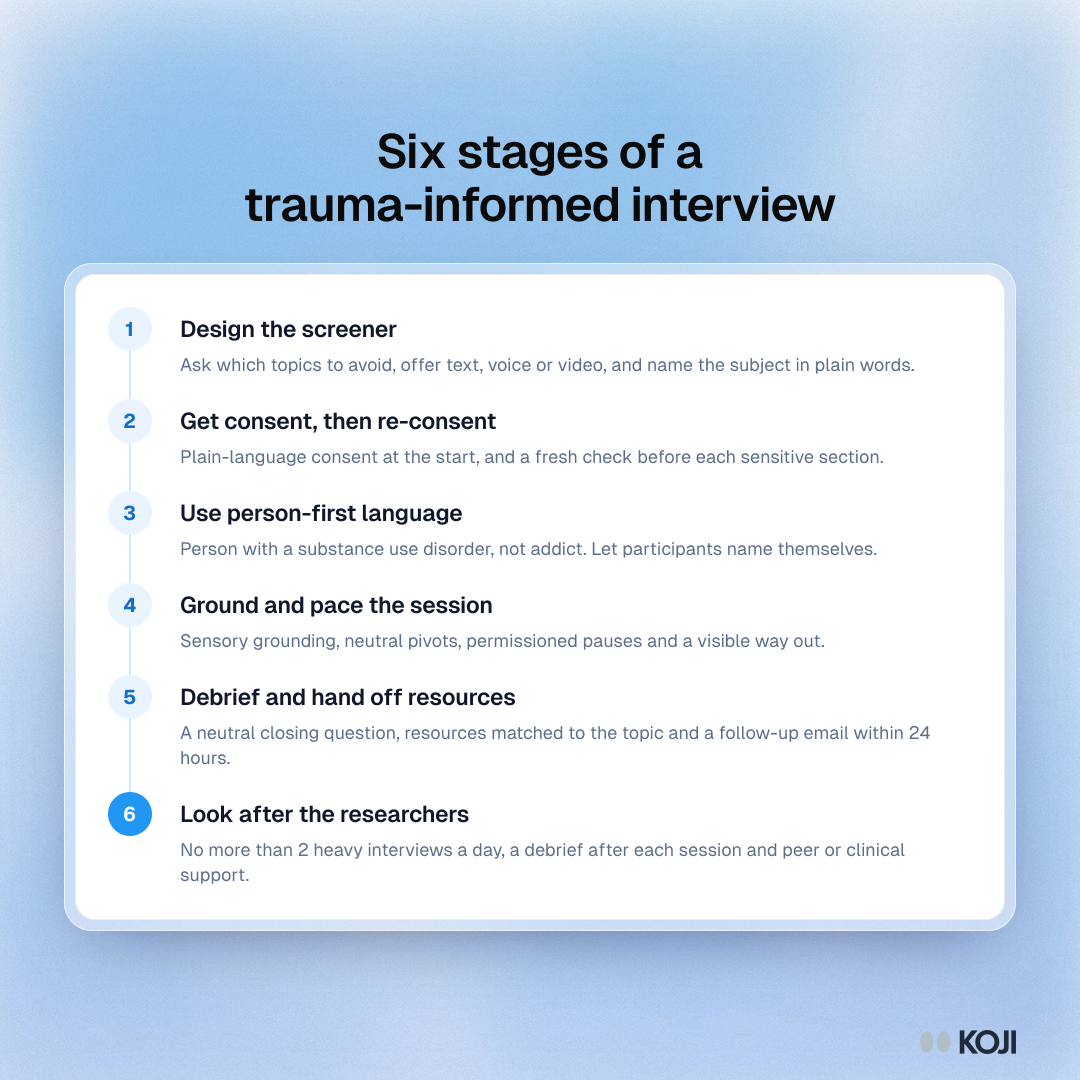
Process showing six stages of a trauma-informed interview: screener, consent and re-consent, person-first language, pacing, debrief and researcher care.

Process

Six stages of a trauma-informed interview
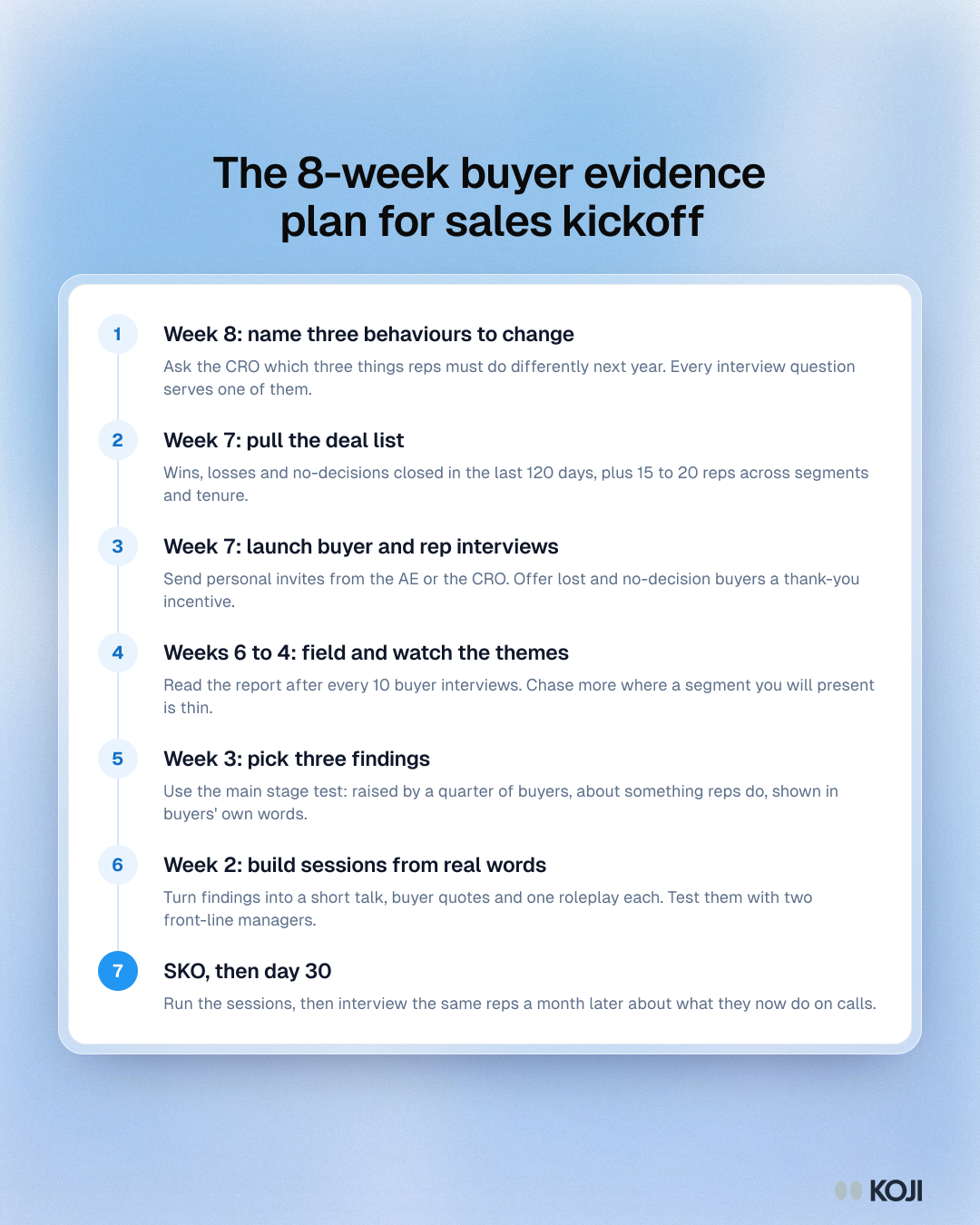
Process for building sales kickoff content from buyer interviews in eight weeks, from naming behaviours to a check 30 days after SKO.

Process

The 8-week buyer evidence plan for sales kickoff
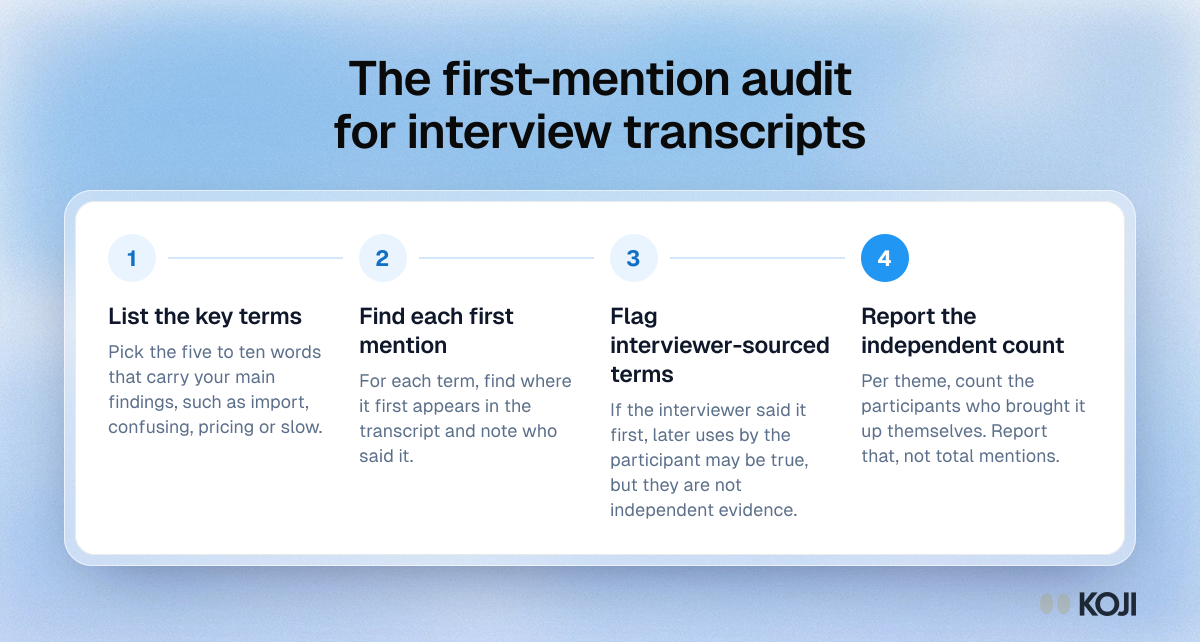
Process showing the four steps of a first-mention audit: list key terms, find who said each first, flag interviewer-sourced terms, report independent counts.

Process

The first-mention audit for interview transcripts
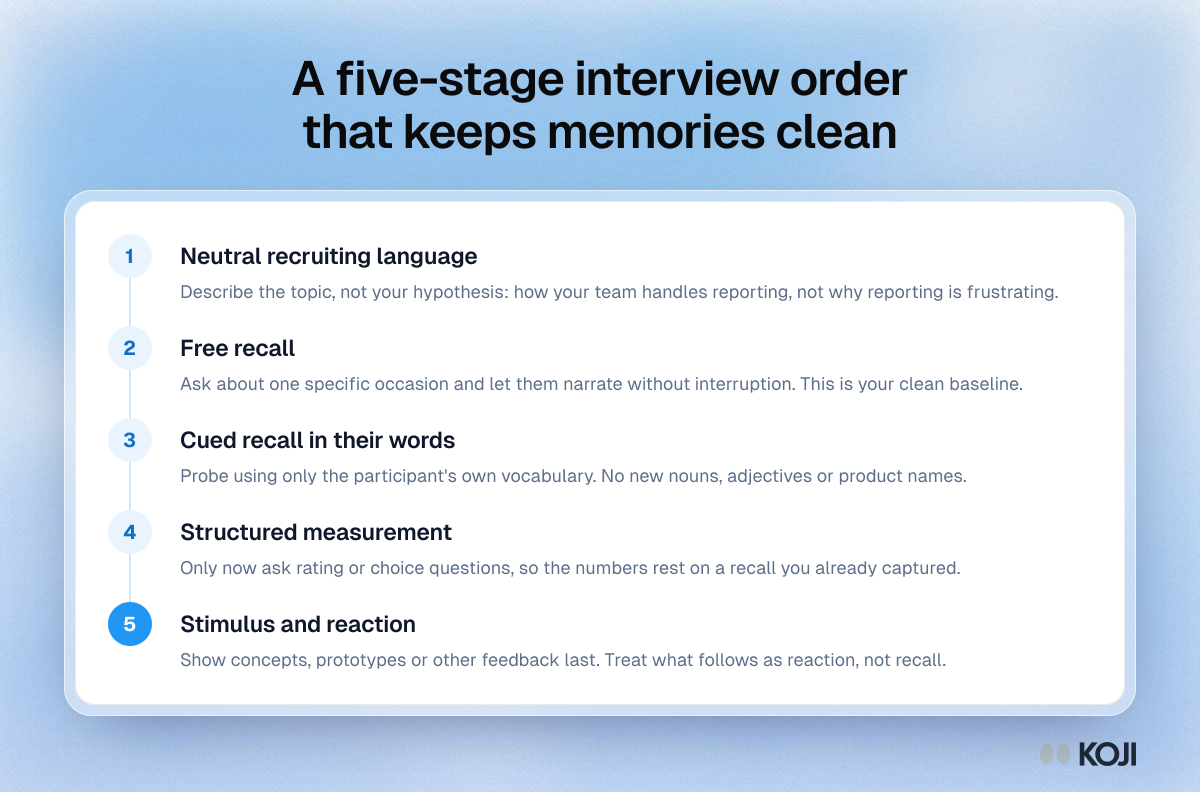
Process showing five interview stages that prevent the misinformation effect: neutral recruiting, free recall, cued recall, structured questions, then stimulus.

Process

A five-stage interview order that keeps memories clean
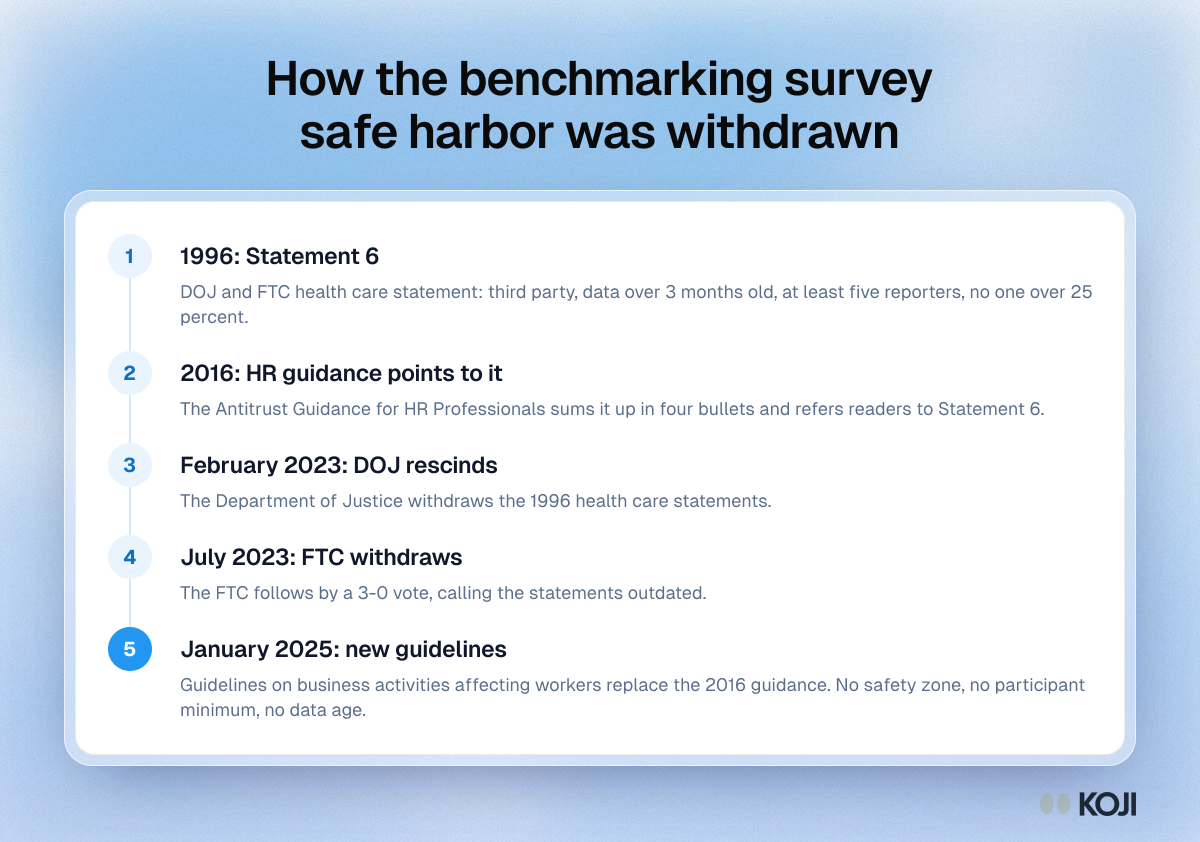
Timeline of the benchmarking survey safe harbor, from the 1996 Statement 6 and 2016 HR guidance to its withdrawal in 2023 and replacement in 2025.

Process

How the benchmarking survey safe harbor was withdrawn
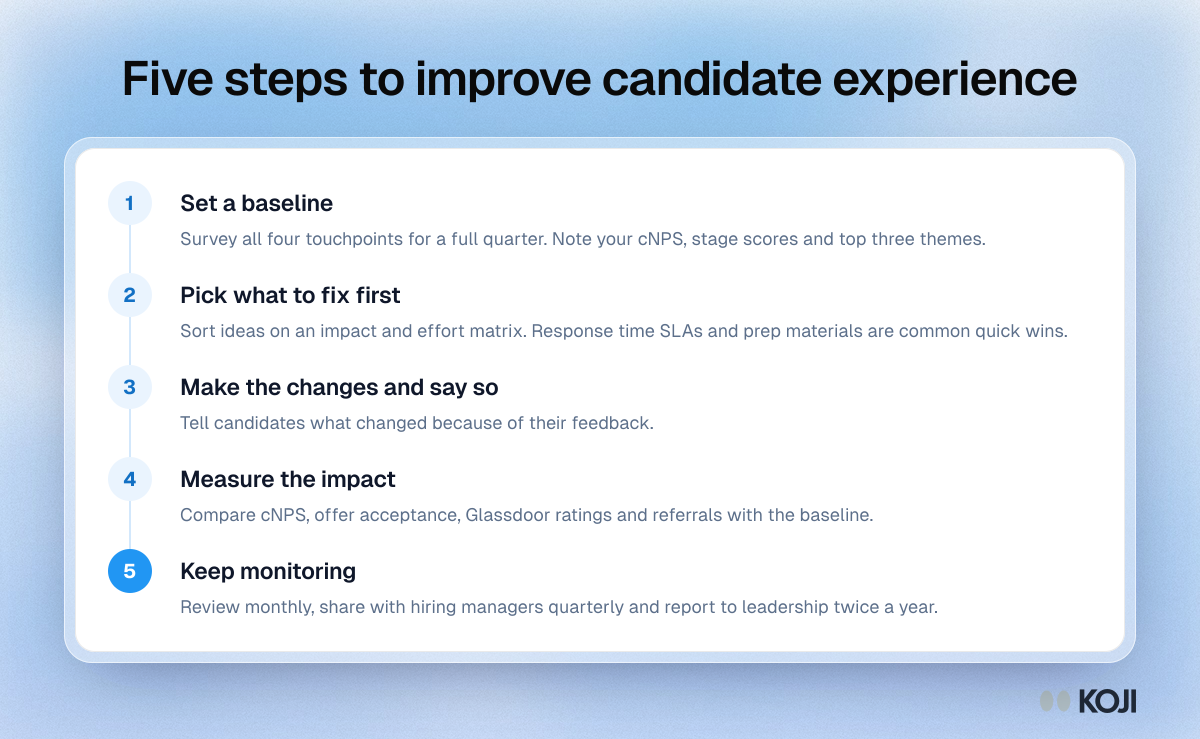
Process showing five steps to improve candidate experience: set a baseline, prioritize fixes, make and announce changes, measure impact, keep monitoring.

Process

Five steps to improve candidate experience
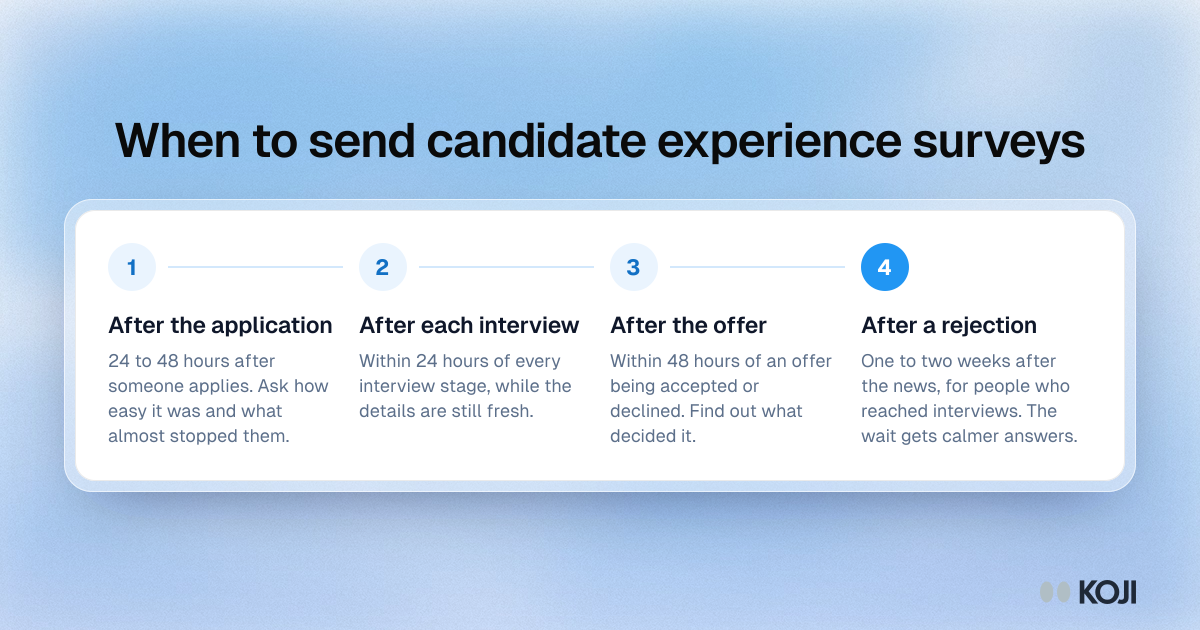
Process showing the four candidate experience survey touchpoints and when to send each: after applying, after interviews, after the offer and after rejection.

Process

When to send candidate experience surveys
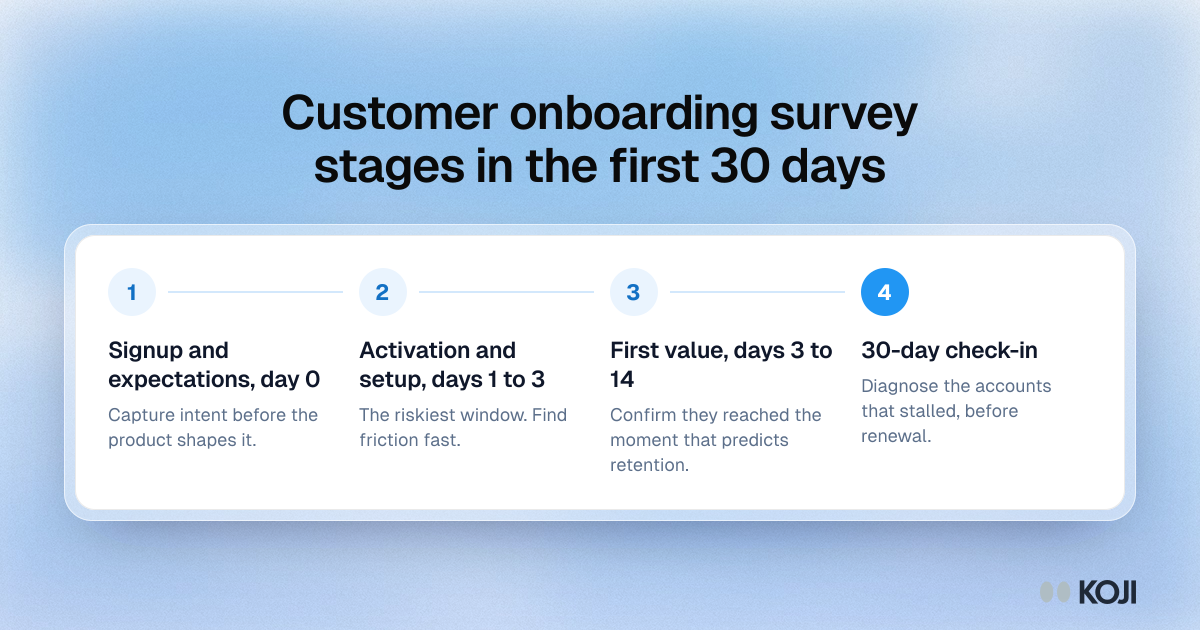
Process of four onboarding survey stages: signup on day 0, activation on days 1 to 3, first value on days 3 to 14, and a 30-day check-in.

Process

Customer onboarding survey stages in the first 30 days
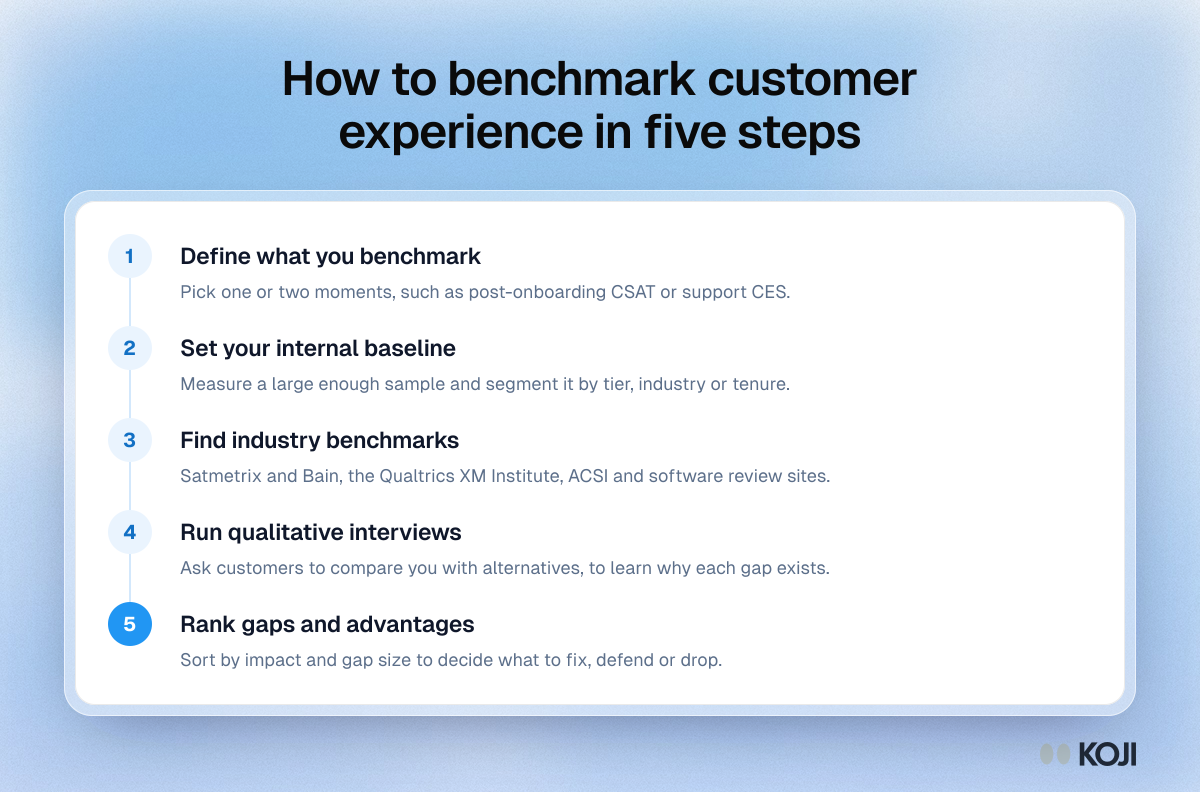
Process for customer experience benchmarking: define the moment, set a baseline, find industry benchmarks, run interviews, rank the gaps.

Process

How to benchmark customer experience in five steps
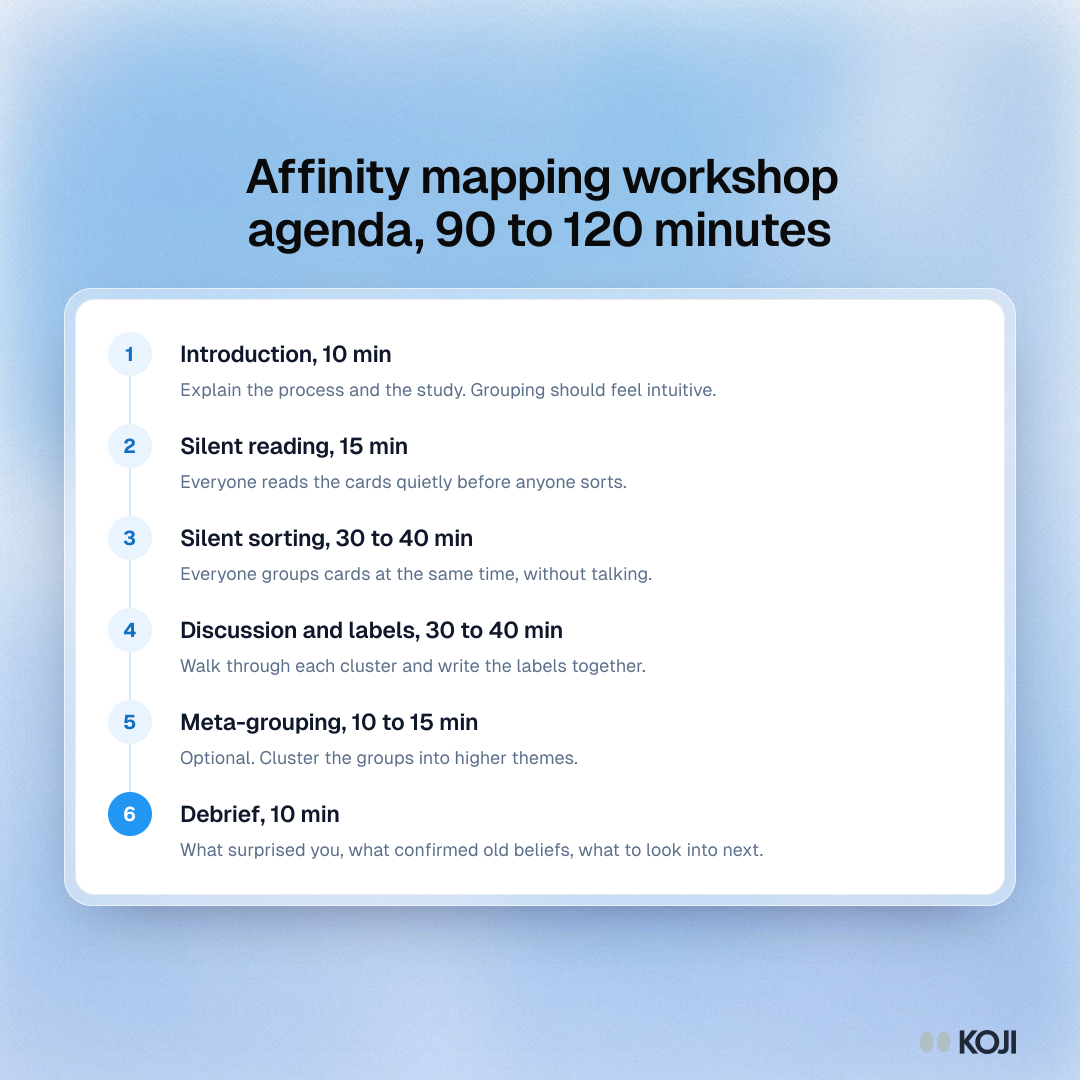
Agenda for a 90 to 120 minute affinity mapping workshop: introduction, silent reading, silent sorting, discussion and labels, meta-grouping, debrief.

Process

Affinity mapping workshop agenda, 90 to 120 minutes
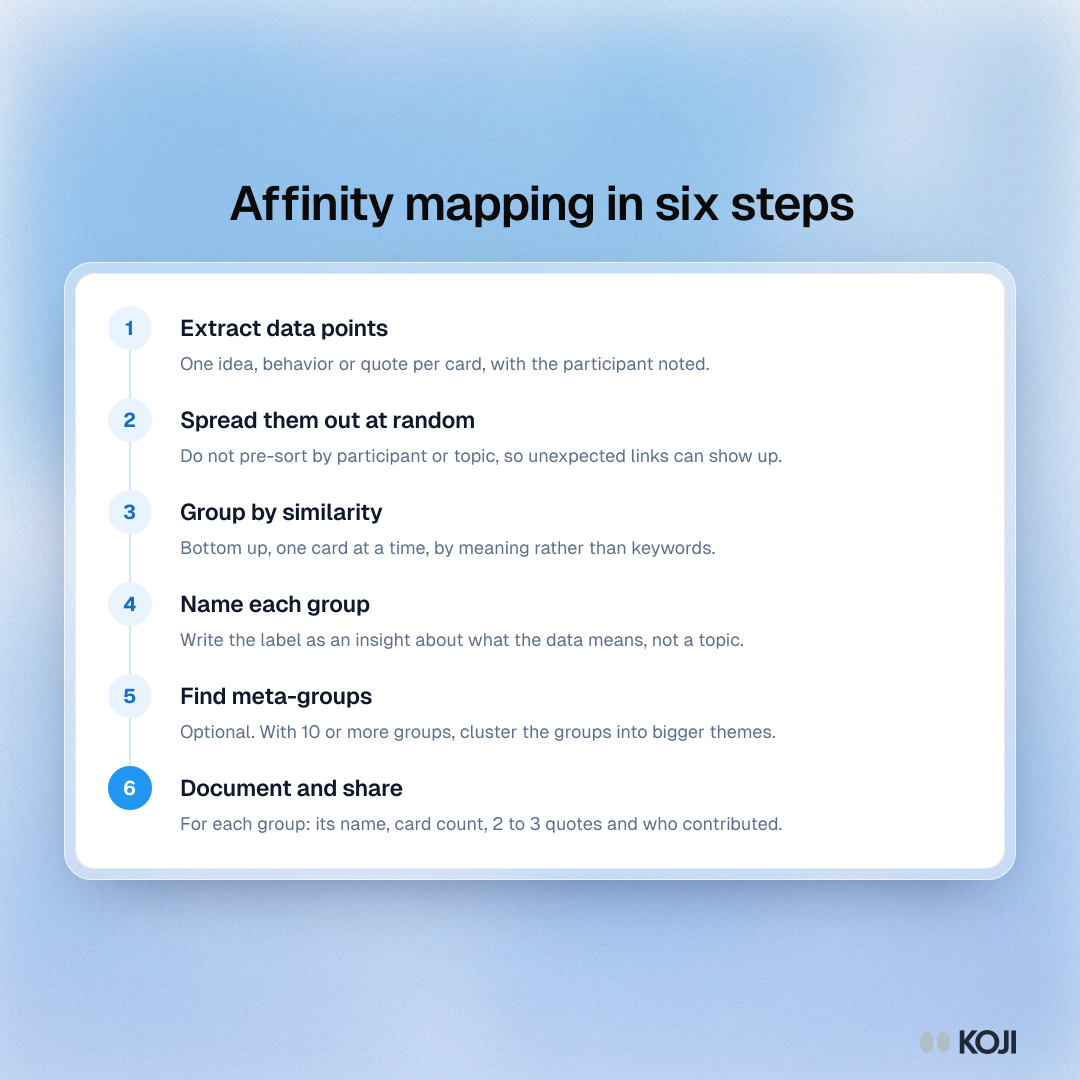
Process for affinity mapping in six steps: extract data points, spread them at random, group by similarity, name groups, find meta-groups, share.

Process

Affinity mapping in six steps
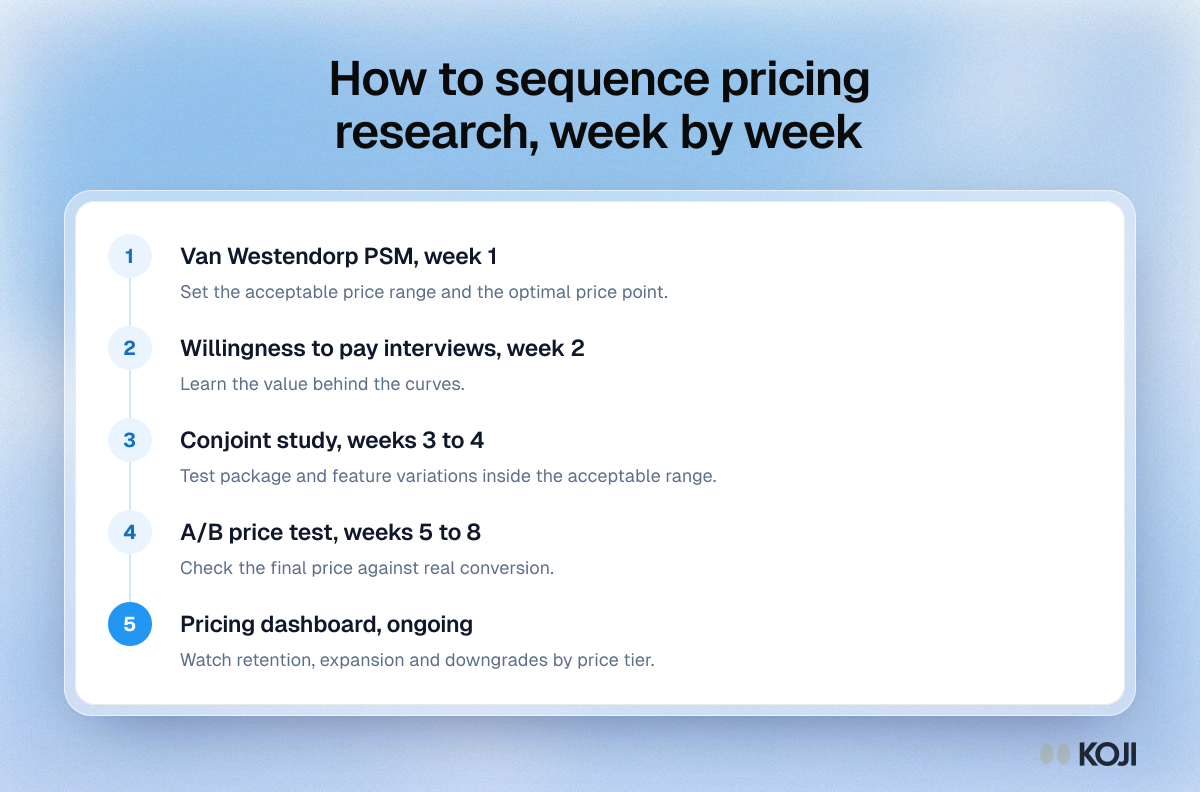
Process for sequencing pricing research: Van Westendorp in week 1, willingness to pay interviews, conjoint, an A/B price test, then a pricing dashboard.

Process

How to sequence pricing research, week by week
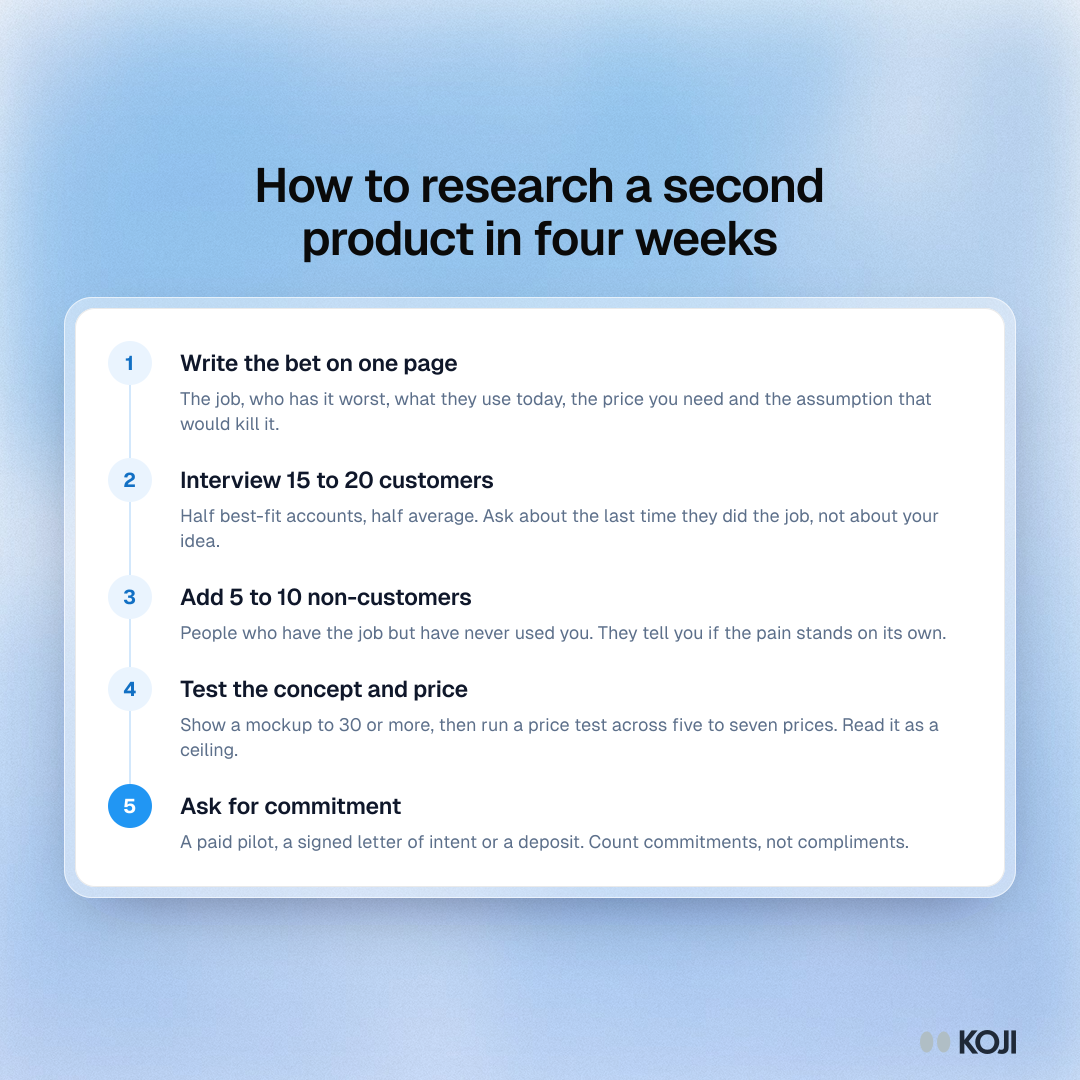
Process for researching a second product in four weeks: write the bet, interview customers and non-customers, test concept and price, ask for commitment.

Process

How to research a second product in four weeks
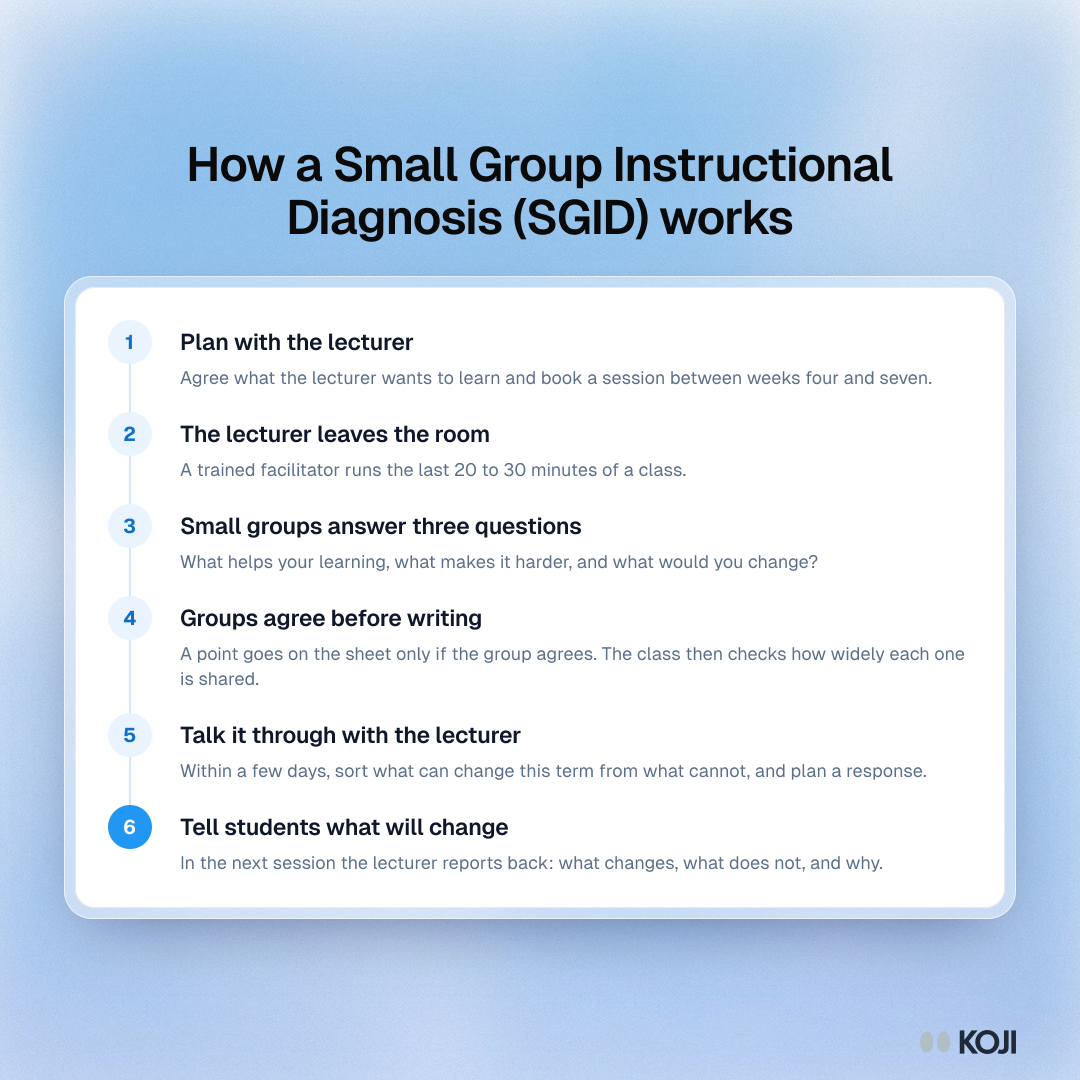
Process diagram of the six steps in a Small Group Instructional Diagnosis, from the planning meeting to telling students what will change.

Process

How a Small Group Instructional Diagnosis (SGID) works
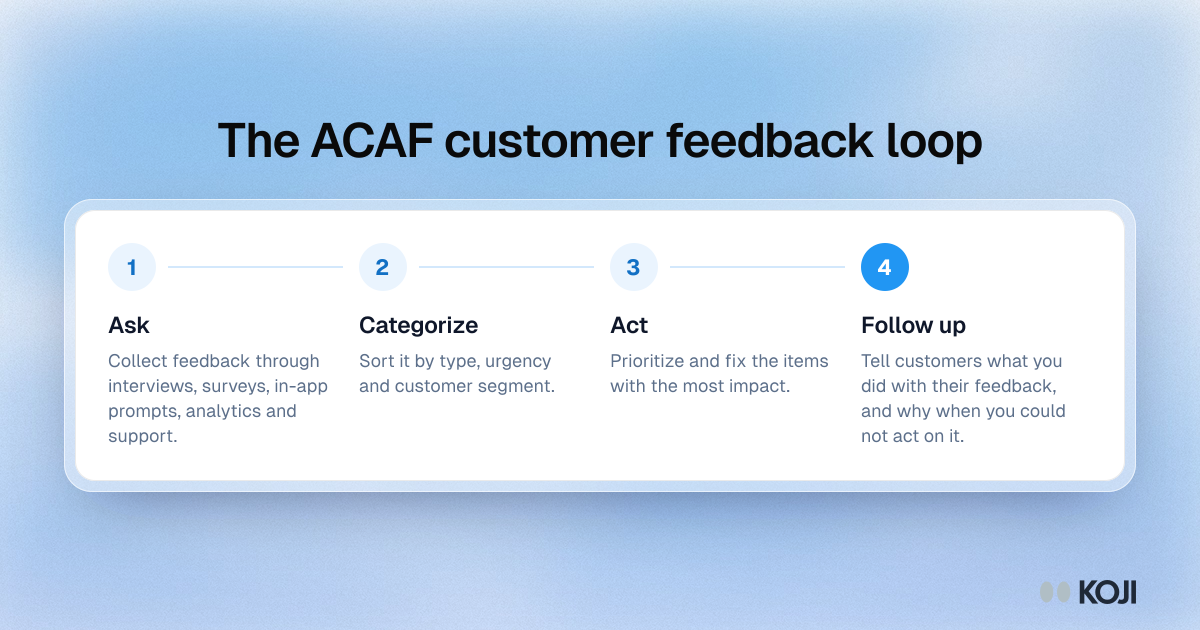
Process diagram of the ACAF customer feedback loop in four steps: ask, categorize, act and follow up with customers on what changed.

Process

The ACAF customer feedback loop
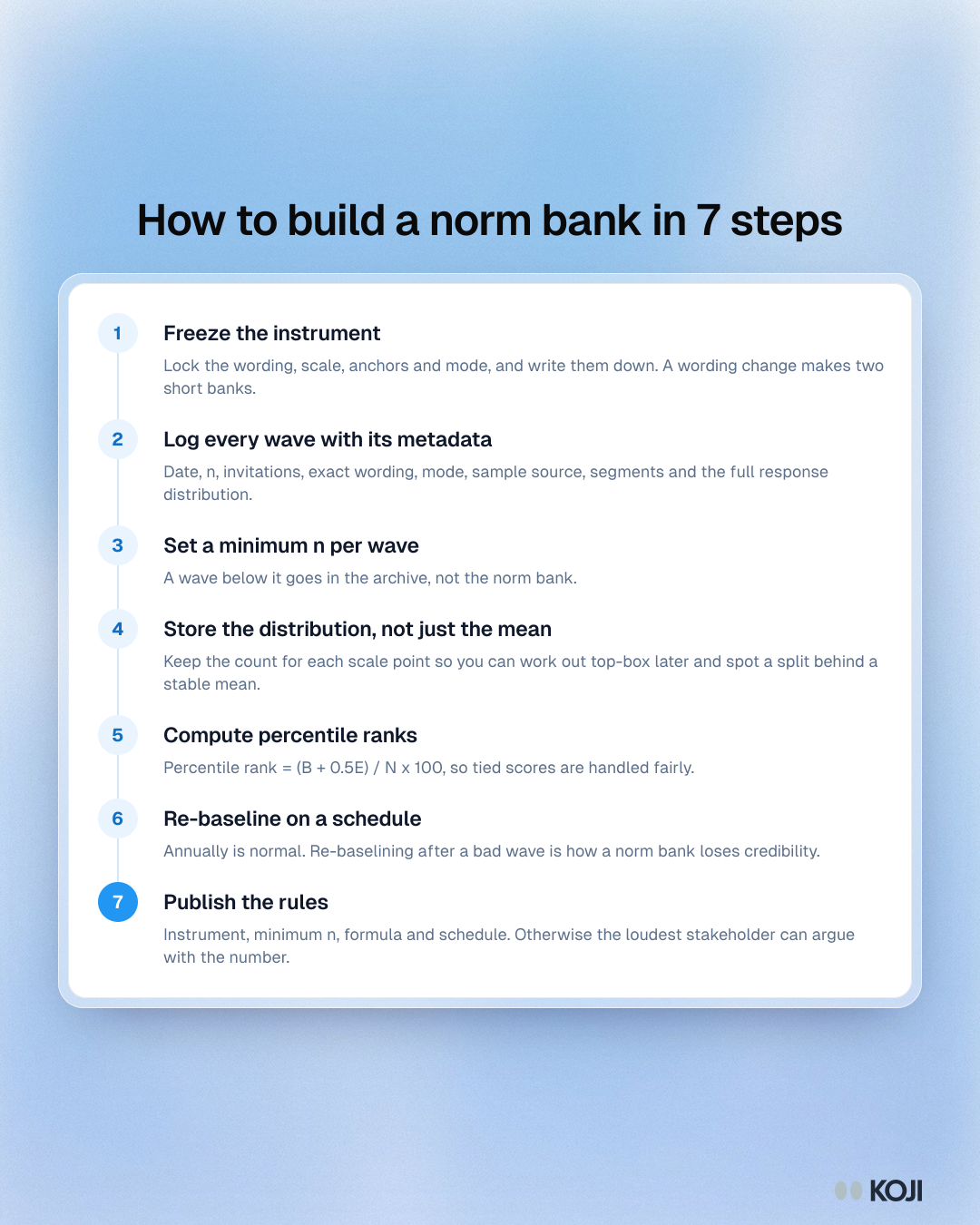
Process diagram of seven steps to build a norm bank of past survey results, from freezing the instrument to computing percentile ranks and publishing the rules.

Process

How to build a norm bank in 7 steps
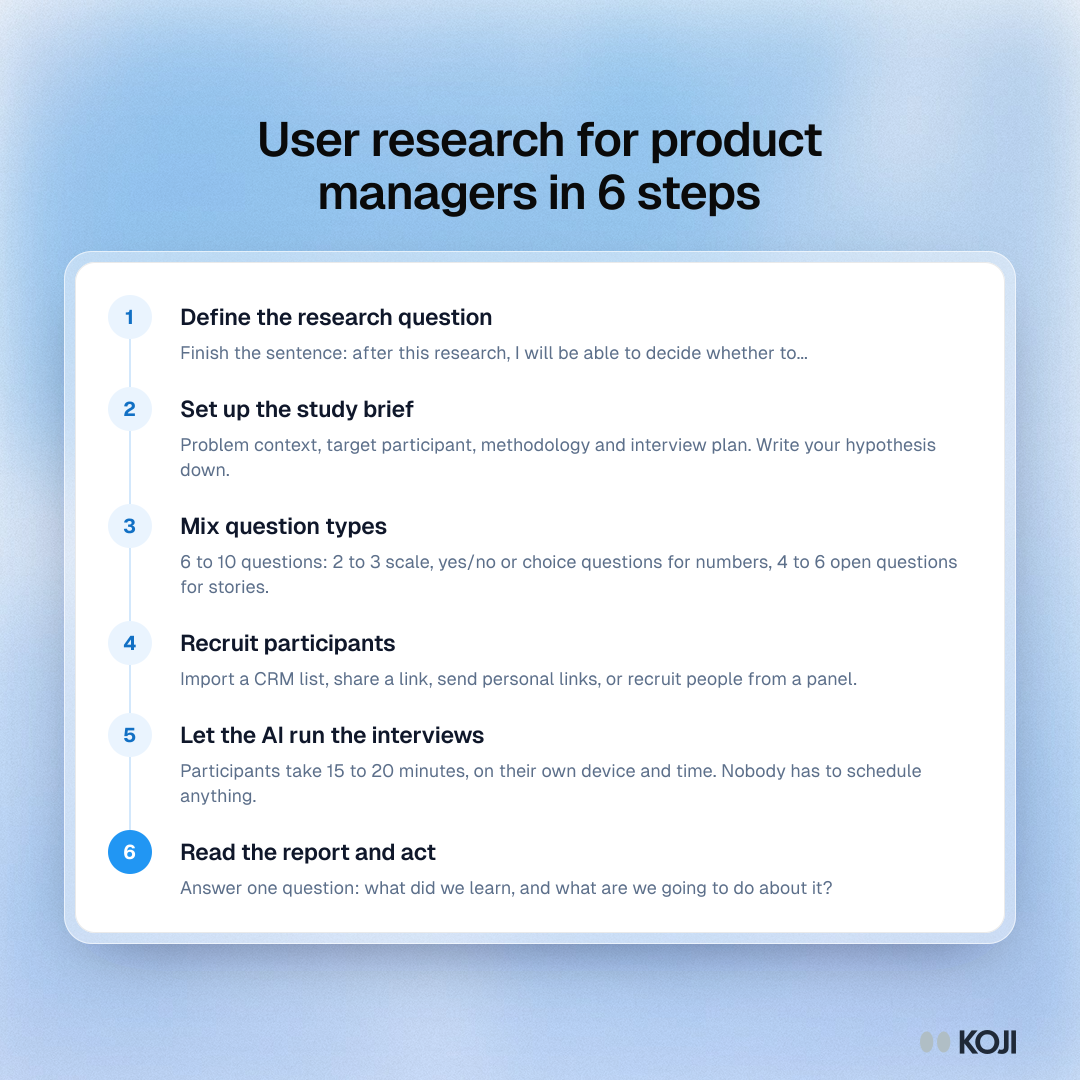
Process diagram of six steps for product managers running user research: define the question, write the brief, mix question types, recruit, interview, act.

Process

User research for product managers in 6 steps
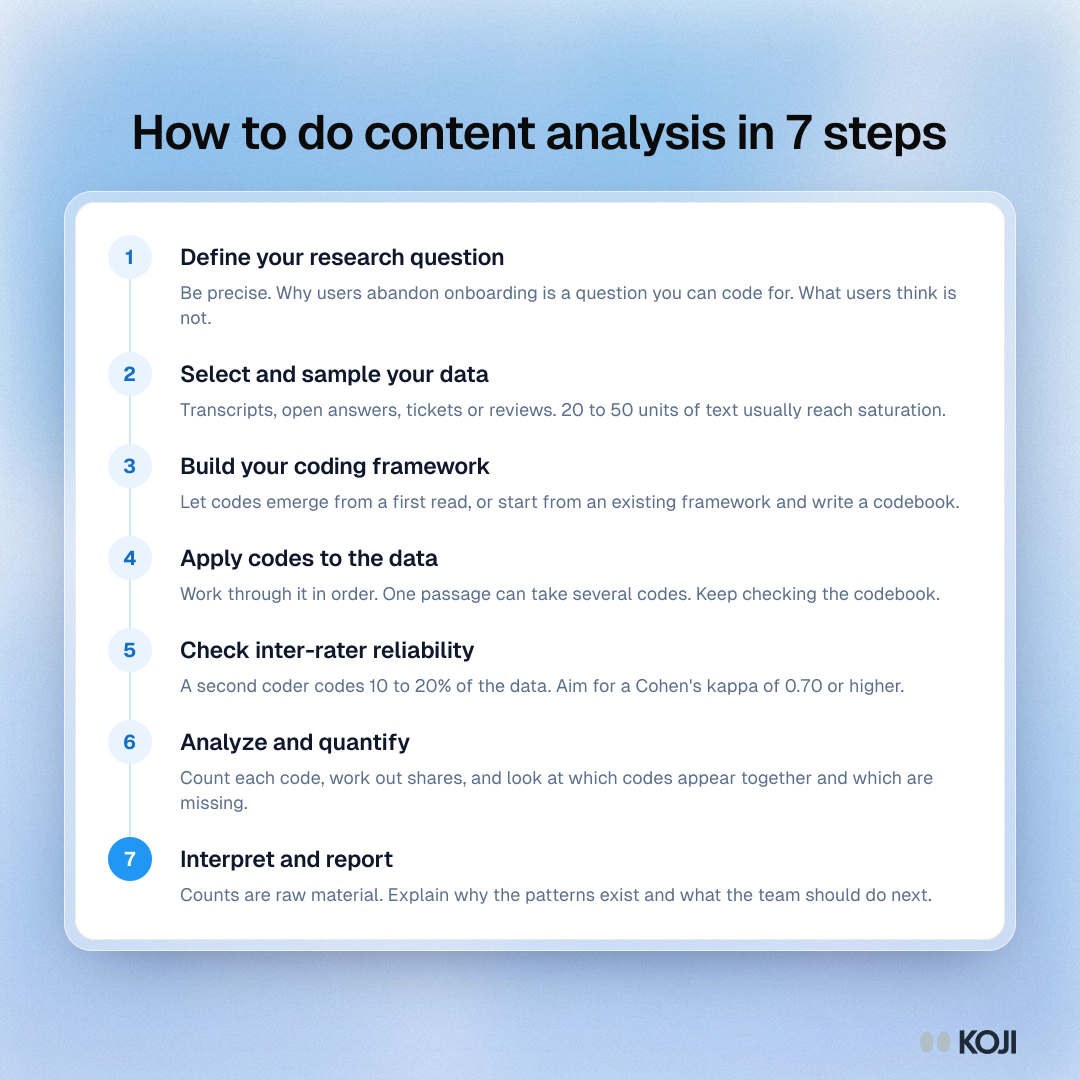
Process diagram of the seven steps of content analysis, from defining the research question and building a codebook to checking reliability and reporting.

Process

How to do content analysis in 7 steps
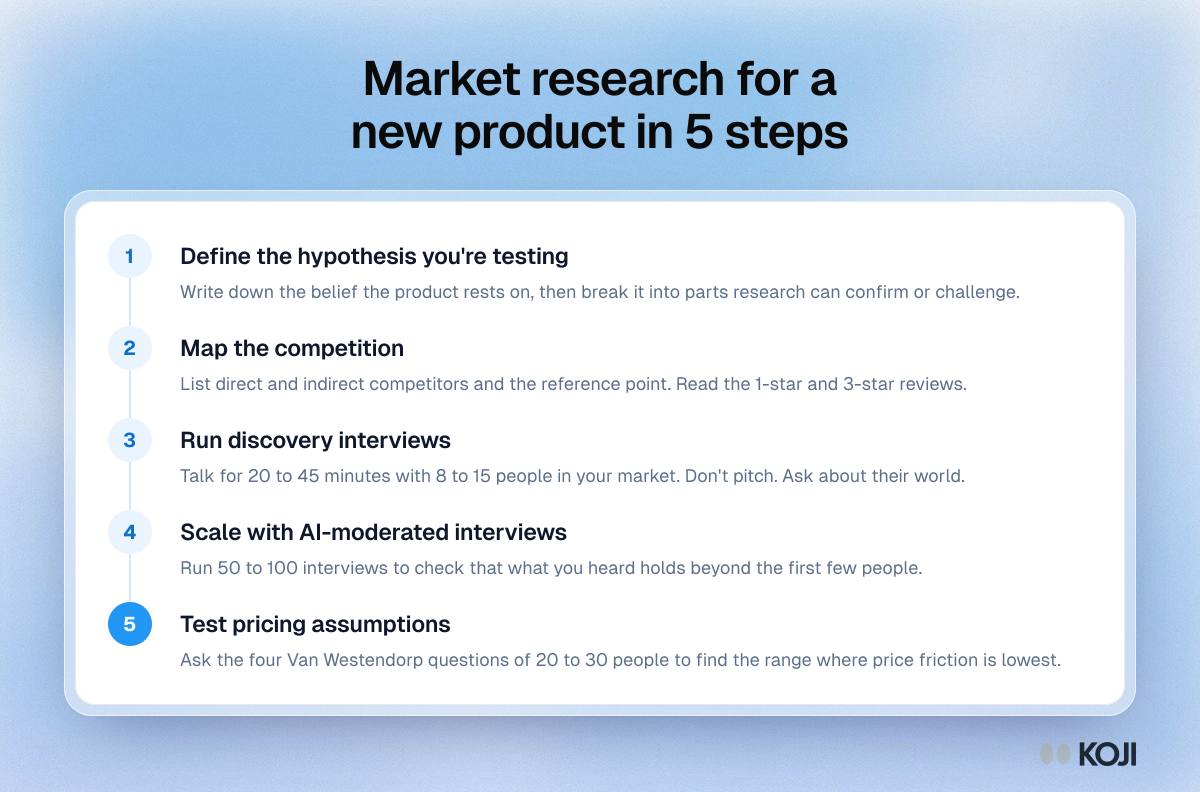
Process diagram of five steps for new product market research: define the hypothesis, map competitors, run discovery interviews, scale up, test pricing.

Process

Market research for a new product in 5 steps
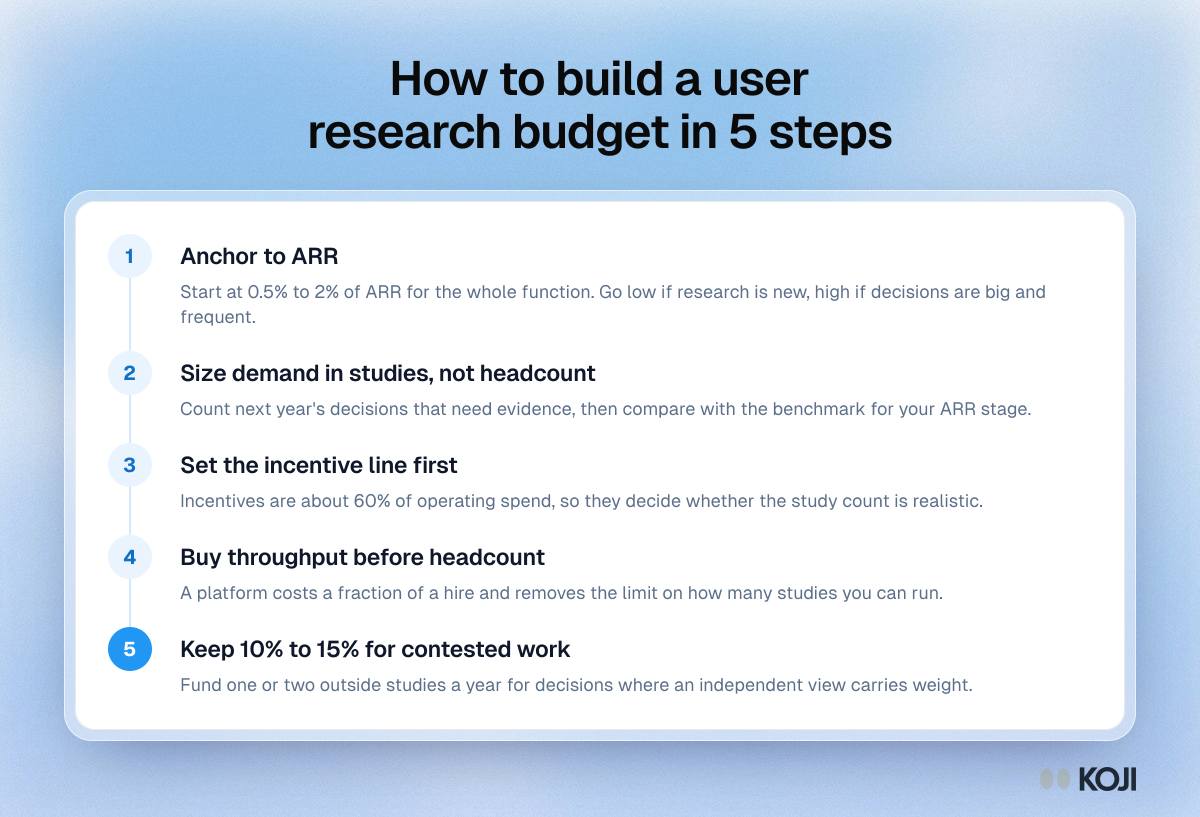
Process diagram of five steps for a user research budget: anchor to ARR, size demand in studies, set incentives first, buy throughput, keep a reserve.

Process

How to build a user research budget in 5 steps
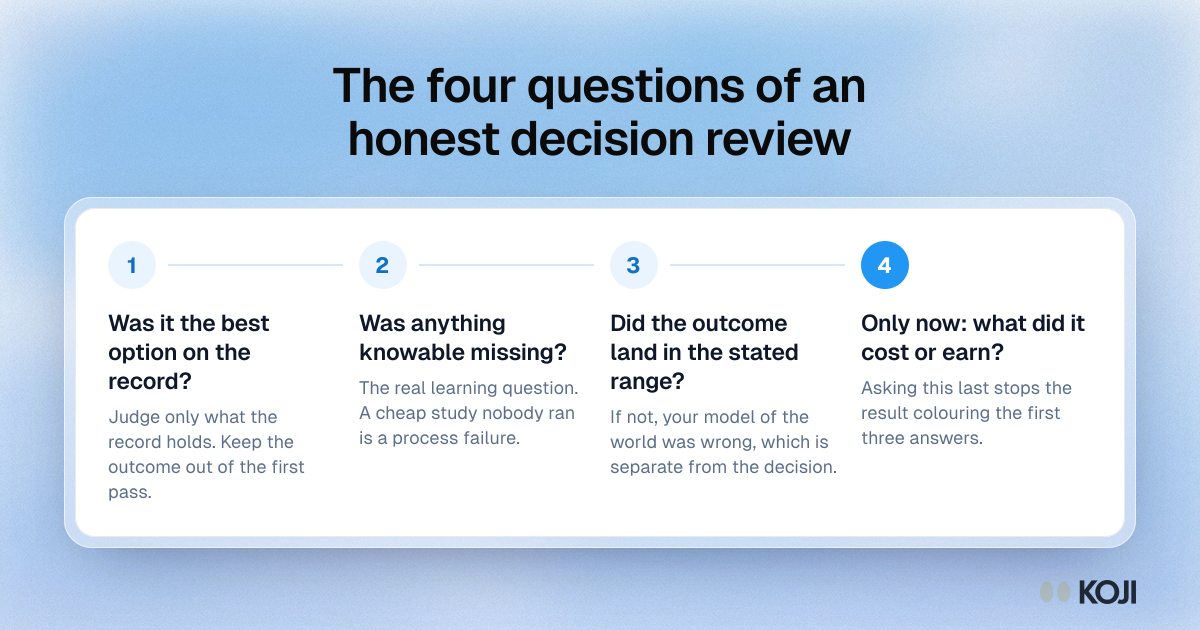
Process of four decision review questions in order: was it the best option on the record, what was missing, did the outcome land in range, then what it cost.

Process

The four questions of an honest decision review
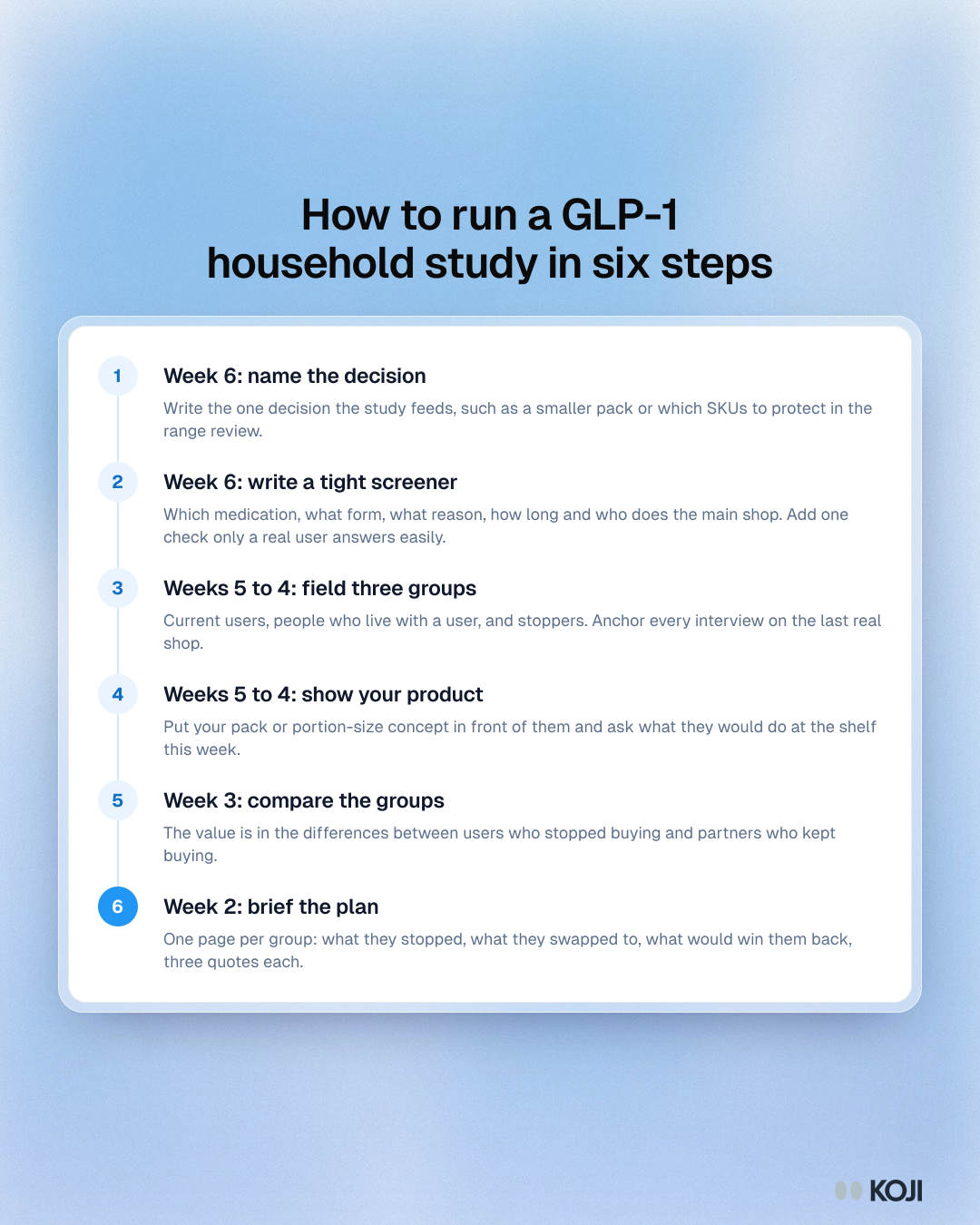
Process for a GLP-1 household study in six steps, from naming the decision and screening three groups to comparing them and briefing the plan.

Process

How to run a GLP-1 household study in six steps
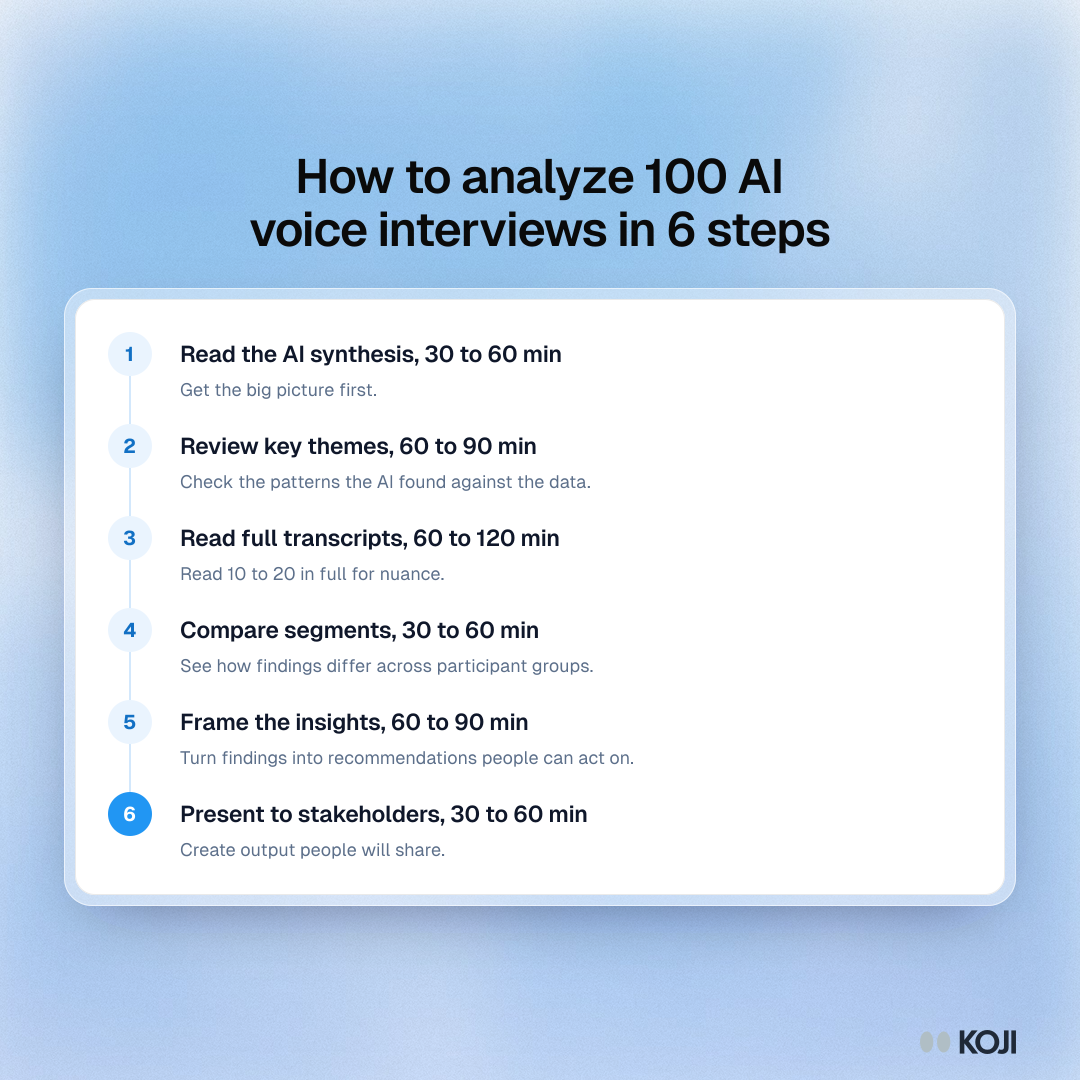
Process diagram of a six-step workflow for analyzing AI voice interviews, from reading the AI synthesis to presenting to stakeholders, with timings.

Process

How to analyze 100 AI voice interviews in 6 steps
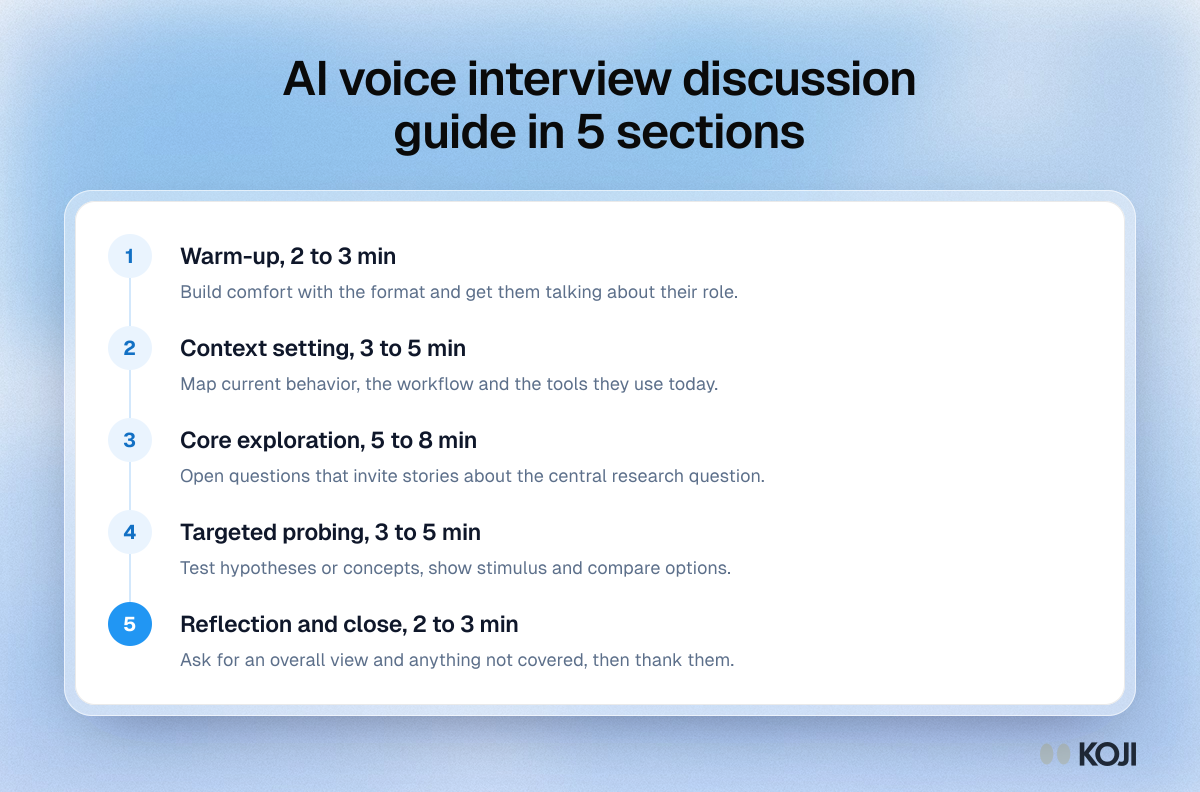
Process diagram of a five-section AI voice interview guide: warm-up, context setting, core exploration, targeted probing, and reflection and close.

Process

AI voice interview discussion guide in 5 sections
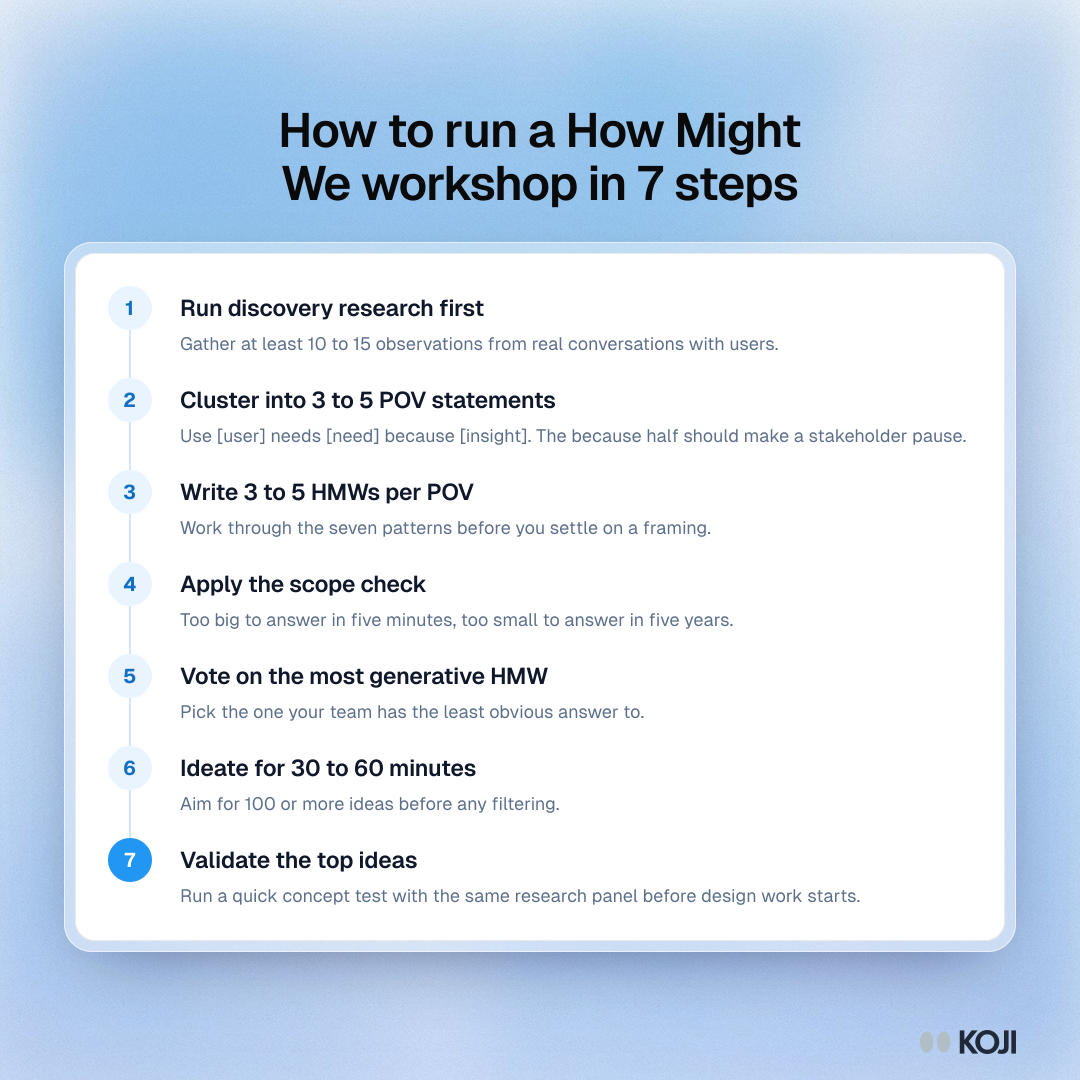
Process diagram of a seven-step How Might We workshop, from discovery research and POV statements to voting, ideation and validating ideas.

Process

How to run a How Might We workshop in 7 steps
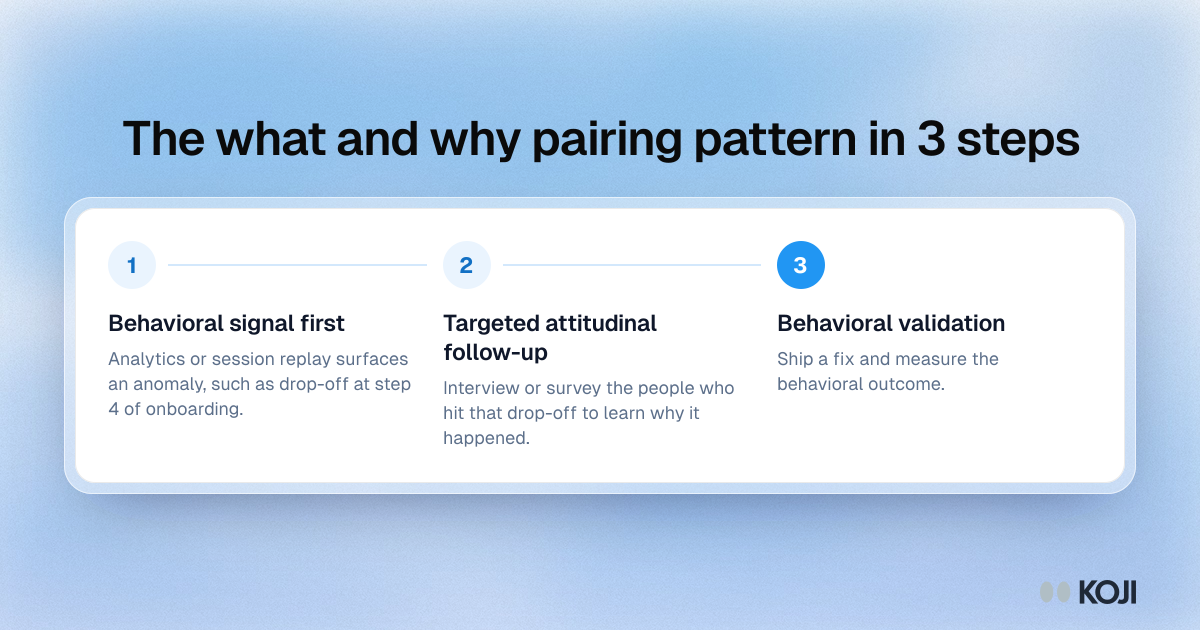
Process diagram of the what and why pattern: spot a behavioral signal, follow up with interviews or a survey, then validate the fix with behavior.

Process

The what and why pairing pattern in 3 steps
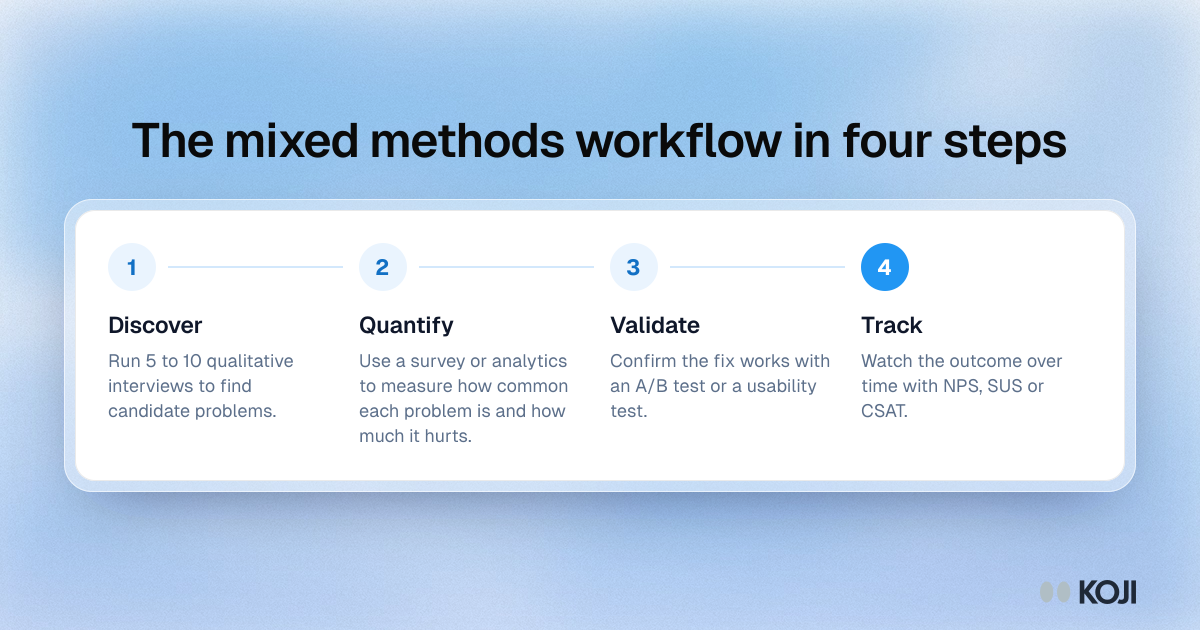
Process diagram of a four-step mixed methods workflow: discover with interviews, quantify with a survey, validate with a test, track with NPS or SUS.

Process

The mixed methods workflow in four steps
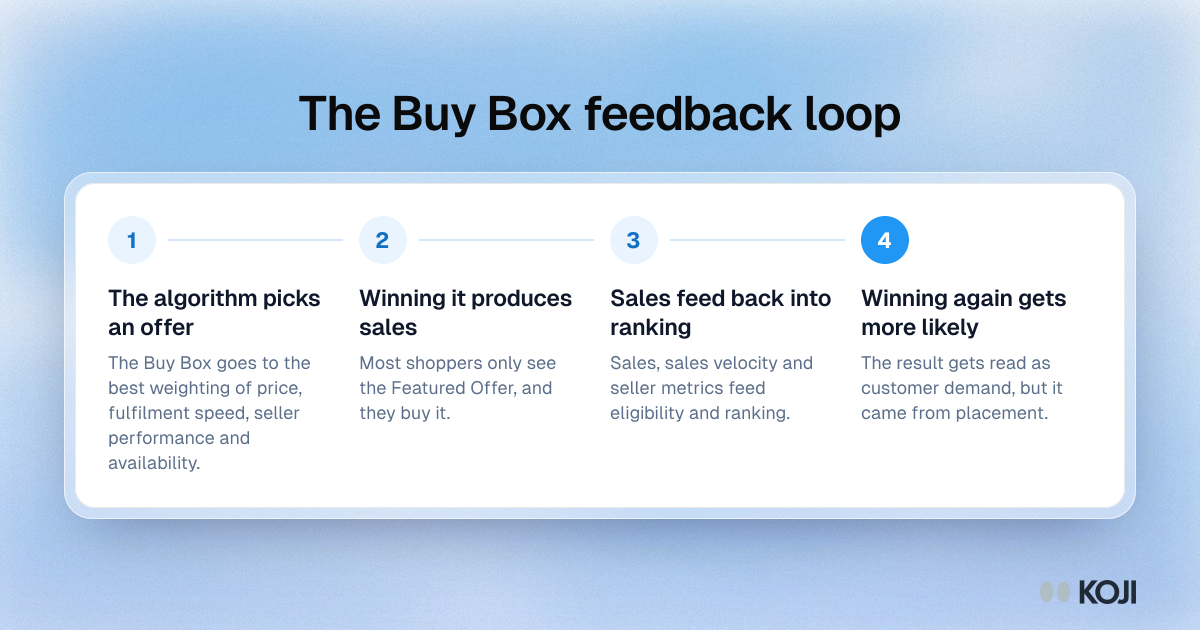
Process showing the Amazon Buy Box feedback loop: the algorithm picks an offer, it sells, sales feed ranking, and it wins again.

Process

The Buy Box feedback loop

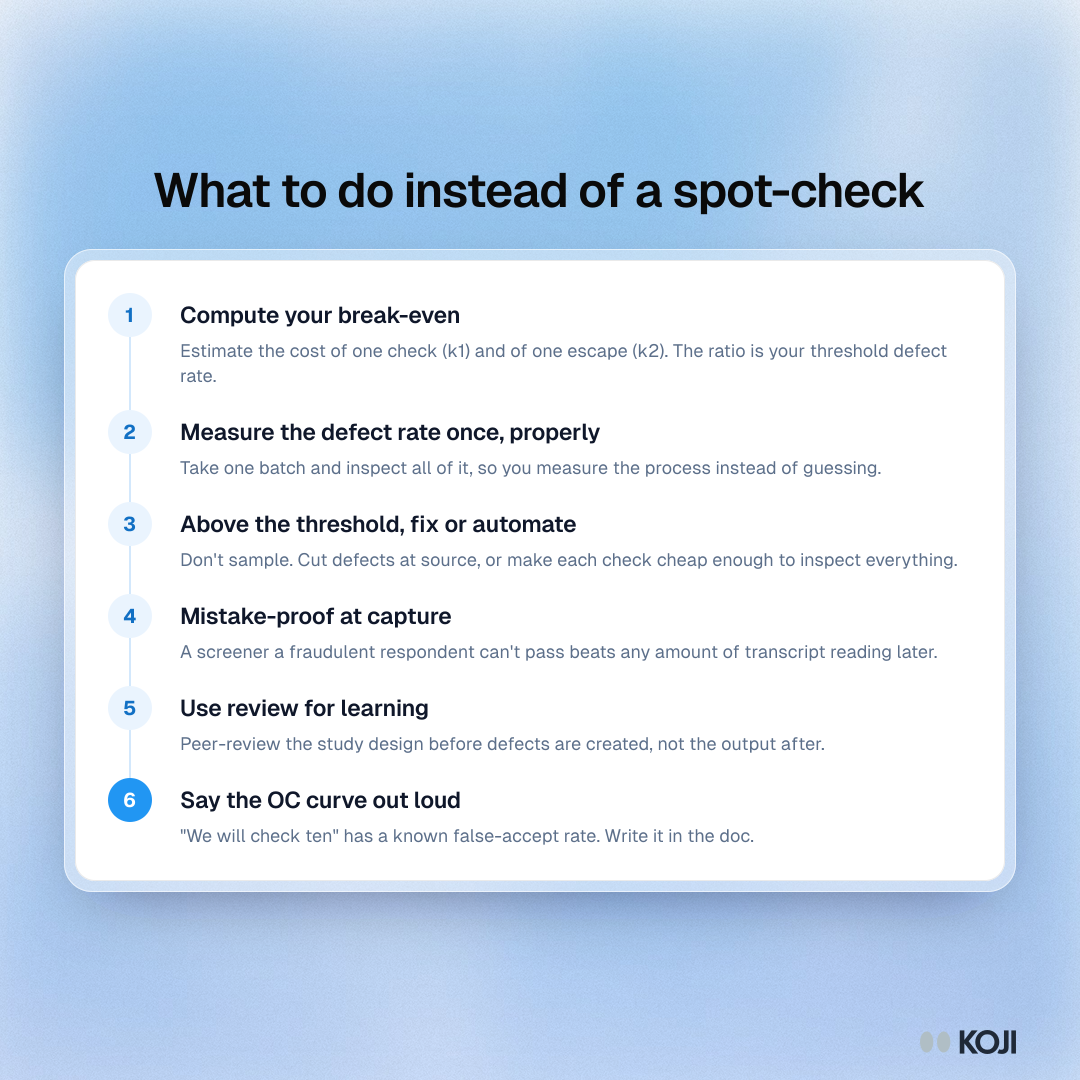
Process with six steps to replace research spot-checks, from working out your break-even defect rate to stating the OC curve.

Process

What to do instead of a spot-check
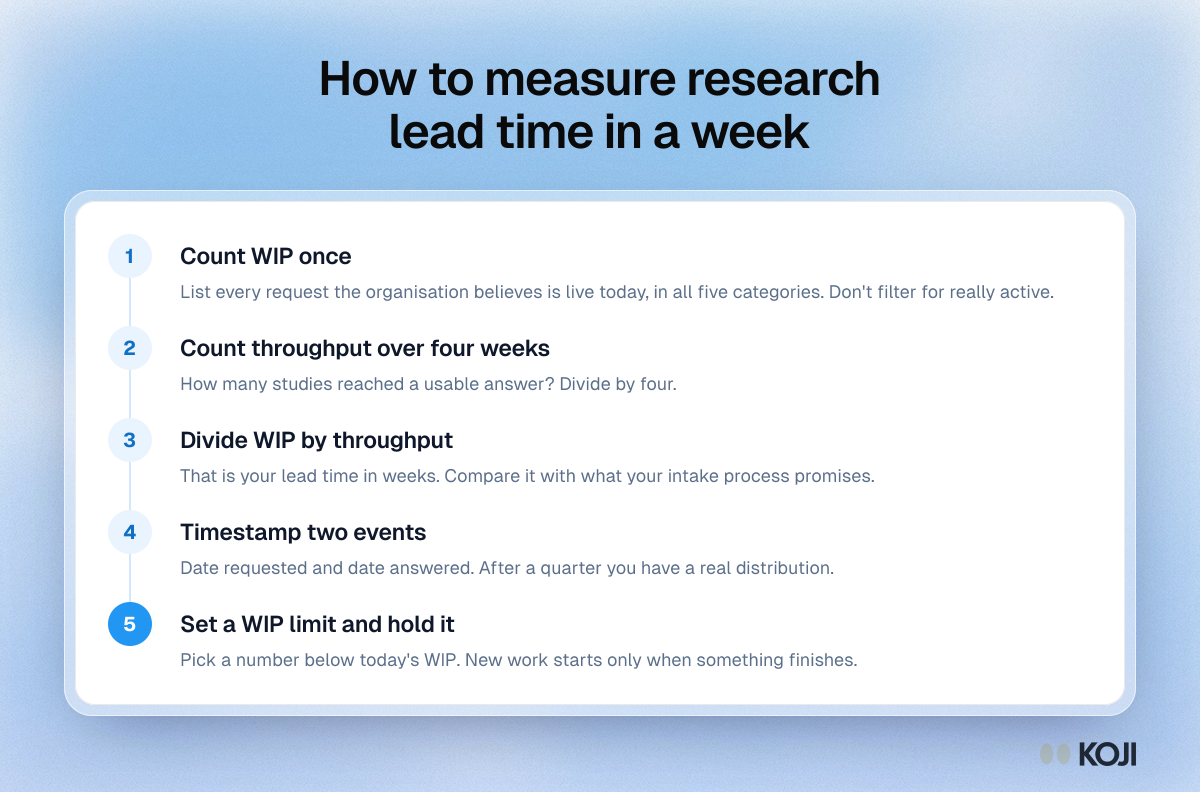
Process showing five steps to measure research lead time: count WIP, count throughput, divide, timestamp requests and set a WIP limit.

Process

How to measure research lead time in a week
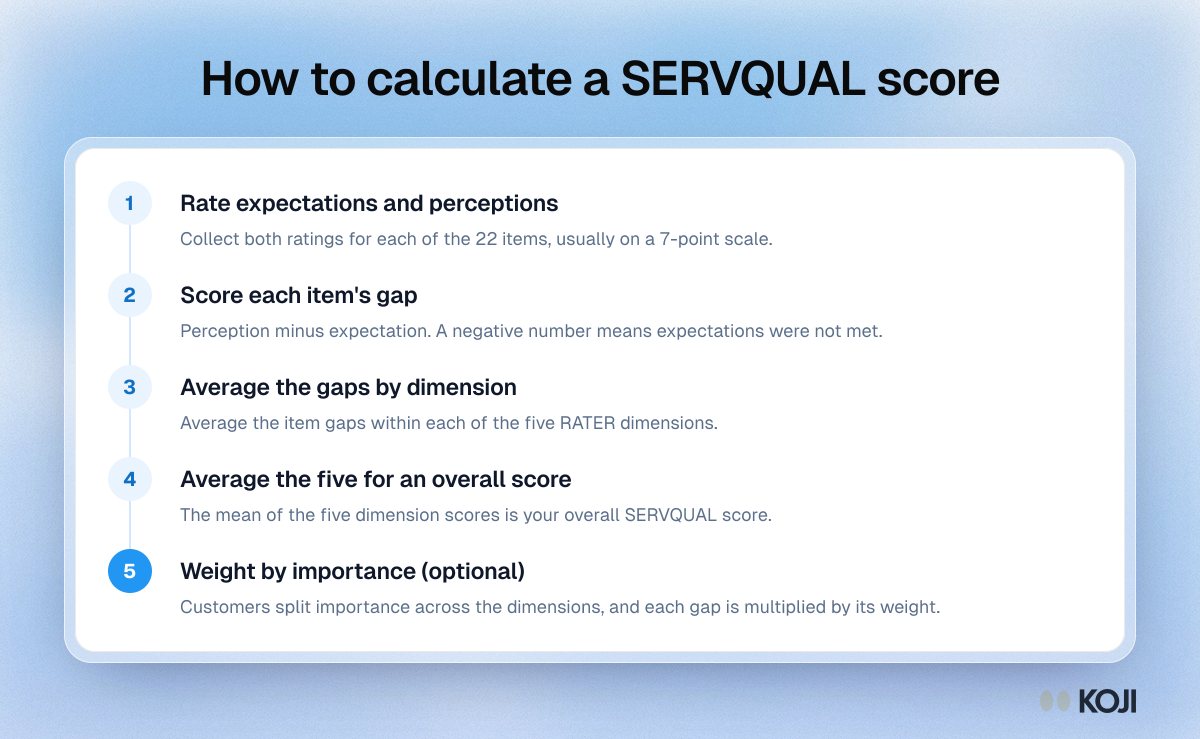
Process showing how to calculate a SERVQUAL score in five steps, from item gap scores to dimension averages and optional weights.

Process

How to calculate a SERVQUAL score
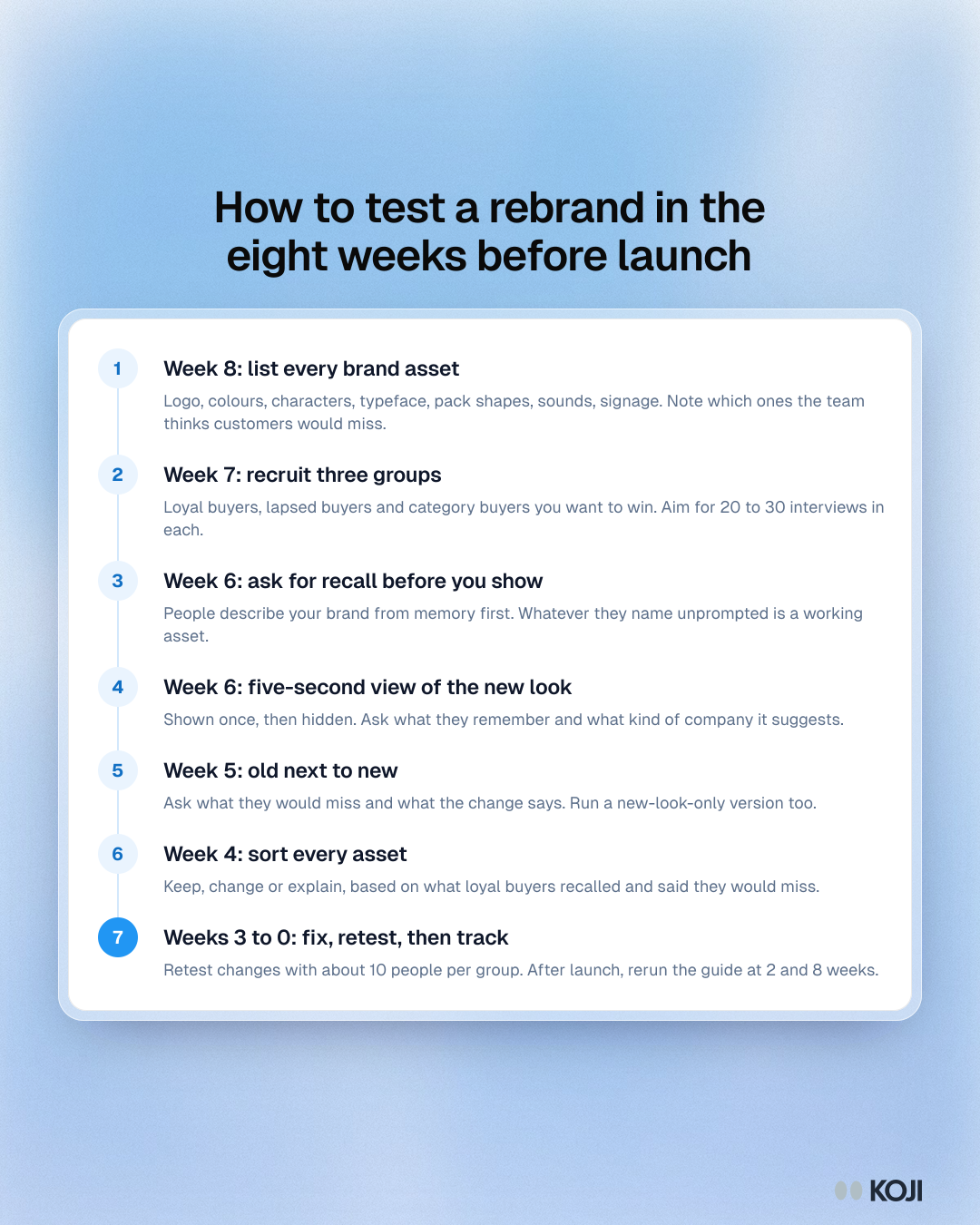
Process for testing a rebrand in the eight weeks before launch, from listing every brand asset to retesting fixes and tracking after the reveal.

Process

How to test a rebrand in the eight weeks before launch
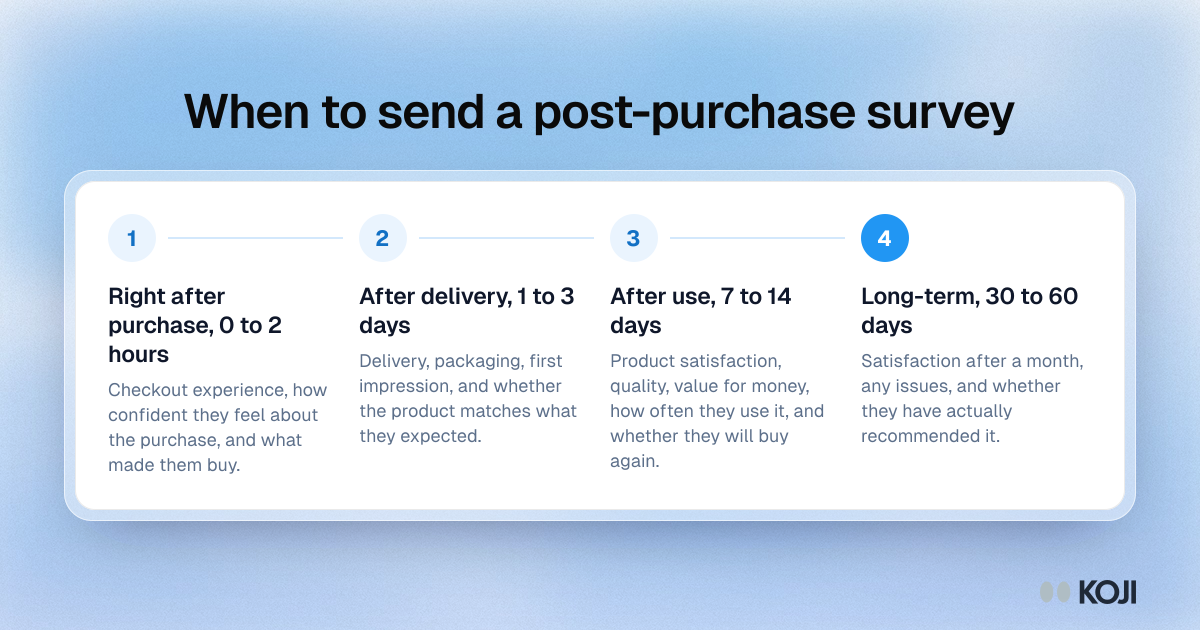
Process of four post-purchase survey moments, from 0 to 2 hours after purchase to 30 to 60 days later, with what to ask at each one.

Process

When to send a post-purchase survey
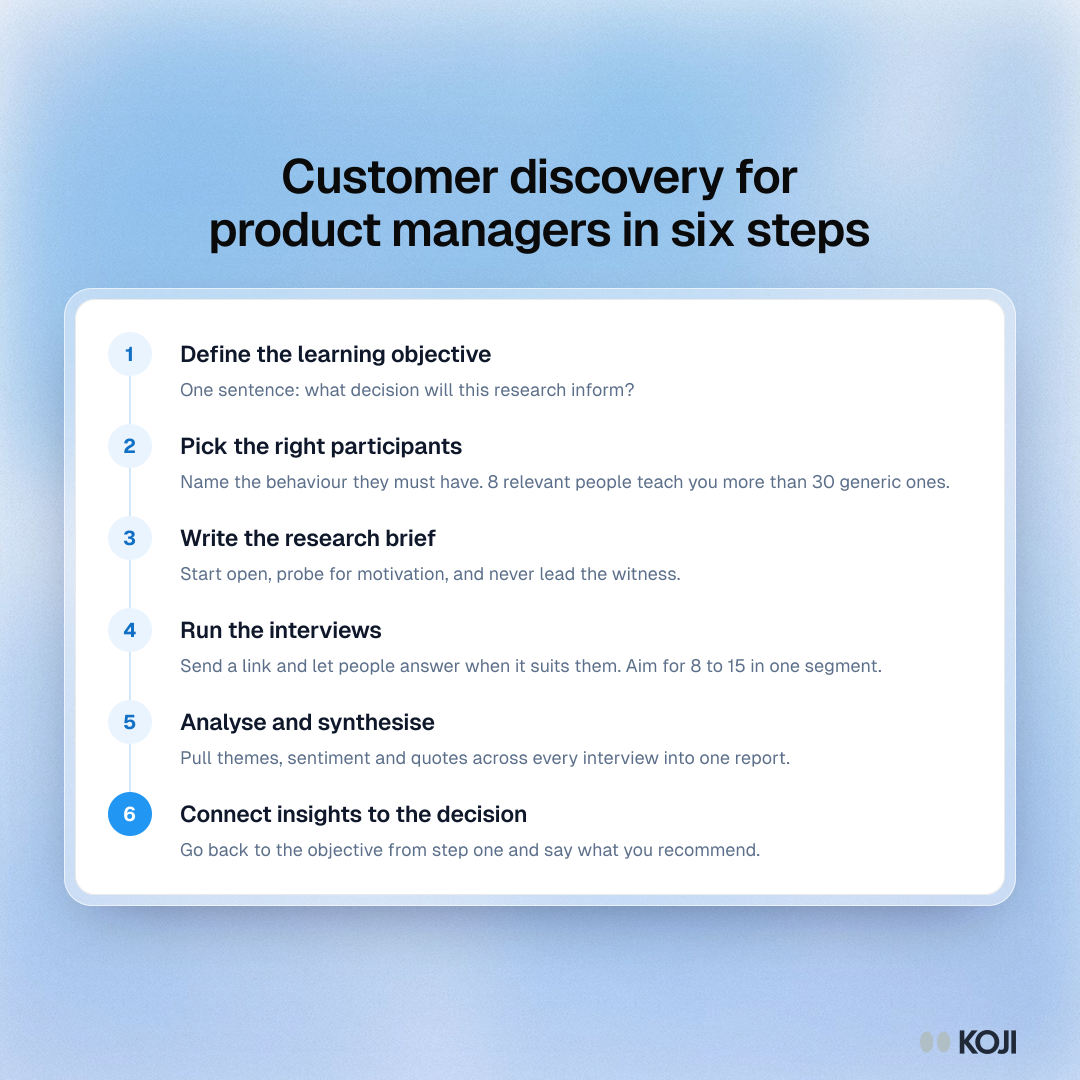
Process of six customer discovery steps for product managers, from defining the decision to recommending what to do, with interview counts.

Process

Customer discovery for product managers in six steps
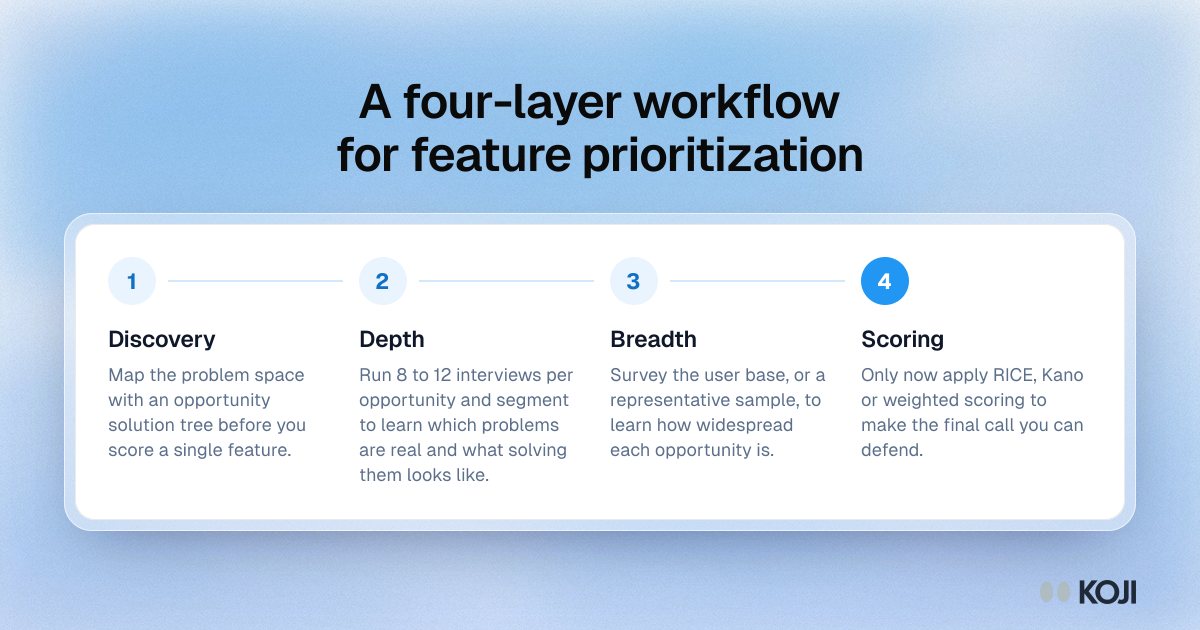
Process of four layers for prioritizing features: discovery with an opportunity solution tree, interviews for depth, surveys for breadth, then scoring.

Process

A four-layer workflow for feature prioritization