Process
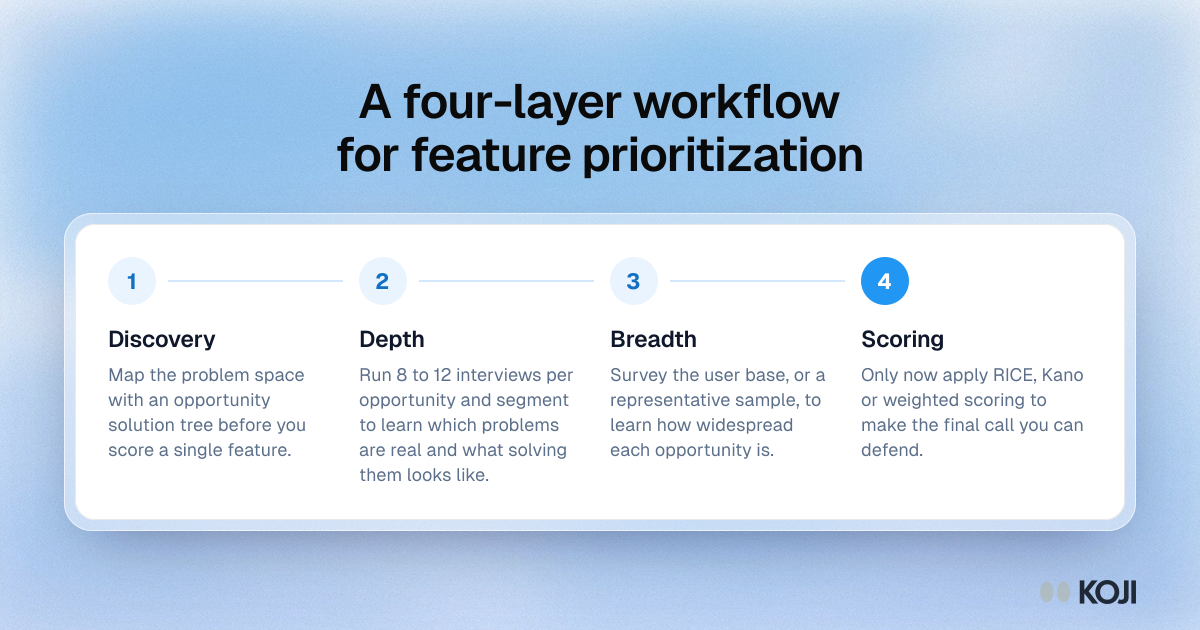
A four-layer workflow for feature prioritization
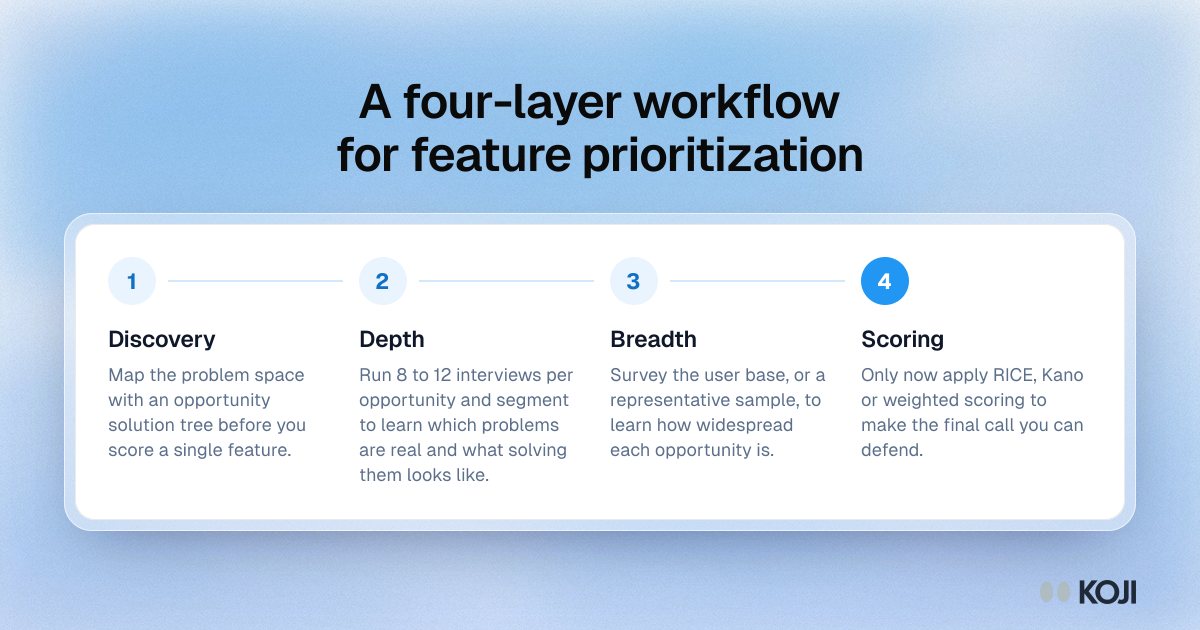
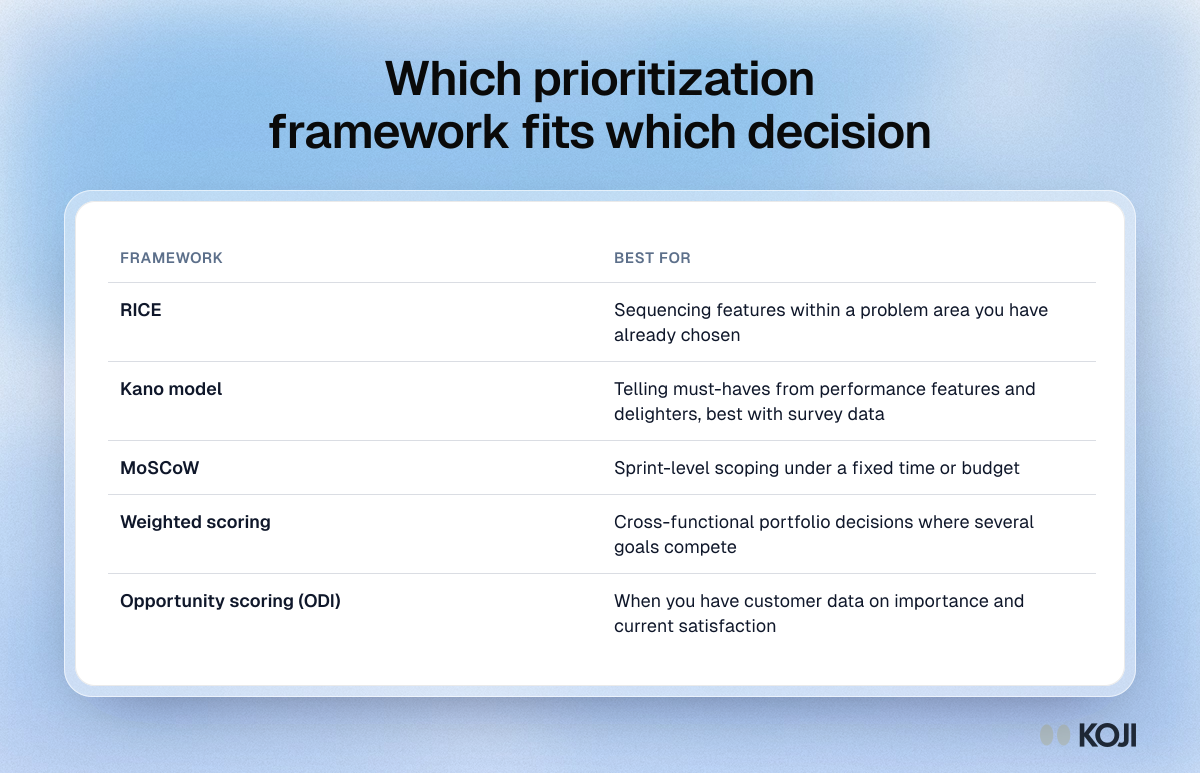
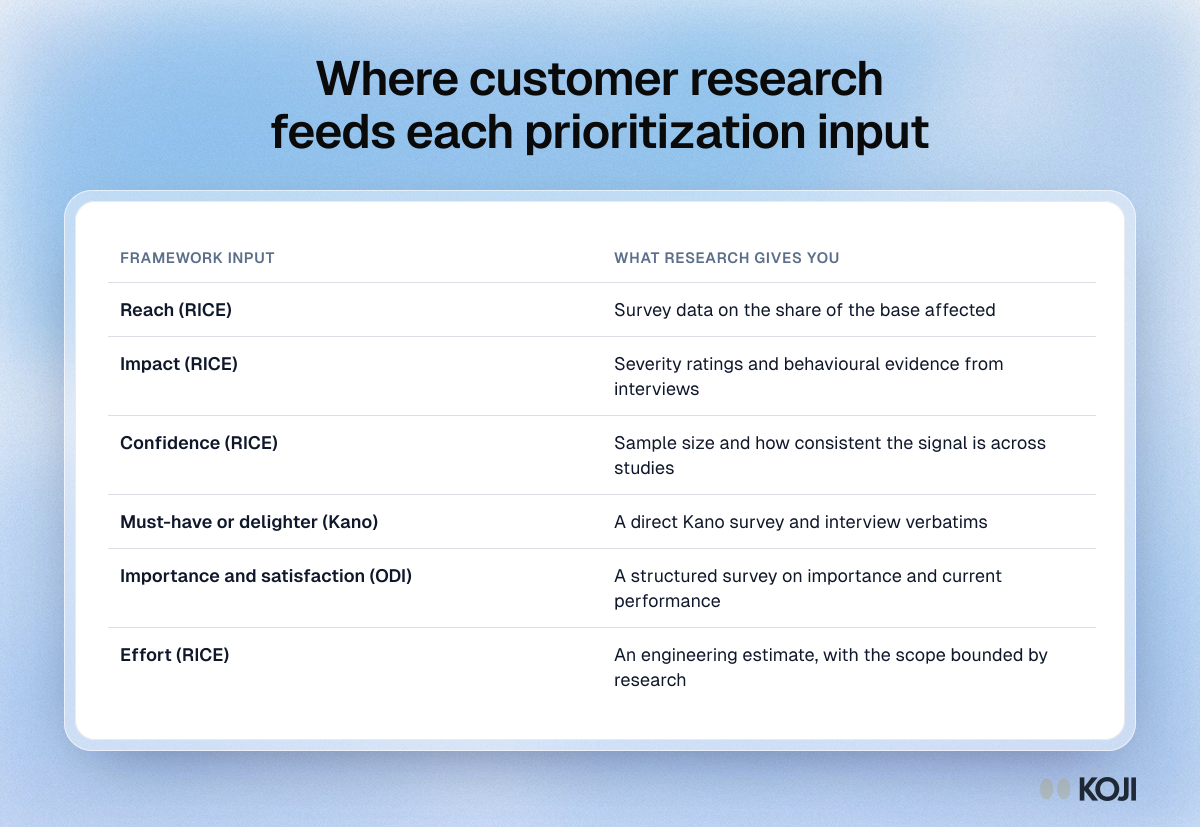
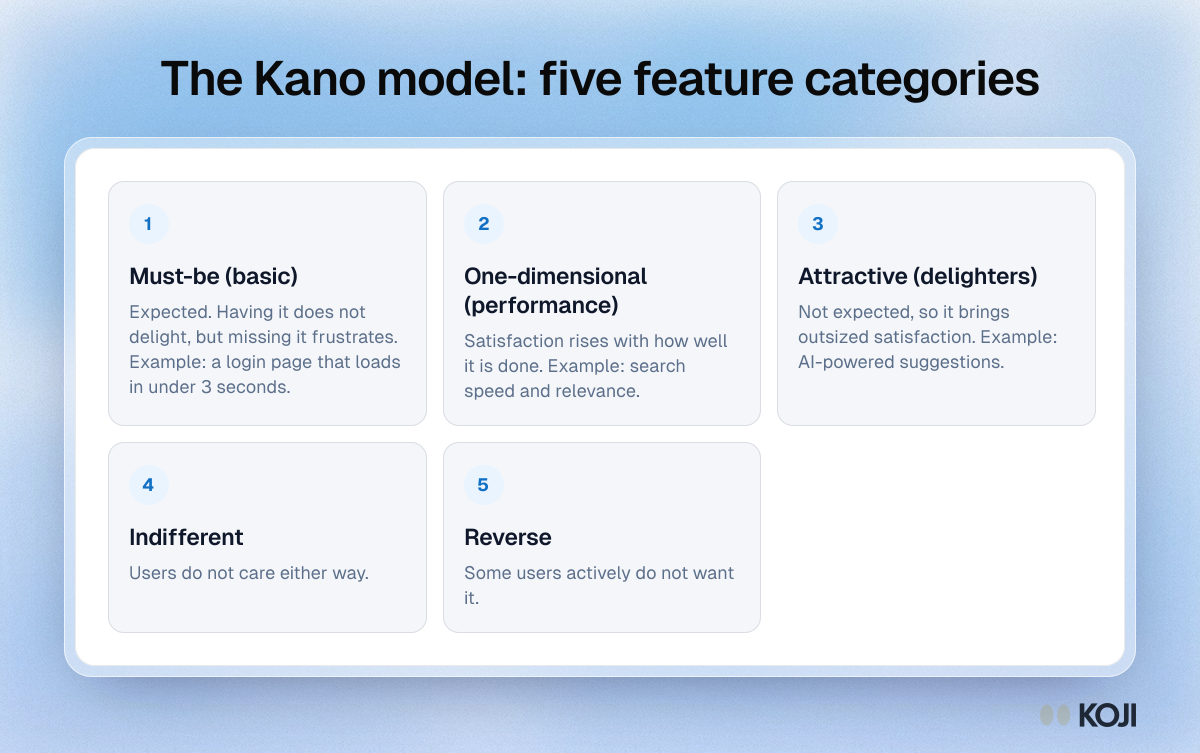
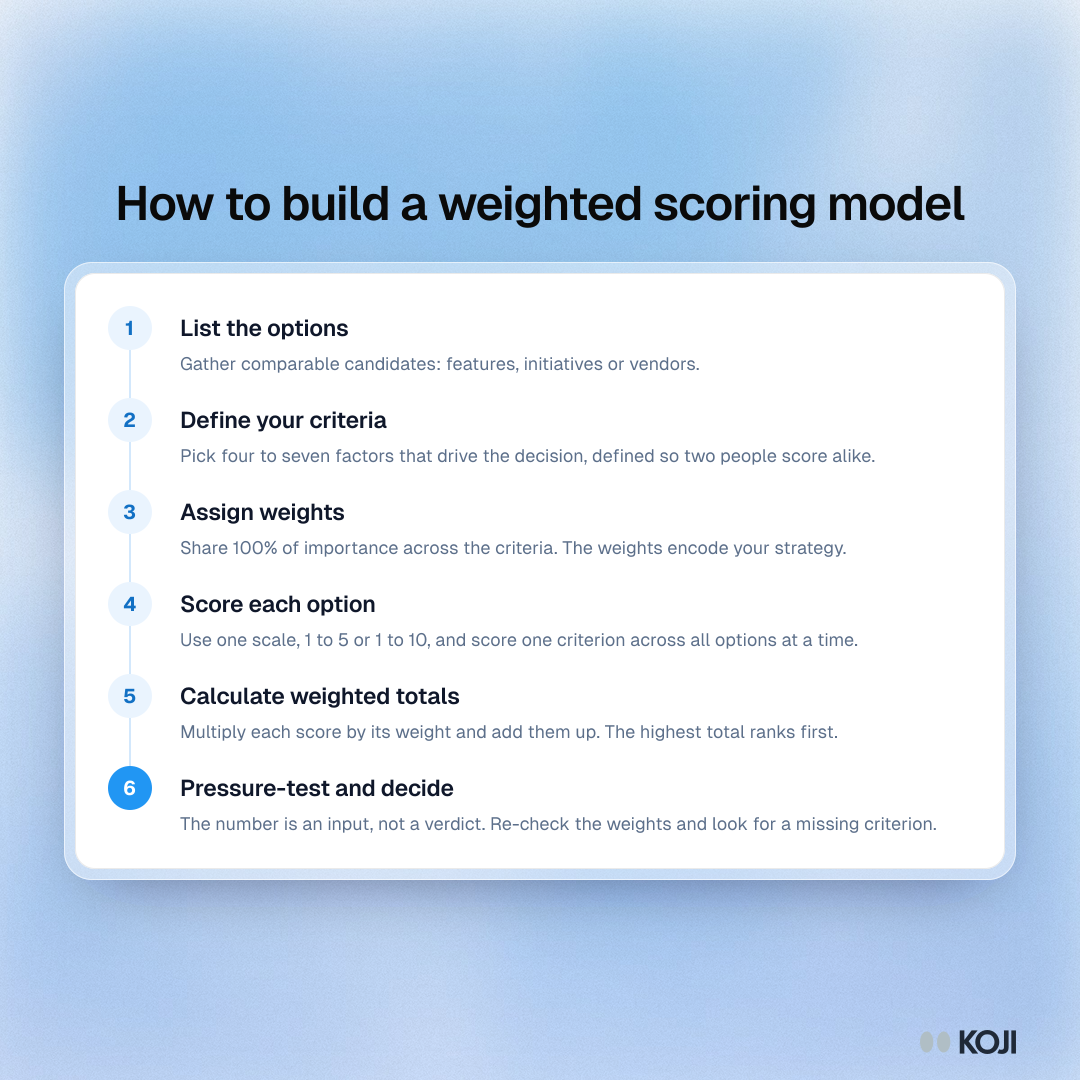
A four-step way to prioritize product features on real customer evidence. Map opportunities with an opportunity solution tree, validate them in 8 to 12 interviews per opportunity and segment, size them with a survey of the base, and only then score them with RICE, Kano or weighted scoring. Koji can run the interview and survey layers in one place, so the scores rest on fresh data.
Where this appears
What's in this process
- Discovery: Map the problem space with an opportunity solution tree before you score a single feature.
- Depth: Run 8 to 12 interviews per opportunity and segment to learn which problems are real and what solving them looks like.
- Breadth: Survey the user base, or a representative sample, to learn how widespread each opportunity is.
- Scoring: Only now apply RICE, Kano or weighted scoring to make the final call you can defend.
Use this image
Free to use in your docs, decks and posts under CC BY 4.0, as long as you credit Koji with a link to this page. To embed it, paste this into your page:
html
<a href="https://www.koji.so/visuals/feature-prioritization-four-layer-research-workflow"><img src="https://www.koji.so/visuals/feature-prioritization-four-layer-research-workflow/feature-prioritization-four-layer-research-workflow.png" alt="Process of four layers for prioritizing features: discovery with an opportunity solution tree, interviews for depth, surveys for breadth, then scoring." width="1200" height="630" /></a>
<p>Source: <a href="https://www.koji.so/visuals/feature-prioritization-four-layer-research-workflow">A four-layer workflow for feature prioritization</a>, Koji</p>