Framework
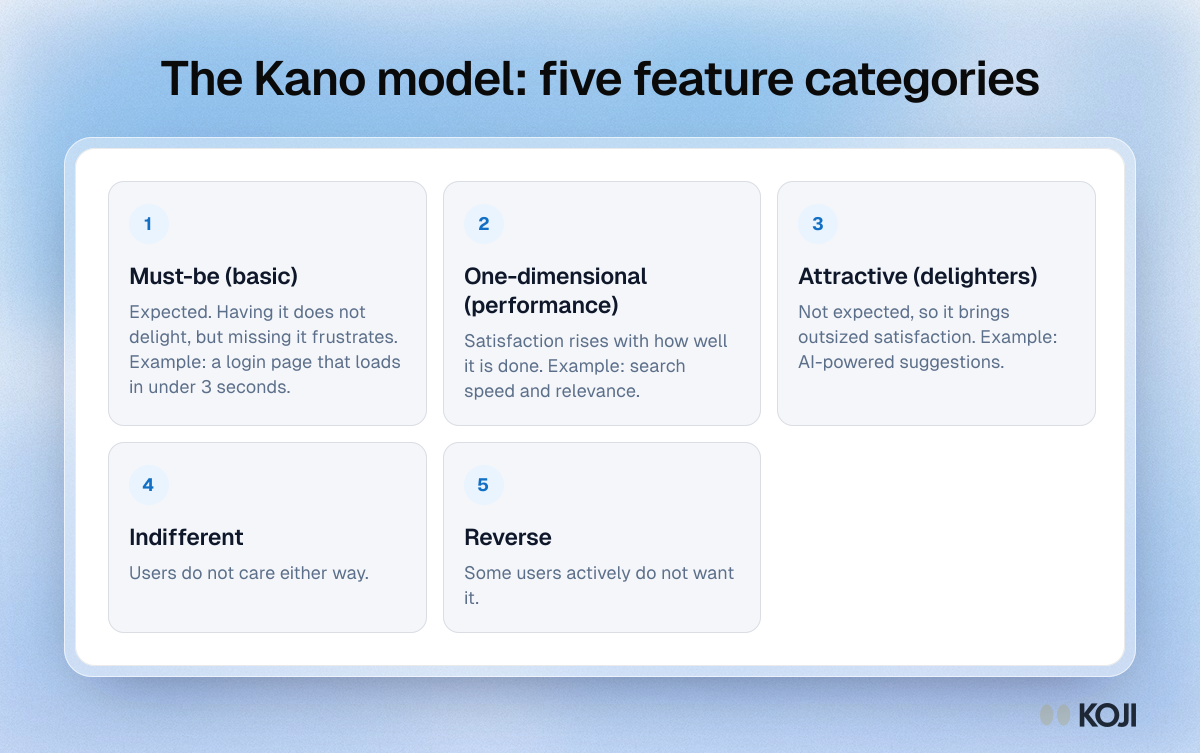
The Kano model: five feature categories
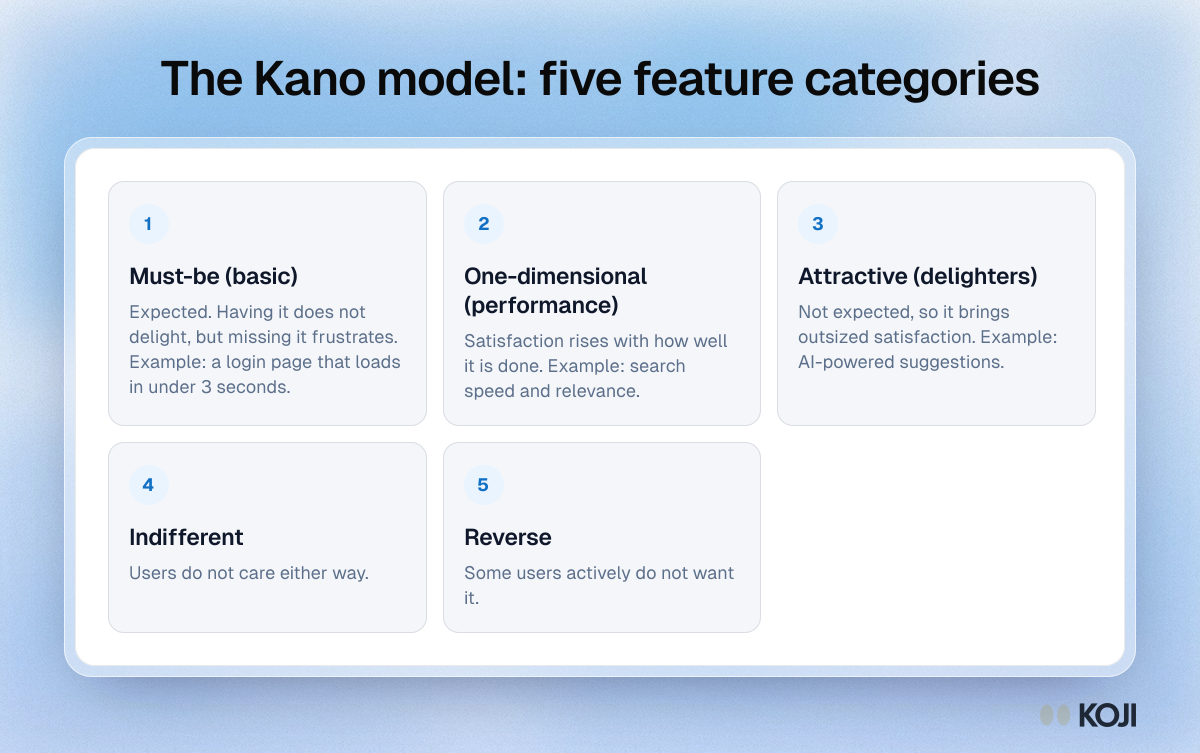
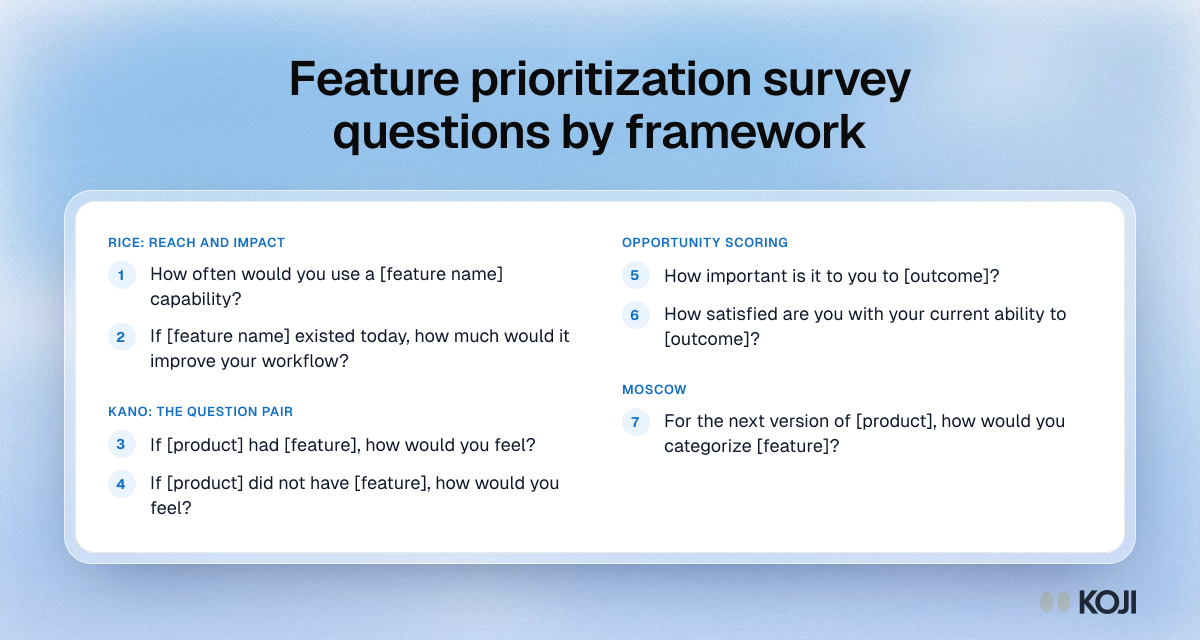
The five categories of the Kano model, which sorts features by how their presence or absence changes satisfaction. Must-be features are expected, one-dimensional features please more the better they work, attractive features delight because nobody expects them, and indifferent and reverse features earn no credit or put people off. Use it to read a Kano survey, which pairs a functional and a dysfunctional question for each feature.
Where this appears
What's in this framework
- Must-be (basic): Expected. Having it does not delight, but missing it frustrates. Example: a login page that loads in under 3 seconds.
- One-dimensional (performance): Satisfaction rises with how well it is done. Example: search speed and relevance.
- Attractive (delighters): Not expected, so it brings outsized satisfaction. Example: AI-powered suggestions.
- Indifferent: Users do not care either way.
- Reverse: Some users actively do not want it.
Use this image
Free to use in your docs, decks and posts under CC BY 4.0, as long as you credit Koji with a link to this page. To embed it, paste this into your page:
html
<a href="https://www.koji.so/visuals/kano-model-five-feature-categories"><img src="https://www.koji.so/visuals/kano-model-five-feature-categories/kano-model-five-feature-categories.png" alt="Framework of the five Kano model categories: must-be, one-dimensional, attractive, indifferent and reverse, with an example for the first three." width="1200" height="753" /></a>
<p>Source: <a href="https://www.koji.so/visuals/kano-model-five-feature-categories">The Kano model: five feature categories</a>, Koji</p>