Process
How to measure research lead time in a week
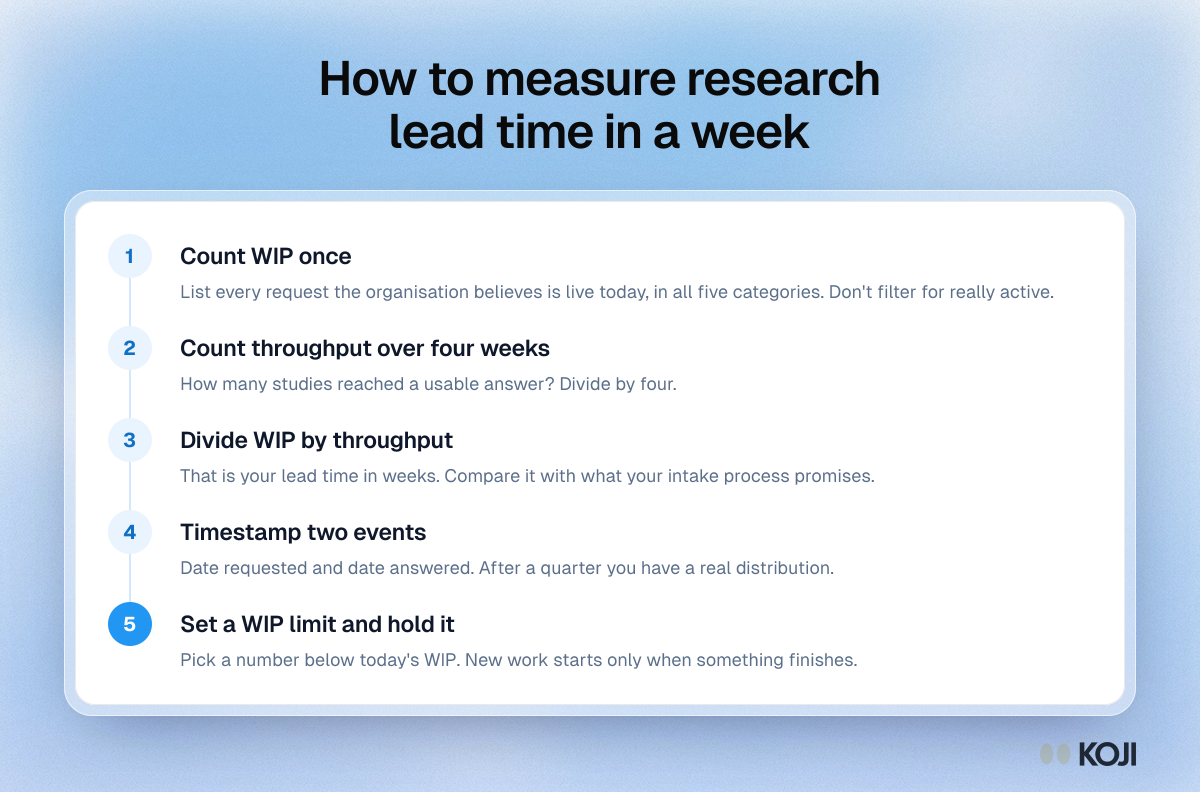
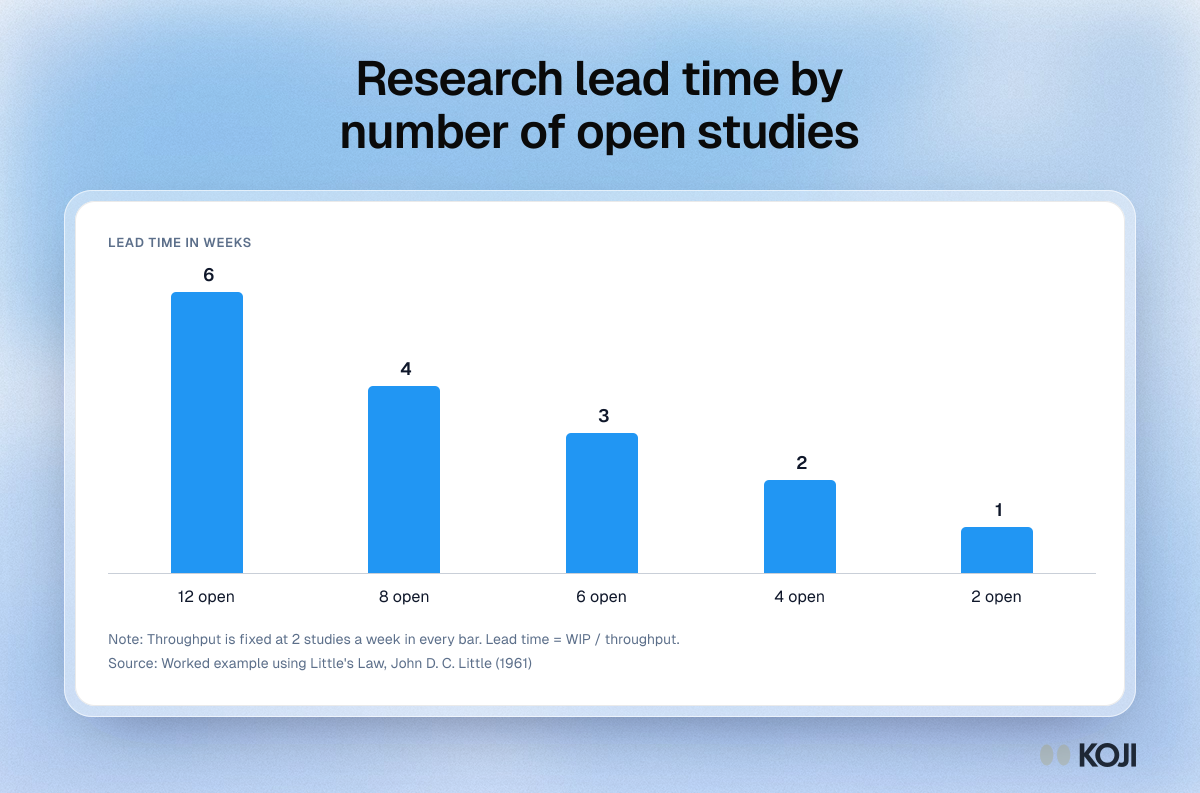
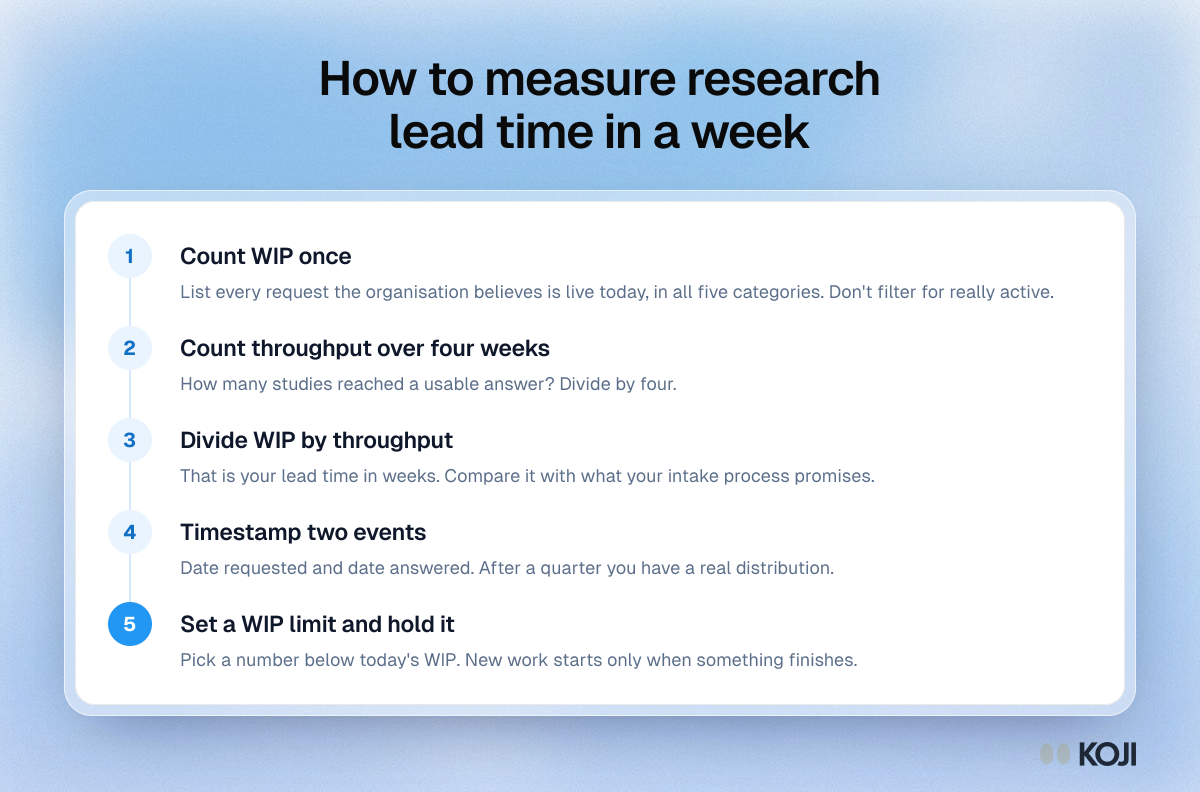
Five steps to measure your research team's lead time with Little's Law. Count every live request once, count how many studies reached a usable answer over four weeks, and divide the first by the second. Then timestamp each request and answer so you build a real distribution, and set a WIP limit you actually hold. Koji can raise throughput once you know where the time goes.
Where this appears
What's in this process
- Count WIP once: List every request the organisation believes is live today, in all five categories. Don't filter for really active.
- Count throughput over four weeks: How many studies reached a usable answer? Divide by four.
- Divide WIP by throughput: That is your lead time in weeks. Compare it with what your intake process promises.
- Timestamp two events: Date requested and date answered. After a quarter you have a real distribution.
- Set a WIP limit and hold it: Pick a number below today's WIP. New work starts only when something finishes.
Use this image
Free to use in your docs, decks and posts under CC BY 4.0, as long as you credit Koji with a link to this page. To embed it, paste this into your page:
html
<a href="https://www.koji.so/visuals/how-to-measure-research-lead-time"><img src="https://www.koji.so/visuals/how-to-measure-research-lead-time/how-to-measure-research-lead-time.png" alt="Process showing five steps to measure research lead time: count WIP, count throughput, divide, timestamp requests and set a WIP limit." width="1200" height="792" /></a>
<p>Source: <a href="https://www.koji.so/visuals/how-to-measure-research-lead-time">How to measure research lead time in a week</a>, Koji</p>