Process
How to run a PESTEL analysis in 6 steps
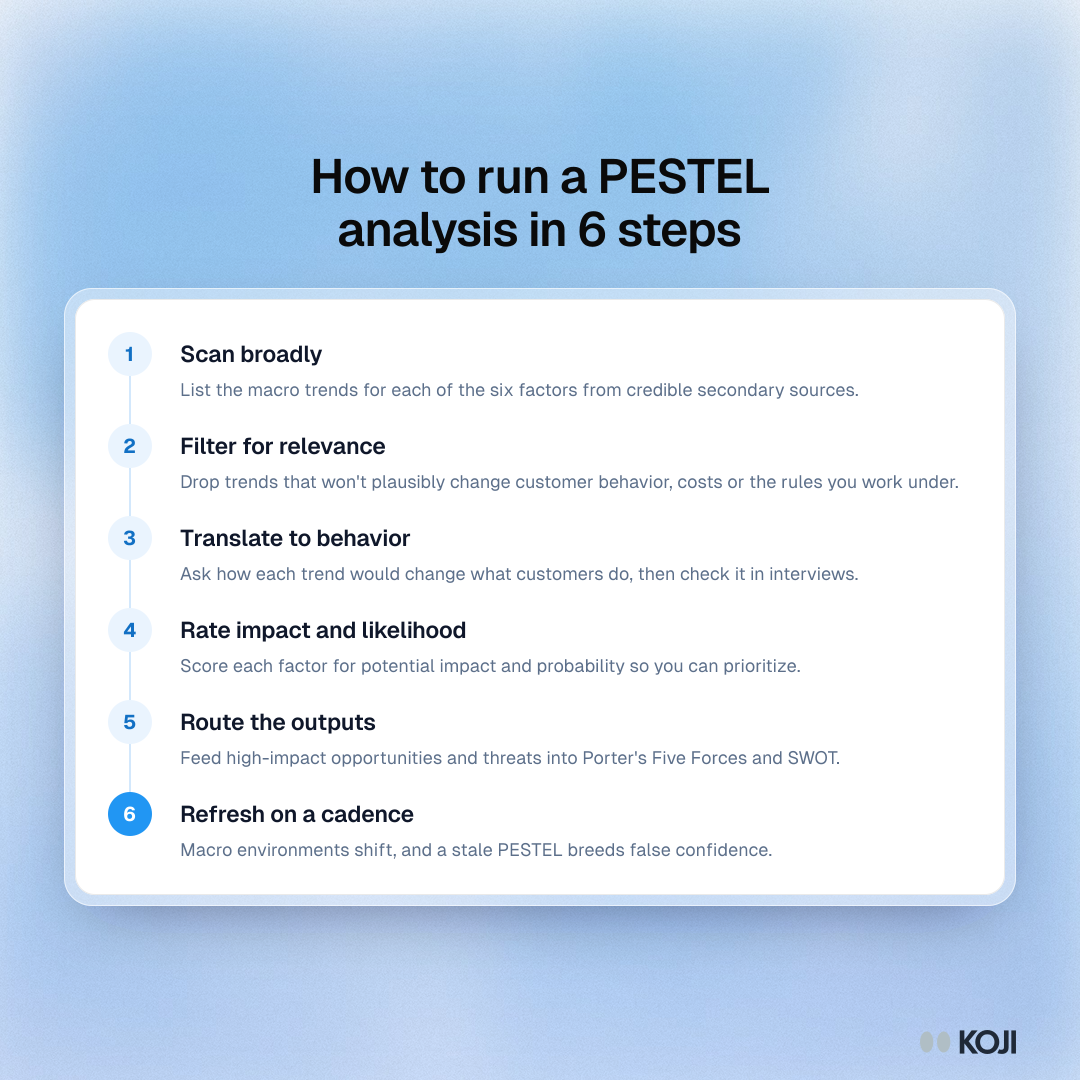
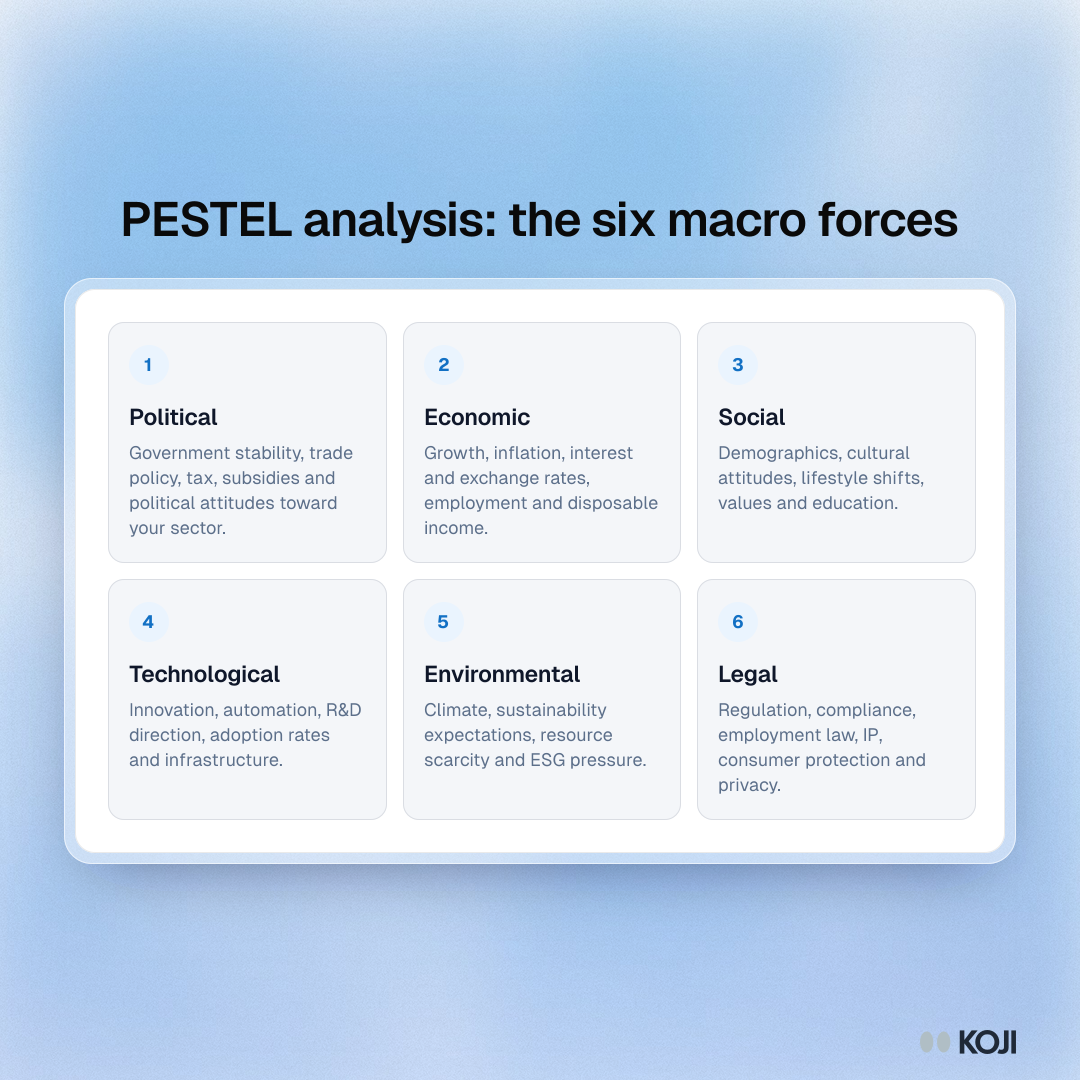
A six-step method for a PESTEL analysis that leads to decisions: scan each factor, cut the trends that won't affect your market, check the rest against real customer behavior, score impact and likelihood, pass the results into Five Forces and SWOT, and repeat on a schedule. Koji helps with step three by running AI-moderated interviews that ask buyers how a trend has changed what they do.
Where this appears
What's in this process
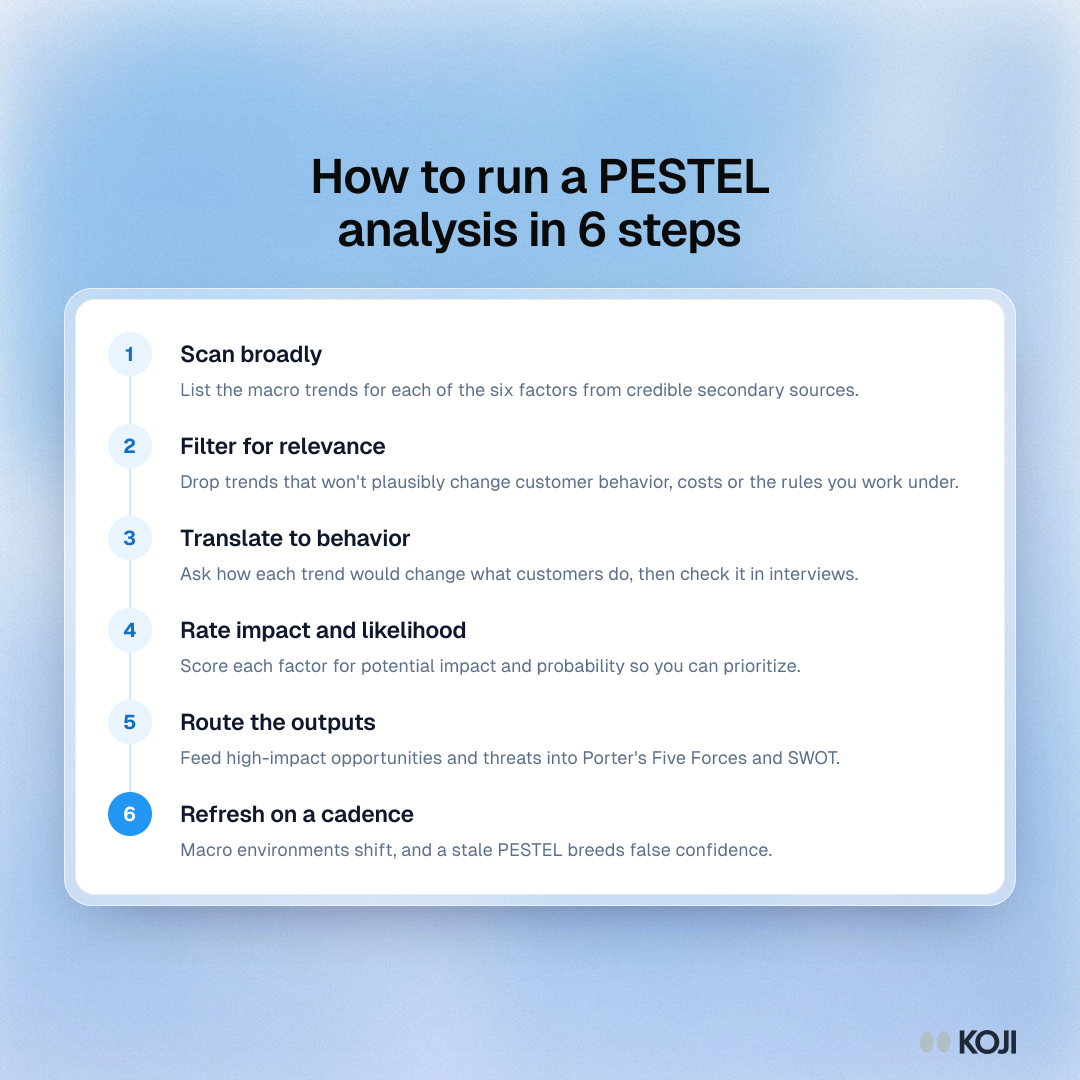
- Scan broadly: List the macro trends for each of the six factors from credible secondary sources.
- Filter for relevance: Drop trends that won't plausibly change customer behavior, costs or the rules you work under.
- Translate to behavior: Ask how each trend would change what customers do, then check it in interviews.
- Rate impact and likelihood: Score each factor for potential impact and probability so you can prioritize.
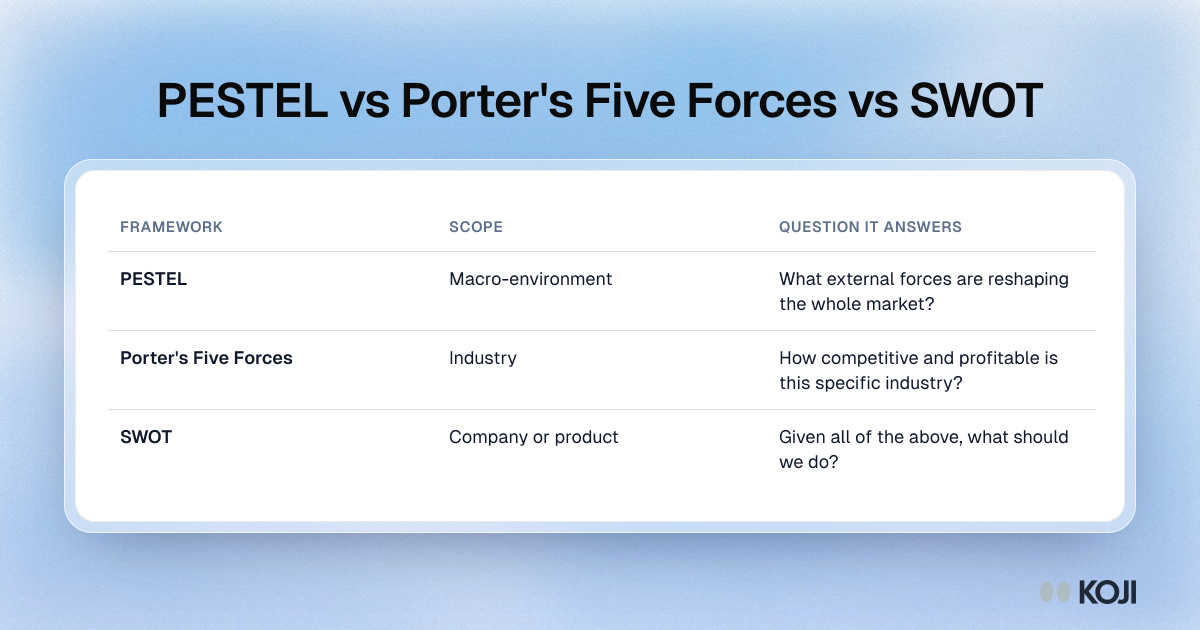
- Route the outputs: Feed high-impact opportunities and threats into Porter's Five Forces and SWOT.
- Refresh on a cadence: Macro environments shift, and a stale PESTEL breeds false confidence.
Use this image
Free to use in your docs, decks and posts under CC BY 4.0, as long as you credit Koji with a link to this page. To embed it, paste this into your page:
html
<a href="https://www.koji.so/visuals/how-to-run-a-pestel-analysis-six-steps"><img src="https://www.koji.so/visuals/how-to-run-a-pestel-analysis-six-steps/how-to-run-a-pestel-analysis-six-steps.png" alt="Process showing six steps of a PESTEL analysis: scan broadly, filter for relevance, translate to behavior, rate impact, route outputs and refresh." width="1080" height="1080" /></a>
<p>Source: <a href="https://www.koji.so/visuals/how-to-run-a-pestel-analysis-six-steps">How to run a PESTEL analysis in 6 steps</a>, Koji</p>