Process
How to calculate a SERVQUAL score
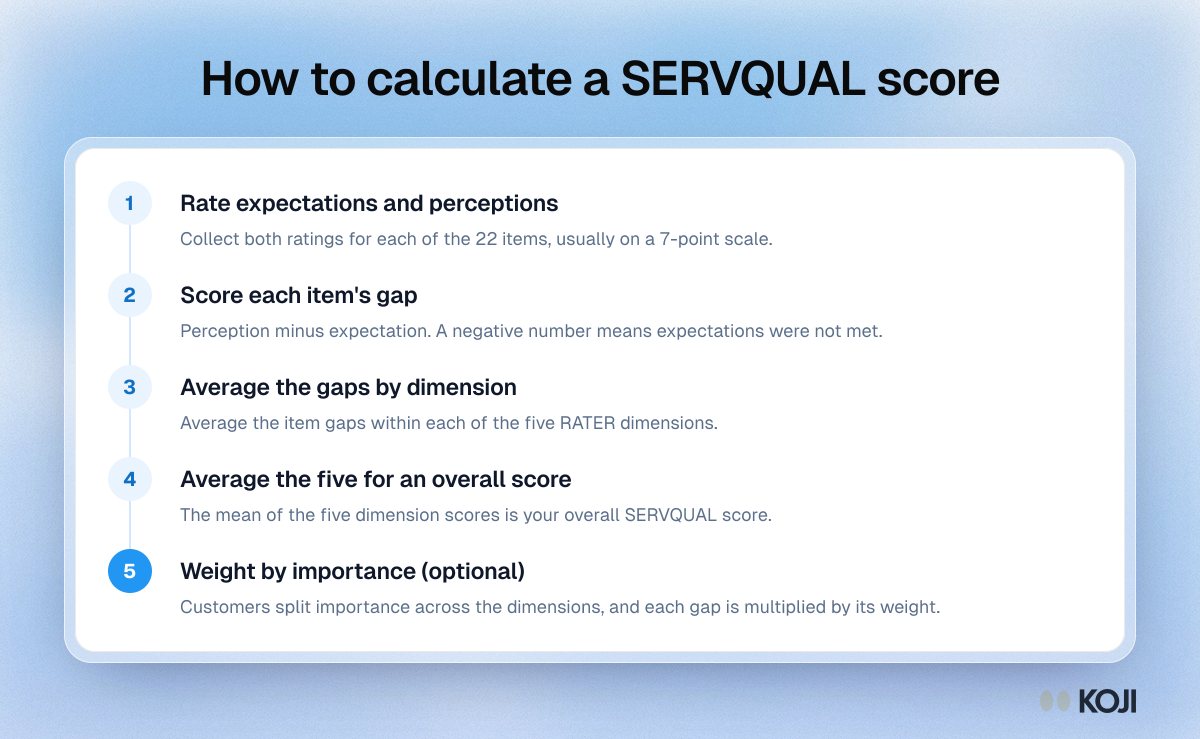
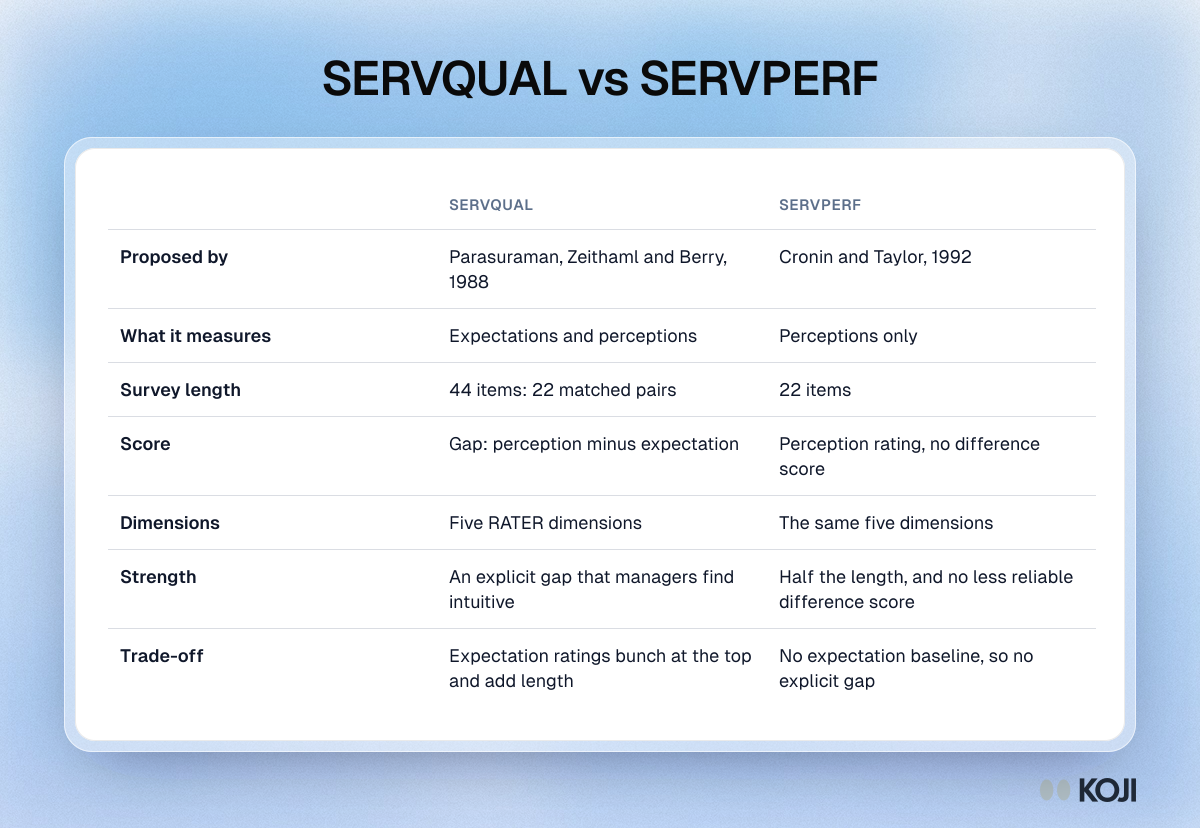
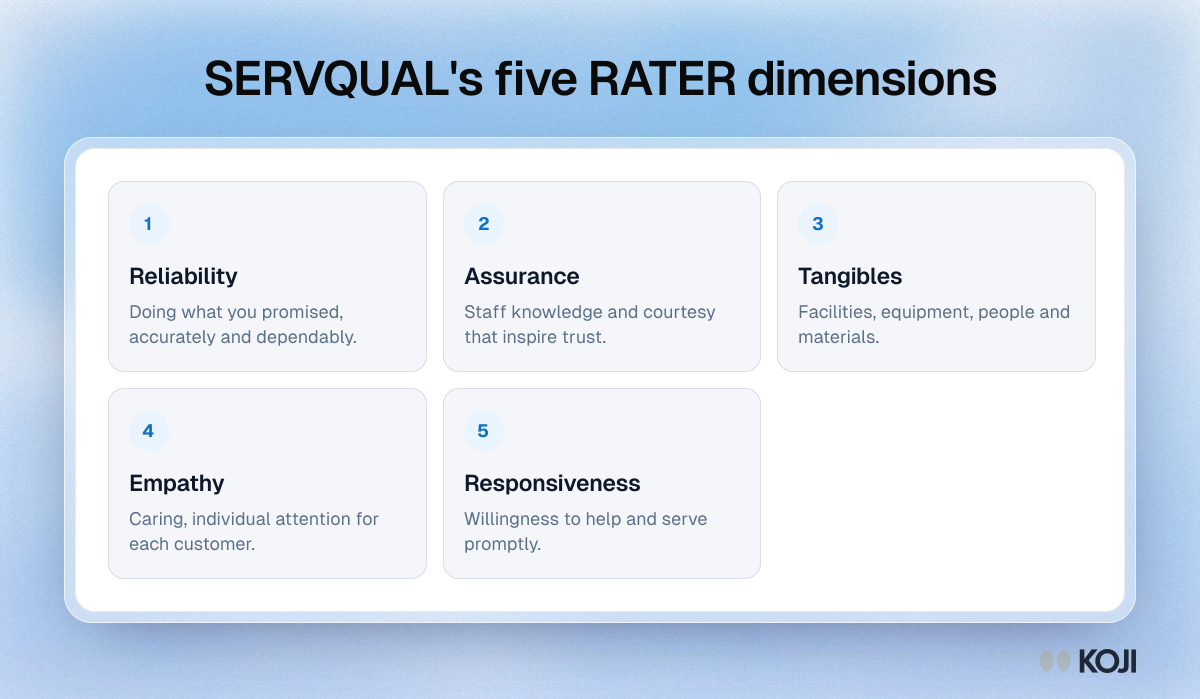
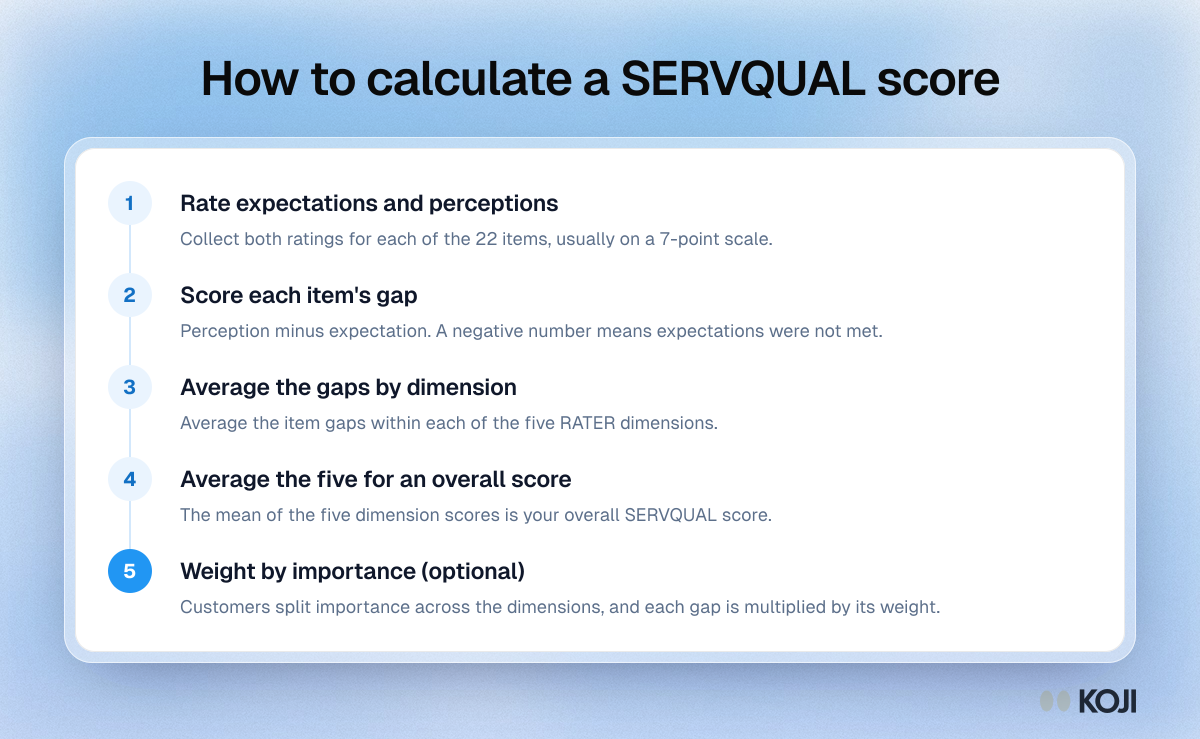
A five-step guide to calculating a SERVQUAL score. Collect expectation and perception ratings for each of the 22 items, subtract to get each item's gap, average the gaps within each RATER dimension, then average the five for an overall score. The weighted version multiplies each gap by how much customers value that dimension. Koji can measure each dimension with scale questions and ask why when a score comes in low.
Where this appears
What's in this process
- Rate expectations and perceptions: Collect both ratings for each of the 22 items, usually on a 7-point scale.
- Score each item's gap: Perception minus expectation. A negative number means expectations were not met.
- Average the gaps by dimension: Average the item gaps within each of the five RATER dimensions.
- Average the five for an overall score: The mean of the five dimension scores is your overall SERVQUAL score.
- Weight by importance (optional): Customers split importance across the dimensions, and each gap is multiplied by its weight.
Use this image
Free to use in your docs, decks and posts under CC BY 4.0, as long as you credit Koji with a link to this page. To embed it, paste this into your page:
html
<a href="https://www.koji.so/visuals/how-to-calculate-servqual-score"><img src="https://www.koji.so/visuals/how-to-calculate-servqual-score/how-to-calculate-servqual-score.png" alt="Process showing how to calculate a SERVQUAL score in five steps, from item gap scores to dimension averages and optional weights." width="1200" height="739" /></a>
<p>Source: <a href="https://www.koji.so/visuals/how-to-calculate-servqual-score">How to calculate a SERVQUAL score</a>, Koji</p>