Process
How a Small Group Instructional Diagnosis (SGID) works
The six steps of a facilitated mid-semester feedback session
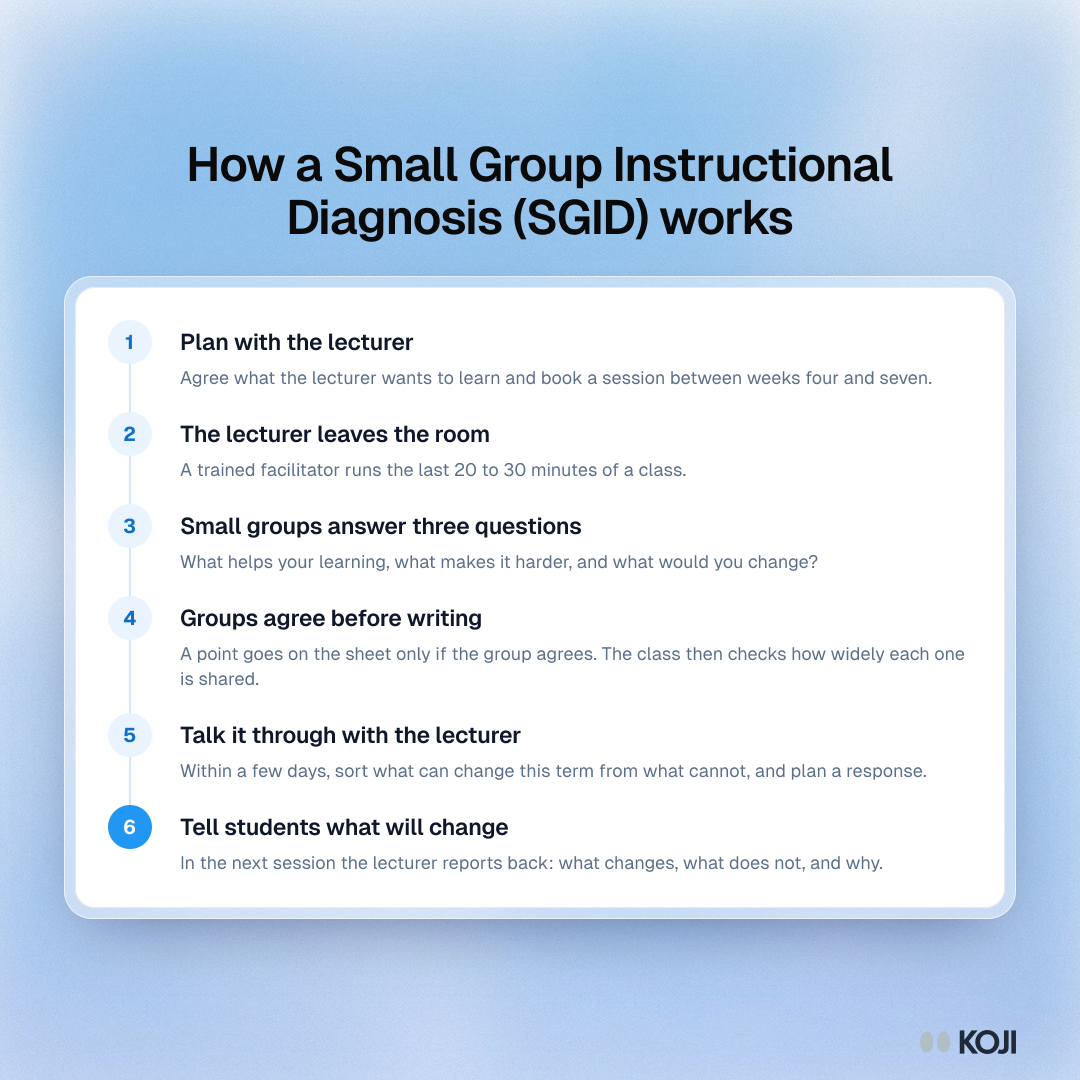
A six-step outline of Small Group Instructional Diagnosis (SGID), the facilitated mid-semester feedback method developed at the University of Washington. Educational developers and lecturers can use it to plan a session, brief a facilitator or explain the method to colleagues. Koji can run short AI-moderated check-ins that keep the timing and follow-up questions when no facilitator is free.
What's in this process
- Plan with the lecturer: Agree what the lecturer wants to learn and book a session between weeks four and seven.
- The lecturer leaves the room: A trained facilitator runs the last 20 to 30 minutes of a class.
- Small groups answer three questions: What helps your learning, what makes it harder, and what would you change?
- Groups agree before writing: A point goes on the sheet only if the group agrees. The class then checks how widely each one is shared.
- Talk it through with the lecturer: Within a few days, sort what can change this term from what cannot, and plan a response.
- Tell students what will change: In the next session the lecturer reports back: what changes, what does not, and why.
Use this image
Free to use in your docs, decks and posts under CC BY 4.0, as long as you credit Koji with a link to this page. To embed it, paste this into your page:
<a href="https://www.koji.so/visuals/small-group-instructional-diagnosis-sgid-process"><img src="https://www.koji.so/visuals/small-group-instructional-diagnosis-sgid-process/small-group-instructional-diagnosis-sgid-process.png" alt="Process diagram of the six steps in a Small Group Instructional Diagnosis, from the planning meeting to telling students what will change." width="1080" height="1080" /></a>
<p>Source: <a href="https://www.koji.so/visuals/small-group-instructional-diagnosis-sgid-process">How a Small Group Instructional Diagnosis (SGID) works</a>, Koji</p>
Related
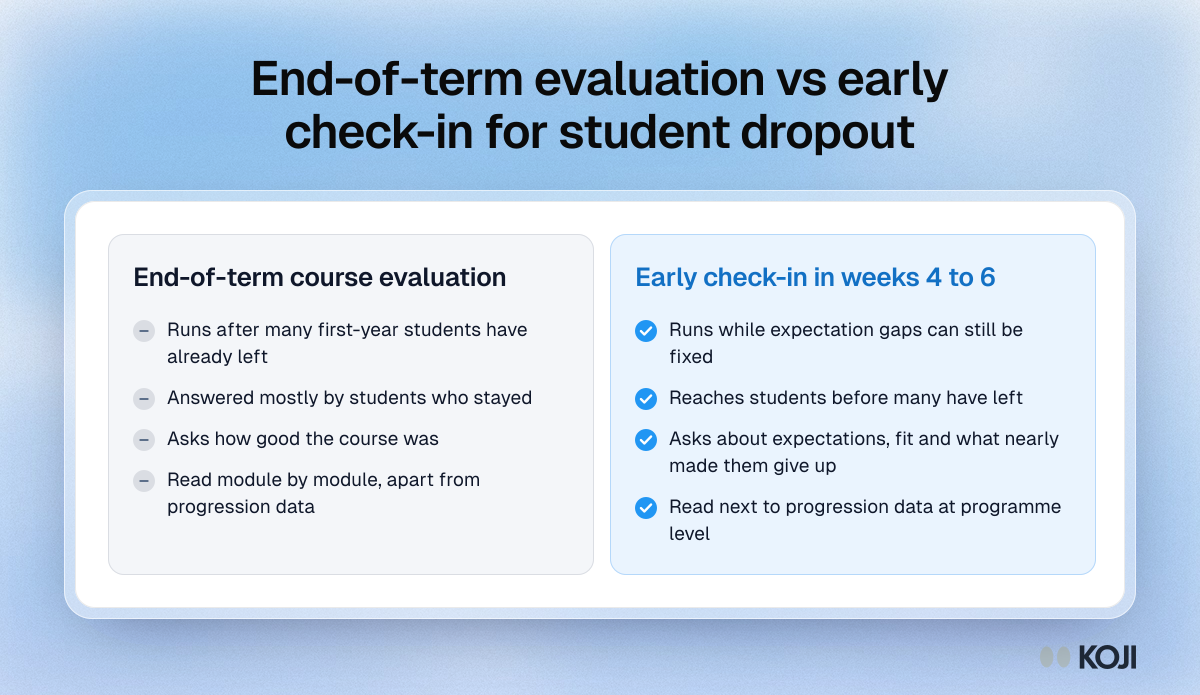
End-of-term evaluation vs early check-in for student dropout
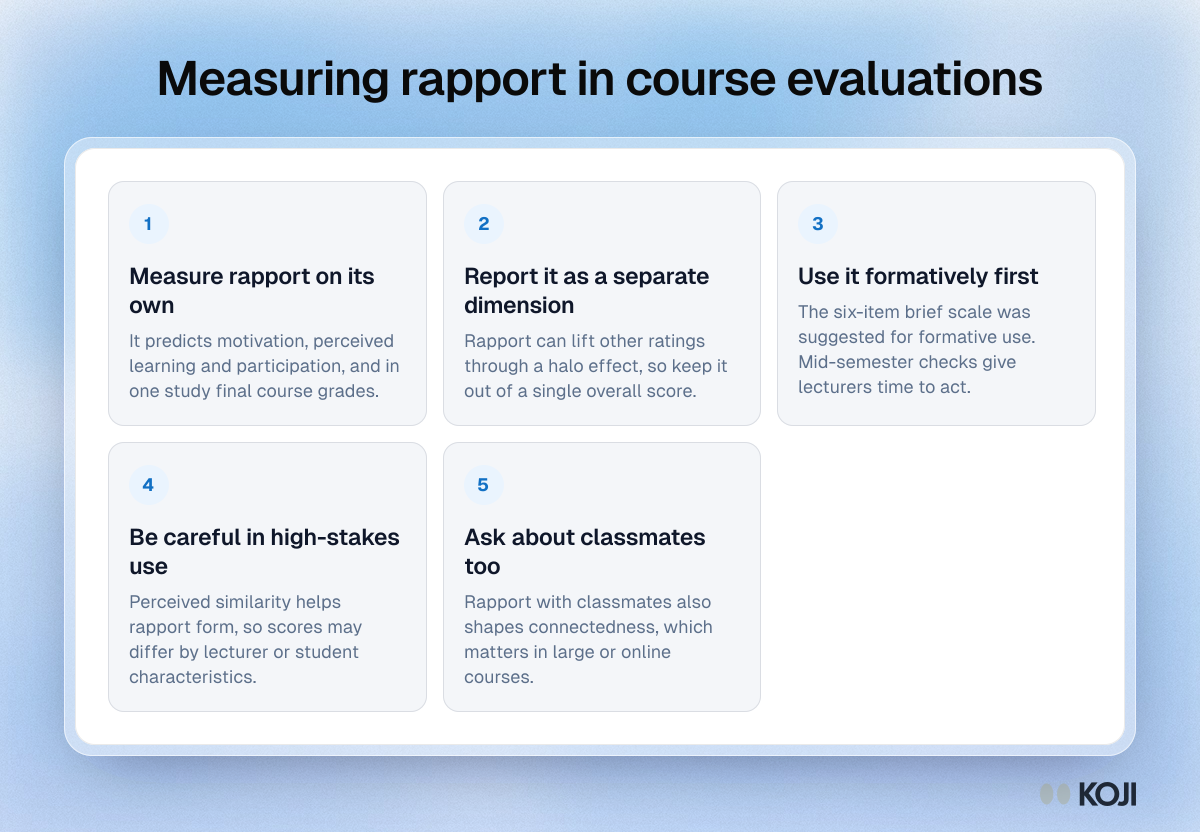
Measuring rapport in course evaluations
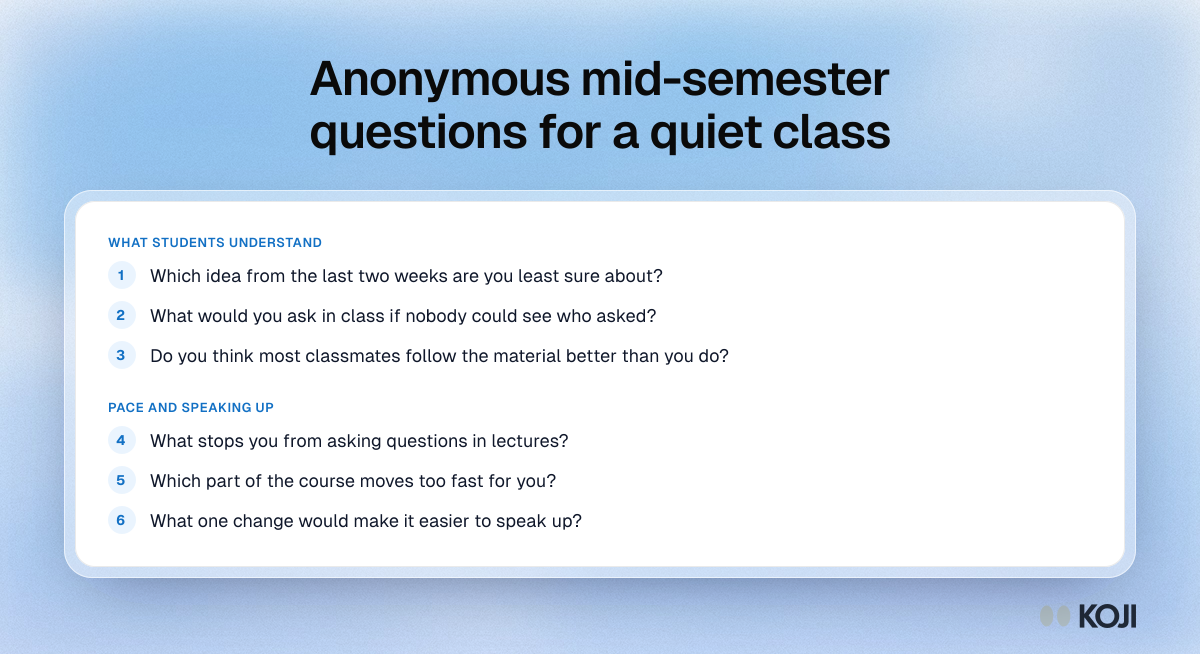
Anonymous mid-semester questions for a quiet class
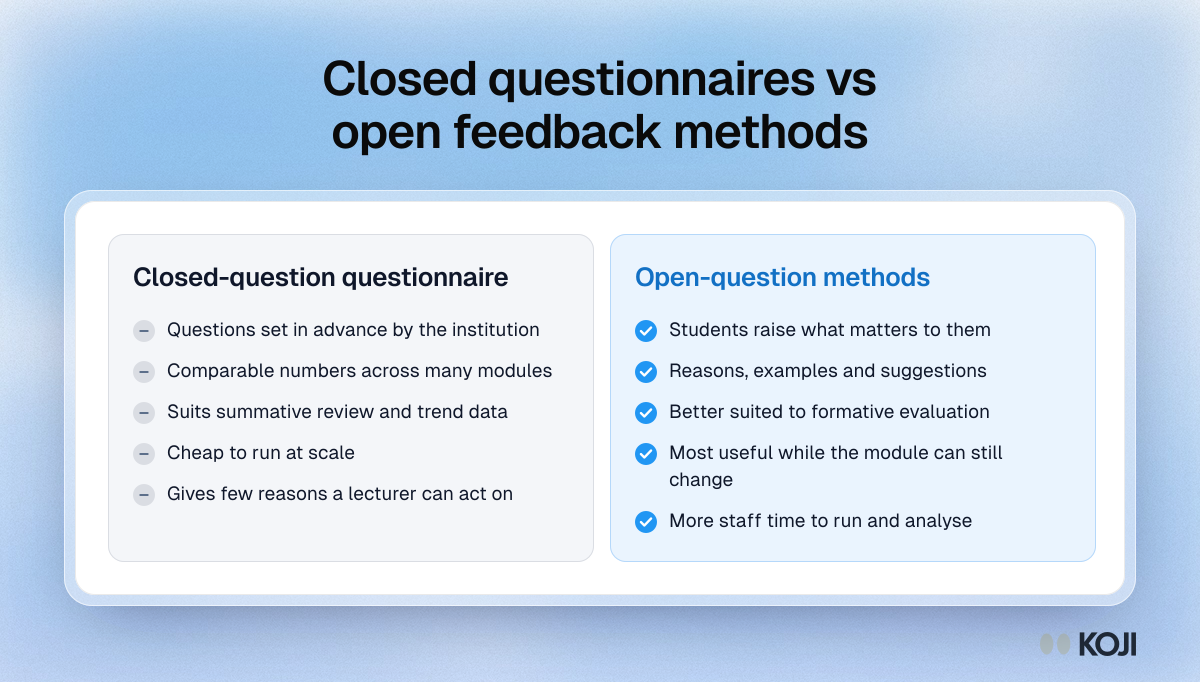
Closed questionnaires vs open feedback methods
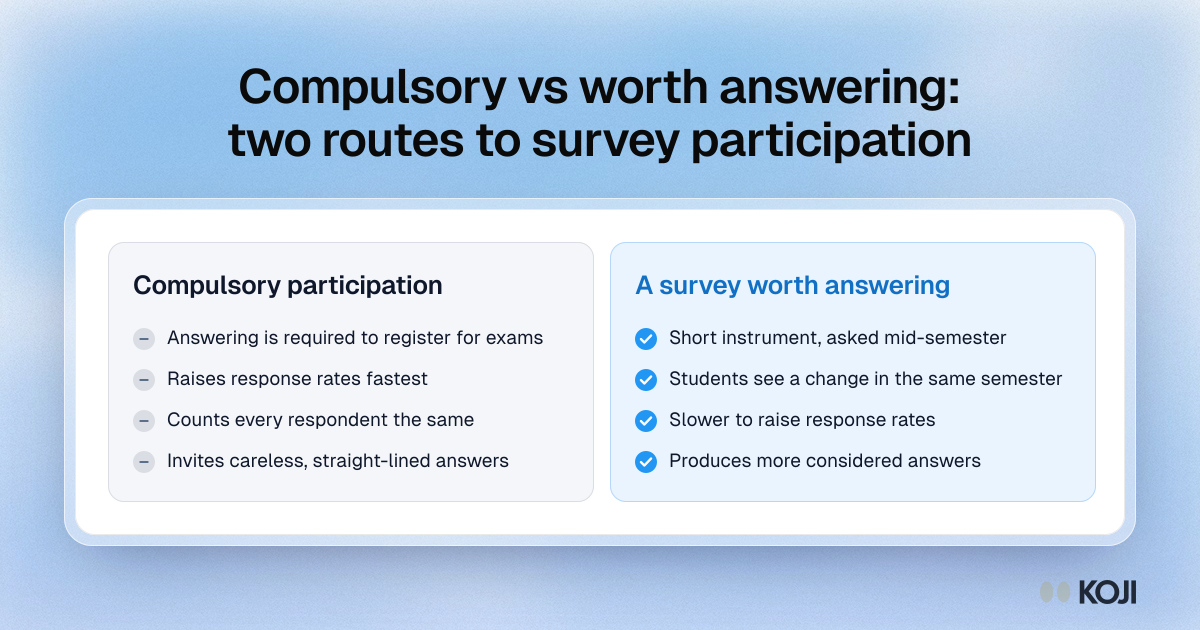
Compulsory vs worth answering: two routes to survey participation
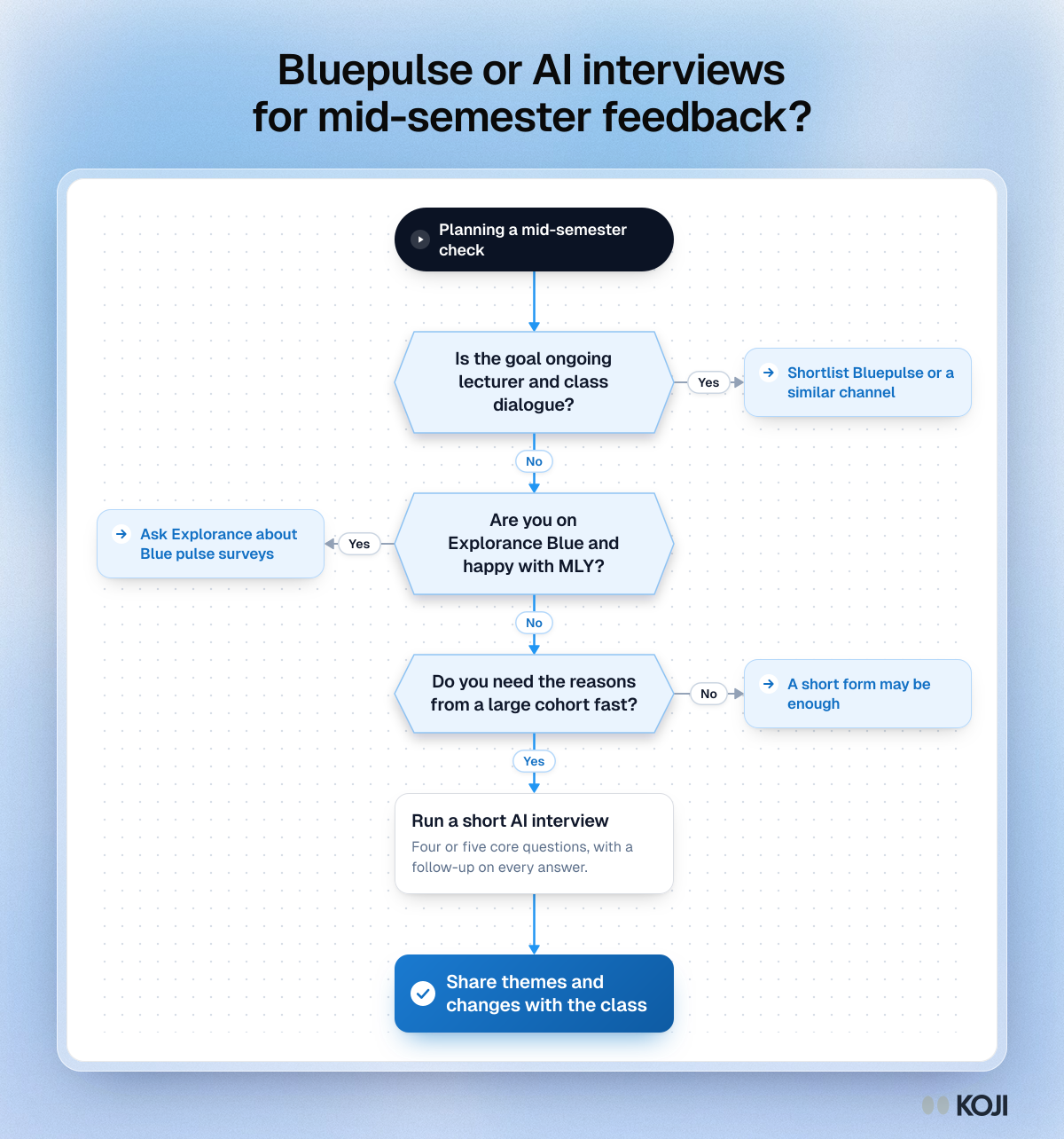
Bluepulse or AI interviews for mid-semester feedback?