Free to save and share

Frameworks and cheat sheets for customer research

Every framework, checklist and comparison from our guides, as an image you can download, drop into a deck or share with your team.
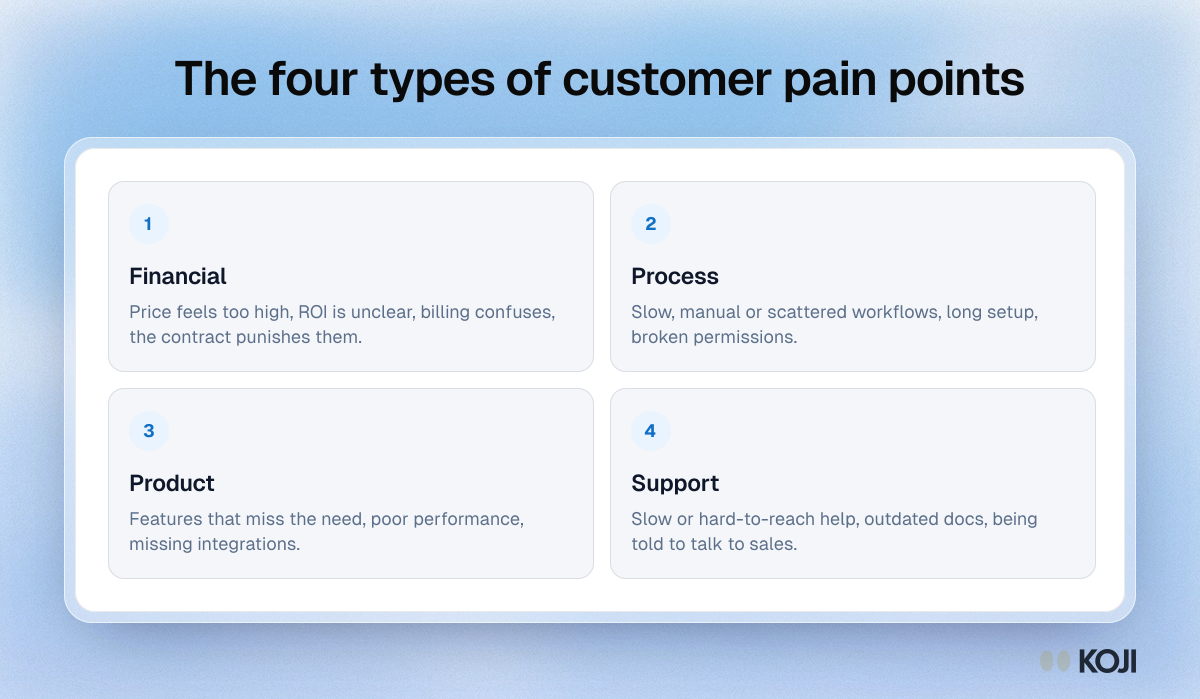
Framework of the four types of customer pain points: financial, process, product and support, with examples of each.

Framework

The four types of customer pain points
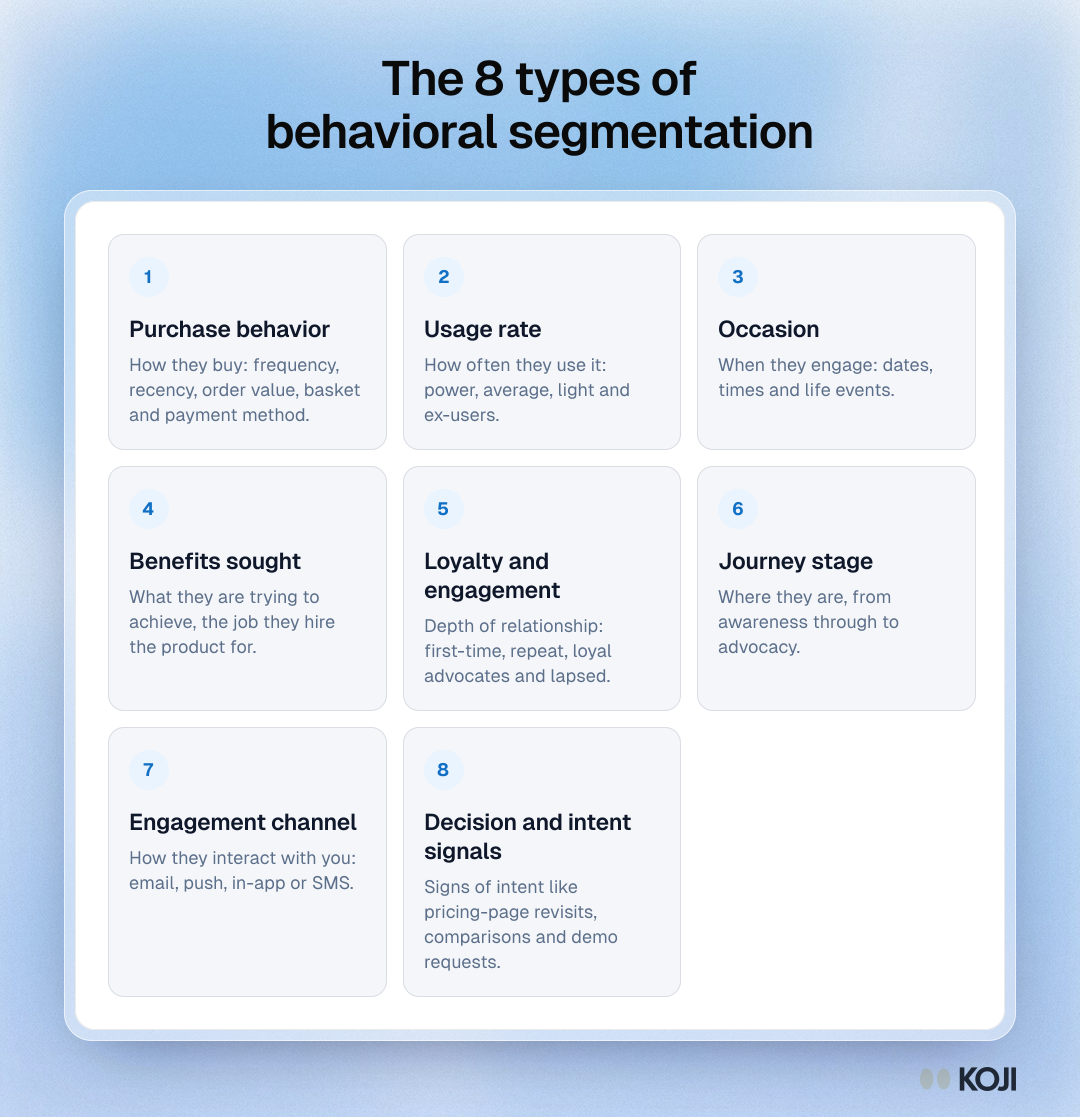
Framework of the eight types of behavioral segmentation: purchase behavior, usage rate, occasion, benefits sought, loyalty, journey stage, channel and intent.

Framework

The 8 types of behavioral segmentation
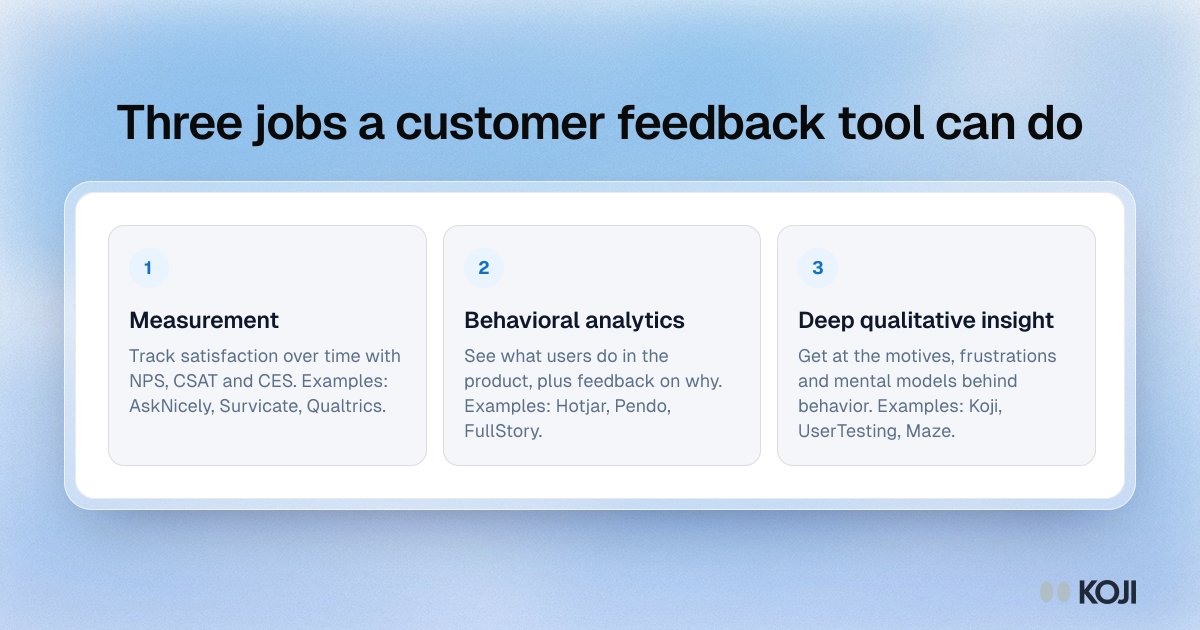
Framework of the three jobs customer feedback tools do: measurement with NPS and CSAT, behavioral analytics, and deep qualitative insight into why

Framework

Three jobs a customer feedback tool can do
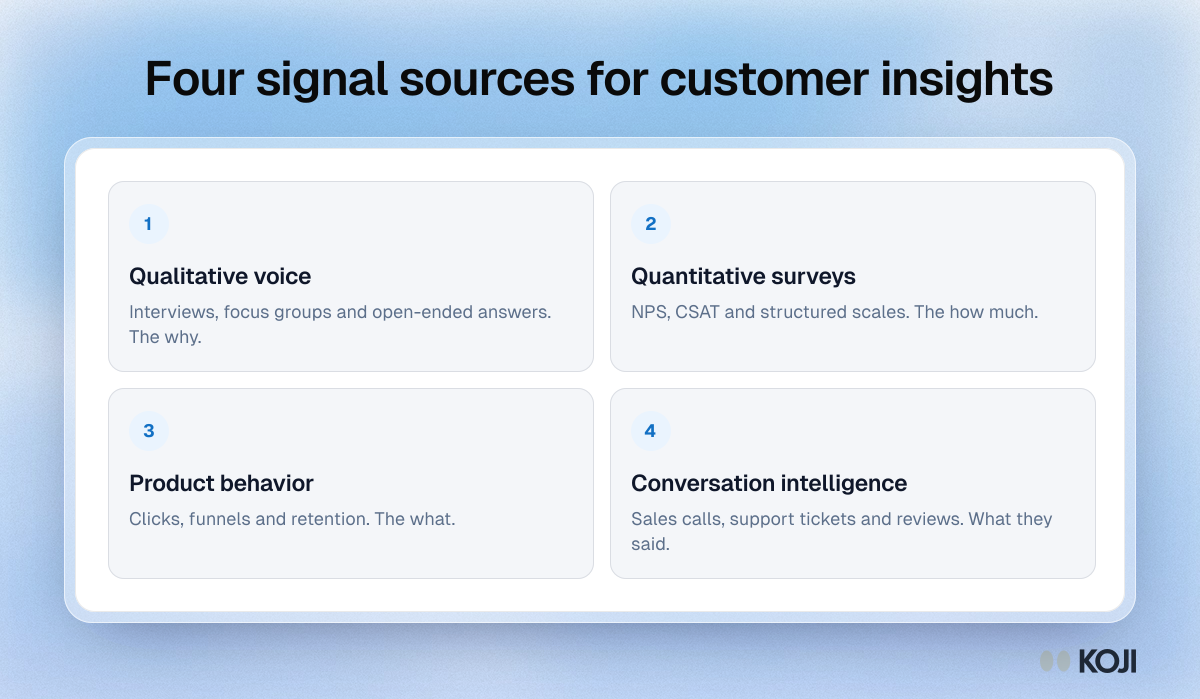
Framework of four customer insight signal sources: qualitative voice, quantitative surveys, product behavior and conversation intelligence

Framework

Four signal sources for customer insights
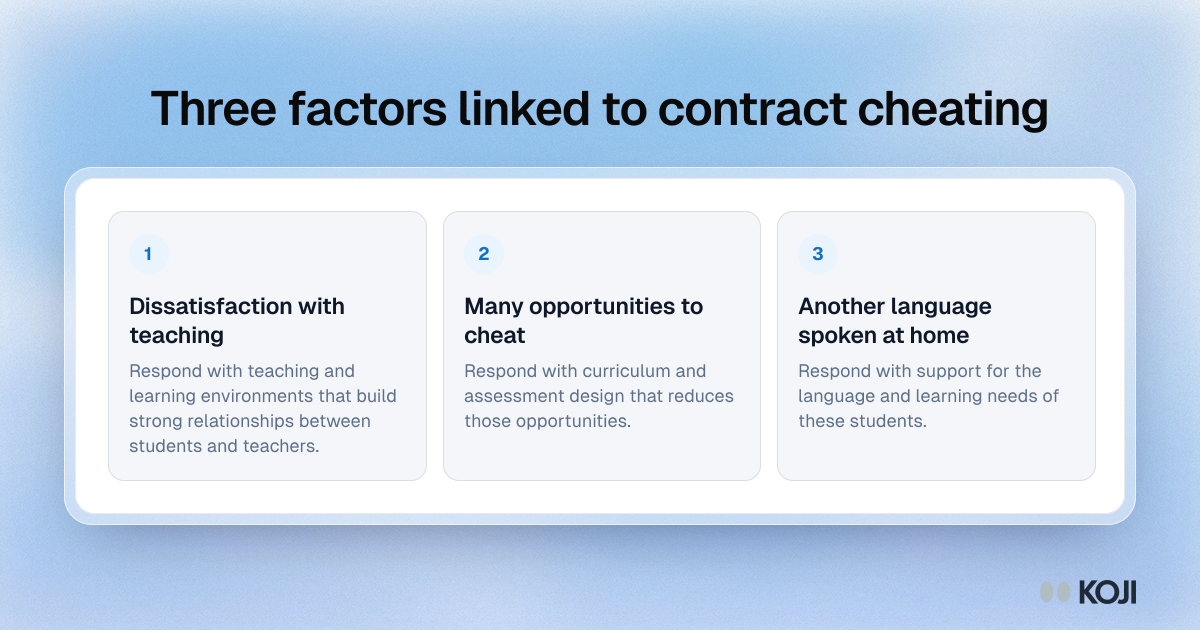
Framework of the three factors linked to contract cheating in a survey of 14,086 students, each paired with the response the authors recommend.
Framework

Three factors linked to contract cheating

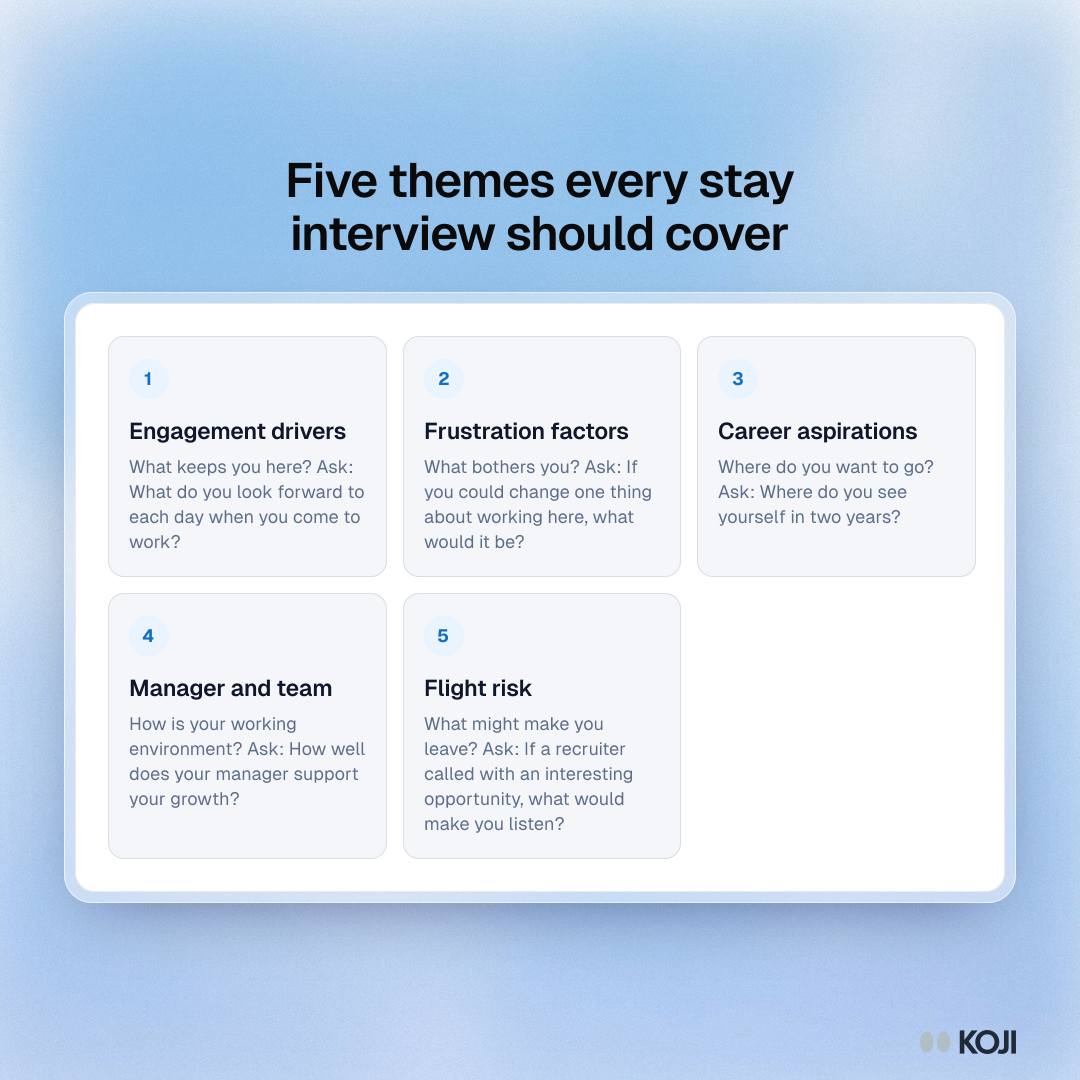
Framework of five stay interview themes, engagement drivers, frustrations, career goals, manager and team, and flight risk, each with a sample question.

Framework

Five themes every stay interview should cover
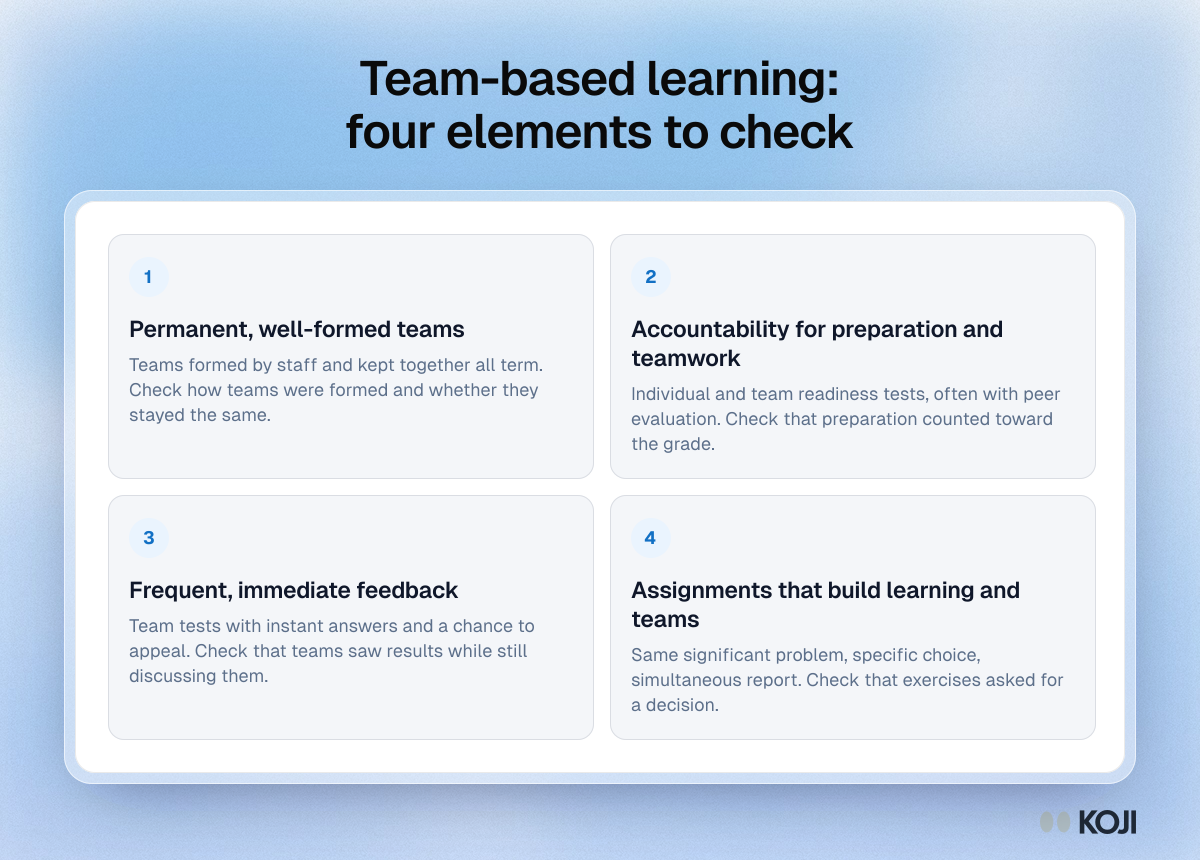
Framework showing the four elements of team-based learning: permanent teams, accountability, immediate feedback and team assignments.

Framework

Team-based learning: four elements to check
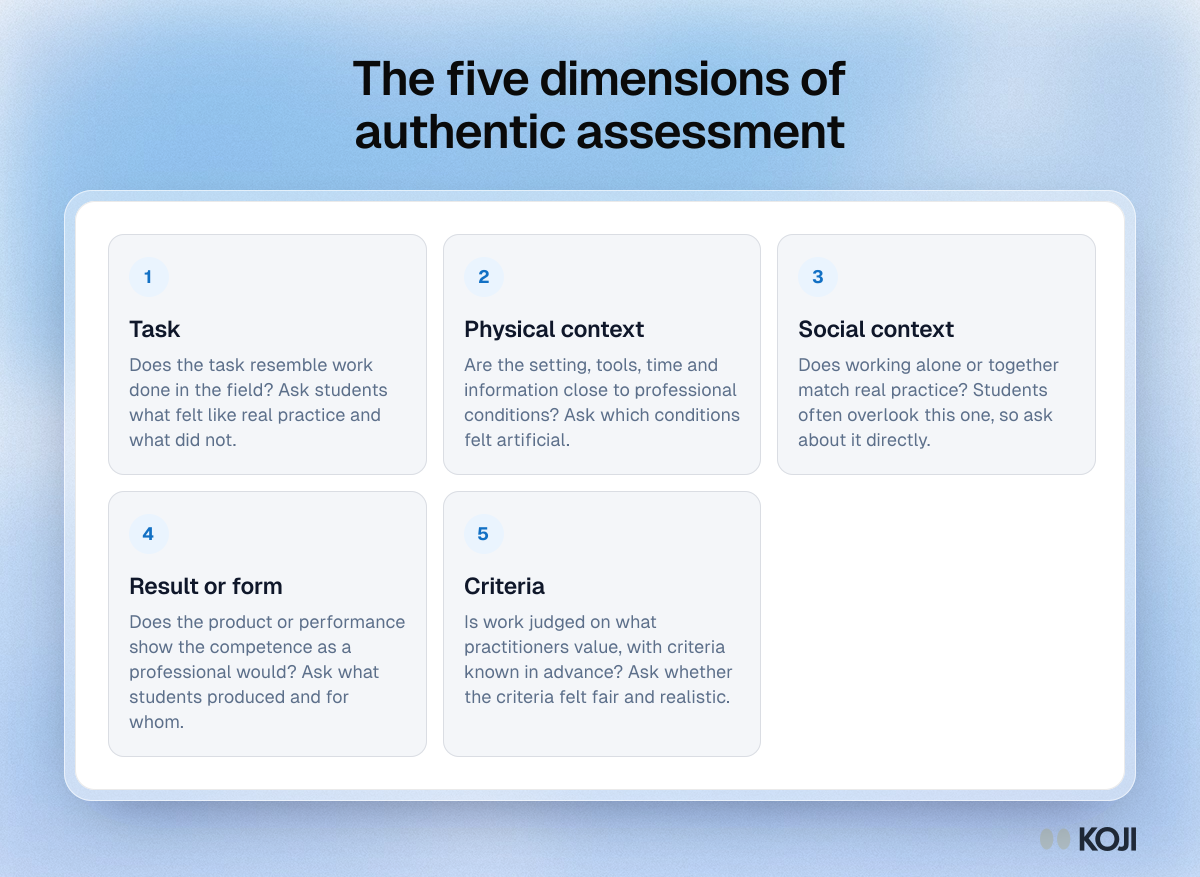
Framework showing five dimensions of authentic assessment: task, physical context, social context, result or form, and criteria.

Framework

The five dimensions of authentic assessment
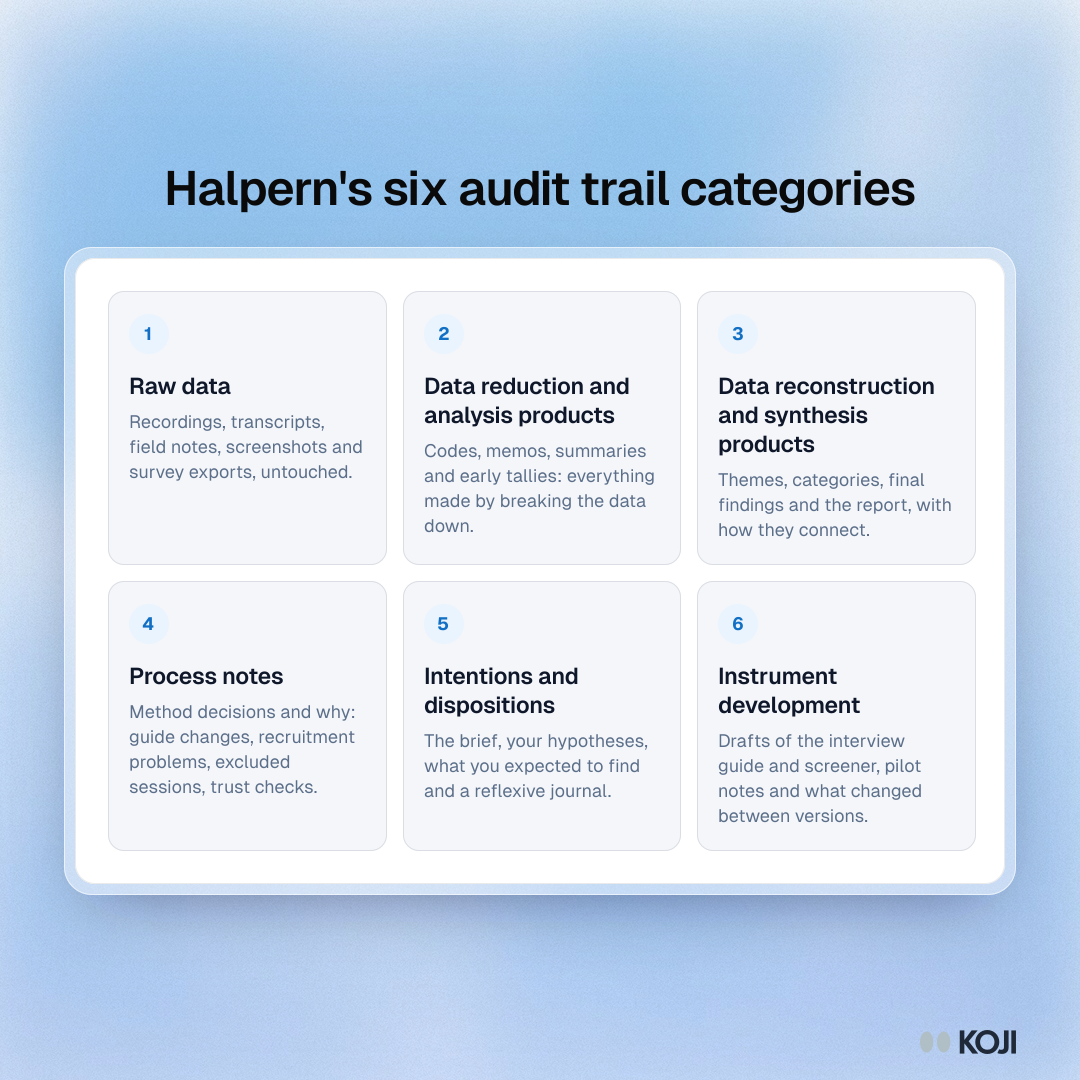
Framework of Halpern's six audit trail categories, from raw data and analysis products to process notes and instrument development.

Framework

Halpern's six audit trail categories
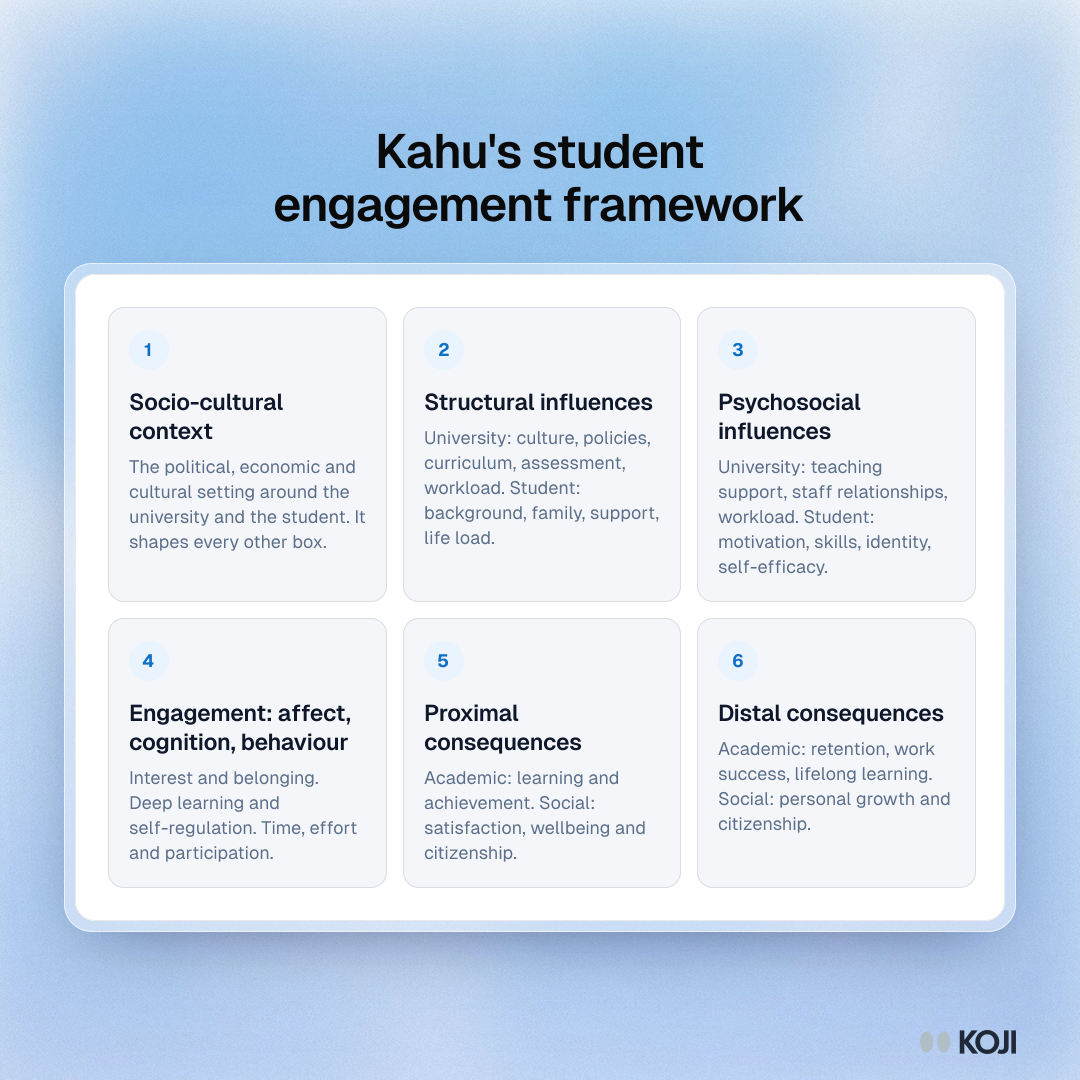
Framework of Kahu's student engagement model: context, structural and psychosocial influences, engagement, and its proximal and distal consequences.

Framework

Kahu's student engagement framework
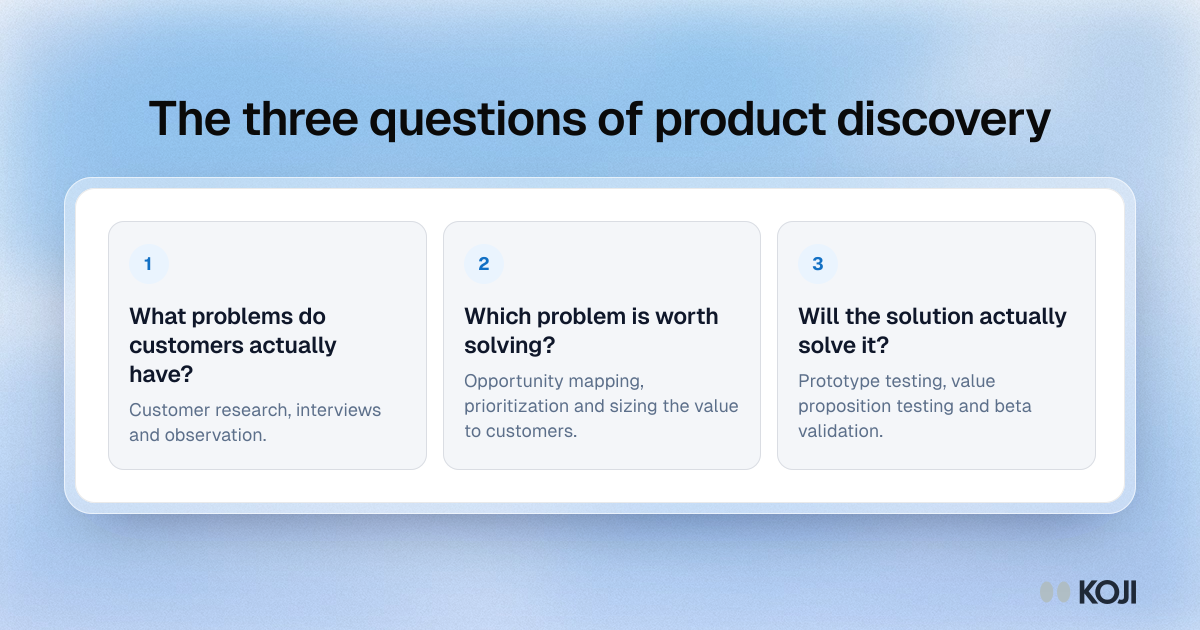
Framework of the three questions product discovery answers: what problems customers have, which one is worth solving, and whether the solution solves it.

Framework

The three questions of product discovery
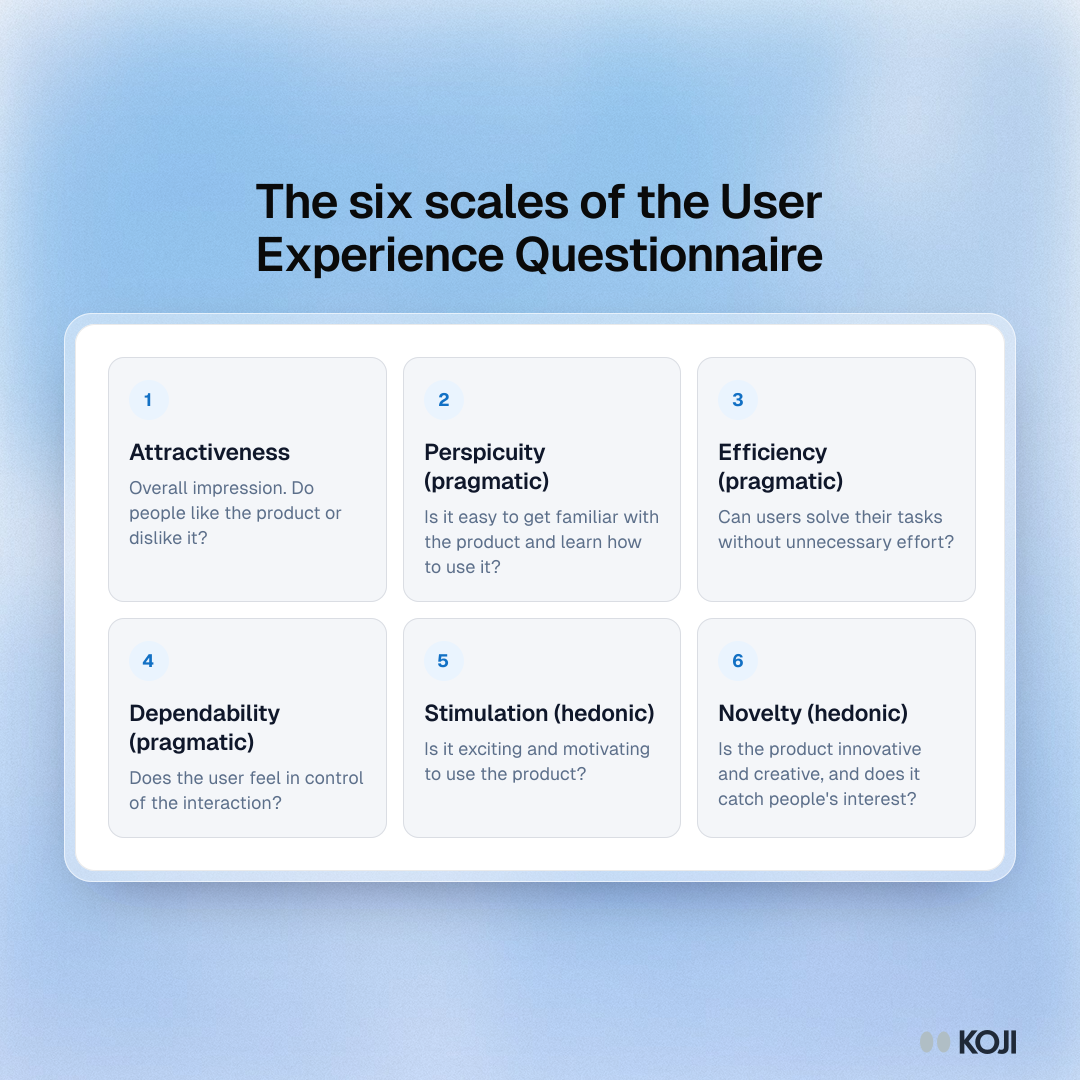
Framework of the six UEQ scales: attractiveness, three pragmatic scales (perspicuity, efficiency, dependability) and two hedonic (stimulation, novelty).

Framework

The six scales of the User Experience Questionnaire
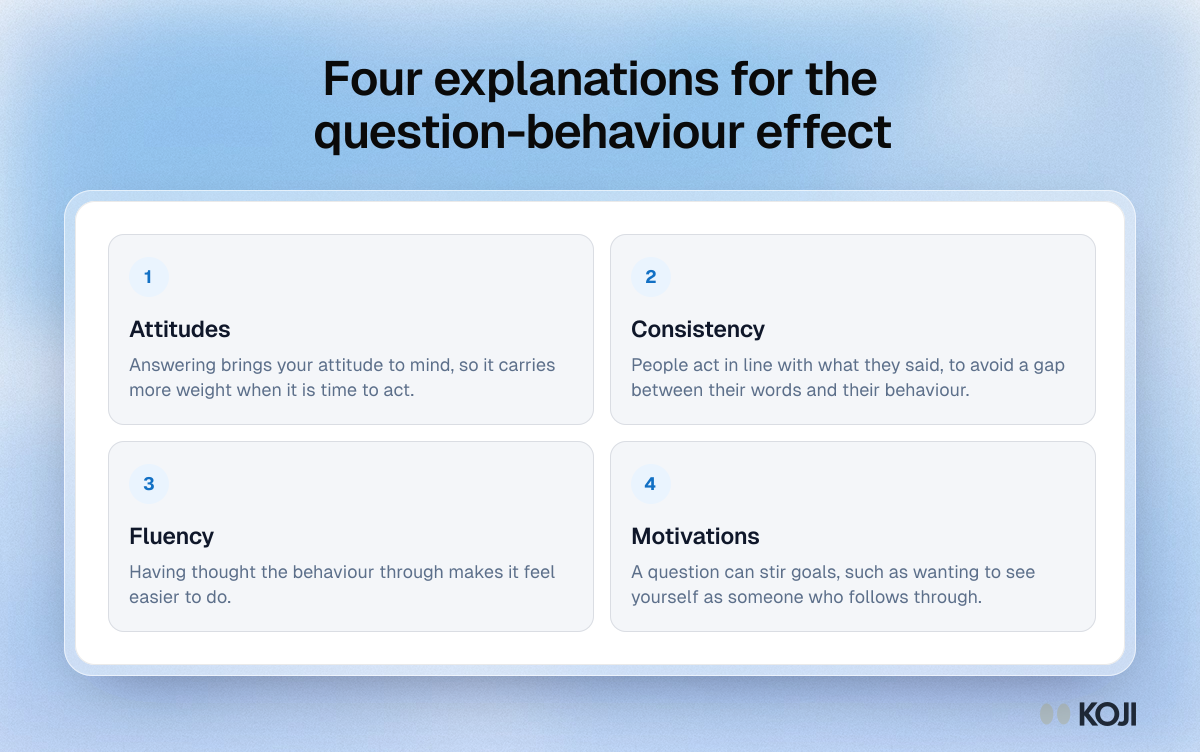
Framework of four explanations for the question-behaviour effect: attitudes, consistency, fluency and motivations, after Spangenberg et al. 2016.

Framework

Four explanations for the question-behaviour effect
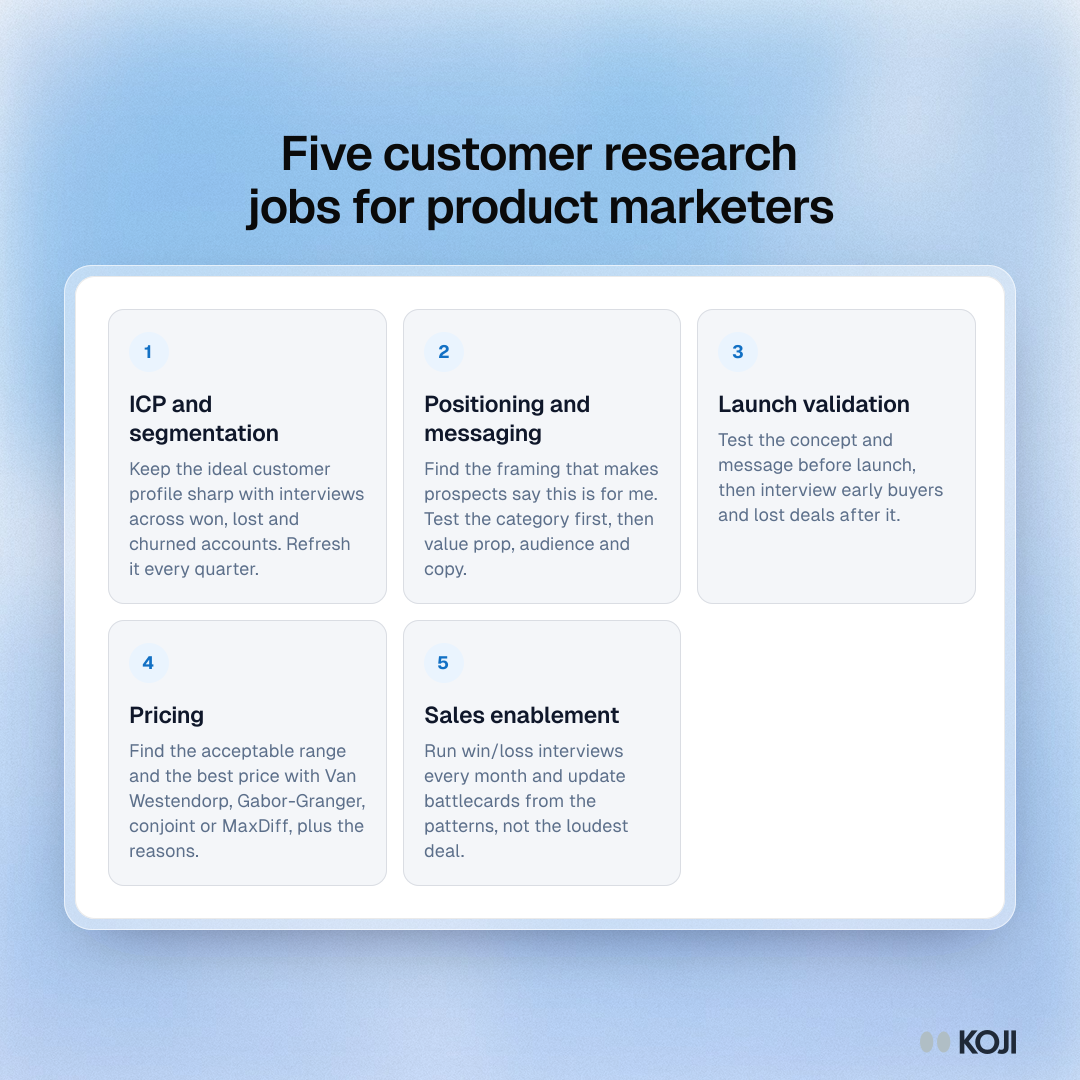
Framework of five product marketing research jobs: ICP and segmentation, positioning and messaging, launch validation, pricing, and sales enablement.

Framework

Five customer research jobs for product marketers
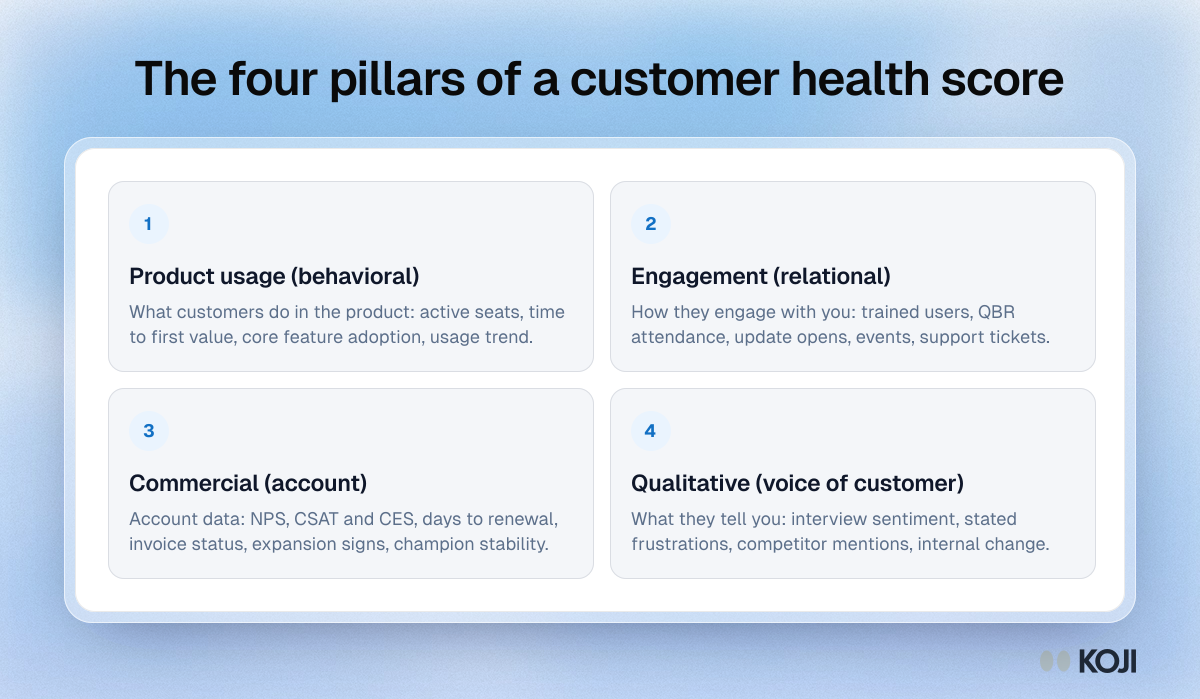
Framework showing the four pillars of a SaaS customer health score: product usage, engagement, commercial and qualitative signals, with examples of each.

Framework

The four pillars of a customer health score
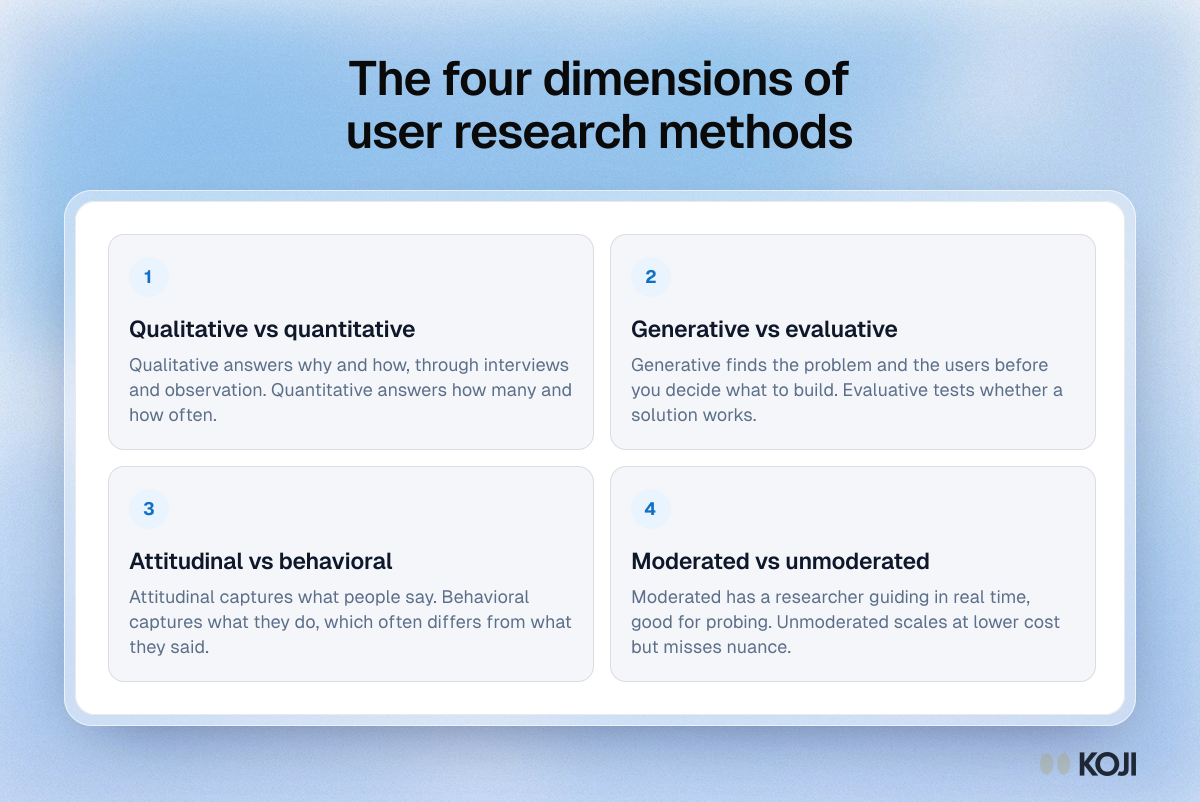
Framework of four dimensions of user research: qualitative or quantitative, generative or evaluative, attitudinal or behavioral, moderated or unmoderated.

Framework

The four dimensions of user research methods
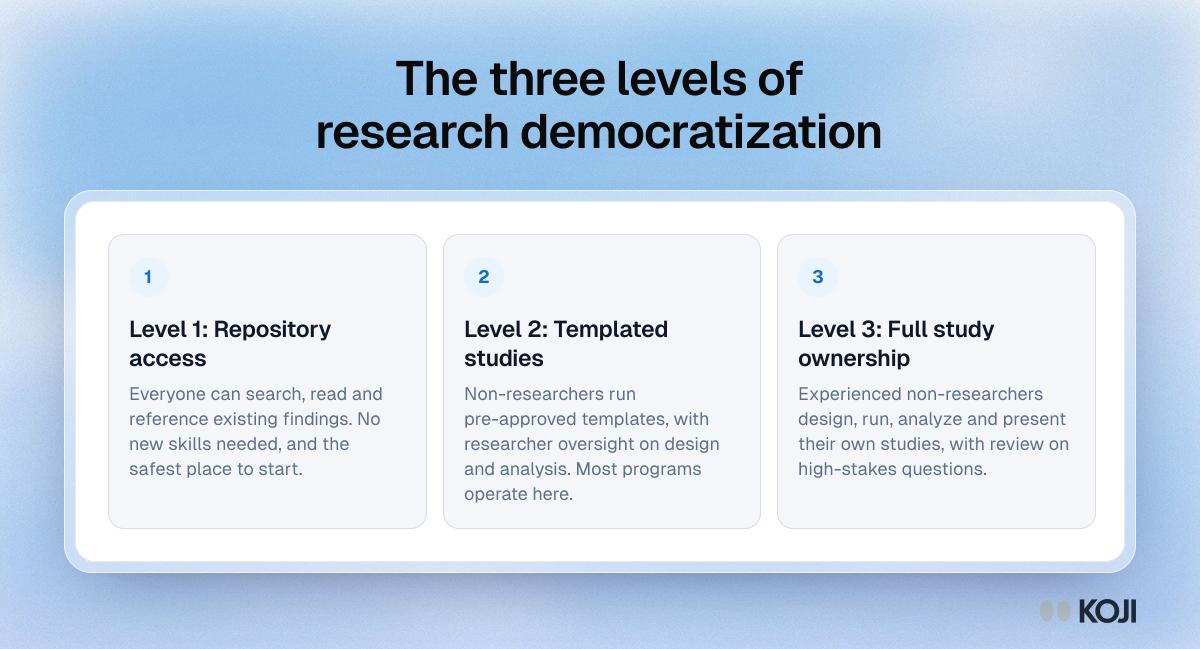
Framework showing three levels of research democratization: repository access for everyone, templated studies with oversight, and full study ownership.

Framework

The three levels of research democratization
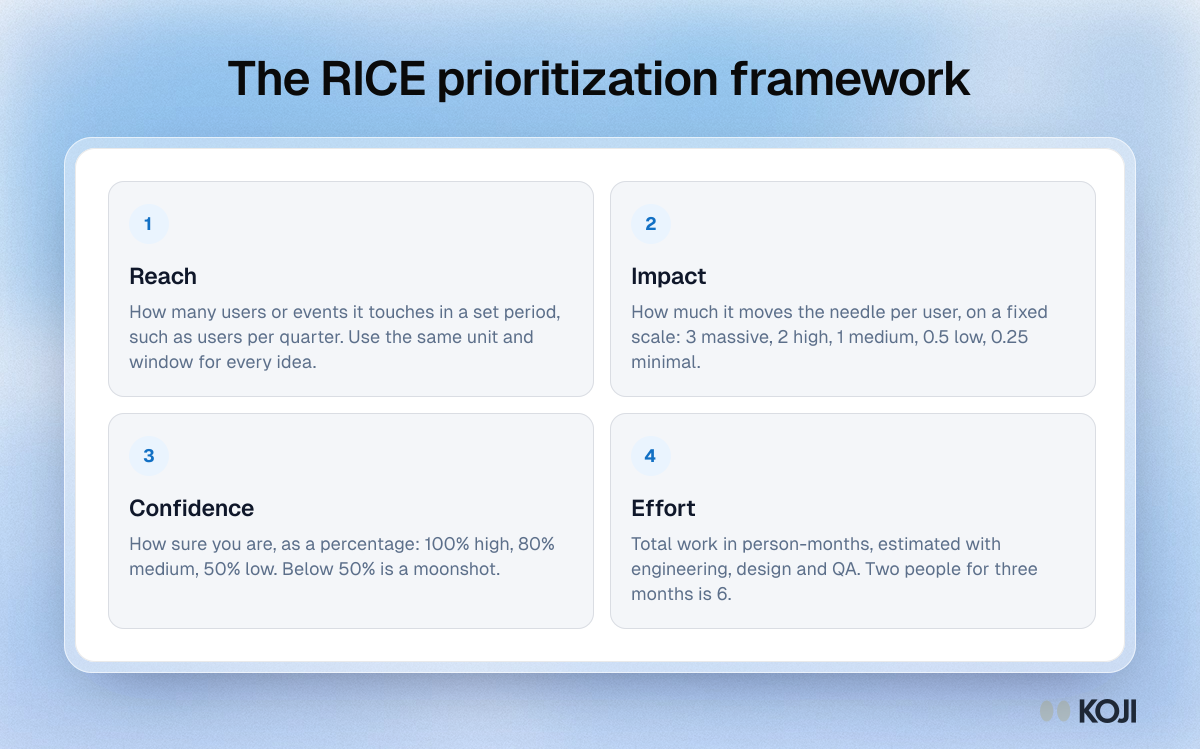
Framework showing the four RICE prioritization factors: reach, impact, confidence and effort, with the scale or unit used to score each one.

Framework

The RICE prioritization framework
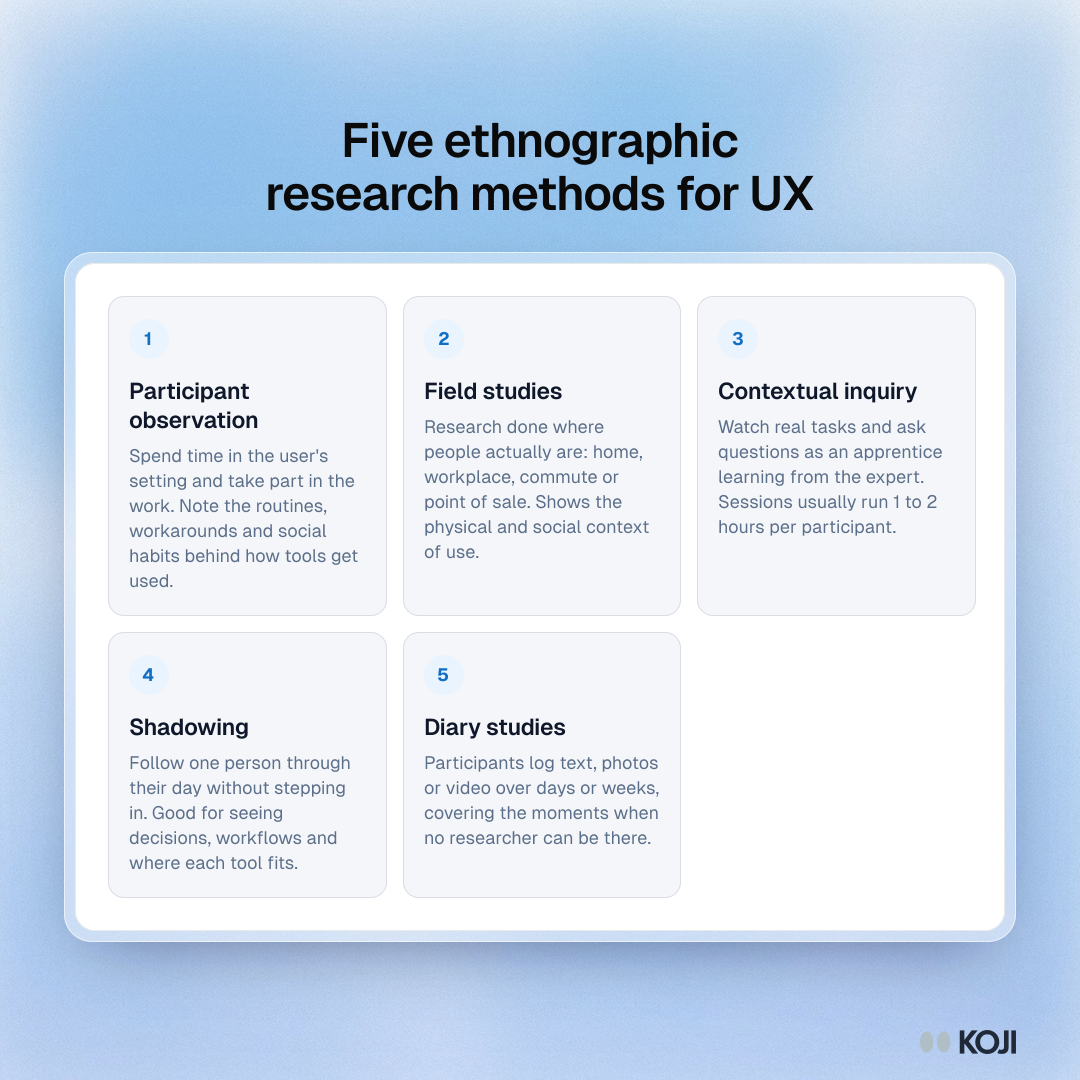
Framework showing five ethnographic research methods: participant observation, field studies, contextual inquiry, shadowing and diary studies.

Framework

Five ethnographic research methods for UX
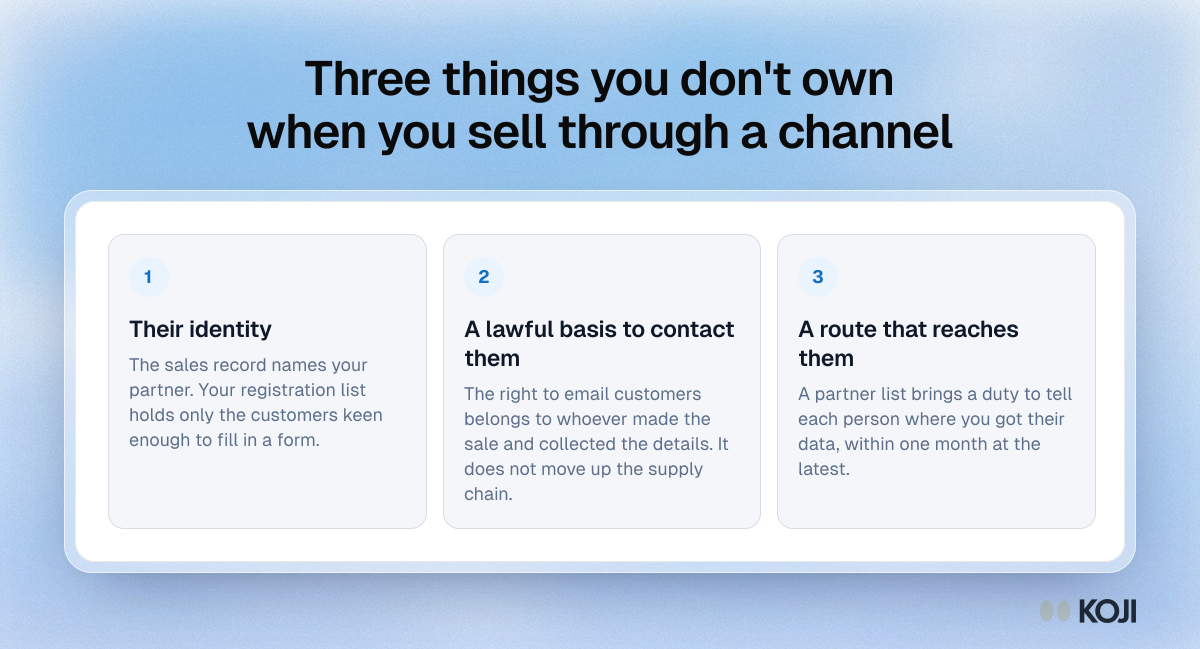
Framework of three things a manufacturer selling through a channel lacks for follow-up research: customer identity, a lawful basis to contact, and a route.

Framework

Three things you don't own when you sell through a channel
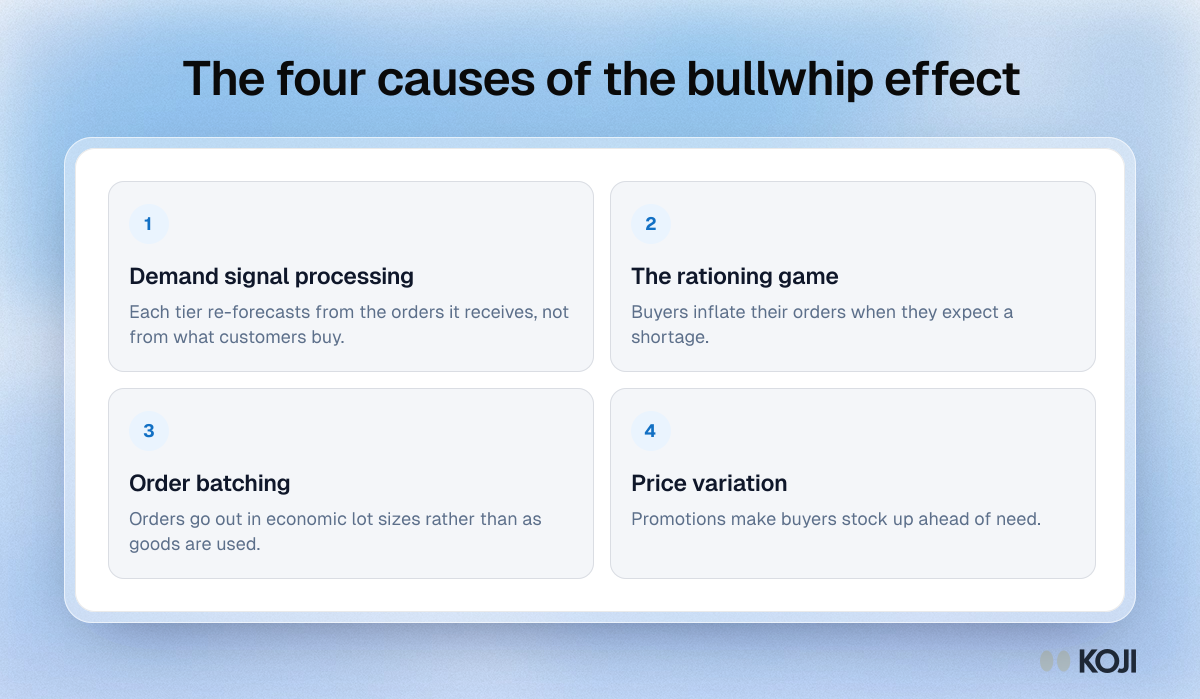
Framework of the four causes of the bullwhip effect: demand signal processing, the rationing game, order batching and price variation.

Framework

The four causes of the bullwhip effect
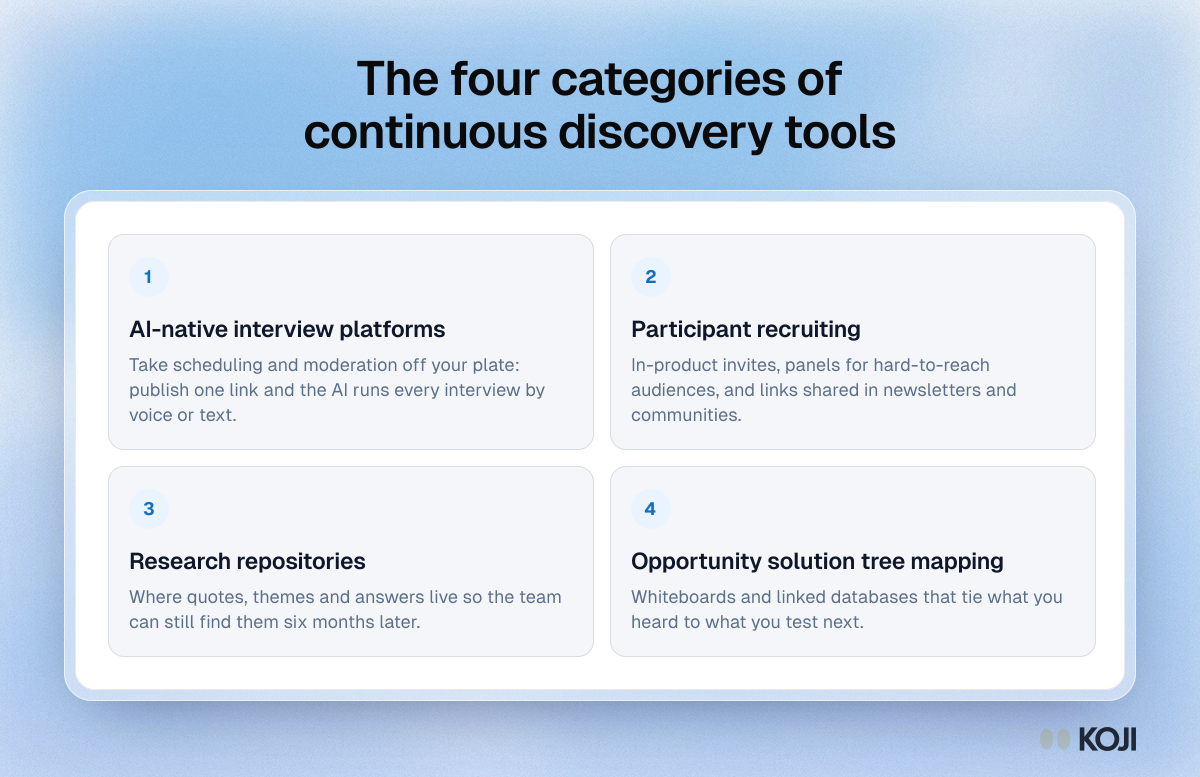
Framework of four kinds of continuous discovery tools: AI-native interview platforms, participant recruiting, research repositories and opportunity mapping.

Framework

The four categories of continuous discovery tools
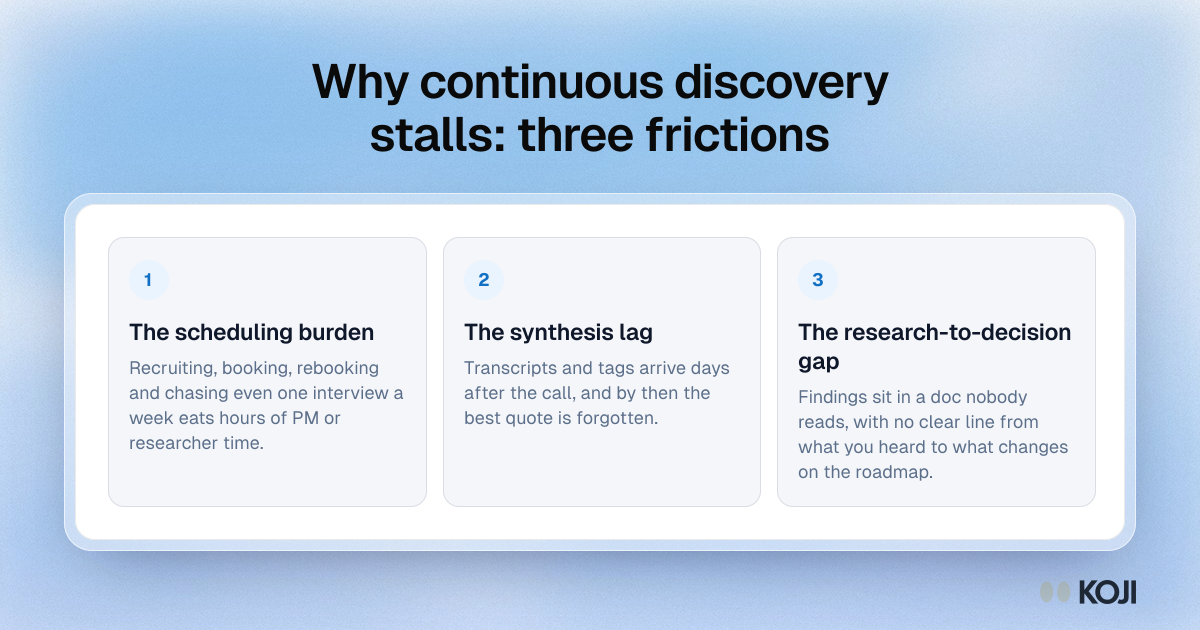
Framework of three frictions that stall continuous discovery: the scheduling burden, the synthesis lag and the gap between research and decisions.

Framework

Why continuous discovery stalls: three frictions
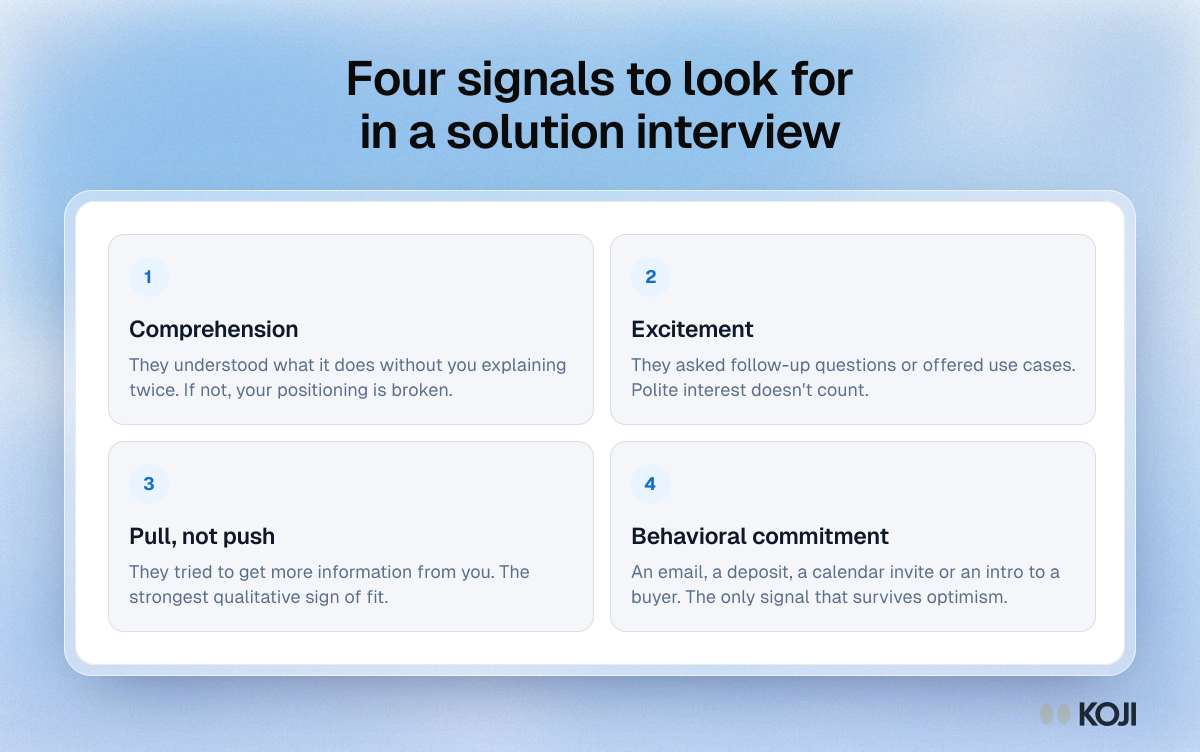
Framework of four solution interview signals in rising order of value: comprehension, excitement, pull rather than push, and behavioral commitment.

Framework

Four signals to look for in a solution interview
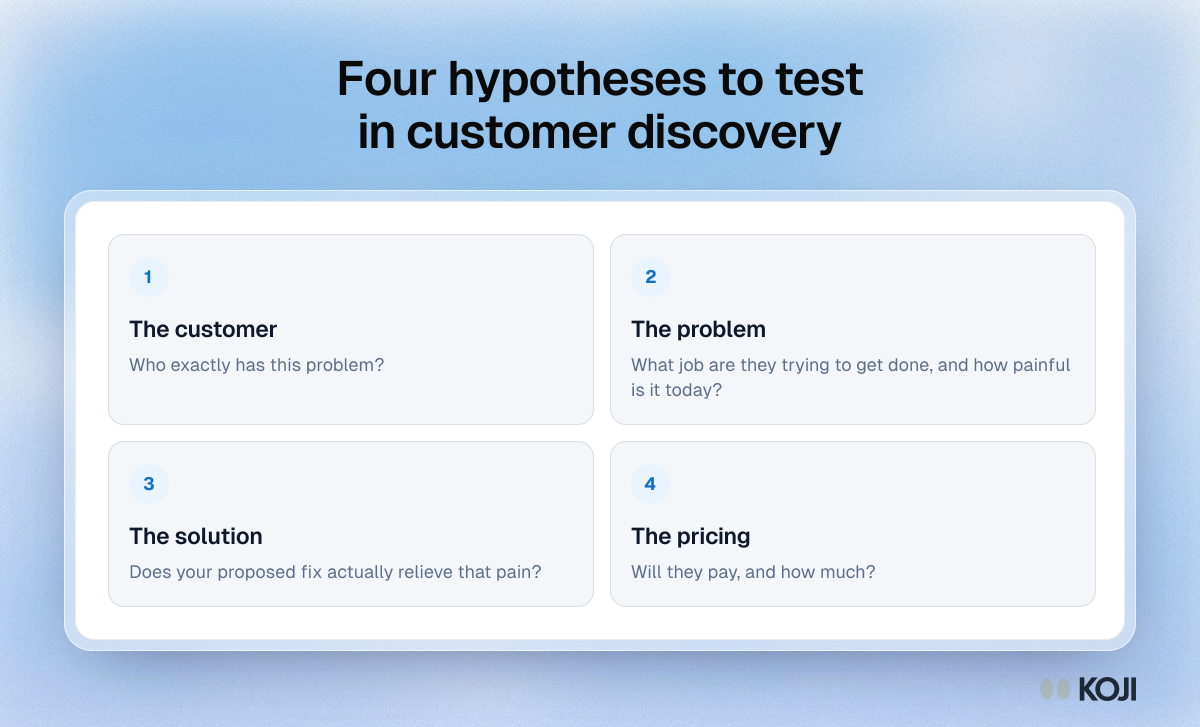
Framework of four customer discovery hypotheses to write down before interviews: the customer, the problem, the solution and the pricing.

Framework

Four hypotheses to test in customer discovery
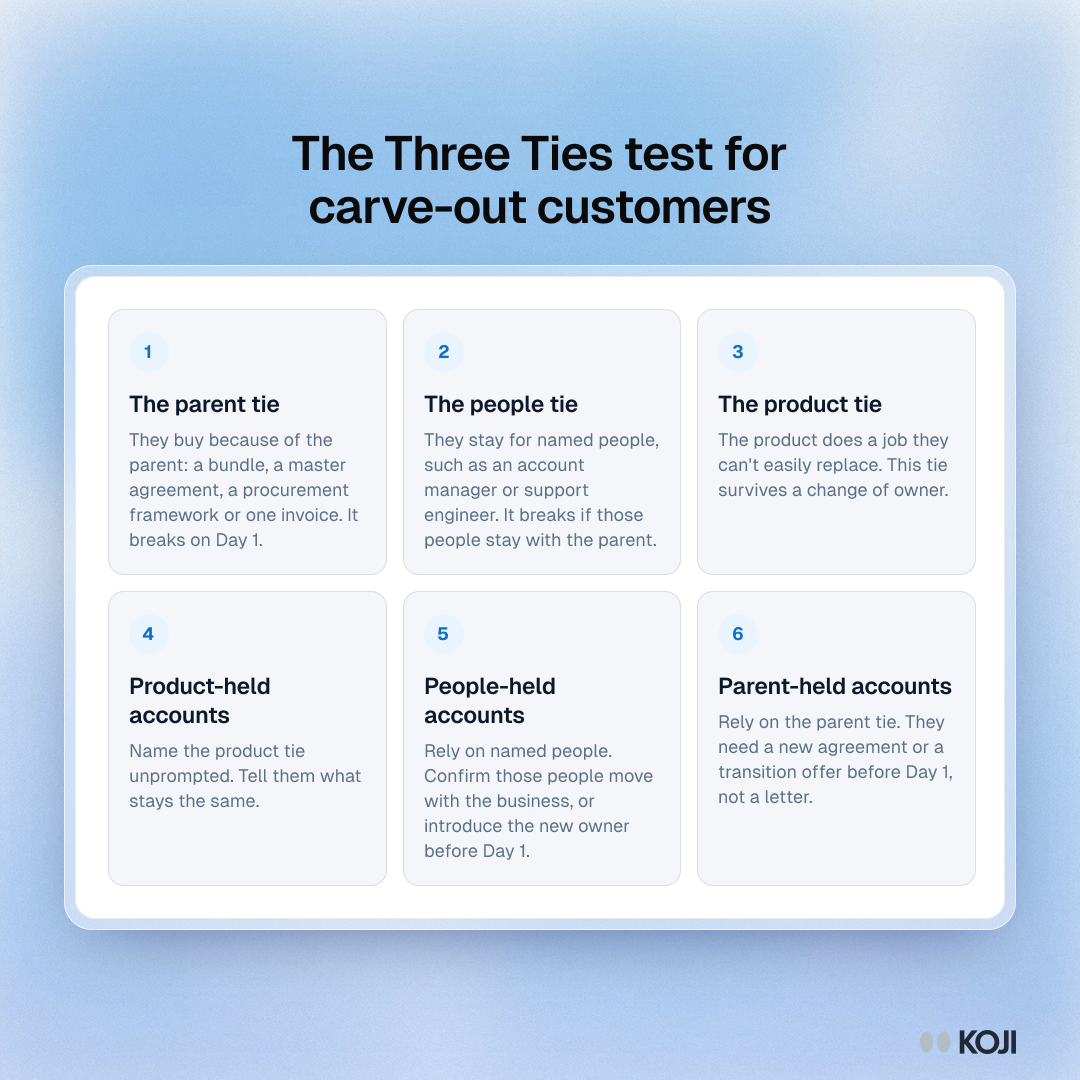
Framework of the Three Ties test for carve-out customers: the parent tie, the people tie and the product tie, and the three account groups

Framework

The Three Ties test for carve-out customers
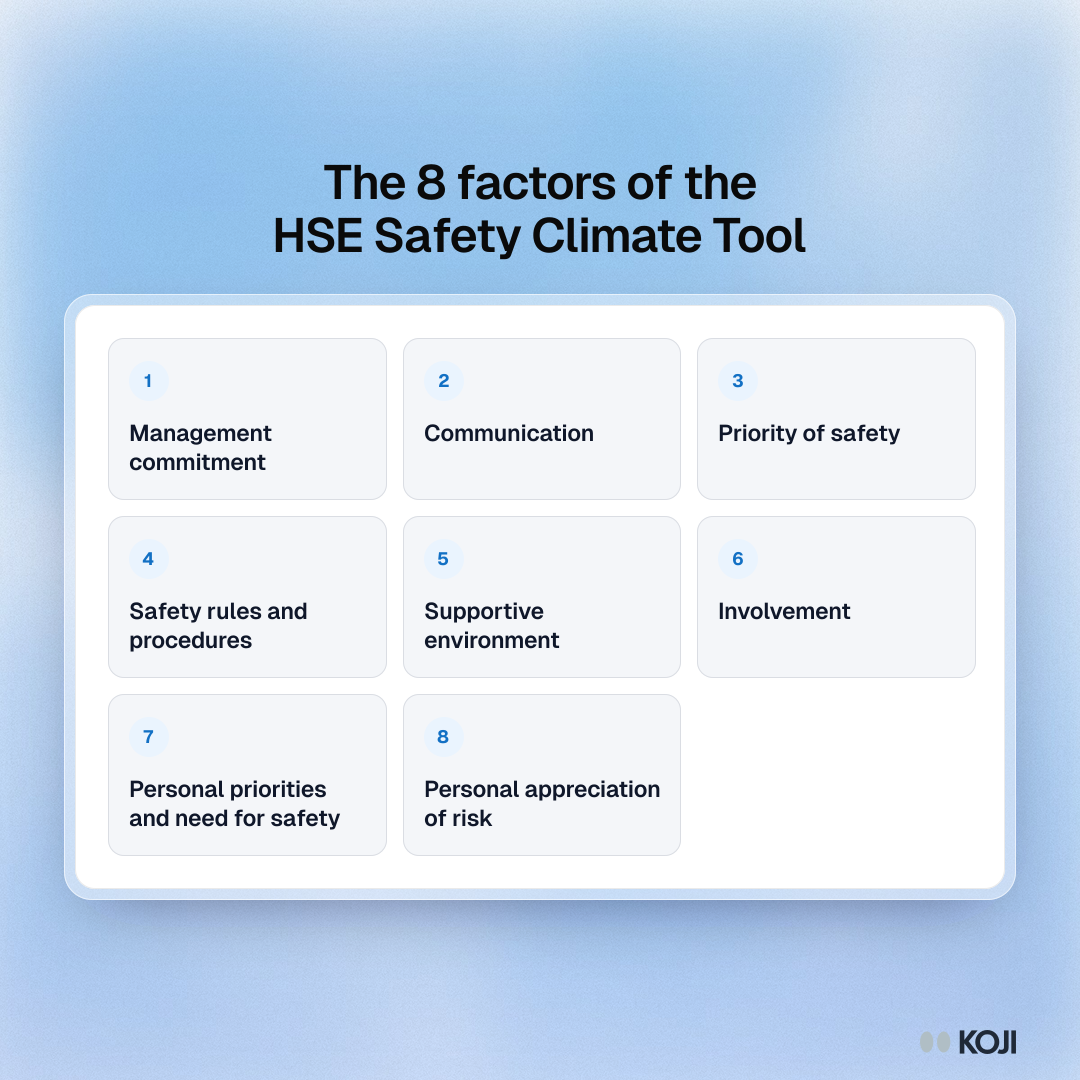
Framework listing the eight safety climate factors in the HSE Safety Climate Tool, from management commitment to personal appreciation of risk.

Framework

The 8 factors of the HSE Safety Climate Tool
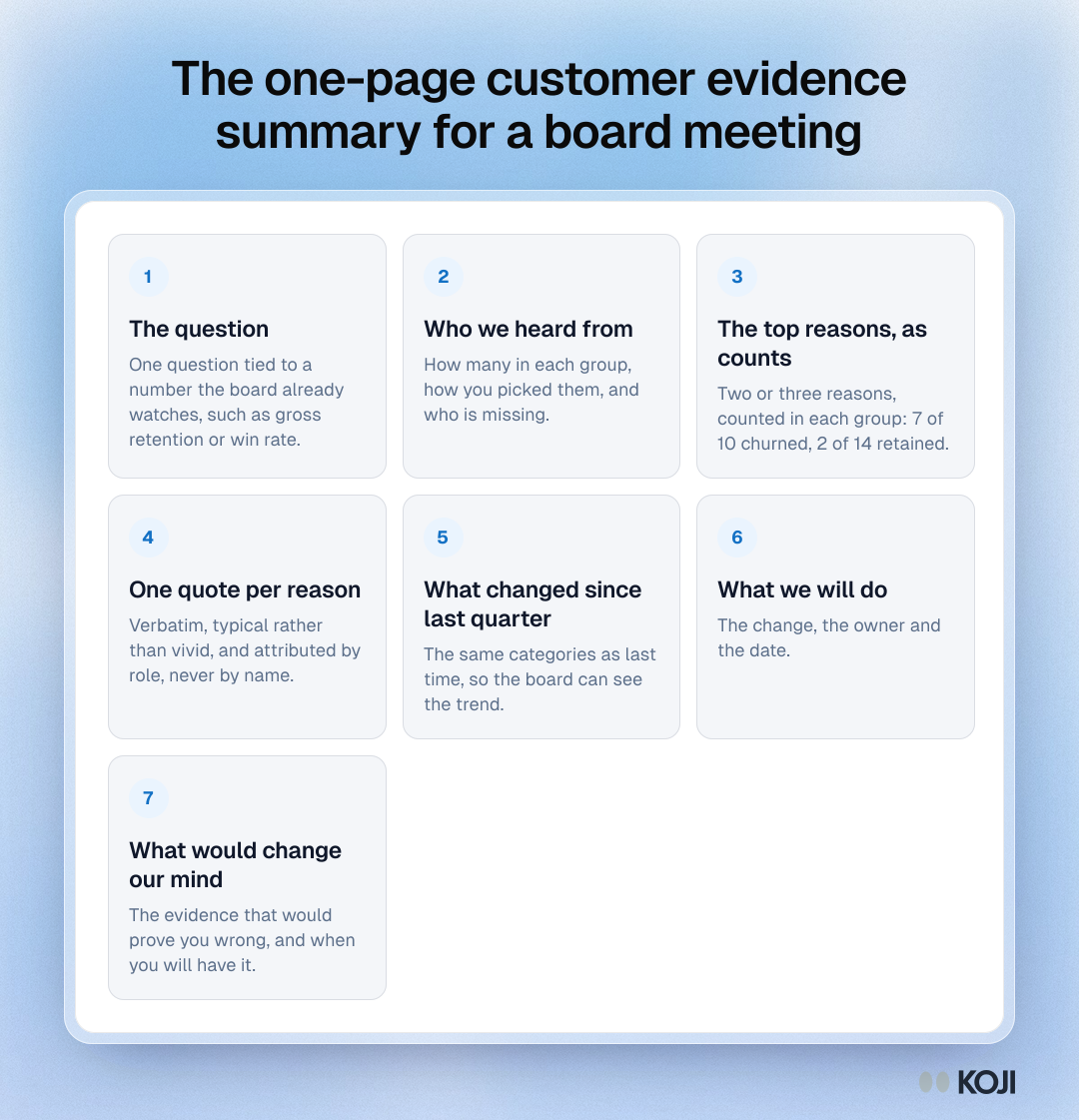
Framework of the seven parts of a one-page customer evidence summary for a board, from the question and who you heard from to what would change your mind.

Framework

The one-page customer evidence summary for a board meeting
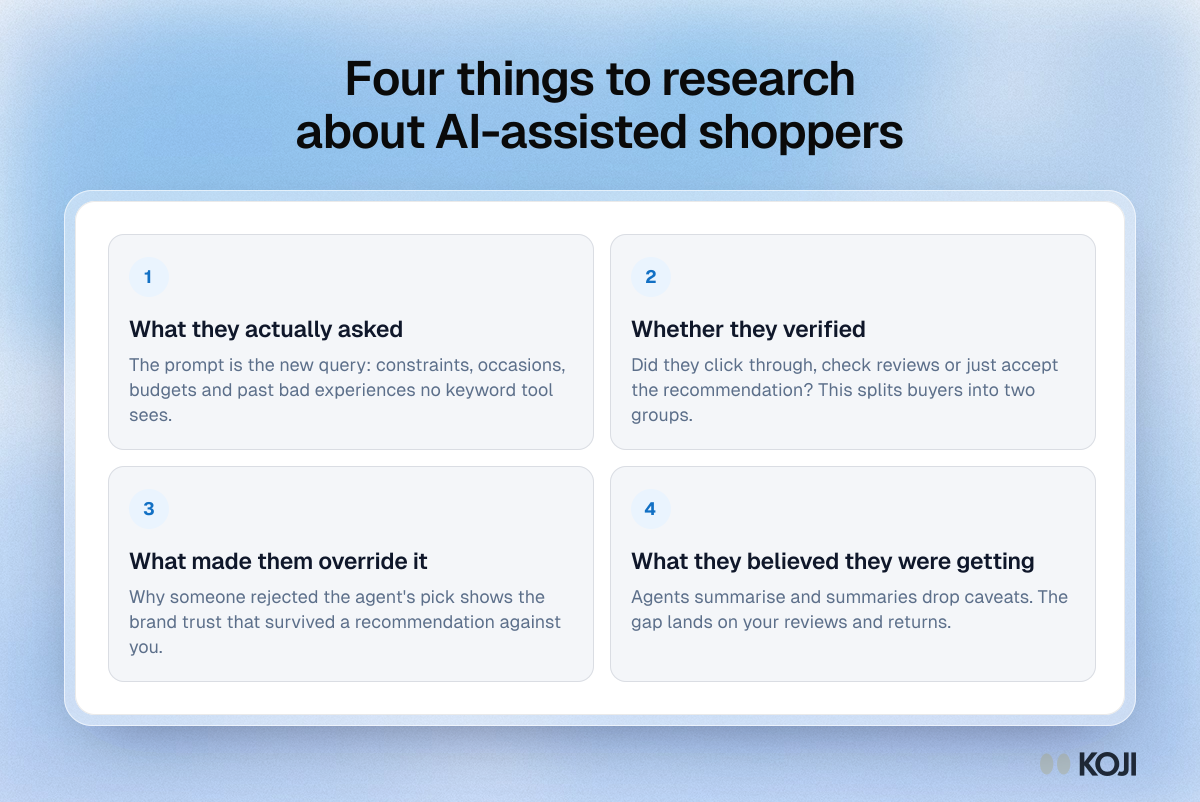
Framework of four things to research with shoppers who use AI agents: what they asked, whether they checked, why they overrode it and what they expected.

Framework

Four things to research about AI-assisted shoppers
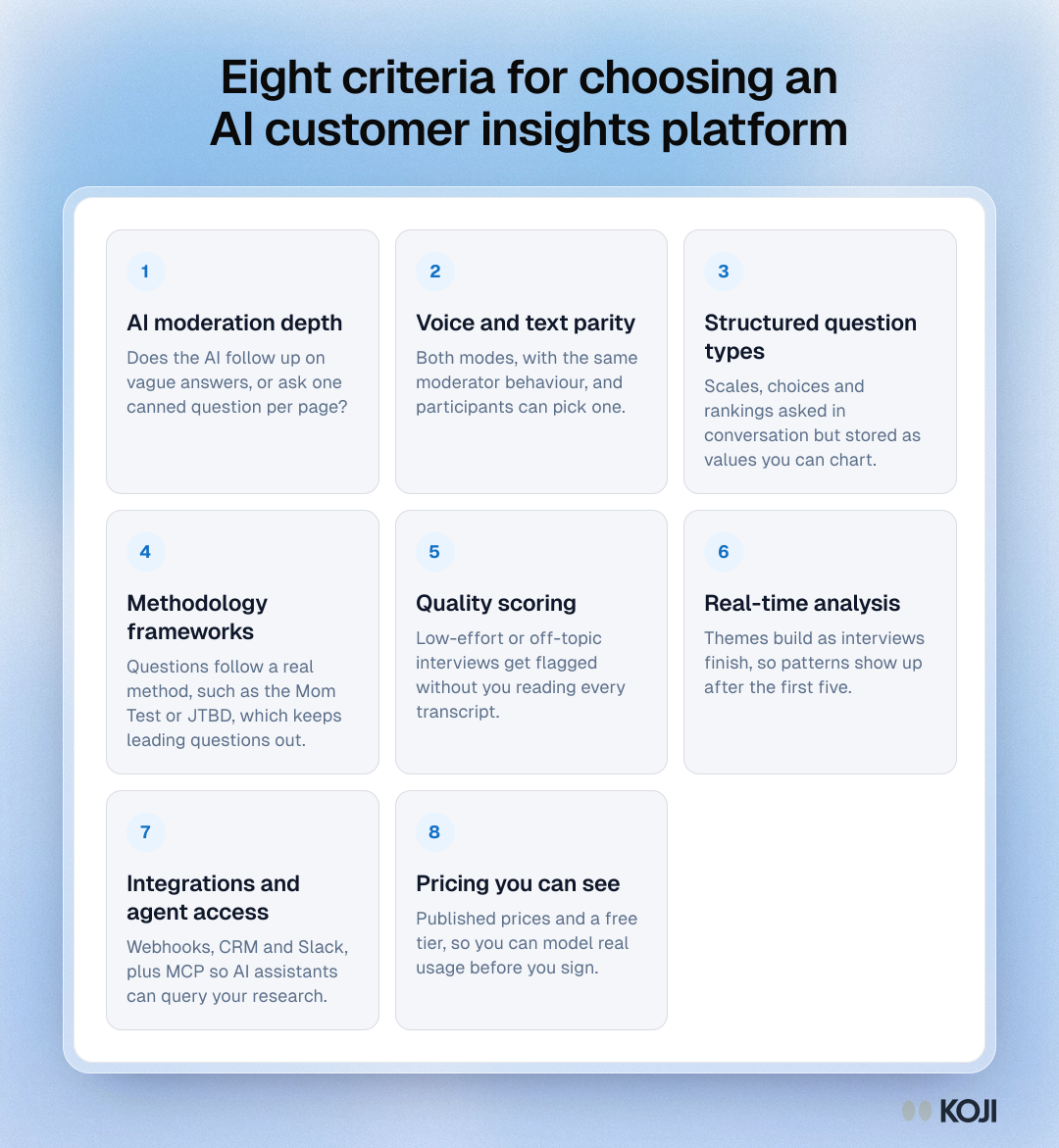
Framework of eight buying criteria for an AI customer insights platform, from moderation depth and voice support to quality scoring and pricing.

Framework

Eight criteria for choosing an AI customer insights platform
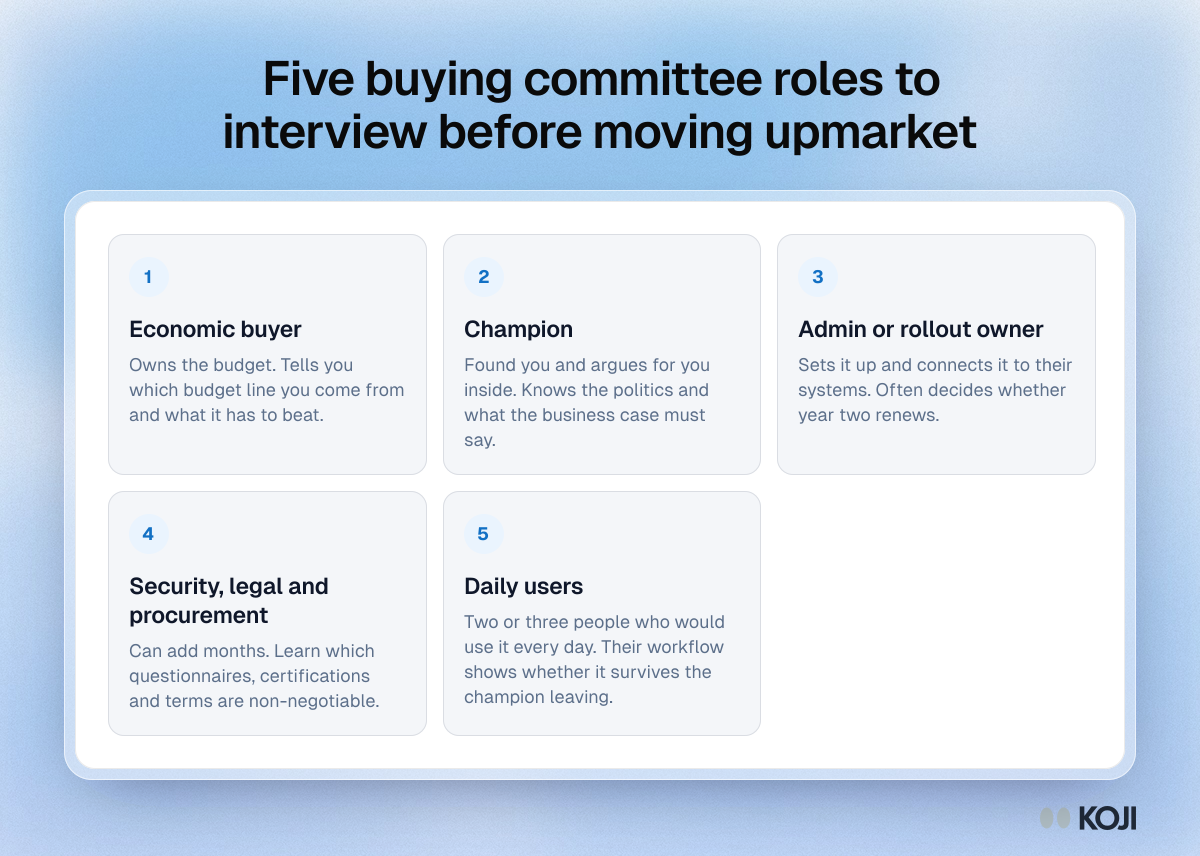
Framework showing the five roles to interview before moving upmarket: economic buyer, champion, admin, security and procurement, and daily users.

Framework

Five buying committee roles to interview before moving upmarket
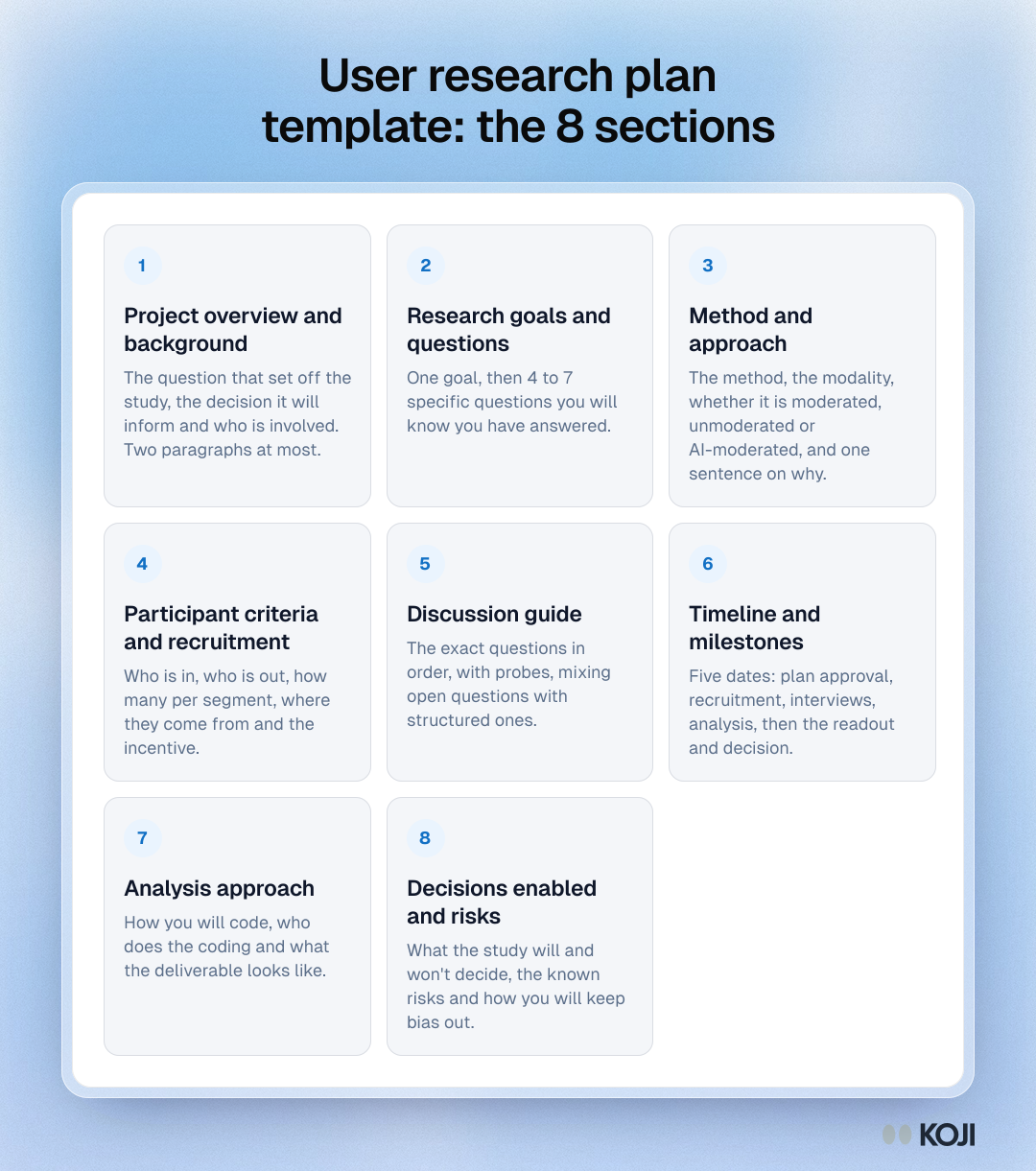
Framework of the eight sections of a user research plan, from project overview and research questions to analysis approach, decisions and risks.

Framework

User research plan template: the 8 sections
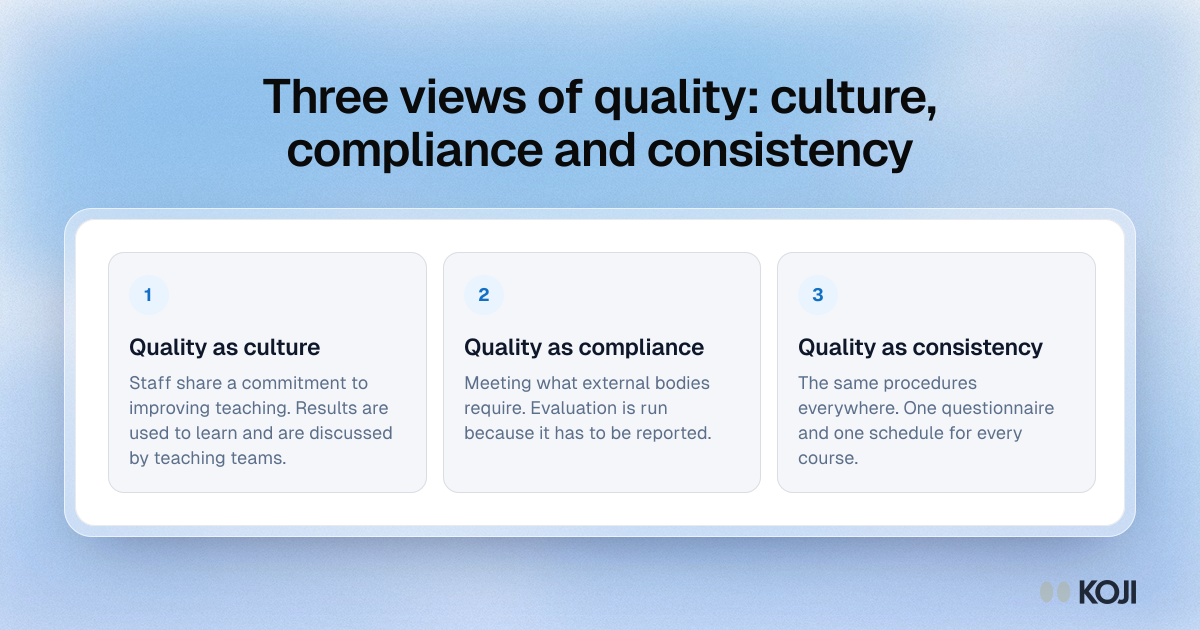
Framework of three views of quality in higher education, culture, compliance and consistency, and how each shows up in a course evaluation system.

Framework

Three views of quality: culture, compliance and consistency
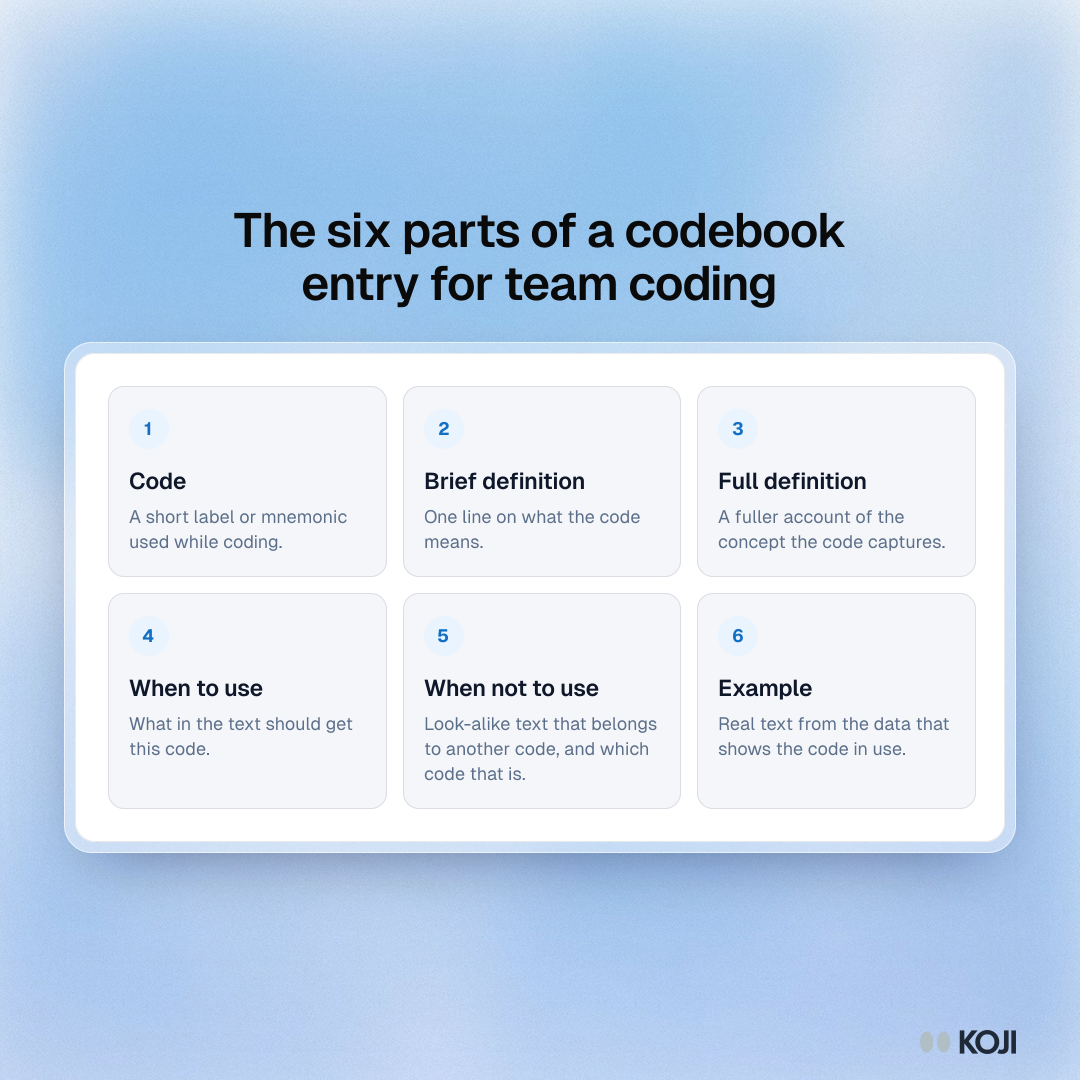
Framework of the six parts of a codebook entry from MacQueen and colleagues: code, brief definition, full definition, when to use, when not to use and example.

Framework

The six parts of a codebook entry for team coding
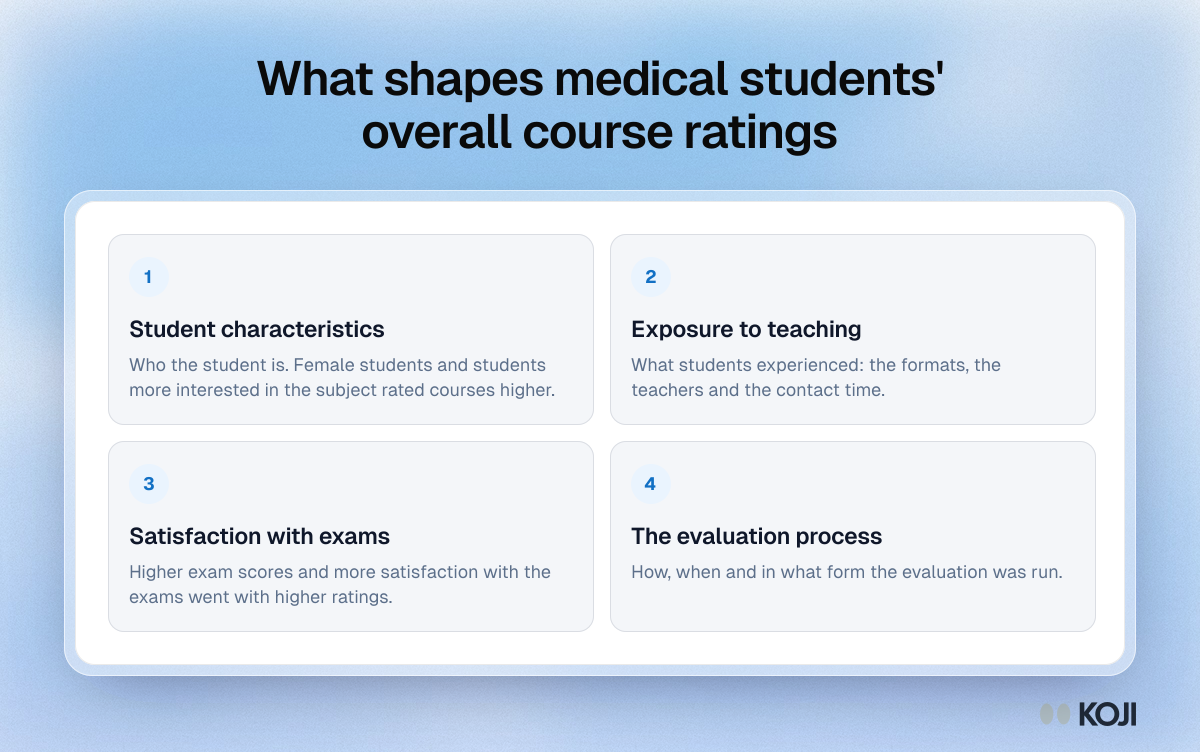
Framework of four factor groups behind medical students' course ratings: student traits, exposure to teaching, exam satisfaction and the evaluation process.

Framework

What shapes medical students' overall course ratings
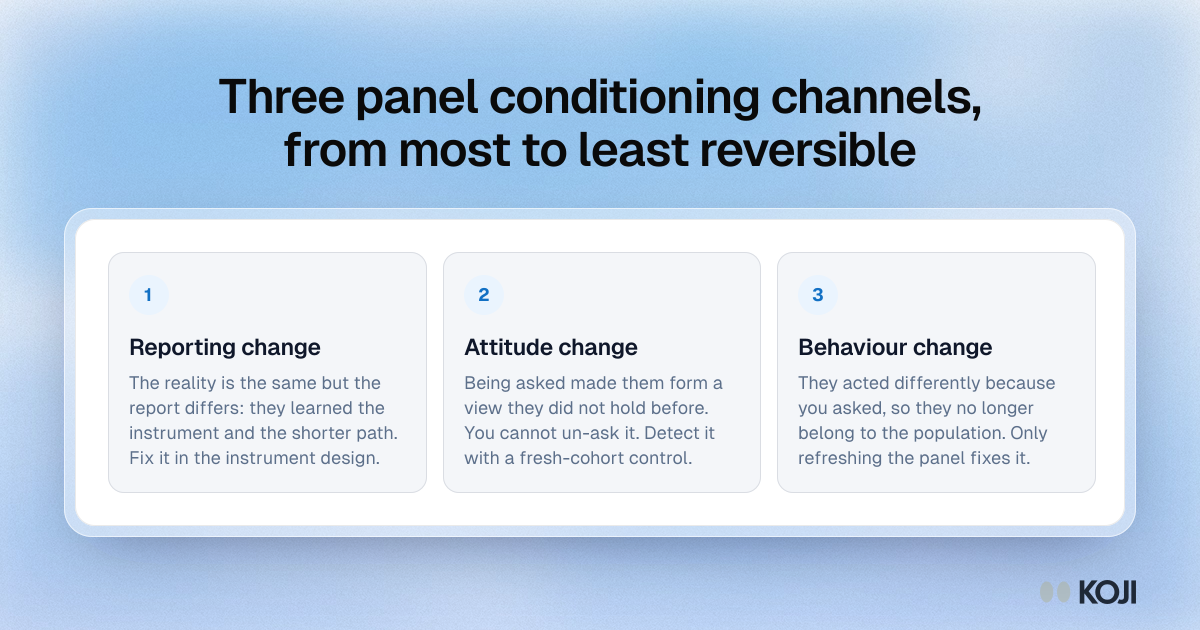
Framework of three panel conditioning channels: reporting change, attitude change and behaviour change, ranked by how far each can be undone.

Framework

Three panel conditioning channels, from most to least reversible
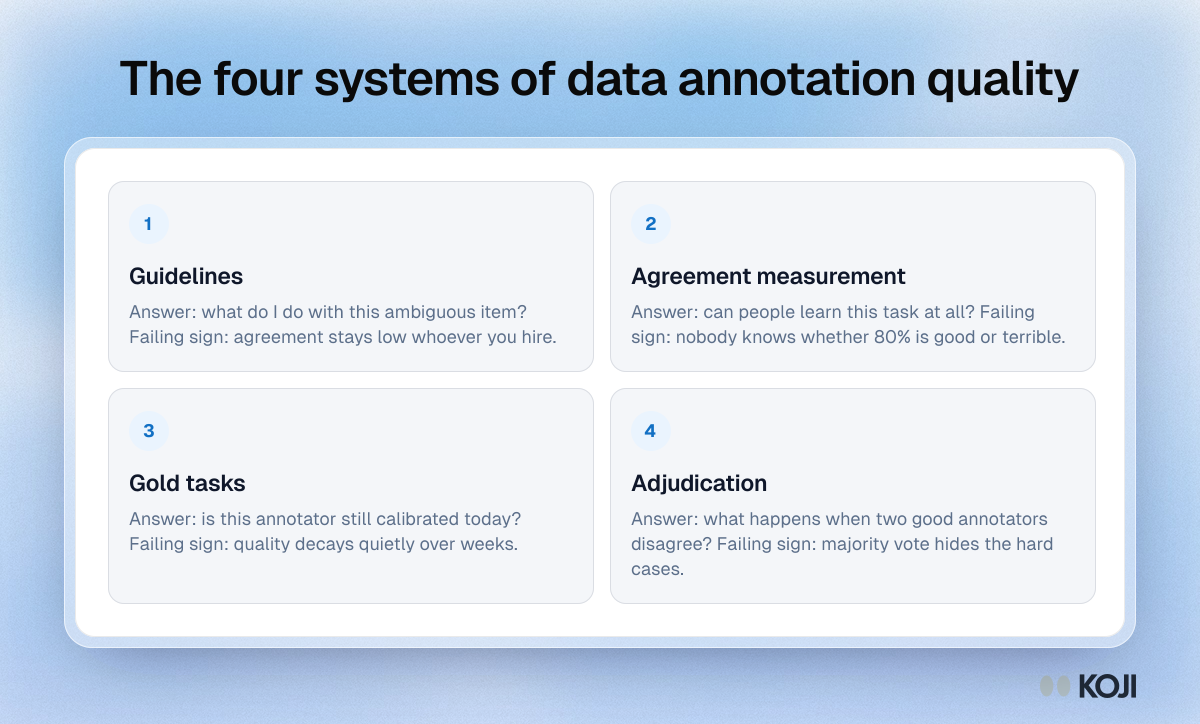
Framework of the four systems behind annotation quality: guidelines, agreement measurement, gold tasks and adjudication, each with its failing sign.

Framework

The four systems of data annotation quality
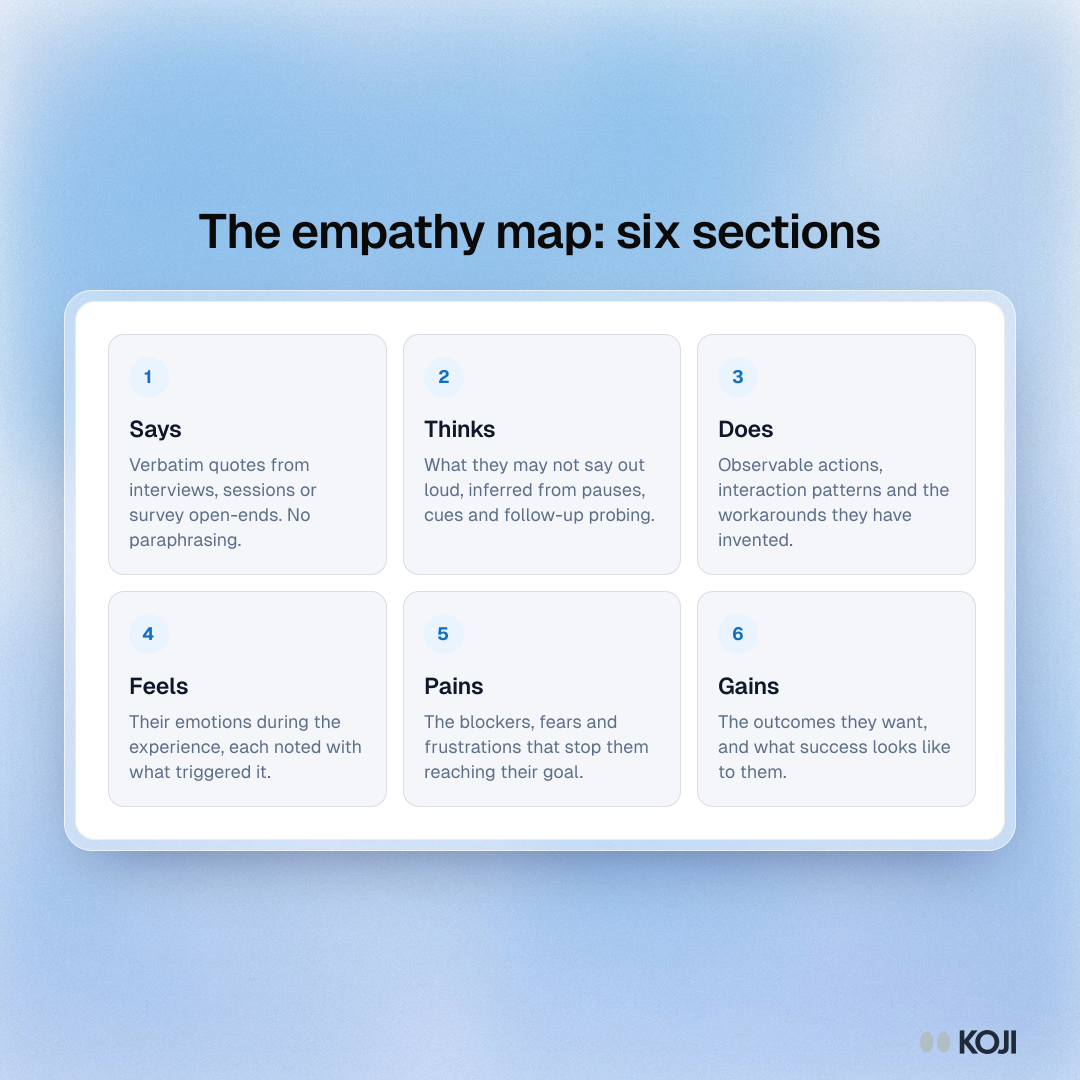
Framework showing the six sections of an empathy map: says, thinks, does and feels around the user, plus pains and gains.

Framework

The empathy map: six sections
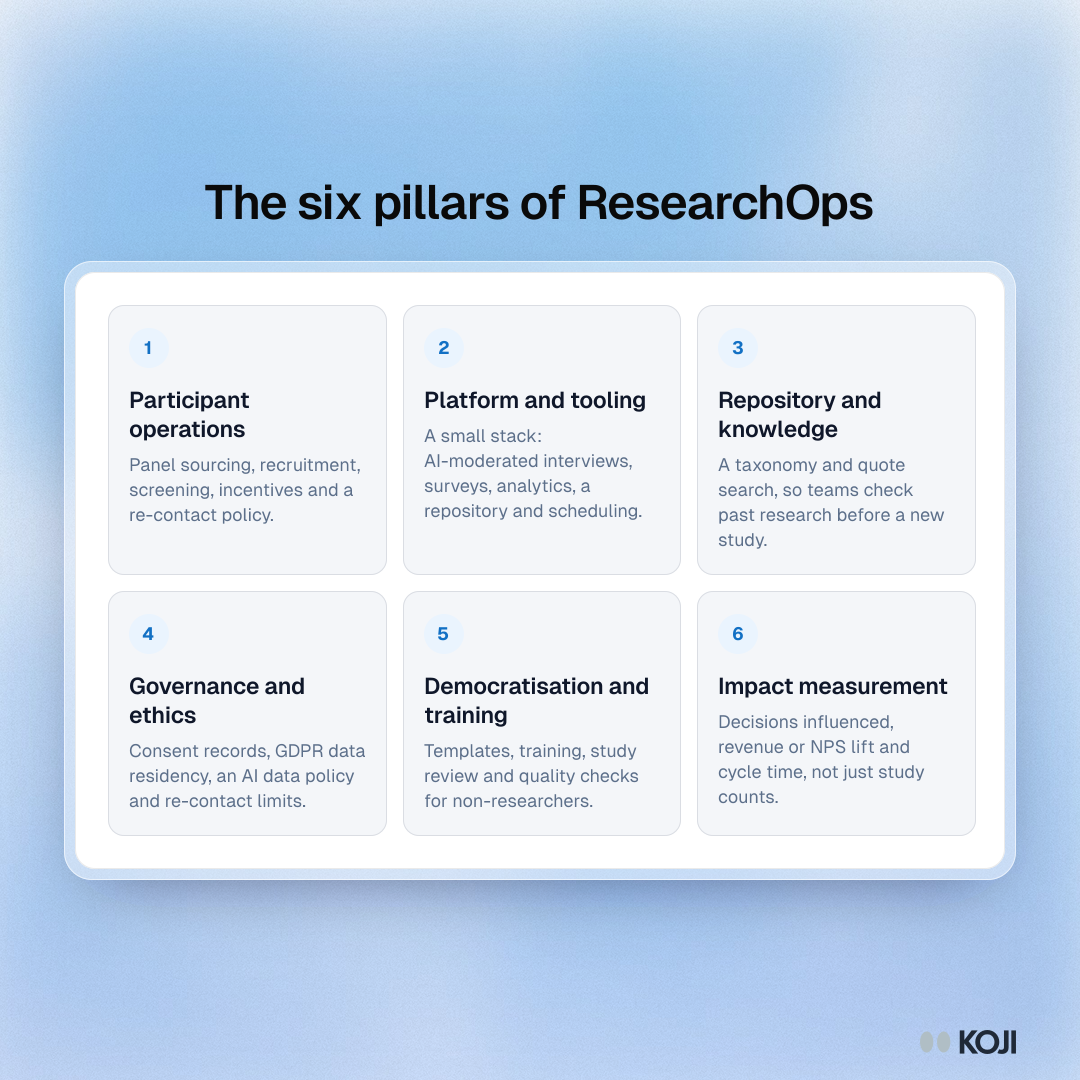
Framework of the six pillars of research operations: participants, platform and tools, repository, governance, democratisation and impact measurement.

Framework

The six pillars of ResearchOps
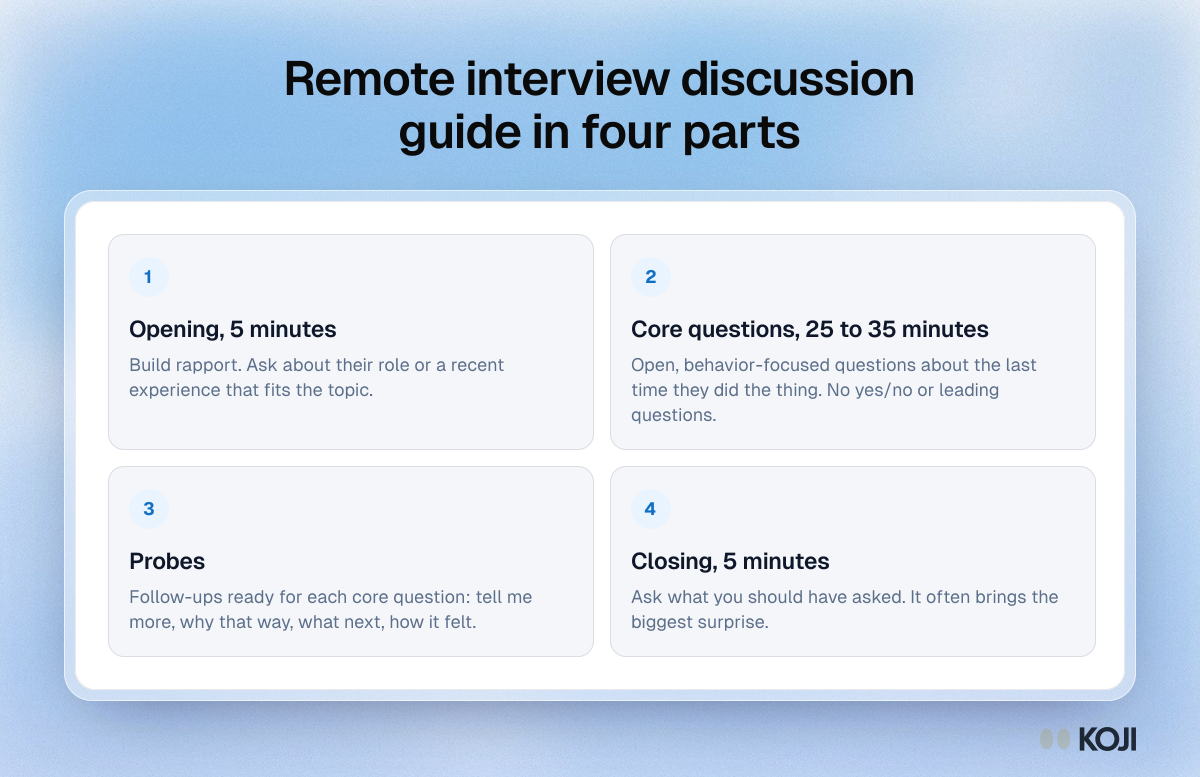
Framework of a remote interview discussion guide in four parts: a 5-minute opening, 25 to 35 minutes of core questions, prepared probes and a 5-minute close.

Framework

Remote interview discussion guide in four parts
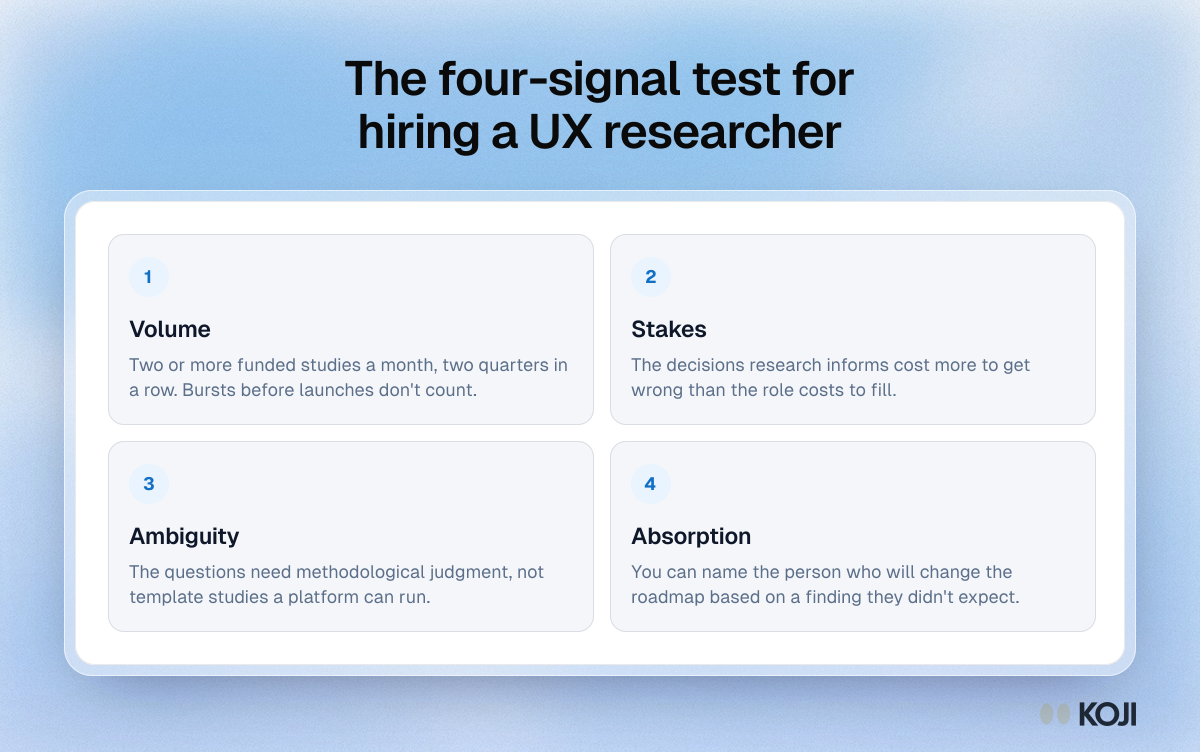
Framework of four signals that show when to hire a UX researcher: continuous volume, high stakes, ambiguous questions and someone who will act on findings.

Framework

The four-signal test for hiring a UX researcher
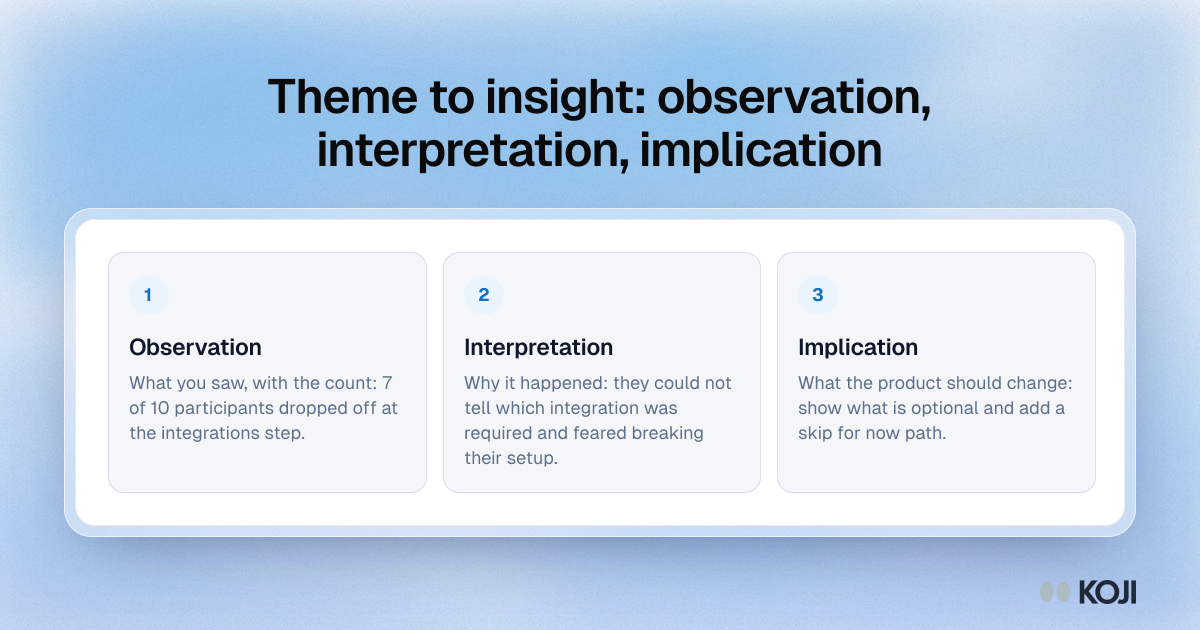
Framework showing how an interview theme becomes an insight in three parts: the observation with its count, the interpretation of why, and the implication.

Framework

Theme to insight: observation, interpretation, implication
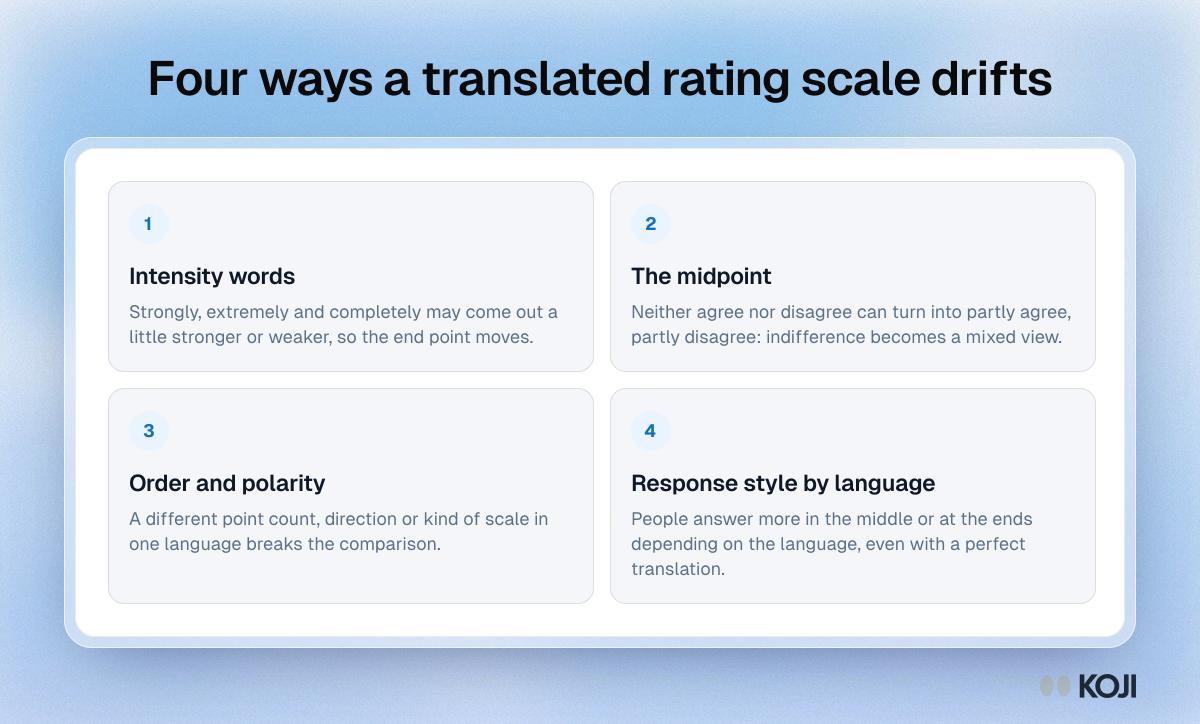
Framework of four ways a translated rating scale drifts: intensity words, the midpoint, order and polarity, and response style by language.

Framework

Four ways a translated rating scale drifts
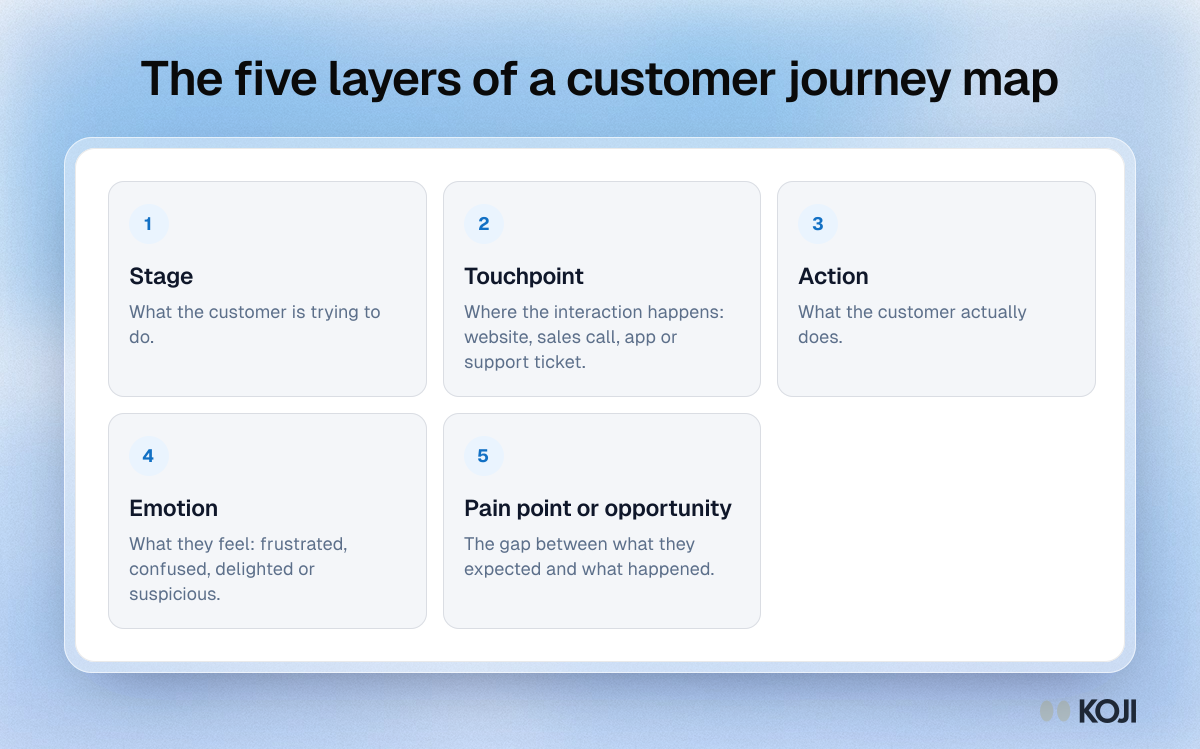
Framework showing the five layers to capture at each stage of a customer journey map: stage, touchpoint, action, emotion and pain point or opportunity.

Framework

The five layers of a customer journey map
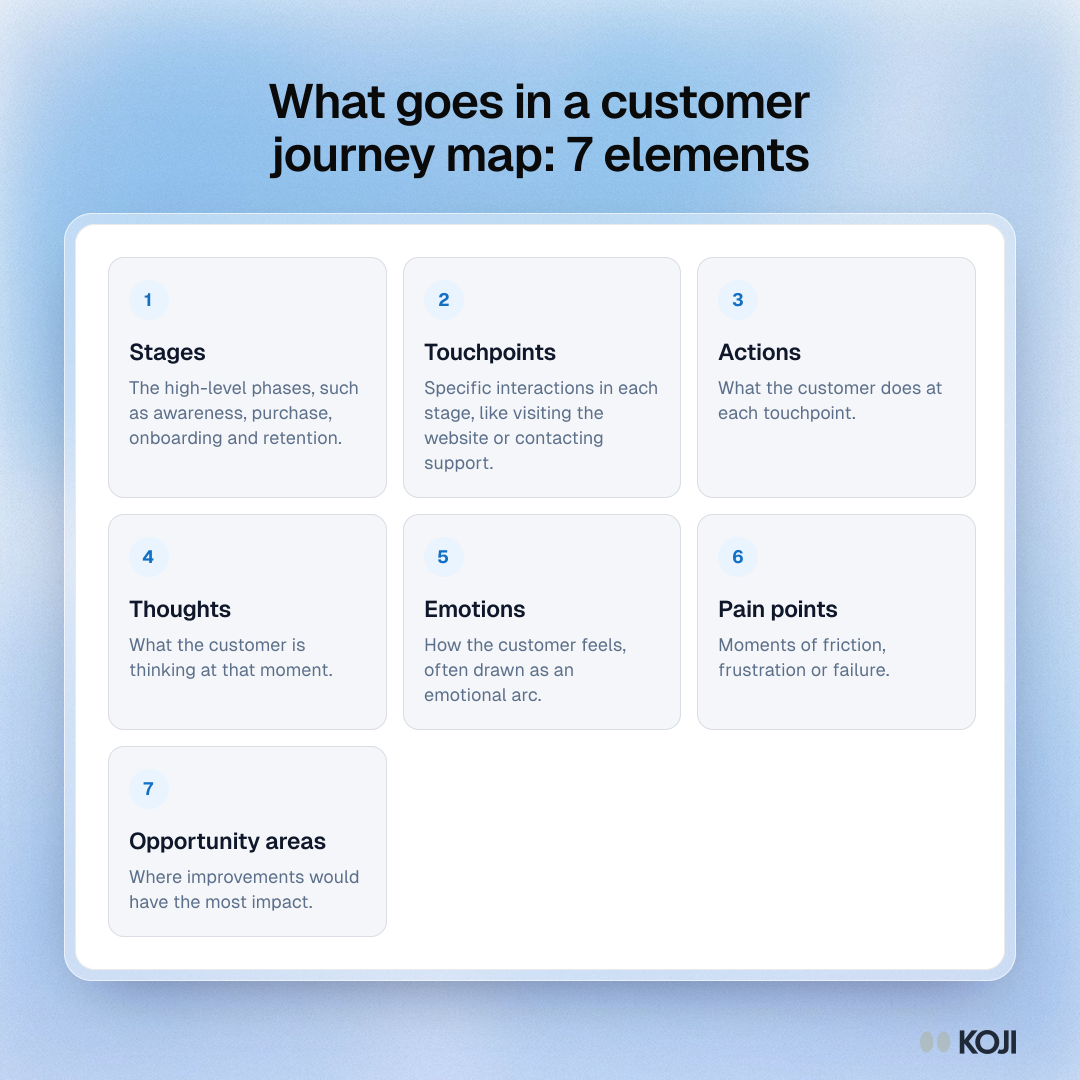
Framework showing the seven elements of a customer journey map: stages, touchpoints, actions, thoughts, emotions, pain points and opportunity areas.

Framework

What goes in a customer journey map: 7 elements
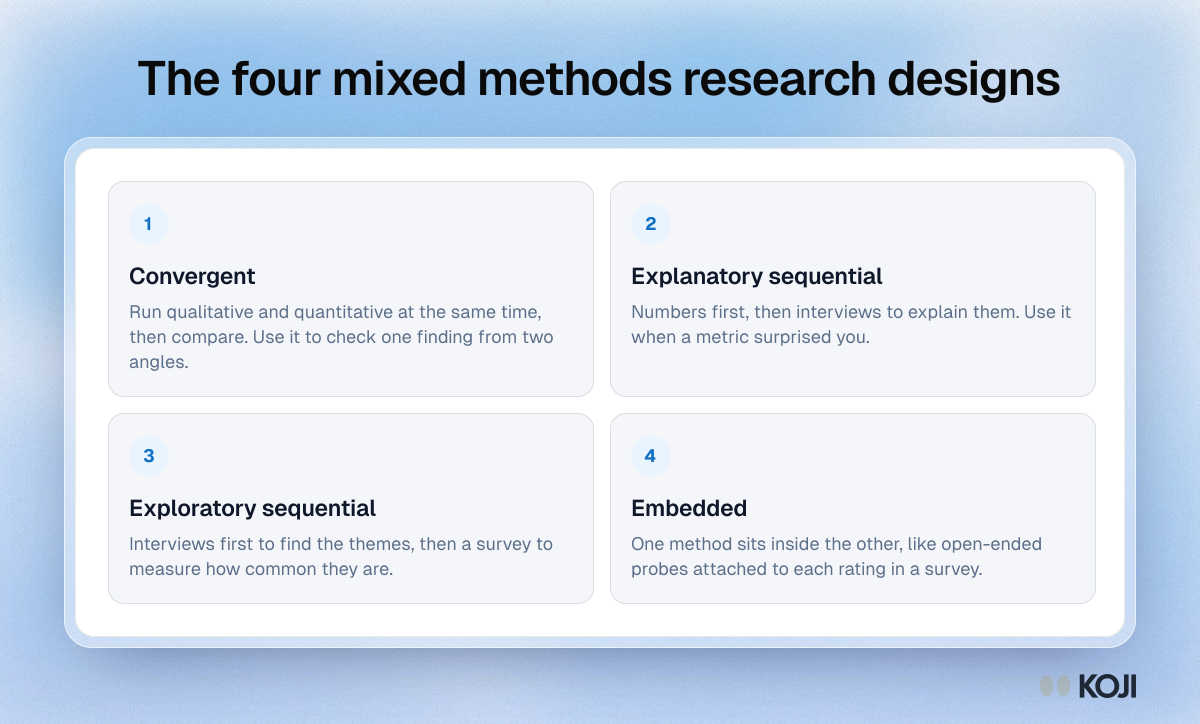
Framework showing the four mixed methods research designs: convergent, explanatory sequential, exploratory sequential and embedded, with when to use each.

Framework

The four mixed methods research designs
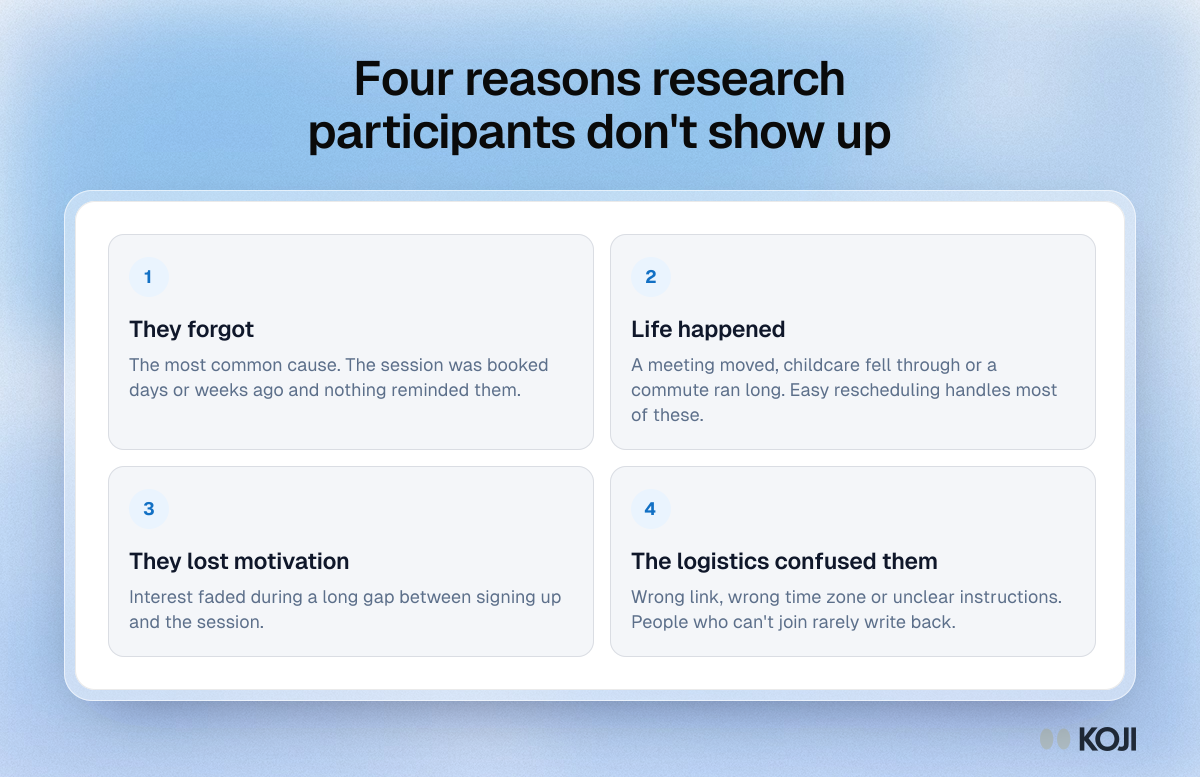
Framework of the four causes of research interview no-shows: they forgot, life happened, they lost motivation, or the logistics confused them.

Framework

Four reasons research participants don't show up
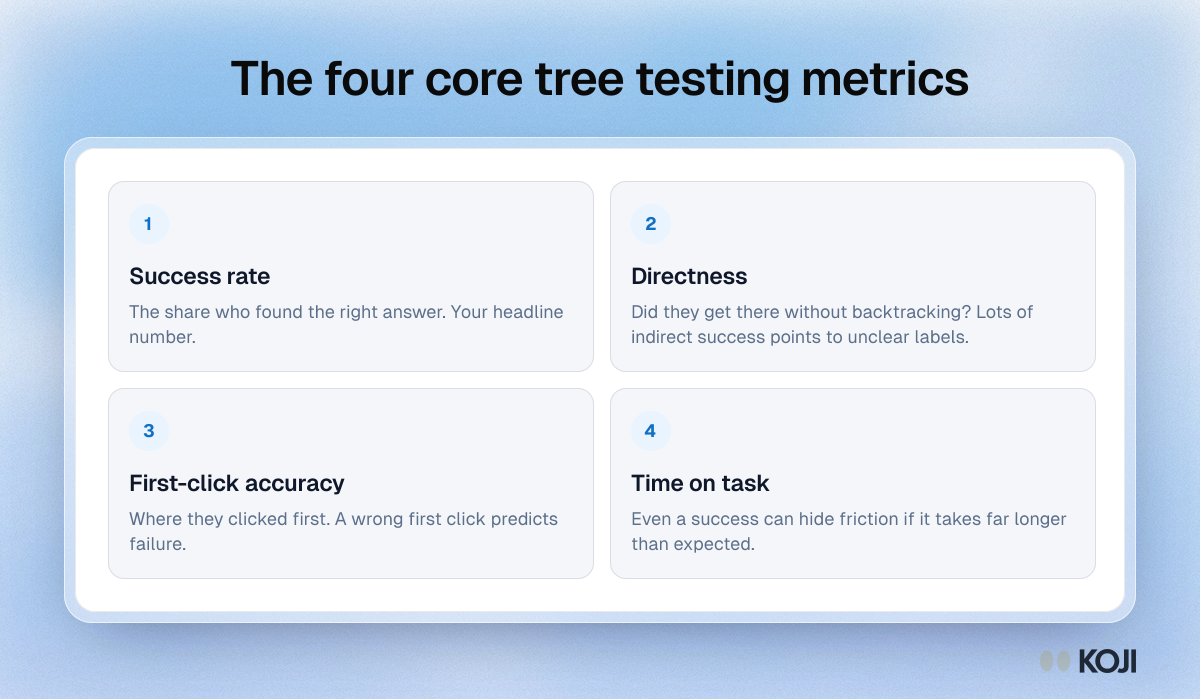
Framework of the four core tree testing metrics: success rate, directness, first-click accuracy and time on task.

Framework

The four core tree testing metrics
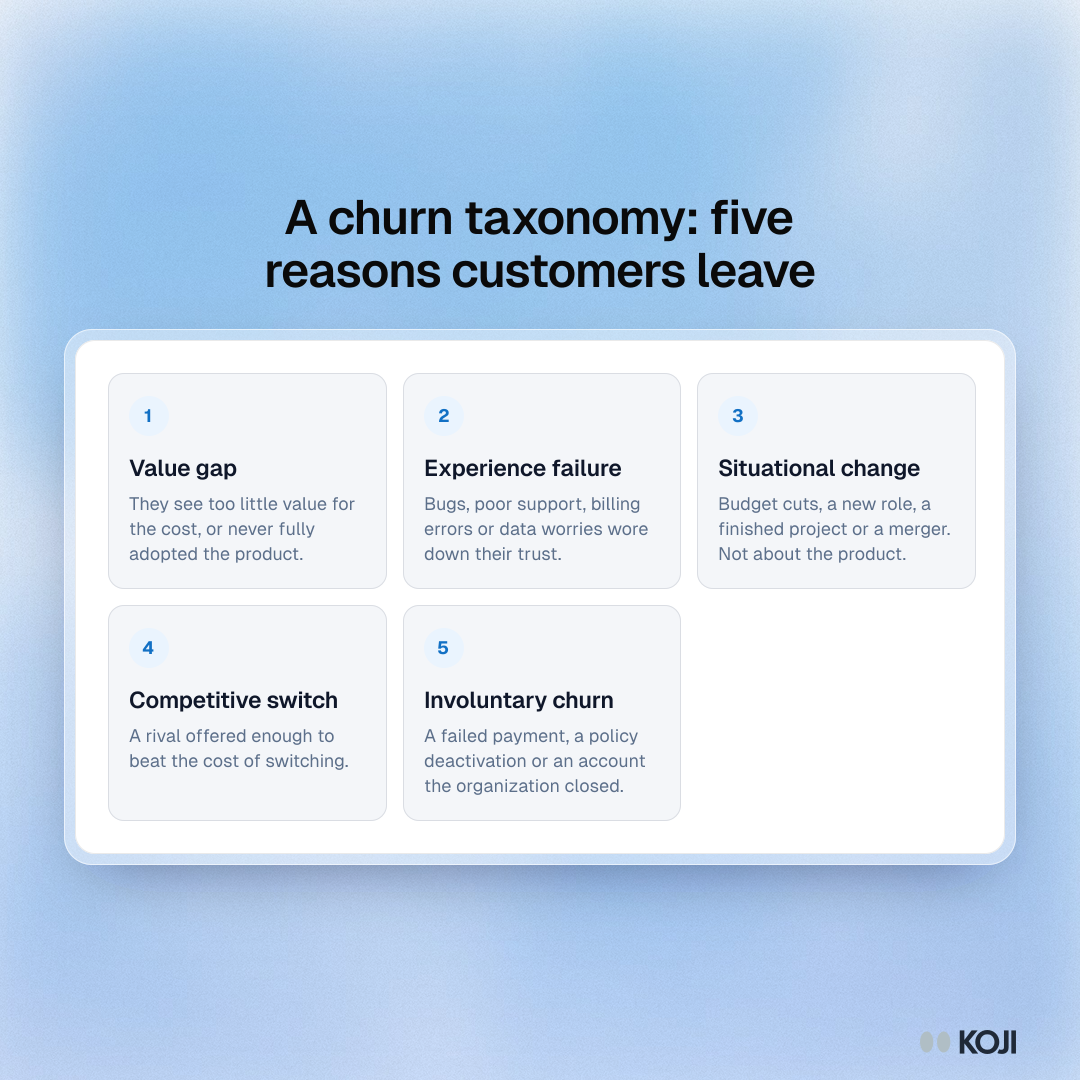
Framework of five churn categories: value gap, experience failure, situational change, competitive switch and involuntary churn such as failed payments.

Framework

A churn taxonomy: five reasons customers leave
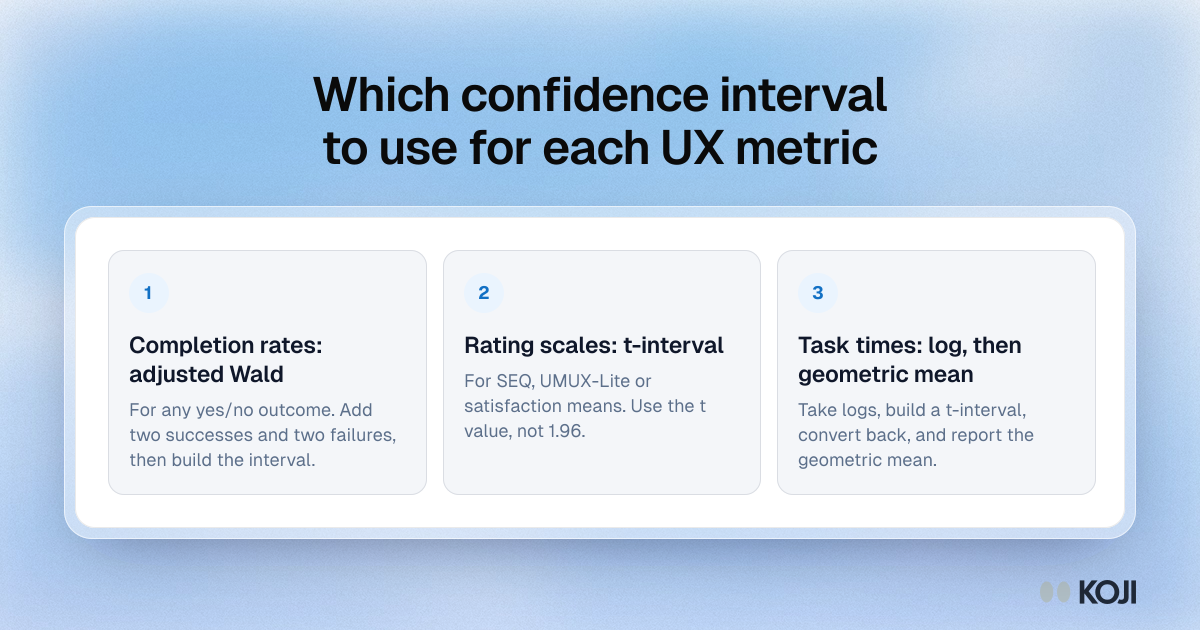
Framework matching UX metrics to interval methods: adjusted Wald for completion rates, t-intervals for ratings and log-based geometric means for task times.

Framework

Which confidence interval to use for each UX metric
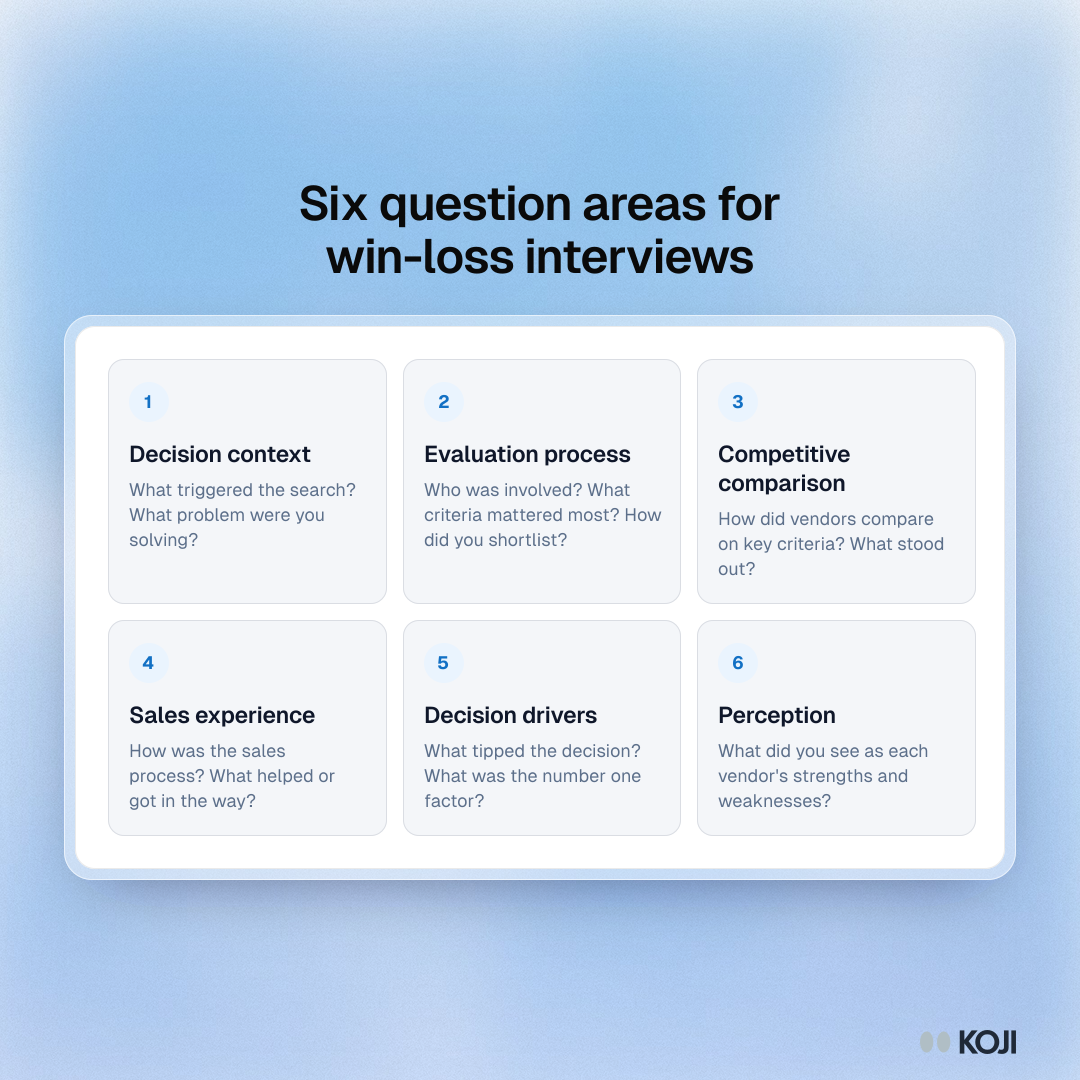
Framework of six win-loss interview question areas: decision context, evaluation, competitive comparison, sales experience, decision drivers and perception.

Framework

Six question areas for win-loss interviews
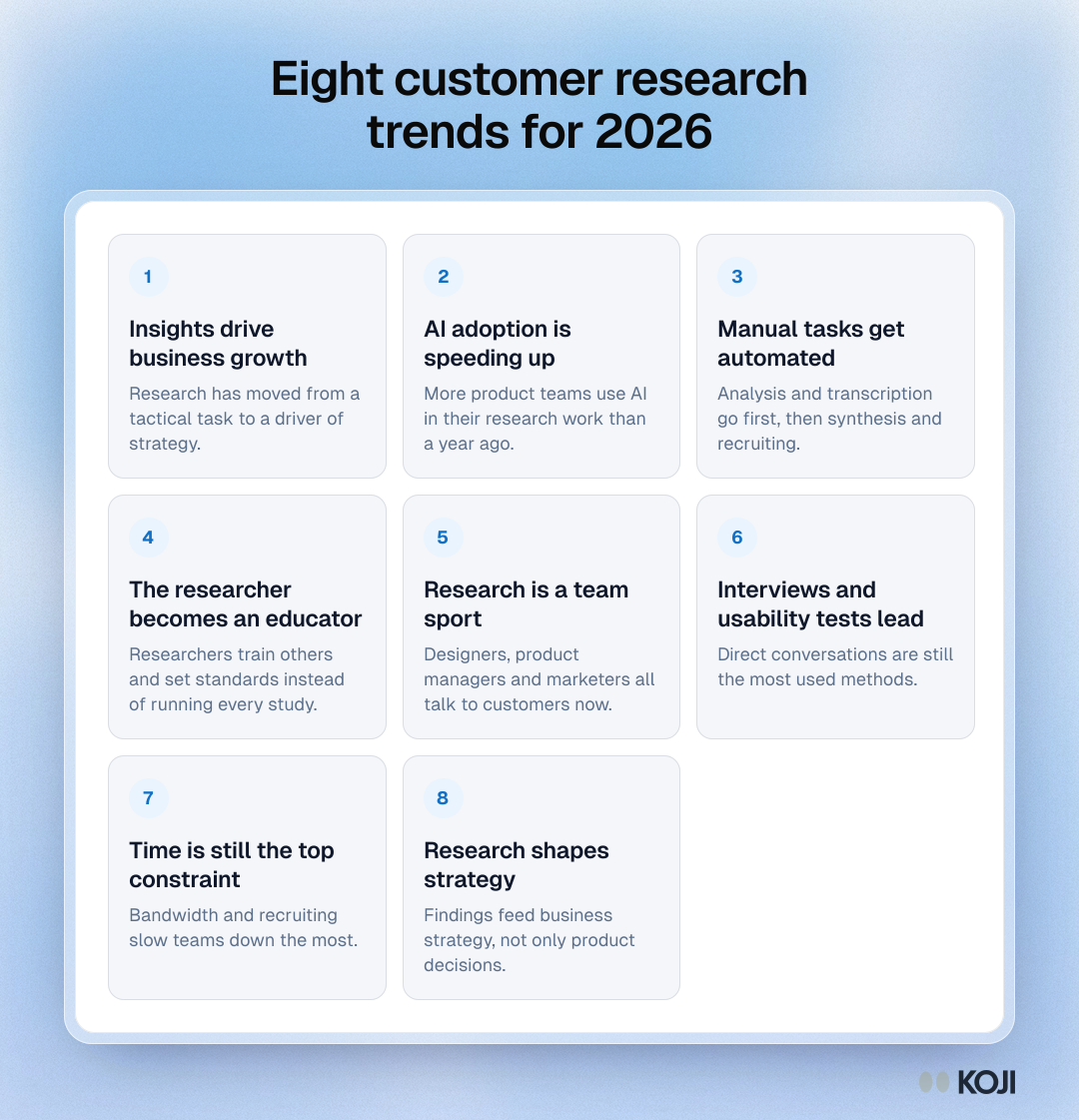
Framework of eight customer research trends for 2026, from faster AI adoption and automated analysis to research as a team sport and a driver of strategy.

Framework

Eight customer research trends for 2026
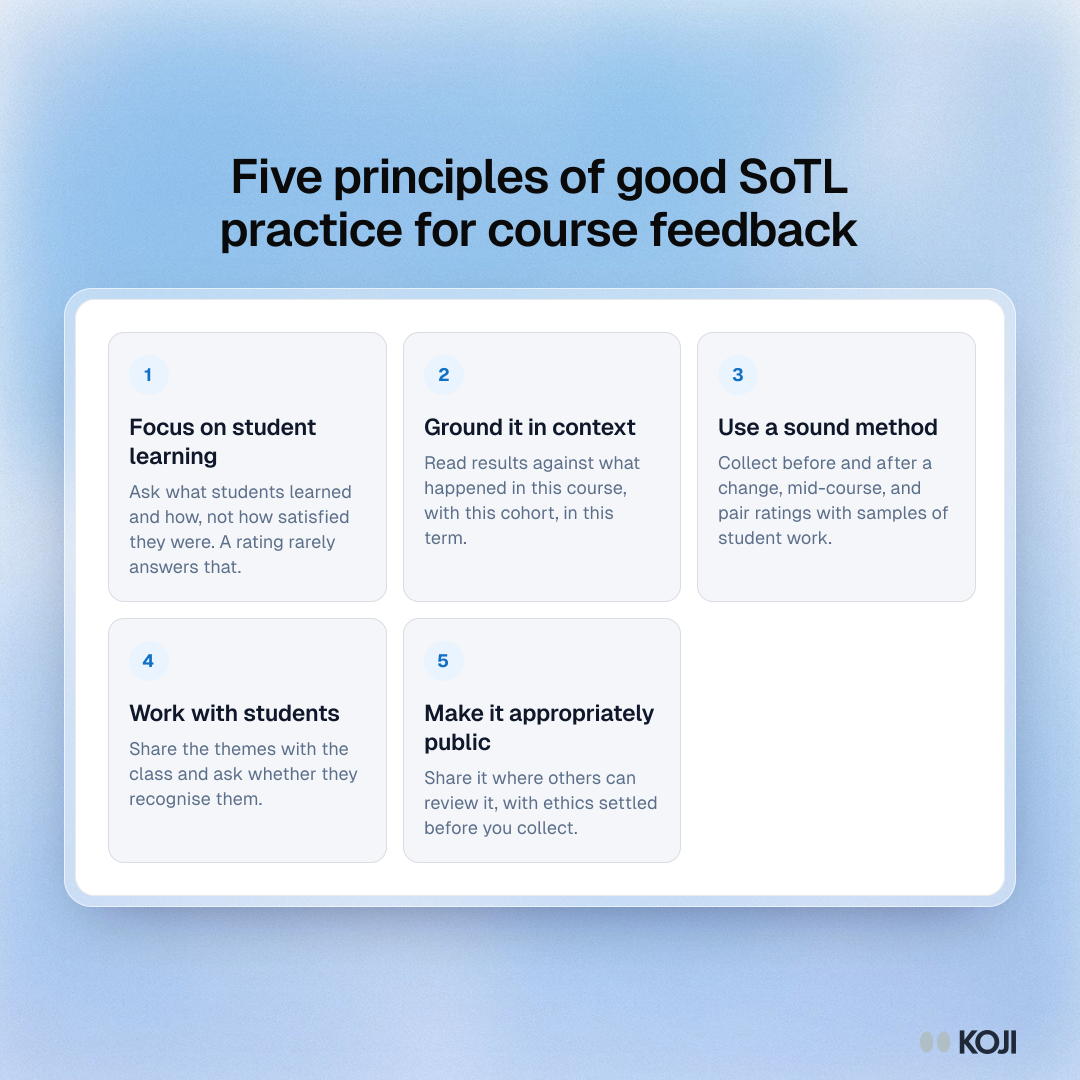
Framework applying Peter Felten's five principles of good SoTL practice to course evaluation data, from a learning question to appropriately public results.

Framework

Five principles of good SoTL practice for course feedback
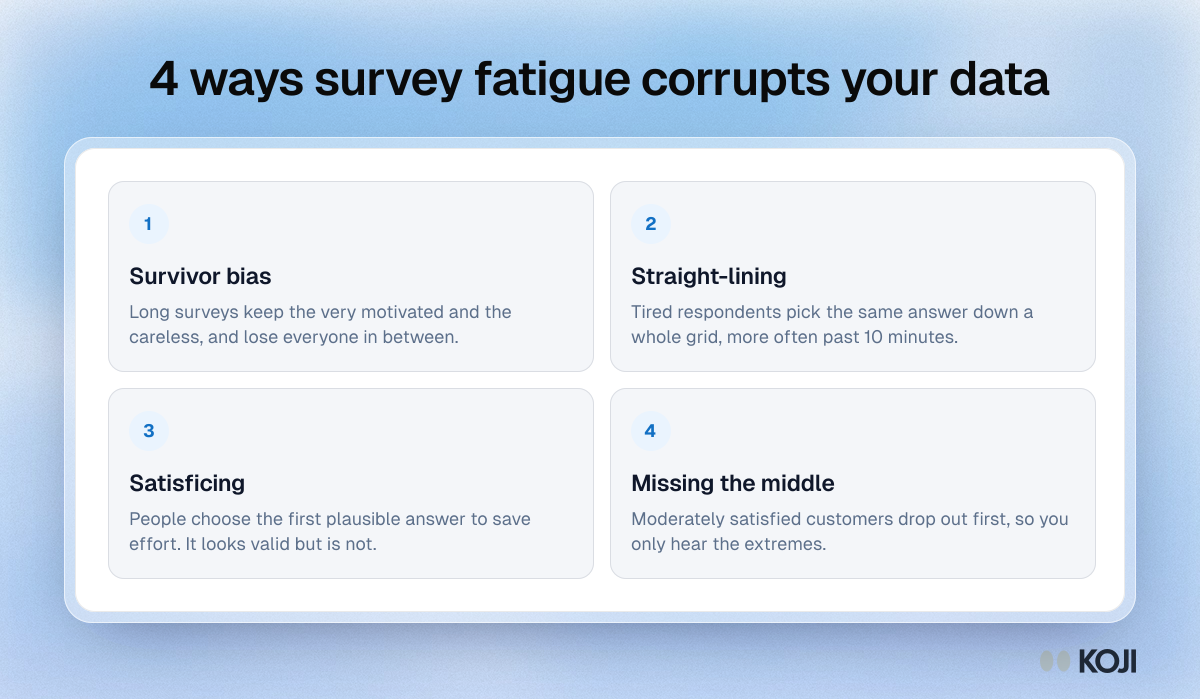
Framework of four ways survey fatigue distorts results: survivor bias, straight-lining, satisficing and losing the moderately satisfied middle.

Framework

4 ways survey fatigue corrupts your data
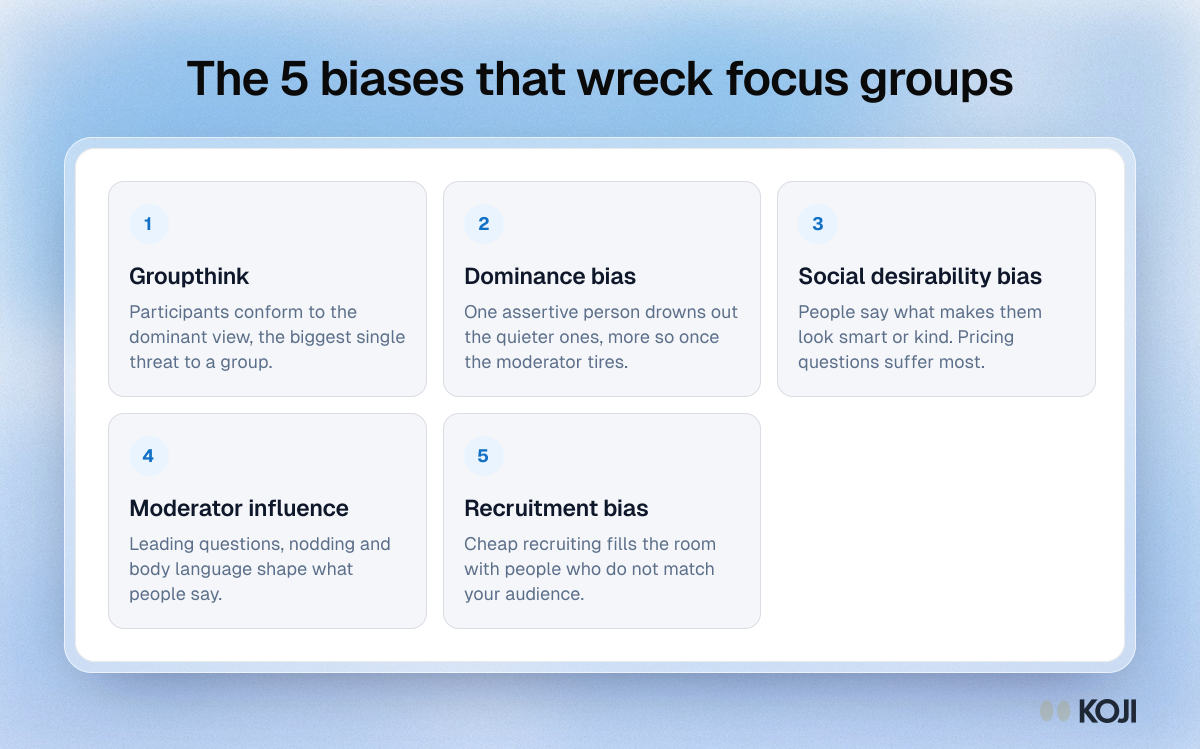
Framework of five focus group biases: groupthink, dominance bias, social desirability bias, moderator influence and recruitment bias, with what each does.

Framework

The 5 biases that wreck focus groups
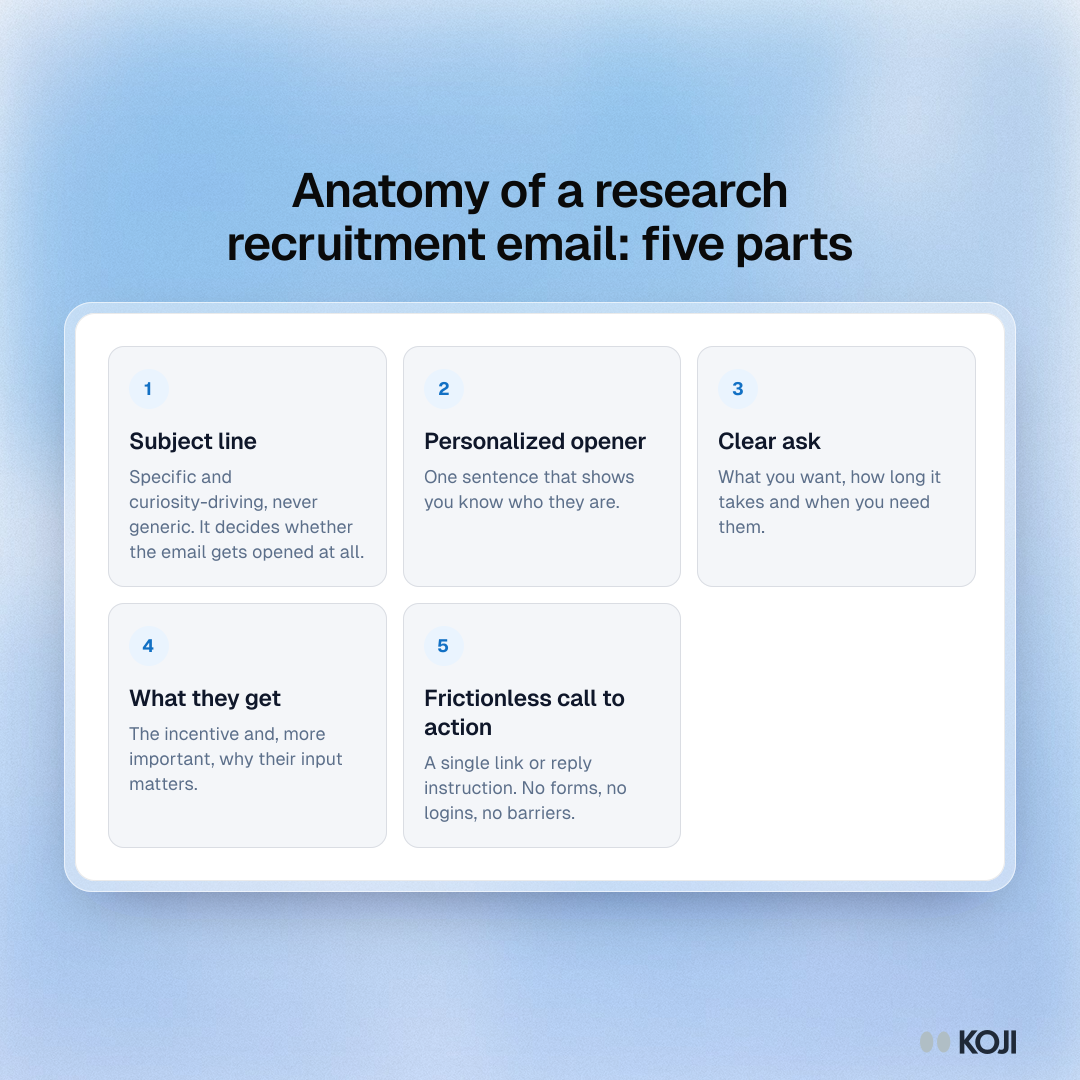
Framework of the five parts of a research recruitment email: subject line, personalized opener, clear ask, what they get and a frictionless call to action.

Framework

Anatomy of a research recruitment email: five parts
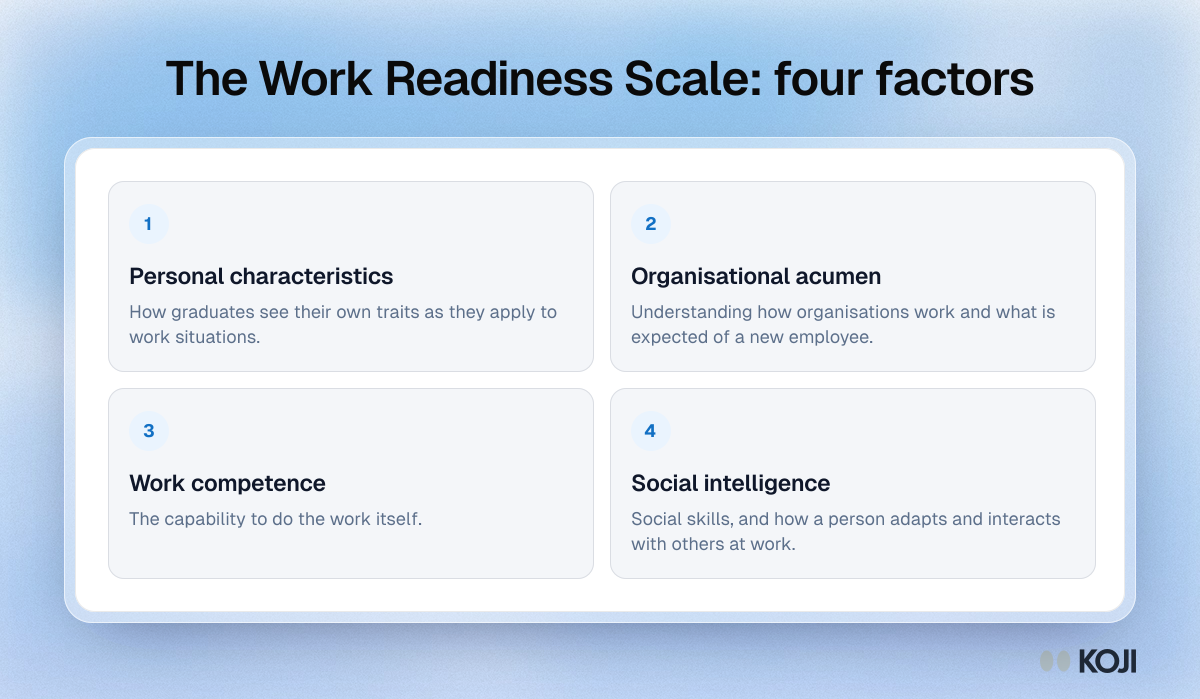
Framework showing the four factors of the Work Readiness Scale: personal characteristics, organisational acumen, work competence and social intelligence.

Framework

The Work Readiness Scale: four factors
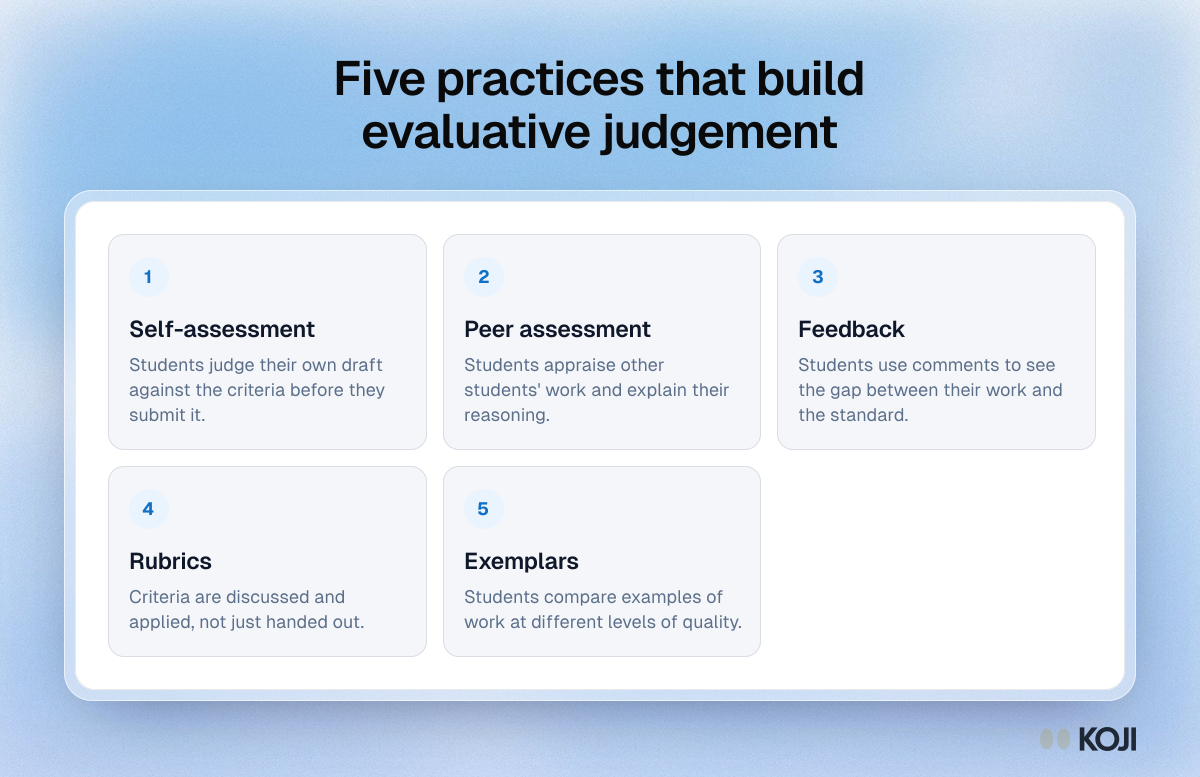
Framework of five practices that develop students' evaluative judgement: self-assessment, peer assessment, feedback, rubrics and exemplars.

Framework

Five practices that build evaluative judgement
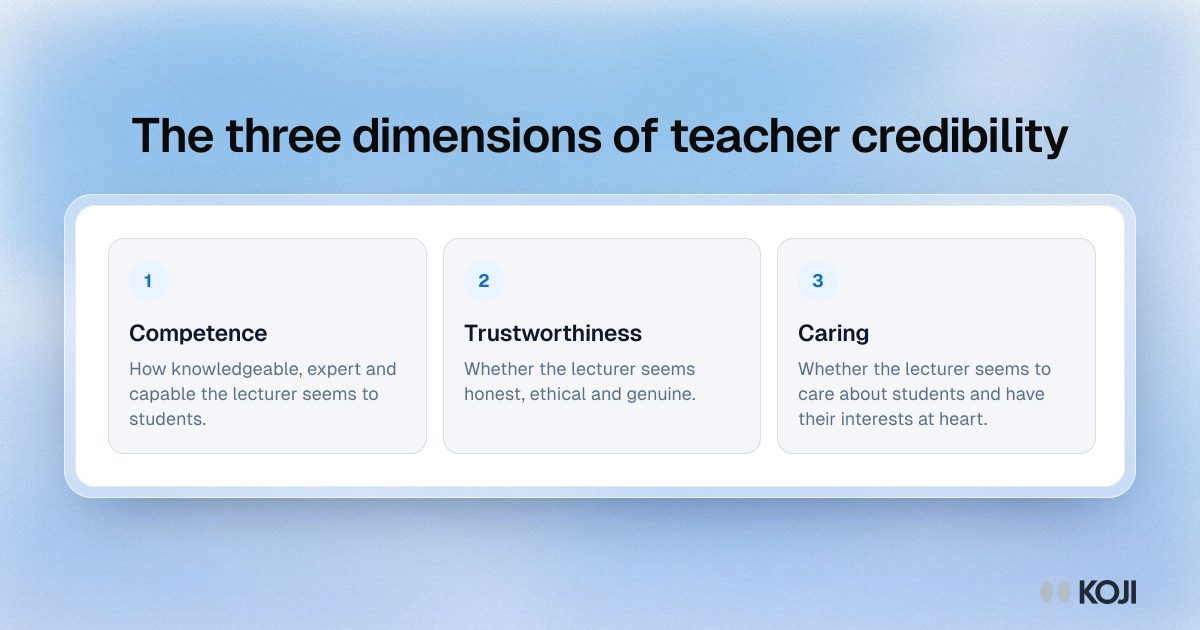
Framework showing the three dimensions of teacher credibility: competence, trustworthiness and caring, as measured by McCroskey and Teven.

Framework

The three dimensions of teacher credibility
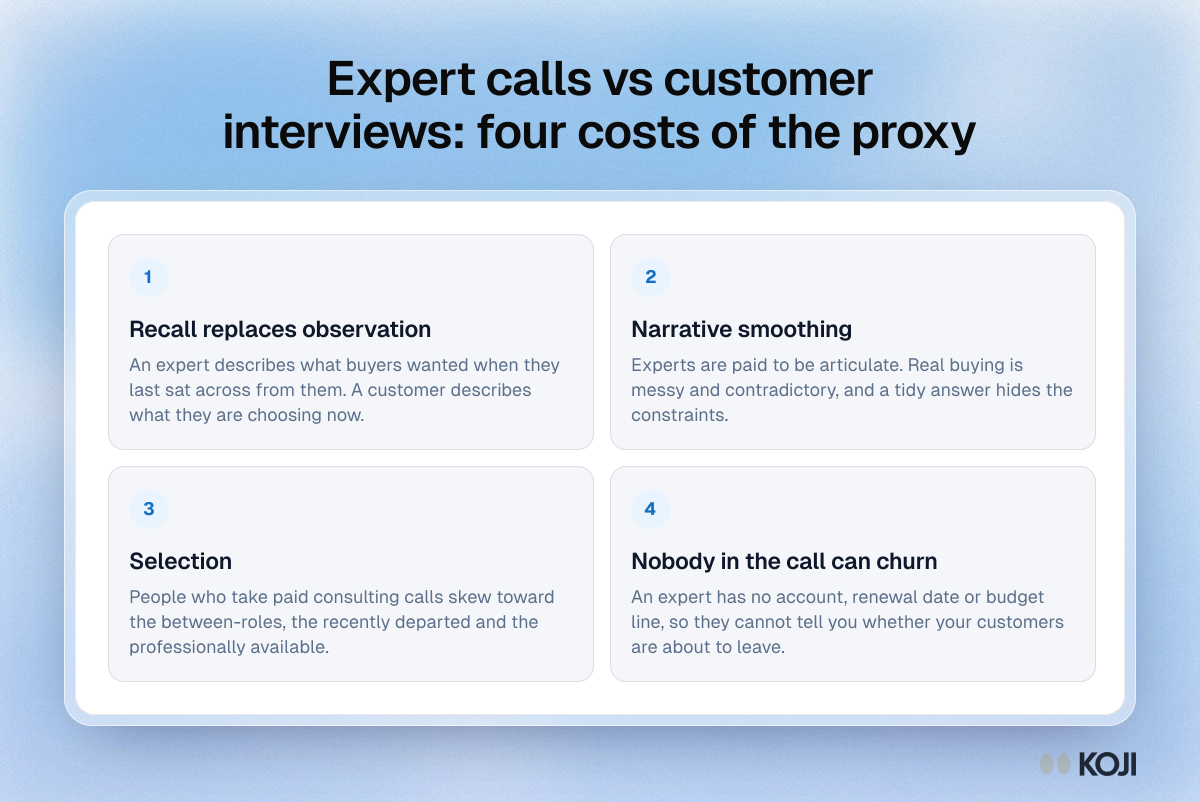
Framework of four costs of using expert network calls instead of customer interviews: recall over observation, narrative smoothing, selection and no churn risk.

Framework

Expert calls vs customer interviews: four costs of the proxy