Framework
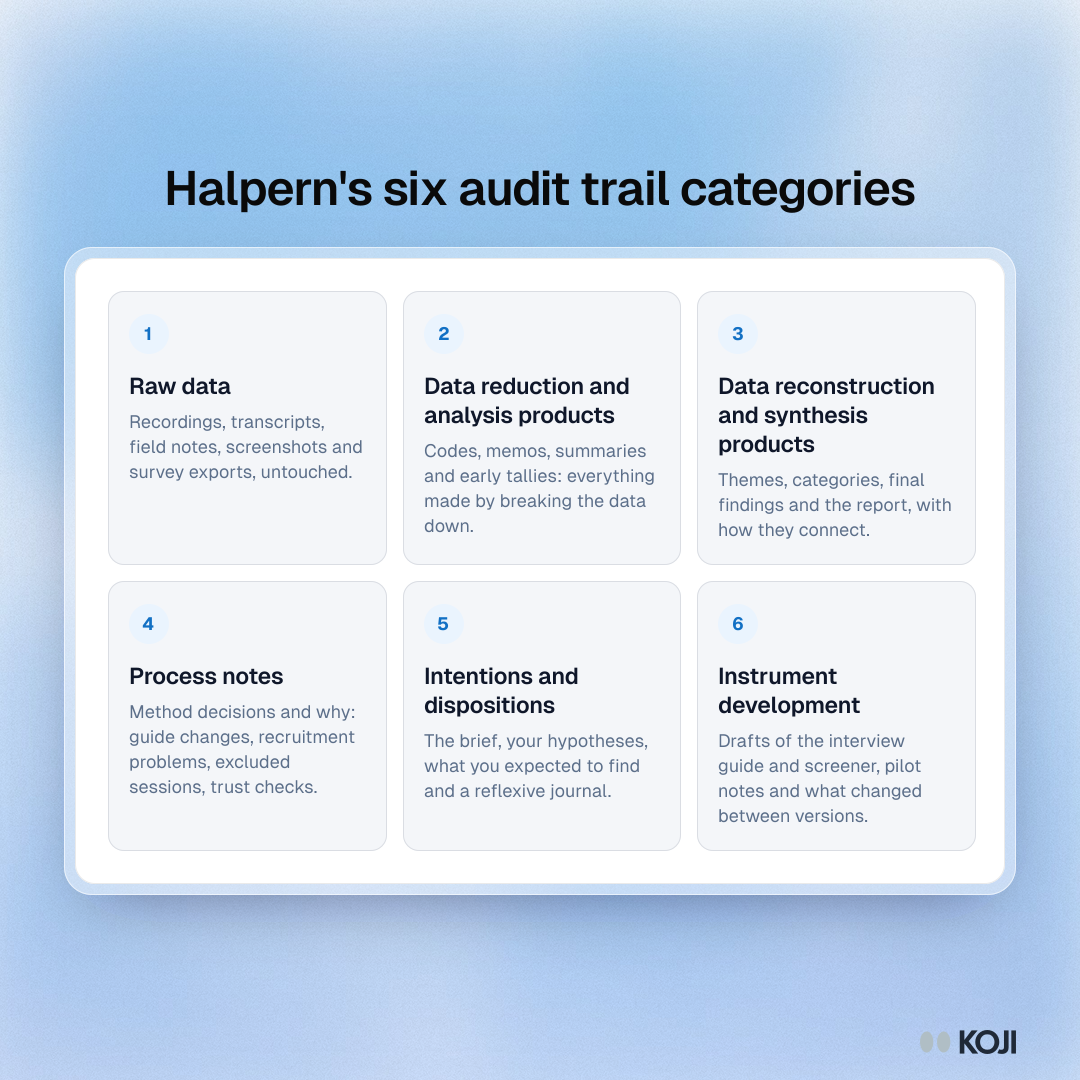
Halpern's six audit trail categories
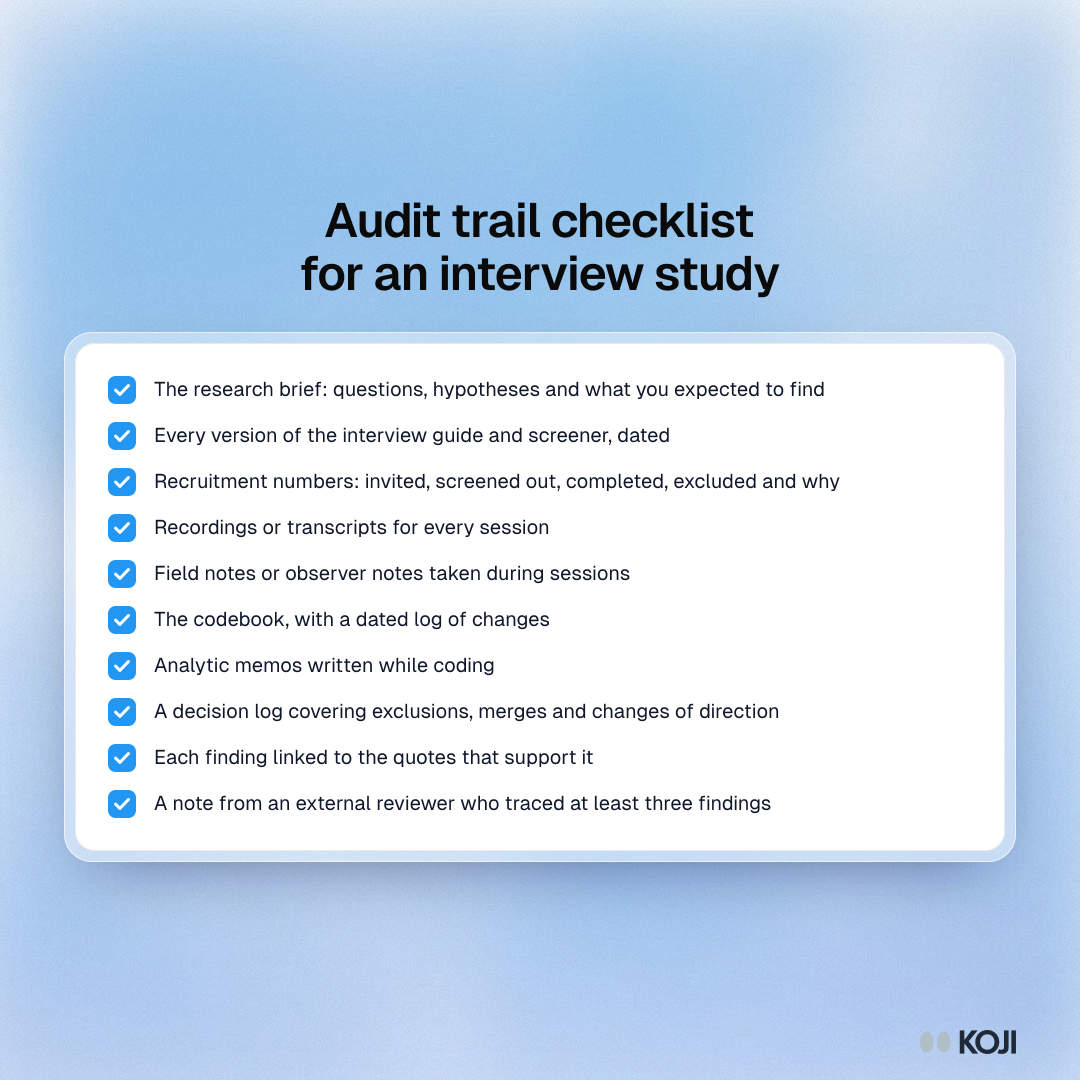
The records an auditor needs to follow a qualitative study from data to findings
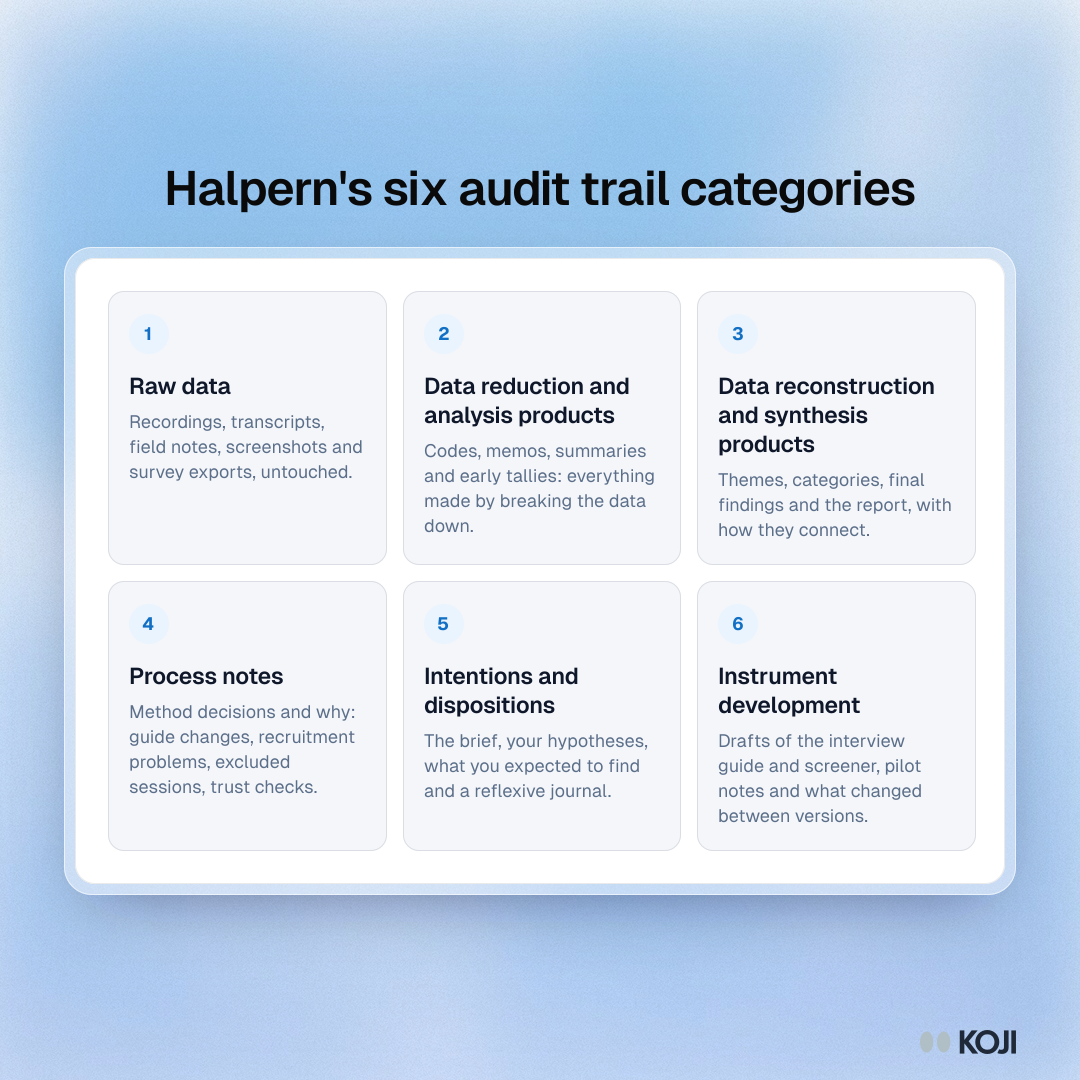
The six classes of records that make up an audit trail in qualitative research: raw data, data reduction and analysis products, reconstruction and synthesis products, process notes, materials on intentions and dispositions, and instrument development information. Use it to plan what to keep before a study starts, or to check a trail before a review. Lincoln and Guba set out these categories from Halpern's work. Koji keeps transcripts, quote-linked findings and report versions for you, which covers much of the raw data and synthesis records.
Where this appears
What's in this framework
- Raw data: Recordings, transcripts, field notes, screenshots and survey exports, untouched.
- Data reduction and analysis products: Codes, memos, summaries and early tallies: everything made by breaking the data down.
- Data reconstruction and synthesis products: Themes, categories, final findings and the report, with how they connect.
- Process notes: Method decisions and why: guide changes, recruitment problems, excluded sessions, trust checks.
- Intentions and dispositions: The brief, your hypotheses, what you expected to find and a reflexive journal.
- Instrument development: Drafts of the interview guide and screener, pilot notes and what changed between versions.
Use this image
Free to use in your docs, decks and posts under CC BY 4.0, as long as you credit Koji with a link to this page. To embed it, paste this into your page:
<a href="https://www.koji.so/visuals/halpern-audit-trail-six-categories"><img src="https://www.koji.so/visuals/halpern-audit-trail-six-categories/halpern-audit-trail-six-categories.png" alt="Framework of Halpern's six audit trail categories, from raw data and analysis products to process notes and instrument development." width="1080" height="1080" /></a>
<p>Source: <a href="https://www.koji.so/visuals/halpern-audit-trail-six-categories">Halpern's six audit trail categories</a>, Koji</p>