Framework
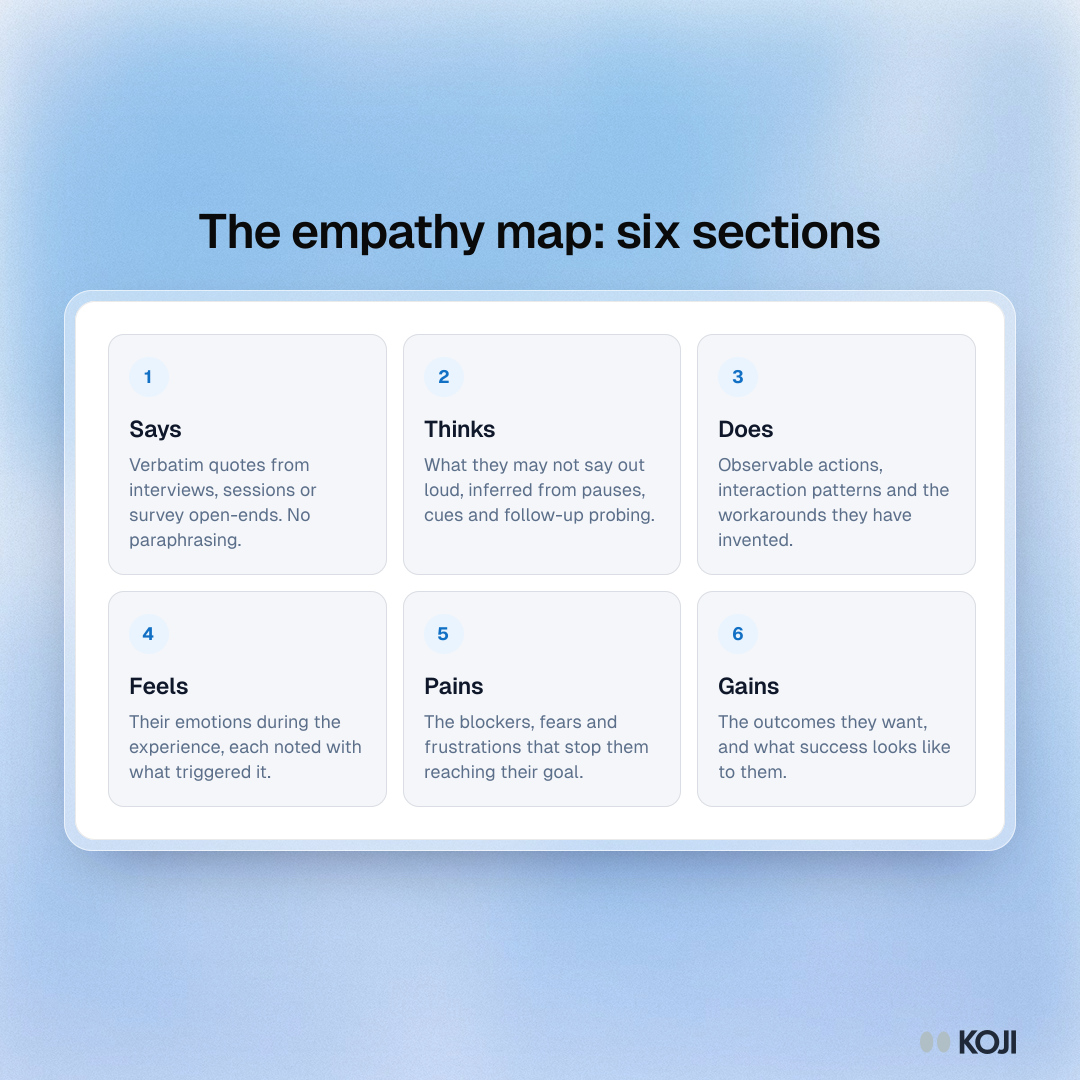
The empathy map: six sections
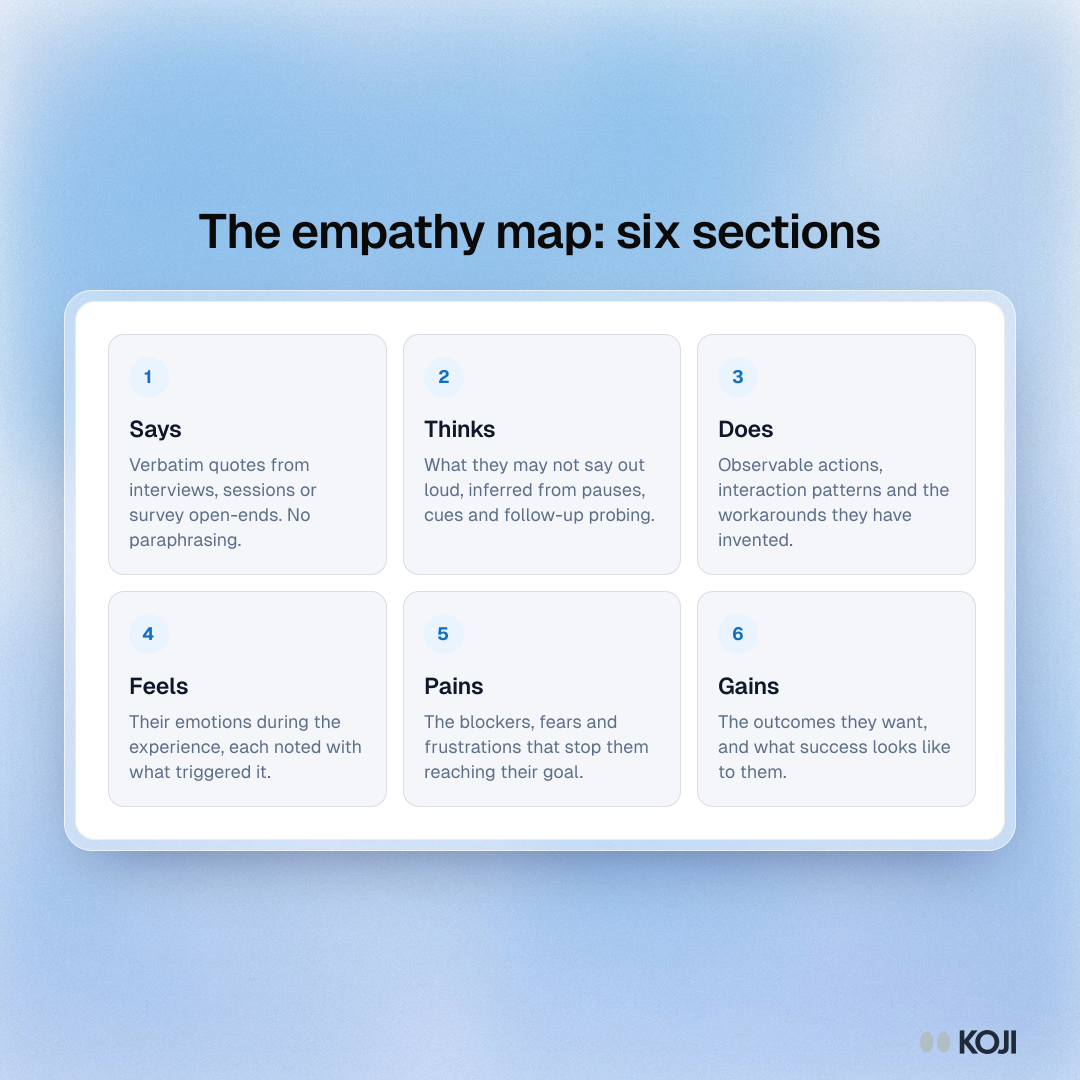
The six sections of the modern empathy map, as updated by Dave Gray of XPLANE in 2017: Says, Thinks, Does and Feels around the user, with Pains and Gains below. Each section notes what belongs in it, so a team can sort interview notes and observations onto the map without arguing about where things go. Koji interviews give you the verbatim quotes and themes that fill most of it.
Where this appears
What's in this framework
- Says: Verbatim quotes from interviews, sessions or survey open-ends. No paraphrasing.
- Thinks: What they may not say out loud, inferred from pauses, cues and follow-up probing.
- Does: Observable actions, interaction patterns and the workarounds they have invented.
- Feels: Their emotions during the experience, each noted with what triggered it.
- Pains: The blockers, fears and frustrations that stop them reaching their goal.
- Gains: The outcomes they want, and what success looks like to them.
Use this image
Free to use in your docs, decks and posts under CC BY 4.0, as long as you credit Koji with a link to this page. To embed it, paste this into your page:
html
<a href="https://www.koji.so/visuals/empathy-map-six-sections-framework"><img src="https://www.koji.so/visuals/empathy-map-six-sections-framework/empathy-map-six-sections-framework.png" alt="Framework showing the six sections of an empathy map: says, thinks, does and feels around the user, plus pains and gains." width="1080" height="1080" /></a>
<p>Source: <a href="https://www.koji.so/visuals/empathy-map-six-sections-framework">The empathy map: six sections</a>, Koji</p>