Framework
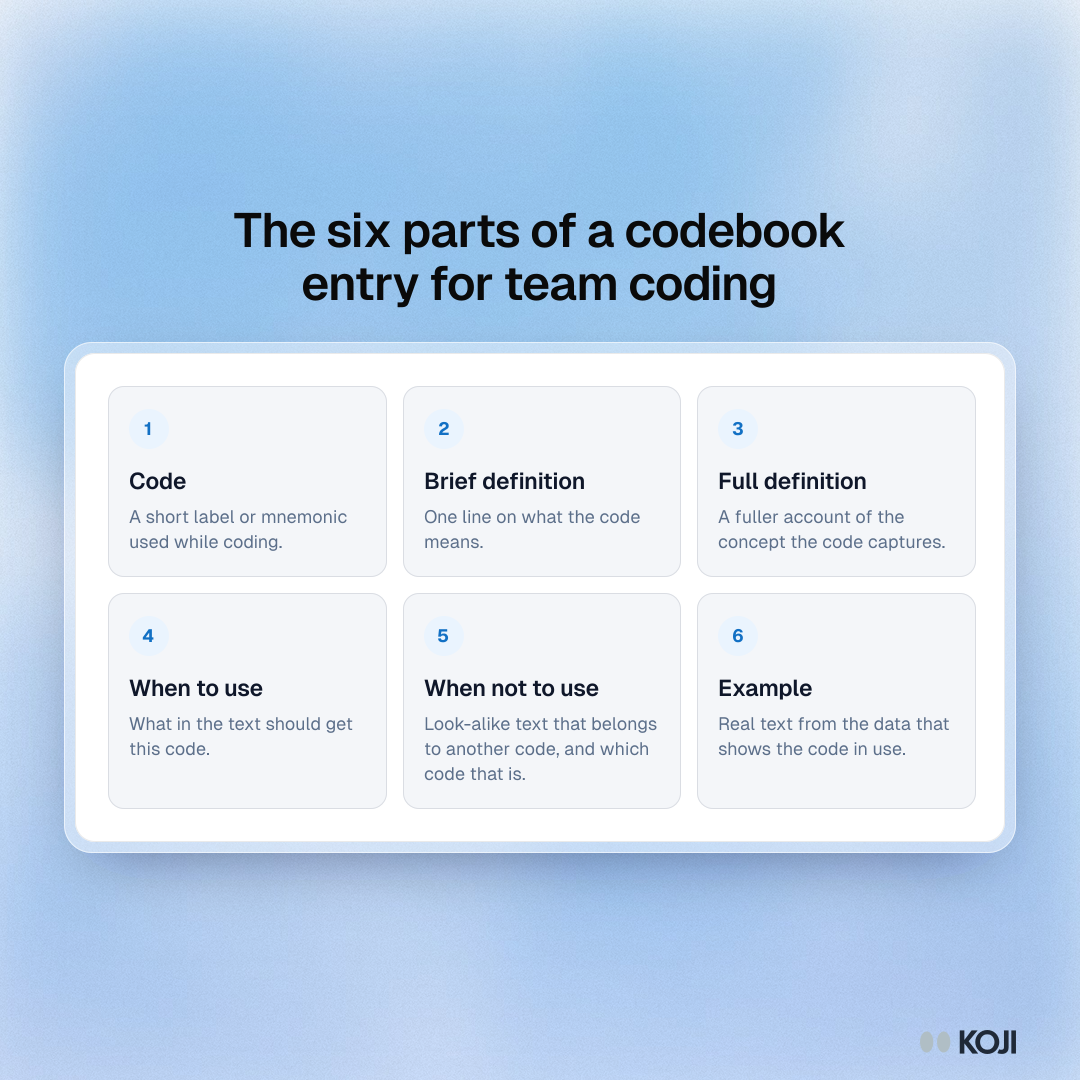
The six parts of a codebook entry for team coding
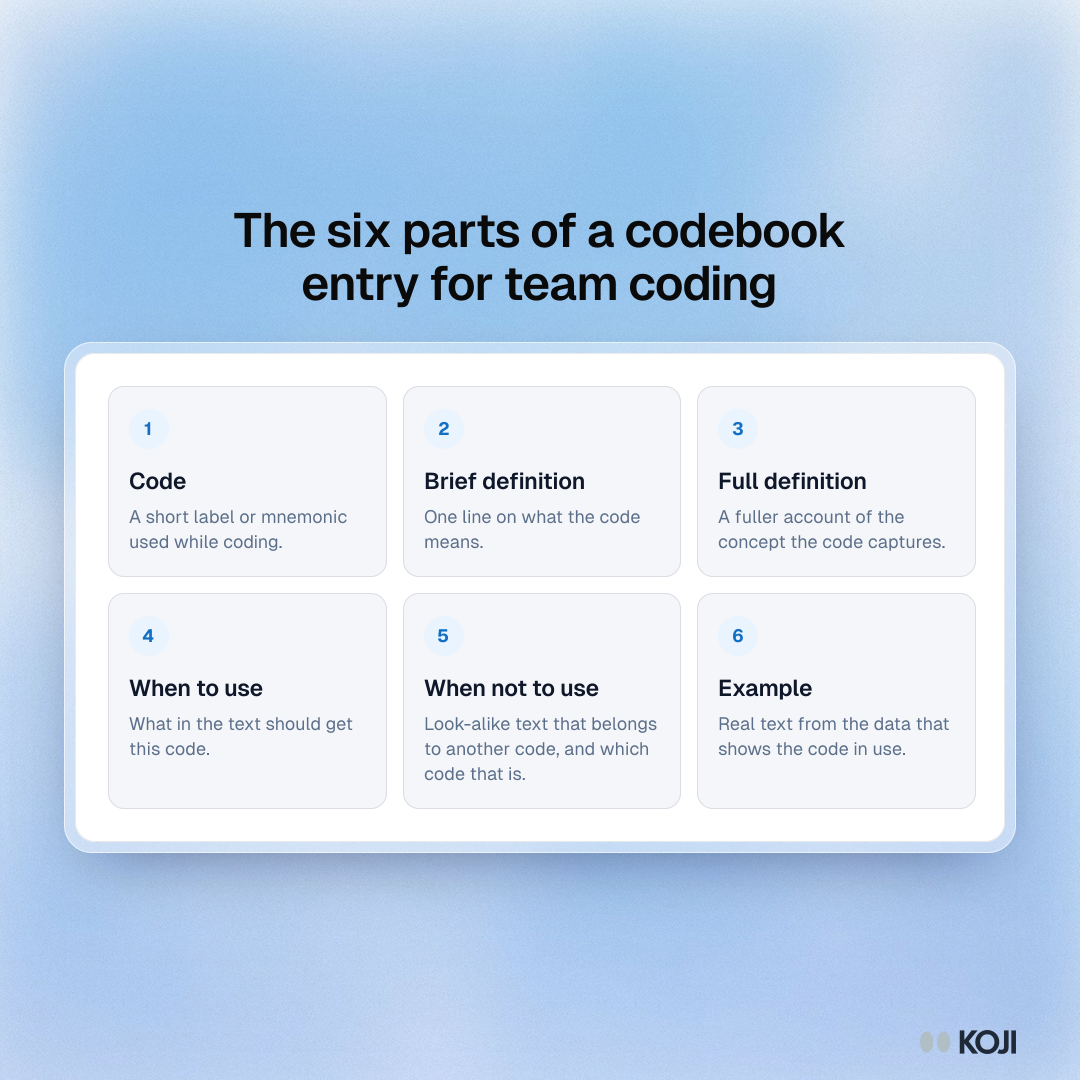
The six-part codebook entry described by MacQueen, McLellan, Kay and Milstein in 1998 for team-based qualitative analysis. It is for institutional researchers and quality staff who code open-text course feedback with more than one person, or who compare theme counts across years. Write every code with all six parts and check a sample with a second coder. Koji groups open answers into themes with quotes, which can be a first draft of the codes.
What's in this framework
- Code: A short label or mnemonic used while coding.
- Brief definition: One line on what the code means.
- Full definition: A fuller account of the concept the code captures.
- When to use: What in the text should get this code.
- When not to use: Look-alike text that belongs to another code, and which code that is.
- Example: Real text from the data that shows the code in use.
Use this image
Free to use in your docs, decks and posts under CC BY 4.0, as long as you credit Koji with a link to this page. To embed it, paste this into your page:
html
<a href="https://www.koji.so/visuals/macqueen-codebook-entry-six-parts"><img src="https://www.koji.so/visuals/macqueen-codebook-entry-six-parts/macqueen-codebook-entry-six-parts.png" alt="Framework of the six parts of a codebook entry from MacQueen and colleagues: code, brief definition, full definition, when to use, when not to use and example." width="1080" height="1080" /></a>
<p>Source: <a href="https://www.koji.so/visuals/macqueen-codebook-entry-six-parts">The six parts of a codebook entry for team coding</a>, Koji</p>