Guide
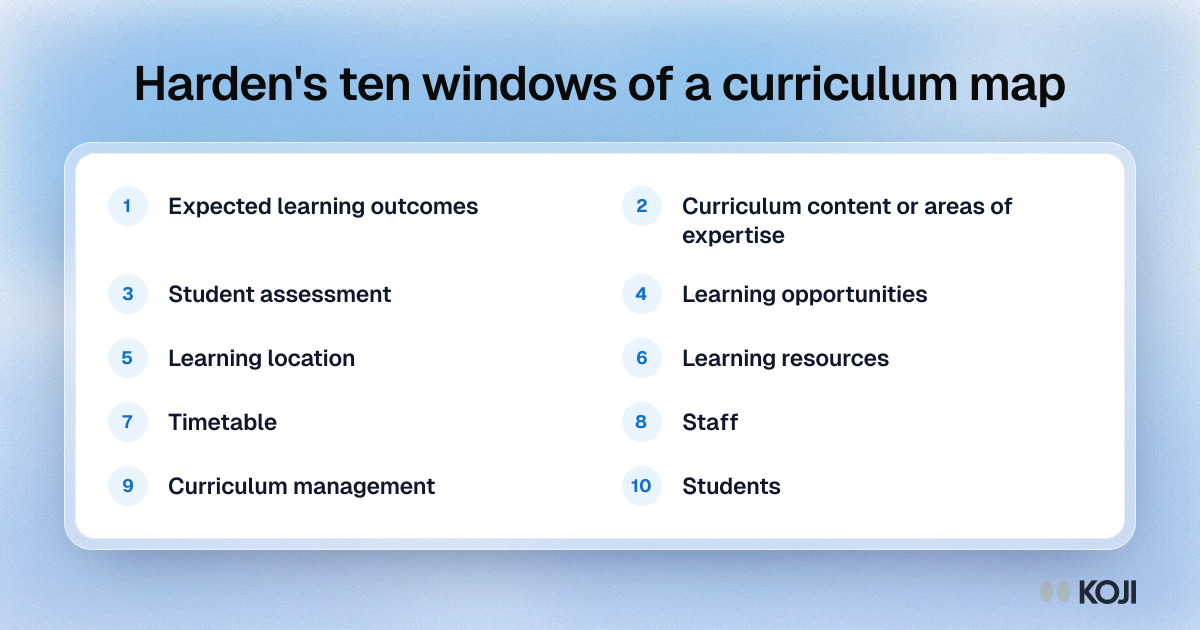
Harden's ten windows of a curriculum map
The elements a curriculum map links together, from AMEE Guide No. 21
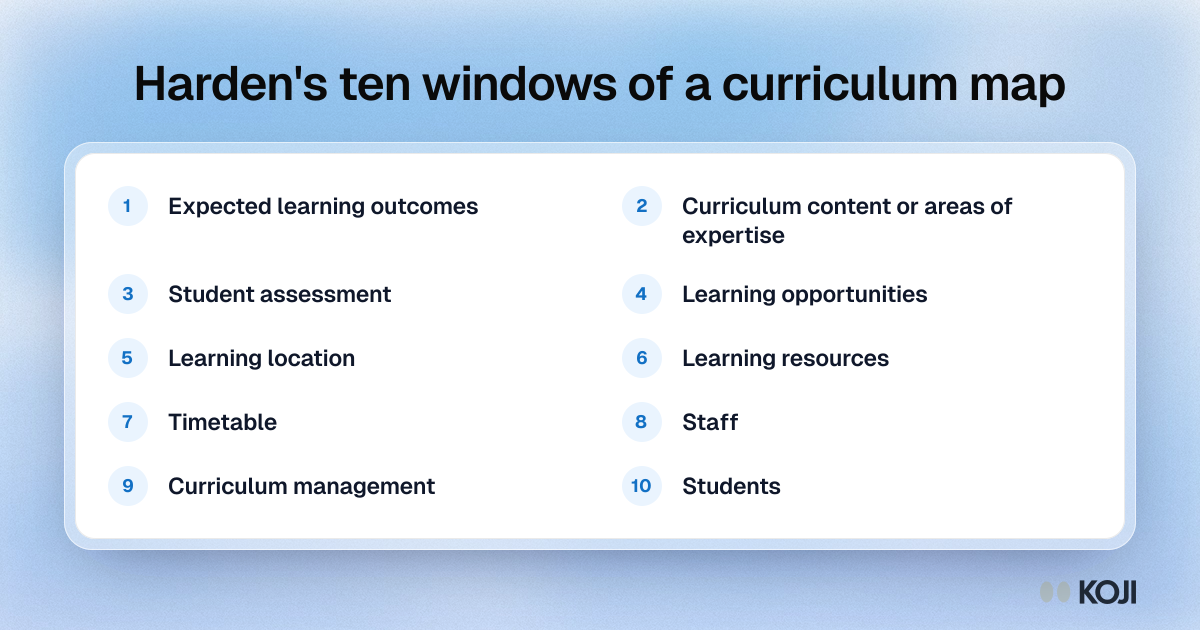
The ten windows Ronald Harden describes in AMEE Guide No. 21 (2001), each a different view of the same curriculum: outcomes, content, assessment, learning opportunities, location, resources, timetable, staff, management and students. A map earns its value from the links between windows. Programme teams can use it to check that every outcome is taught, practised and assessed, and to read course evaluation results against what each module is meant to develop.
What's in this guide
- Expected learning outcomes
- Curriculum content or areas of expertise
- Student assessment
- Learning opportunities
- Learning location
- Learning resources
- Timetable
- Staff
- Curriculum management
- Students
Use this image
Free to use in your docs, decks and posts under CC BY 4.0, as long as you credit Koji with a link to this page. To embed it, paste this into your page:
html
<a href="https://www.koji.so/visuals/harden-curriculum-map-ten-windows"><img src="https://www.koji.so/visuals/harden-curriculum-map-ten-windows/harden-curriculum-map-ten-windows.png" alt="List of the ten windows of a curriculum map in Harden's model, from expected learning outcomes to students." width="1200" height="630" /></a>
<p>Source: <a href="https://www.koji.so/visuals/harden-curriculum-map-ten-windows">Harden's ten windows of a curriculum map</a>, Koji</p>