Reference table
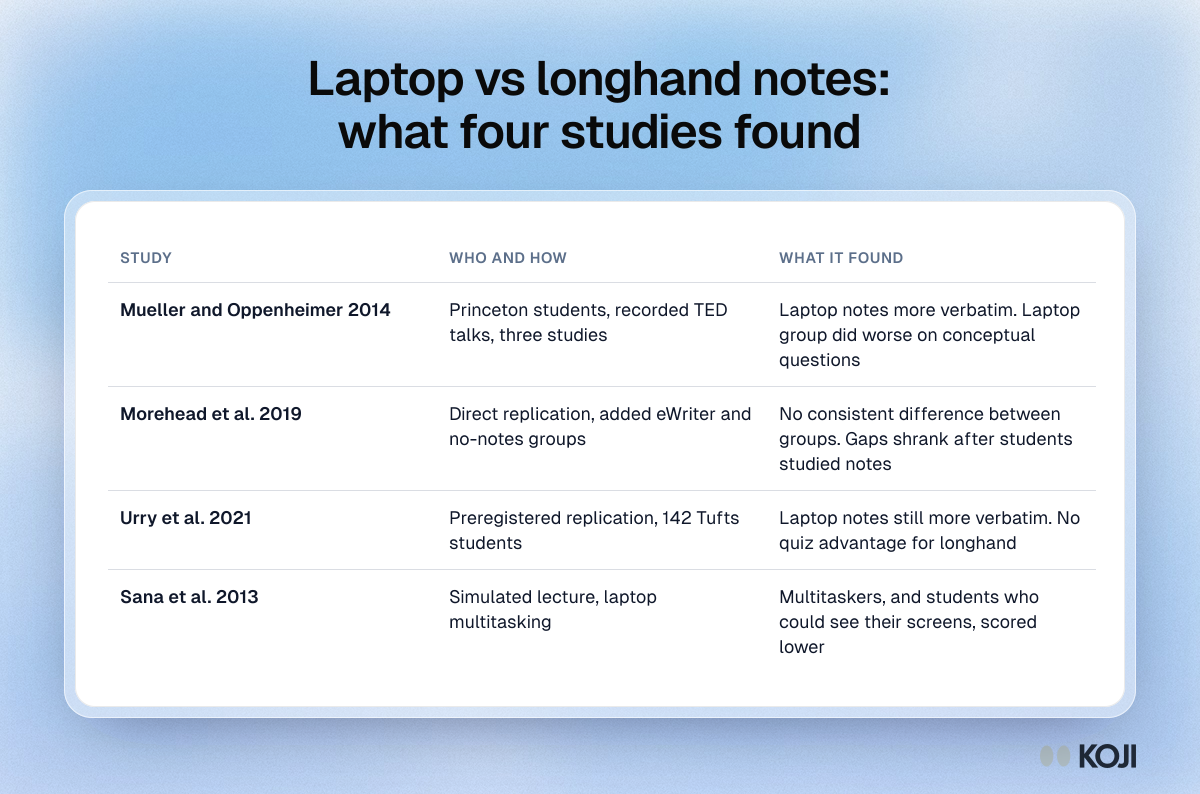
Laptop vs longhand notes: what four studies found
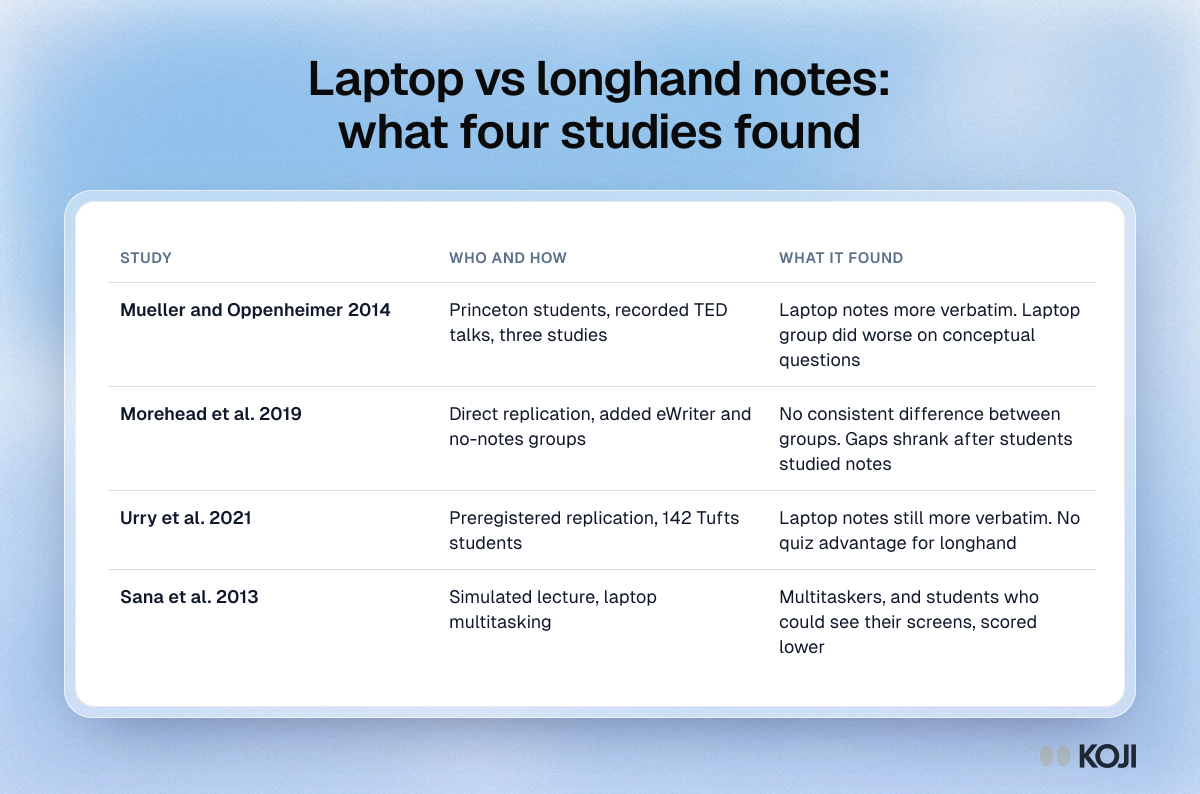
A one-page summary of the main evidence on laptop and longhand note-taking at university. The original 2014 study found a longhand advantage on conceptual questions; two direct replications found laptop notes were still more verbatim but did not confirm the learning penalty. A separate experiment found that laptop multitasking lowers scores for users and nearby students. Useful for programme teams reviewing a device policy. Koji can ask students how they took notes and what they did with them, with follow-up questions.
What's in this reference table
| Study | Who and how | What it found |
|---|---|---|
| Mueller and Oppenheimer 2014 | Princeton students, recorded TED talks, three studies | Laptop notes more verbatim. Laptop group did worse on conceptual questions |
| Morehead et al. 2019 | Direct replication, added eWriter and no-notes groups | No consistent difference between groups. Gaps shrank after students studied notes |
| Urry et al. 2021 | Preregistered replication, 142 Tufts students | Laptop notes still more verbatim. No quiz advantage for longhand |
| Sana et al. 2013 | Simulated lecture, laptop multitasking | Multitaskers, and students who could see their screens, scored lower |
Use this image
Free to use in your docs, decks and posts under CC BY 4.0, as long as you credit Koji with a link to this page. To embed it, paste this into your page:
html
<a href="https://www.koji.so/visuals/laptop-vs-longhand-note-taking-studies"><img src="https://www.koji.so/visuals/laptop-vs-longhand-note-taking-studies/laptop-vs-longhand-note-taking-studies.png" alt="Table comparing four note-taking studies: Mueller and Oppenheimer 2014, Morehead 2019, Urry 2021 and the Sana 2013 laptop distraction study." width="1200" height="794" /></a>
<p>Source: <a href="https://www.koji.so/visuals/laptop-vs-longhand-note-taking-studies">Laptop vs longhand notes: what four studies found</a>, Koji</p>