Guide
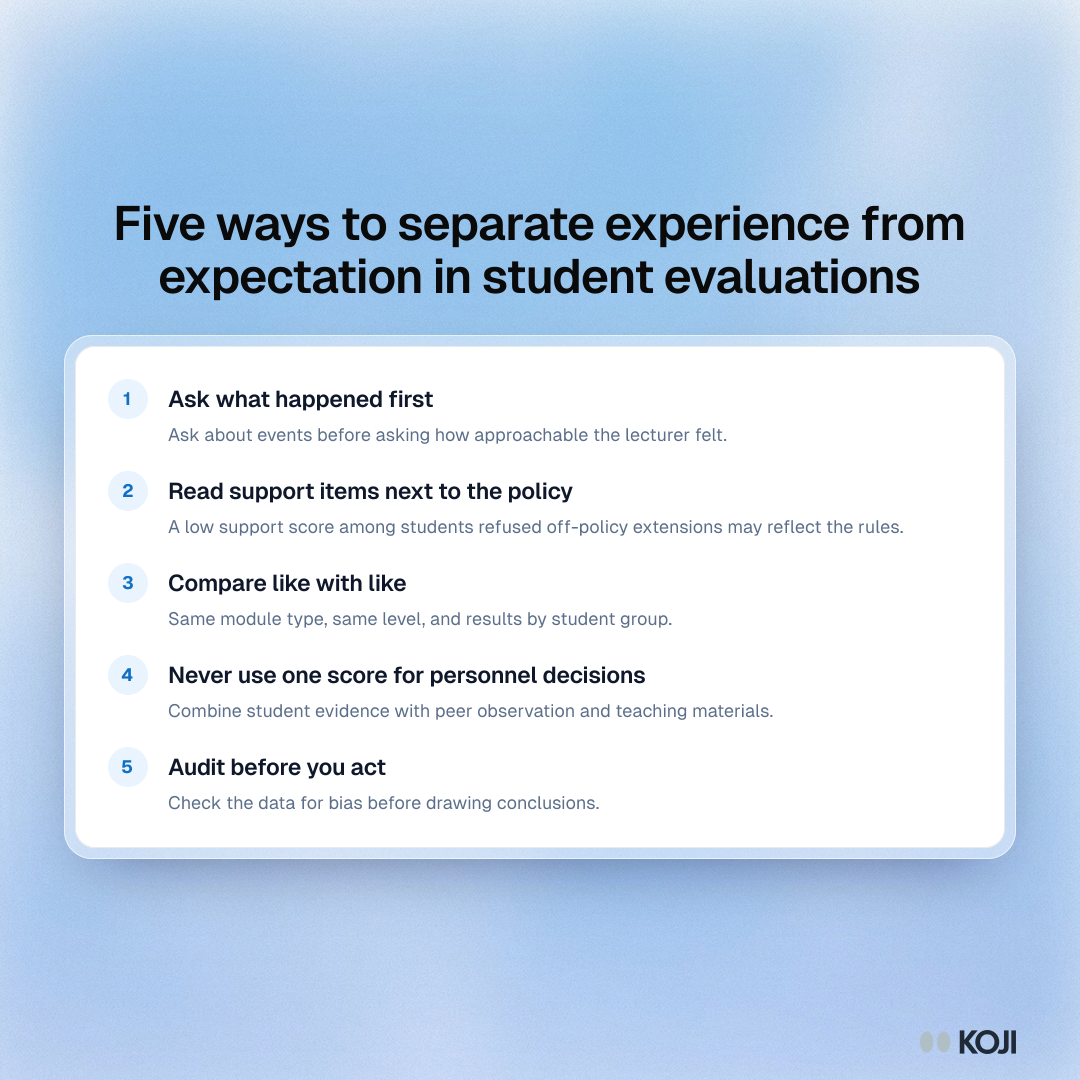
Five ways to separate experience from expectation in student evaluations
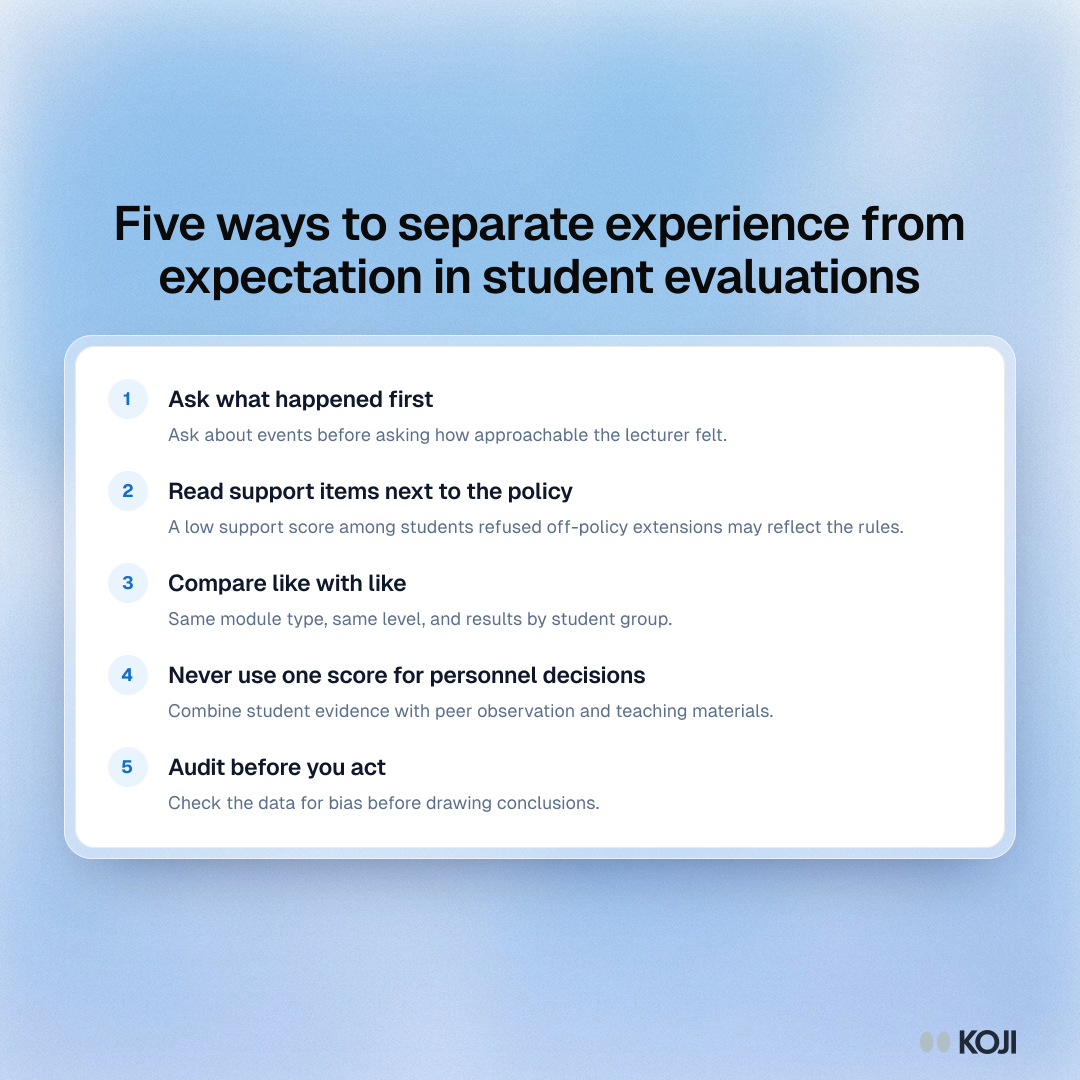
Five practical steps for quality and HR staff who use student evaluations of teaching and want to limit the effect of gendered expectations, such as students expecting more special favours from women lecturers. The steps move evaluation from impressions to events, put support scores in the context of policy and keep single scores out of personnel decisions. Koji's follow-up questions can ask students what happened, not only how it felt.
What's in this guide
- Ask what happened first: Ask about events before asking how approachable the lecturer felt.
- Read support items next to the policy: A low support score among students refused off-policy extensions may reflect the rules.
- Compare like with like: Same module type, same level, and results by student group.
- Never use one score for personnel decisions: Combine student evidence with peer observation and teaching materials.
- Audit before you act: Check the data for bias before drawing conclusions.
Use this image
Free to use in your docs, decks and posts under CC BY 4.0, as long as you credit Koji with a link to this page. To embed it, paste this into your page:
html
<a href="https://www.koji.so/visuals/separate-experience-from-expectation-student-evaluations"><img src="https://www.koji.so/visuals/separate-experience-from-expectation-student-evaluations/separate-experience-from-expectation-student-evaluations.png" alt="List of five ways to collect student evaluations that separate what happened from gendered expectations, from asking about events to auditing for bias." width="1080" height="1080" /></a>
<p>Source: <a href="https://www.koji.so/visuals/separate-experience-from-expectation-student-evaluations">Five ways to separate experience from expectation in student evaluations</a>, Koji</p>