Flowchart
When to stop in-depth interviews
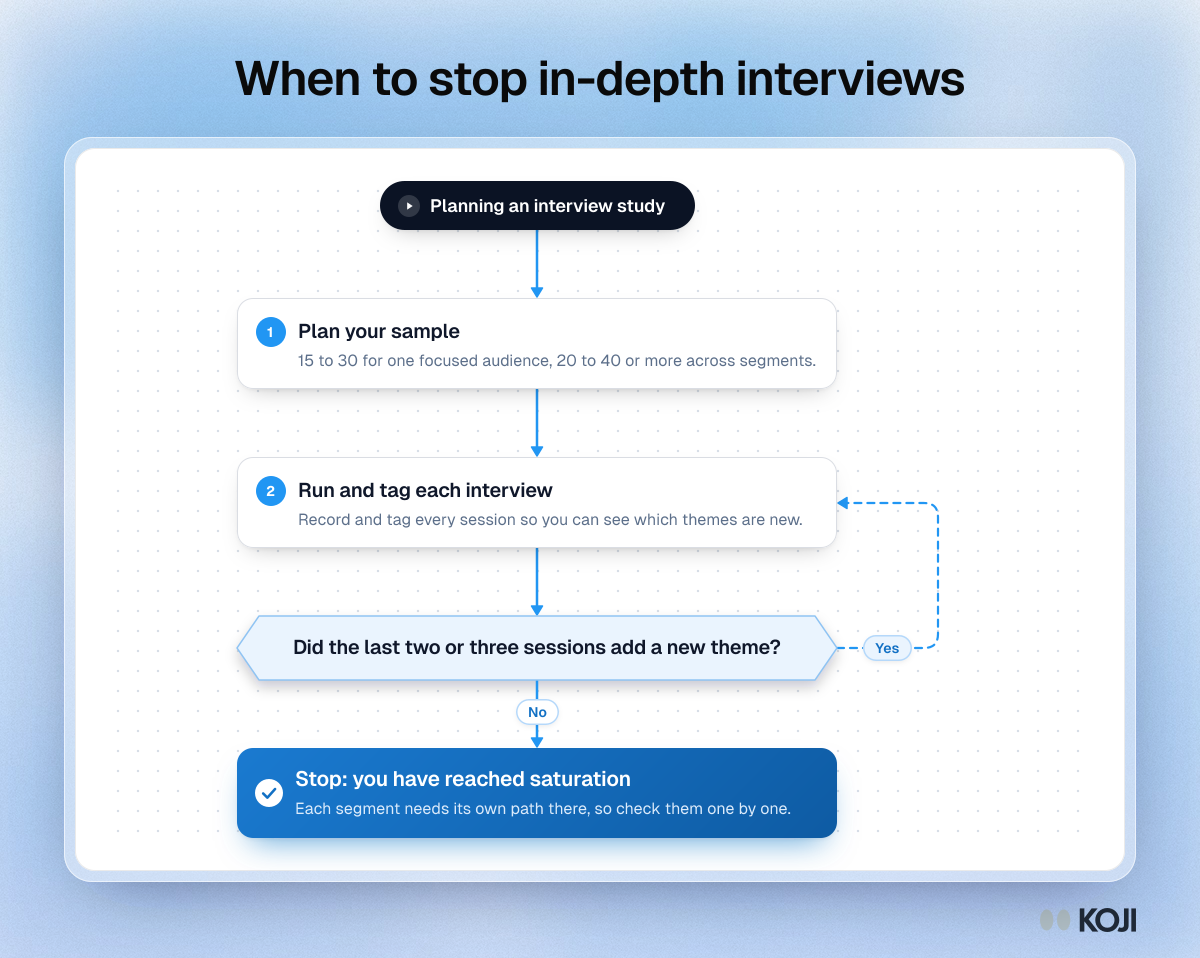
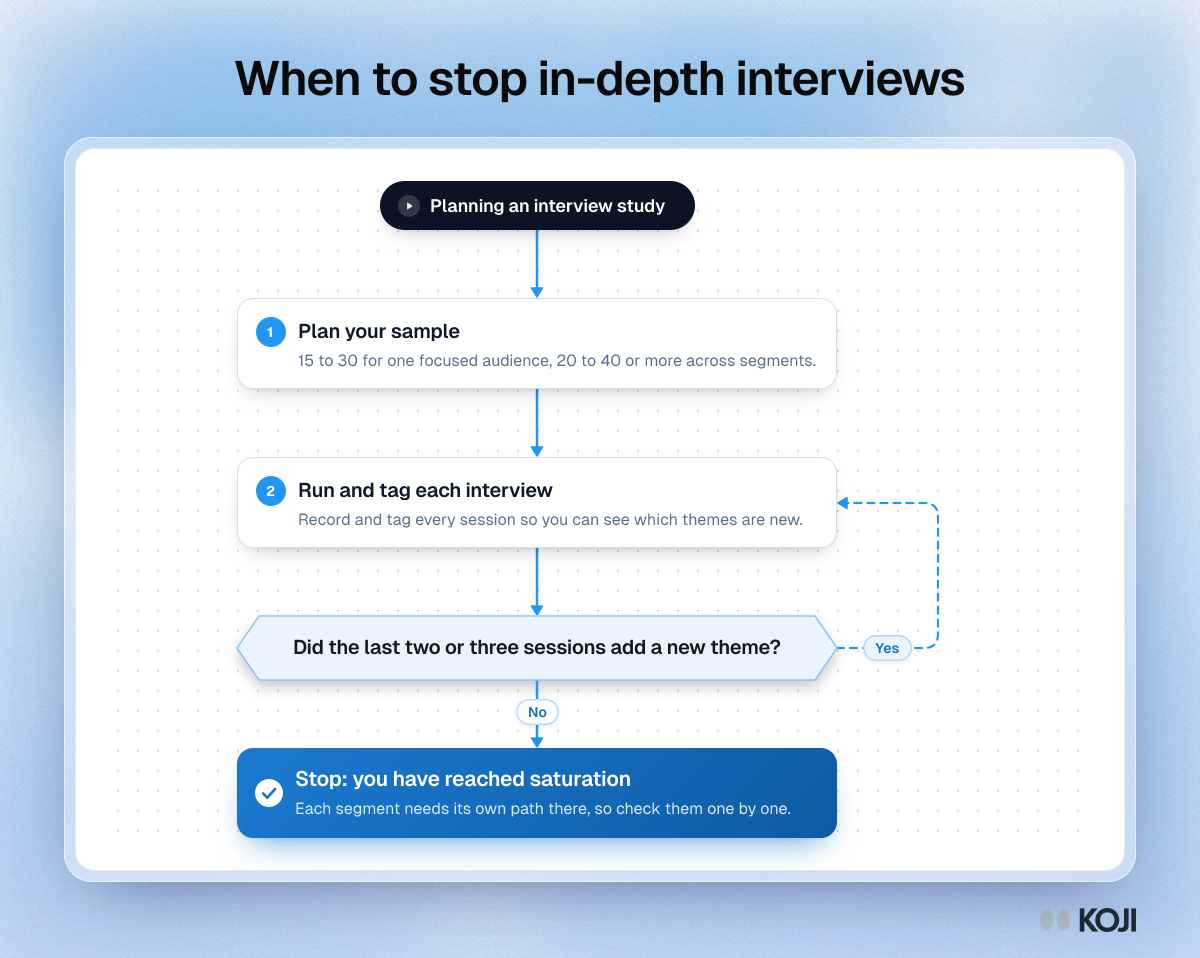
A flowchart for the saturation rule in in-depth interviews. Plan 15 to 30 interviews for a focused audience, or 20 to 40 or more across segments, then keep interviewing until two or three sessions in a row add no new theme. It guards against a common mistake: claiming saturation after five interviews. With Koji, AI-moderated interviews run in parallel and the analysis groups themes across every transcript, so you can see when new ones stop appearing.
Where this appears
What's in this flowchart
Start: Planning an interview study
- Plan your sample. 15 to 30 for one focused audience, 20 to 40 or more across segments.
- Run and tag each interview. Record and tag every session so you can see which themes are new.
- Did the last two or three sessions add a new theme?
- No: go to 4.
- Yes: go back to 2.
- Finish: Stop: you have reached saturation. Each segment needs its own path there, so check them one by one.
Use this image
Free to use in your docs, decks and posts under CC BY 4.0, as long as you credit Koji with a link to this page. To embed it, paste this into your page:
html
<a href="https://www.koji.so/visuals/when-to-stop-in-depth-interviews-saturation-flowchart"><img src="https://www.koji.so/visuals/when-to-stop-in-depth-interviews-saturation-flowchart/when-to-stop-in-depth-interviews-saturation-flowchart.png" alt="Flowchart for deciding when to stop in-depth interviews: plan the sample, run and tag sessions, and loop back until two or three in a row add no new theme." width="1200" height="958" /></a>
<p>Source: <a href="https://www.koji.so/visuals/when-to-stop-in-depth-interviews-saturation-flowchart">When to stop in-depth interviews</a>, Koji</p>