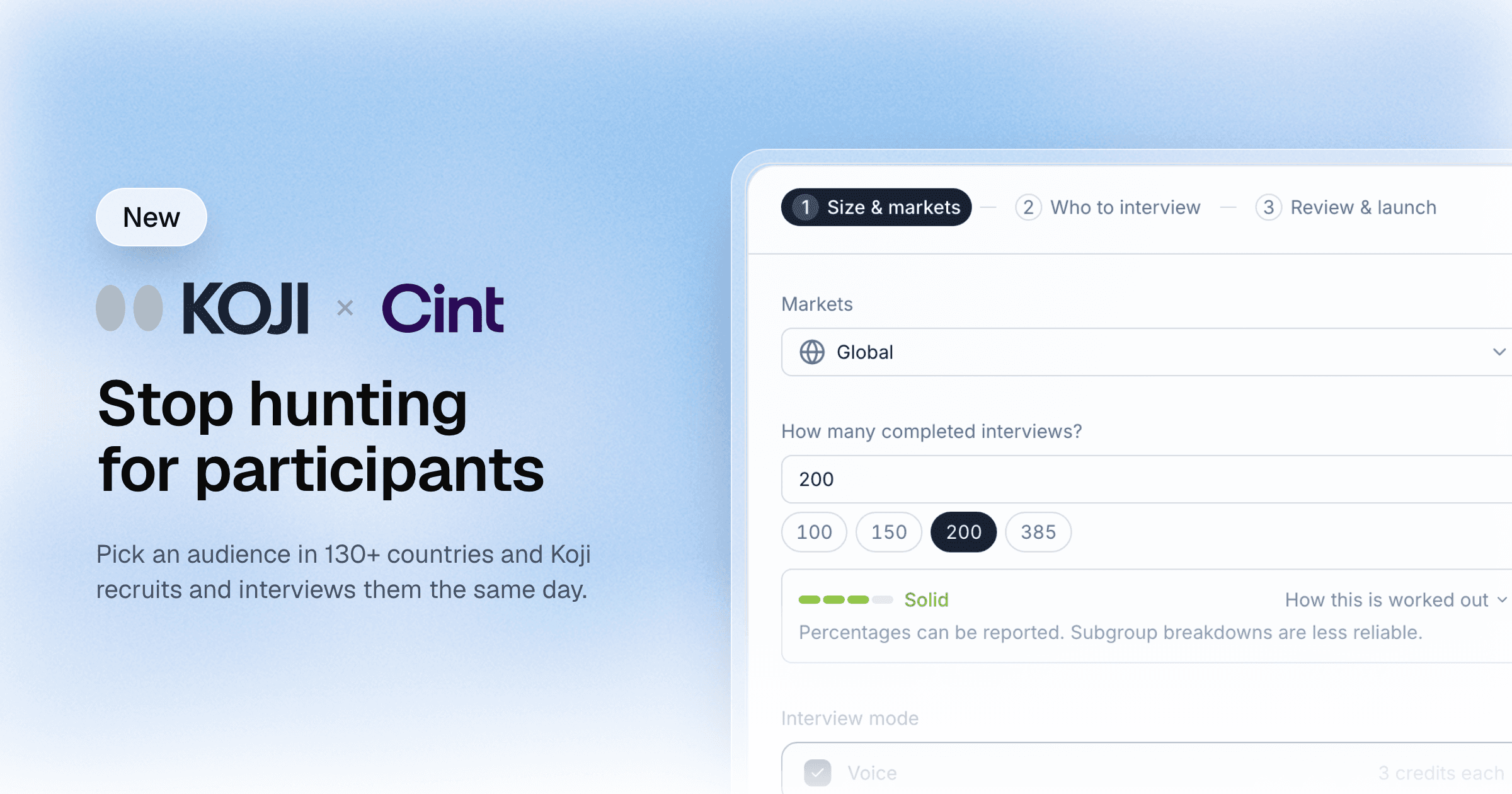

Most research stalls at the same step. The question is clear, the discussion guide is written, and then: who do I send this to?
From today, you can recruit the people yourself, inside the study, from the Cint Exchange. Describe who you want to hear from, see what it costs, and launch. Koji finds them in any of 130+ countries, interviews them by voice or text in their own language, and adds their conversations to the same report as everyone else's.
Why we built this before anything else
When we started Koji we obsessed over the interviewer. Could an AI ask a good follow-up question? Could it listen? Could it find the theme in forty conversations? It can, and customers told us so.
Then we looked at how studies were actually used. Many were written by someone with a great question and an empty inbox. A founder validating an idea. A product manager whose users don't answer email. A marketer who wants to hear from people who buy the competitor. They could write a brilliant discussion guide and then stall at "who do I send this to?"
So we spent the summer on the unglamorous half of research: finding people.
How it works
Open any study, go to the Interviews page, and pick the Panel recruit tab. Three steps.
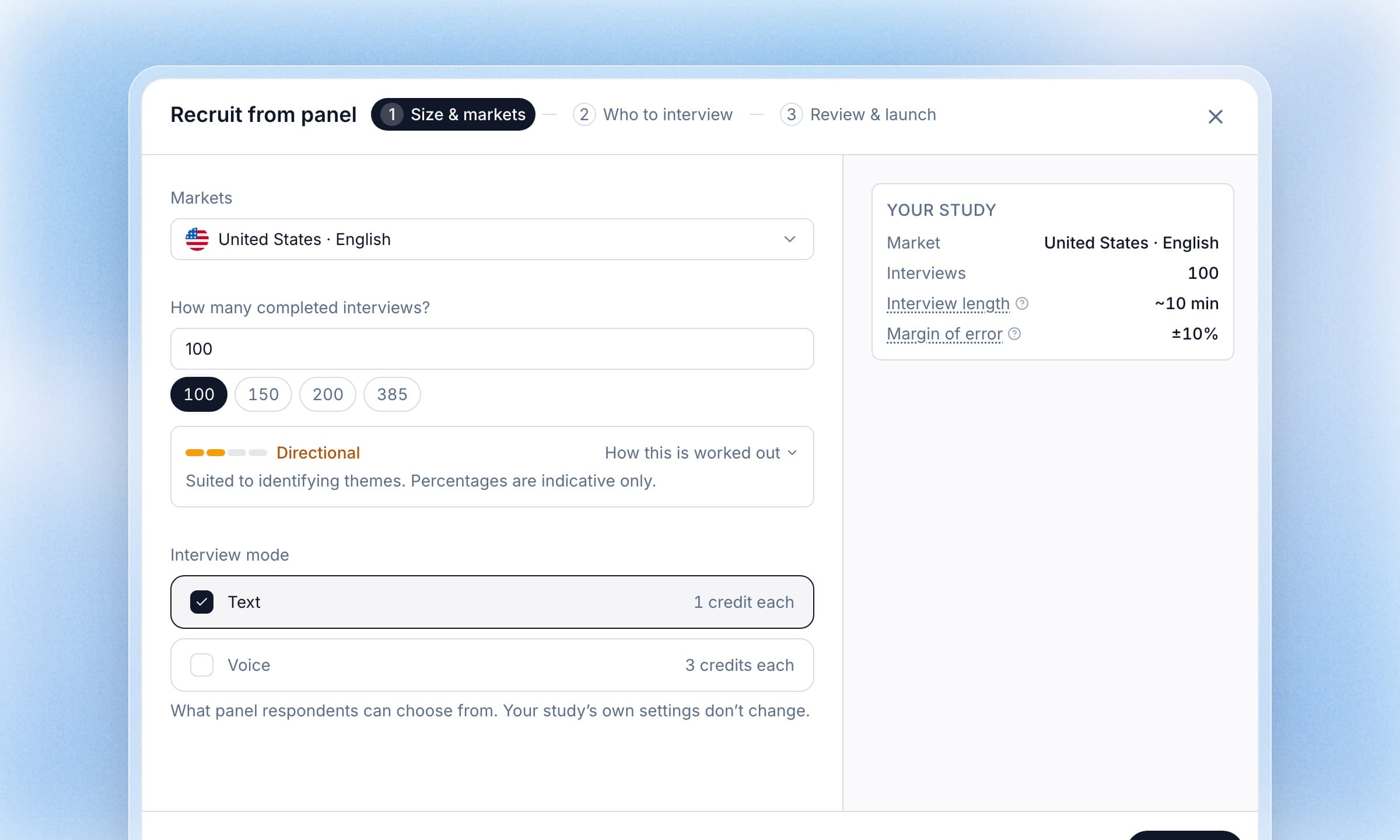
1. Size and markets
Choose a country and how many completed interviews you want. Koji shows you what that sample can support: 20 is exploratory, 100 is directional, 200 lets you report percentages, 385 holds up to subgroup breakdowns. Pick text, voice or both for the people you recruit.
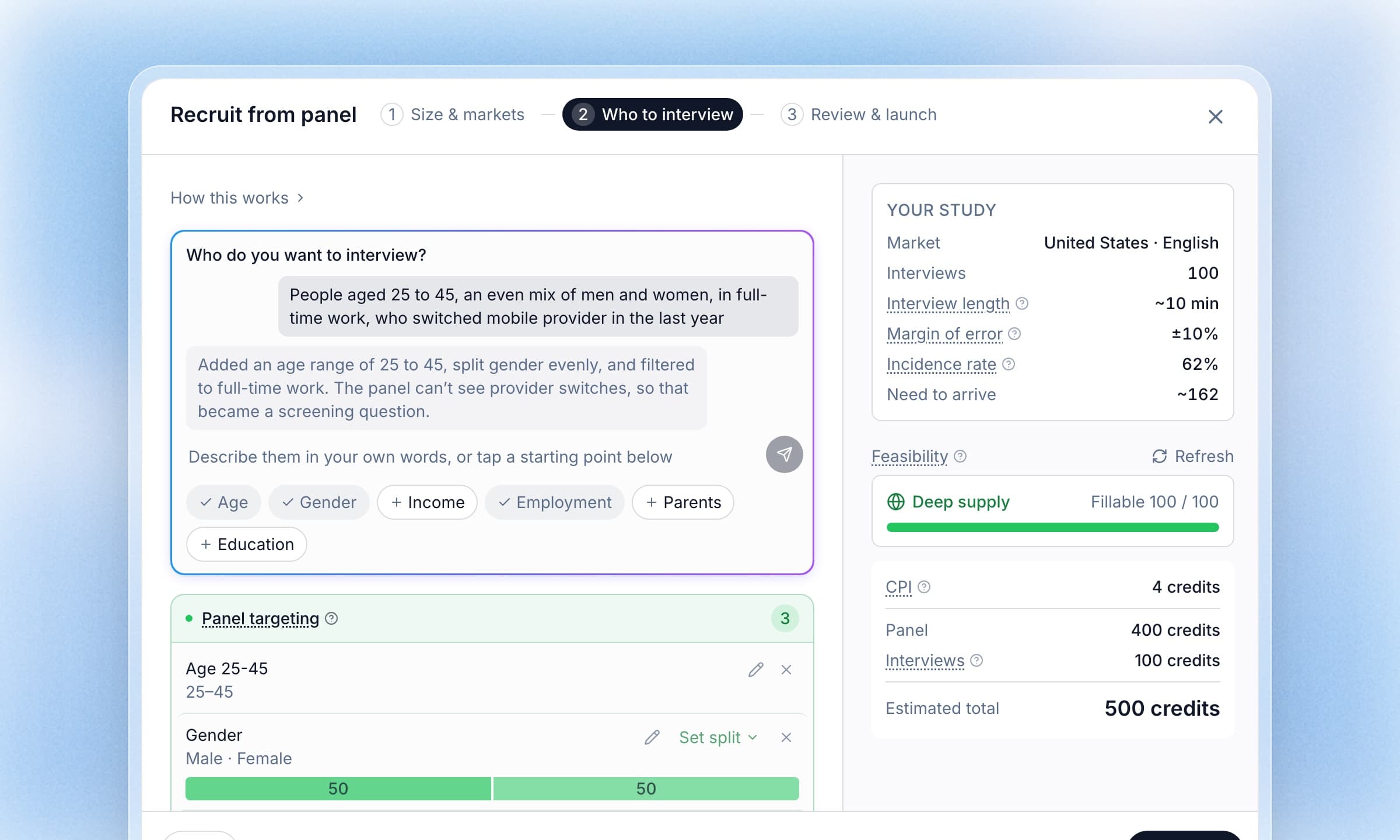
2. Who to interview
Describe the audience in plain language, or click through the criteria. Koji translates the description into Cint's profiling catalogue, which covers age, gender, income, employment, parenthood, education and hundreds of market-specific attributes. Anything the catalogue can't express becomes a screening question that Koji asks before the interview starts.
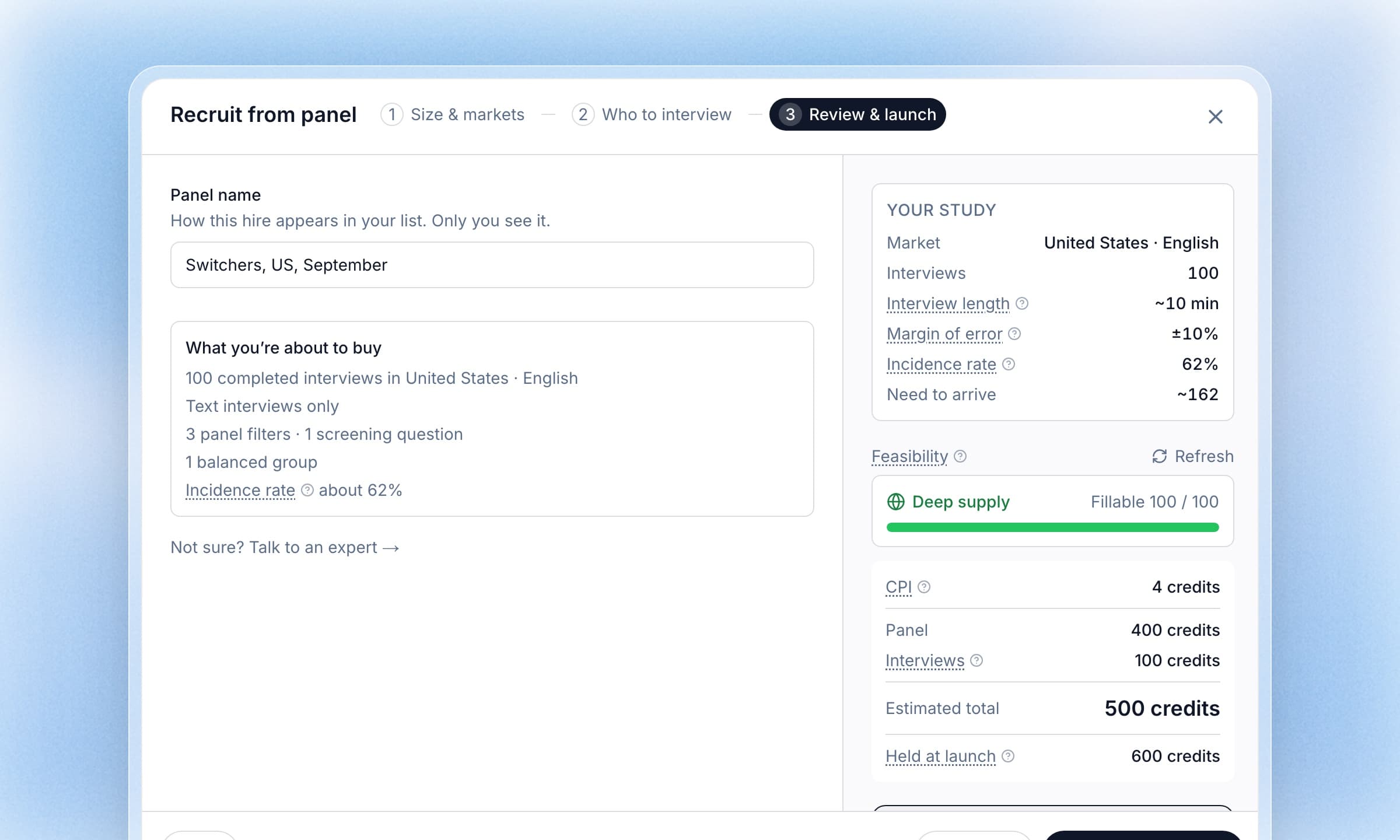
3. Review and launch
You see the price before anything happens: panel credits per completed interview, interview credits per conversation, and the total. Launch, or start with a 10 percent test batch to check the price and the quality before the rest of the sample goes out.
| What you decide | What Koji handles |
|---|---|
| Who to talk to and how many | Translating that into panel targeting |
| Text, voice or both | Interviewing each person in their language |
| Screening questions | Asking them, and returning non-matches to their panel |
| The budget | Holding credits at launch, refunding what isn't used |
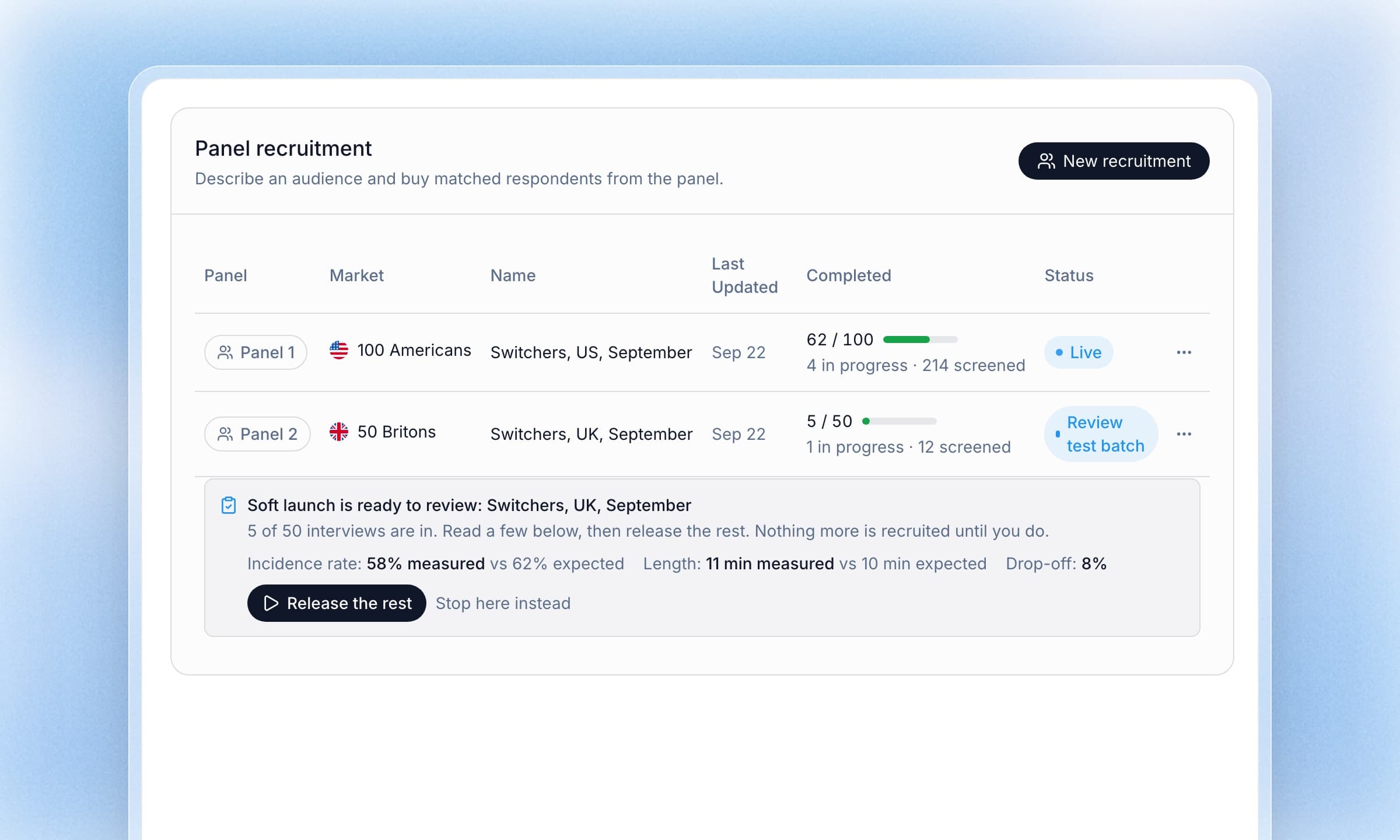
Once a hire is live it sits on the Interviews page with its progress. A soft launch pauses after the first batch and shows you the measured incidence rate and interview length before you release the rest.
What it costs
Koji prices in credits. One credit is one euro, and the full price list is on the pricing page.
A panel complete is priced from Cint's rate card for that market, interview length and audience, then shown to you as a whole number of credits before you launch. A 10-minute interview with a broad audience in the United States is typically 4 to 5 panel credits per completed interview. Narrow audiences cost more, and you always see the number first.
On top of that, each conversation costs what it costs everywhere in Koji: 1 credit for a text interview, 3 for voice.
| Example: 100 text interviews, broad US audience | Credits |
|---|---|
| Panel, 100 completes | ~400 |
| Interviews, 100 text conversations | 100 |
| Estimated total | ~500 |
Credits are set aside when you launch, and anything unused goes back to your balance when the hire ends. Quoting and saving an audience works on every plan. Launching a hire needs a paid plan, starting at €29 a month.
You pay for interviews, not clicks
Panel sample has a reputation for speeders and straight-liners. We built the billing so that you don't pay for them.
Before Koji tells Cint an interview is complete, it checks the conversation. Under 60 seconds, or fewer than three answers from the respondent, and the interview is reported as a quality terminate. You are not charged, and the respondent is returned to their panel. On top of that, every interview in Koji only consumes its interview credit when it scores 3 or higher on quality, the same rule as for your own participants.
Cint runs its own checks on the supply side, including its Trust Score, which rates respondent authenticity before they reach you. Two filters, one at the door and one at the exit.
Where the people come from
The Cint Exchange connects more than 800 panel suppliers across 130+ countries. When you launch a hire, Cint routes people who match your targeting to your Koji interview. They arrive on a landing page in their language, answer any screening questions, choose voice or text, and talk to the interviewer. When they finish, Koji sends them back to their panel with the outcome, and their conversation appears in your study within minutes.
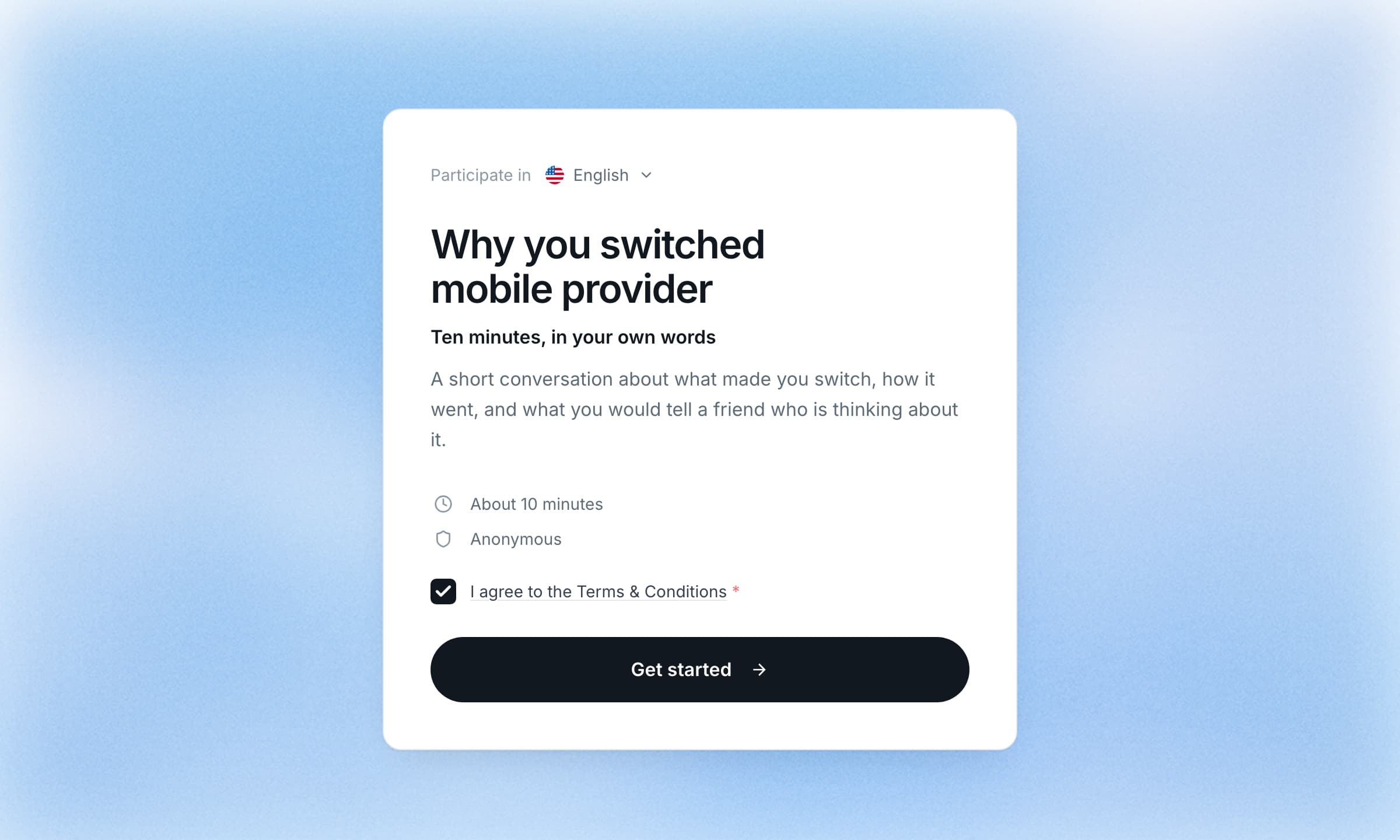
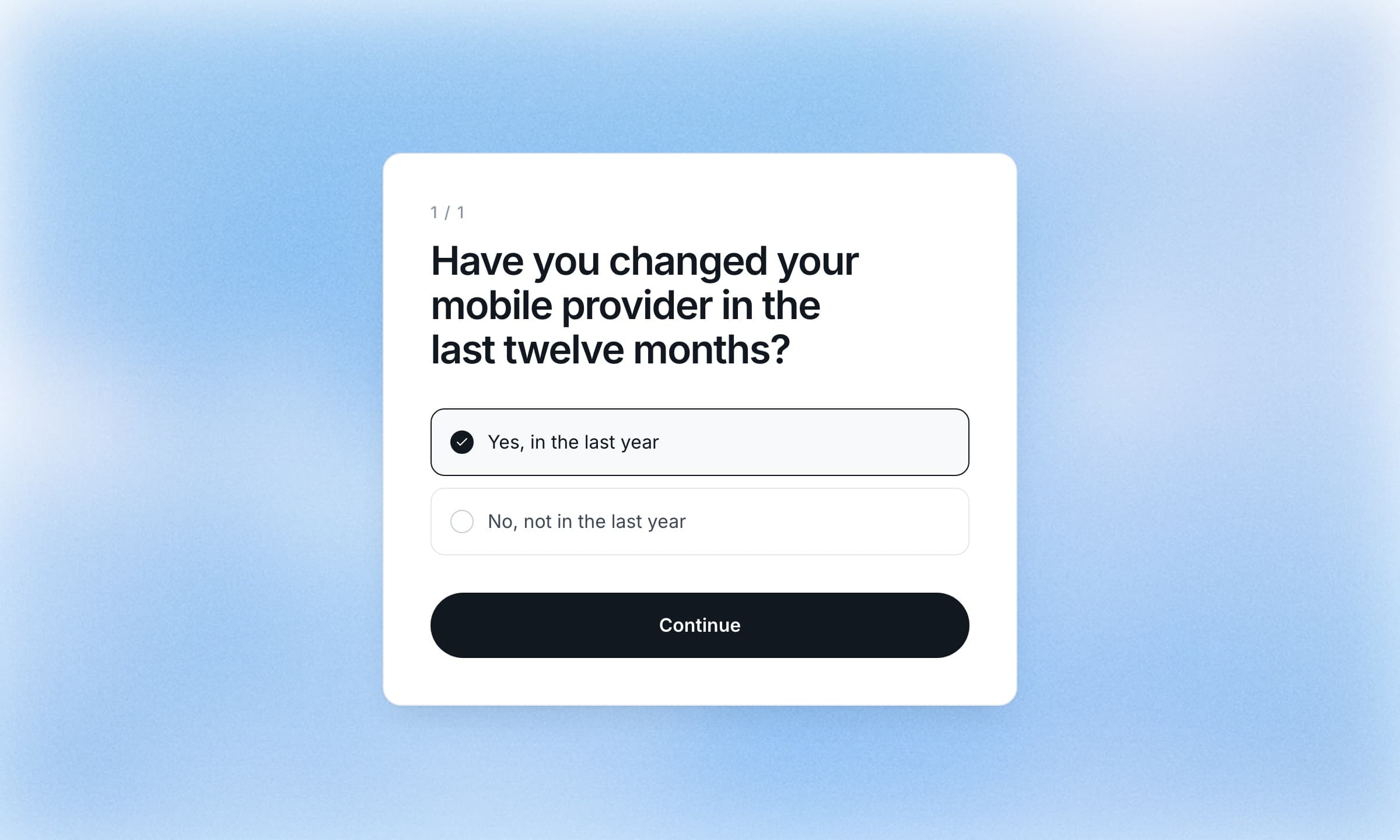
Their interviews sit alongside the ones from your own customers, in the same transcript list and the same report. You can tell them apart by source, and you can analyse them together.
Good to know
- Each hire is one market. For a study across three countries, Koji creates three hires, each priced for its own market.
- The price depends on how hard your audience is to find. Cint measures the incidence rate during the test batch, and if it drifts a lot from the estimate, the hire pauses and asks you to approve the new price before continuing.
- Screening questions belong to the study, so the same questions apply whether a participant came from the panel or from your own link.
- Panel respondents can only use the interview modes you allow for the hire. A text-only hire keeps every interview at one credit.
Try it this week
If you have a question you have been meaning to ask your market, this is the week to ask it. Create a study, open the Panel recruit tab, and see what your audience costs. Quoting is free on every plan.
Thank you to the team at Cint for the Demand API and the patience while we got the details right.