Key figure
Active learning and the achievement gap in passing rates
Theobald et al. (2020), a meta-analysis of same-instructor STEM course comparisons
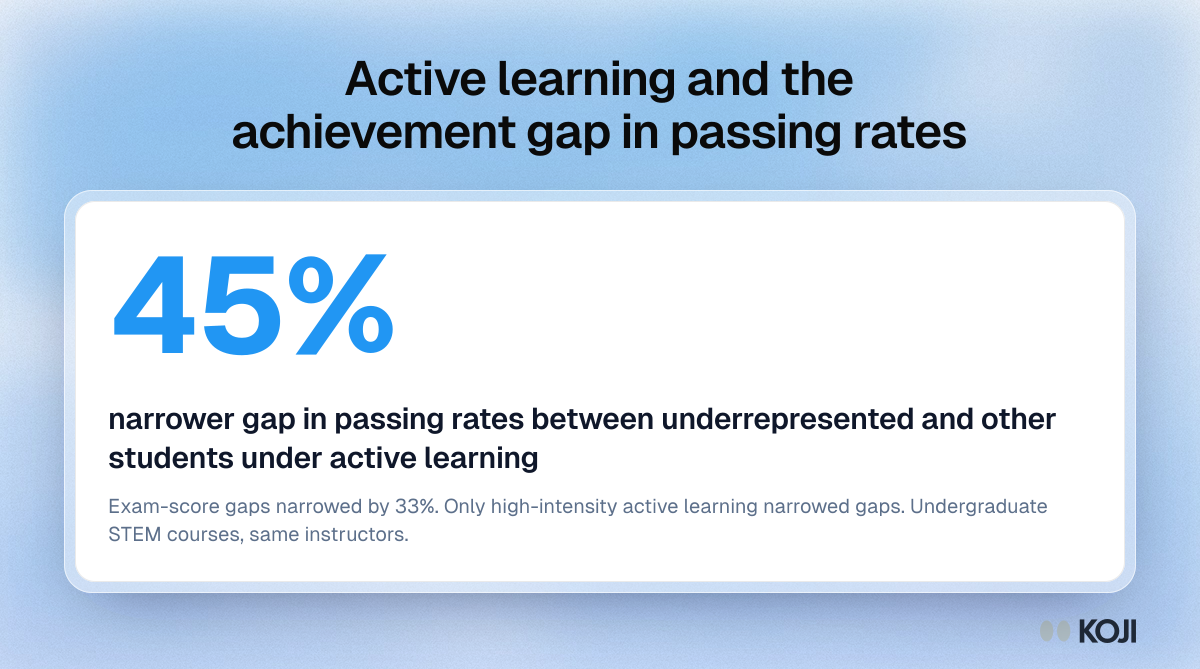
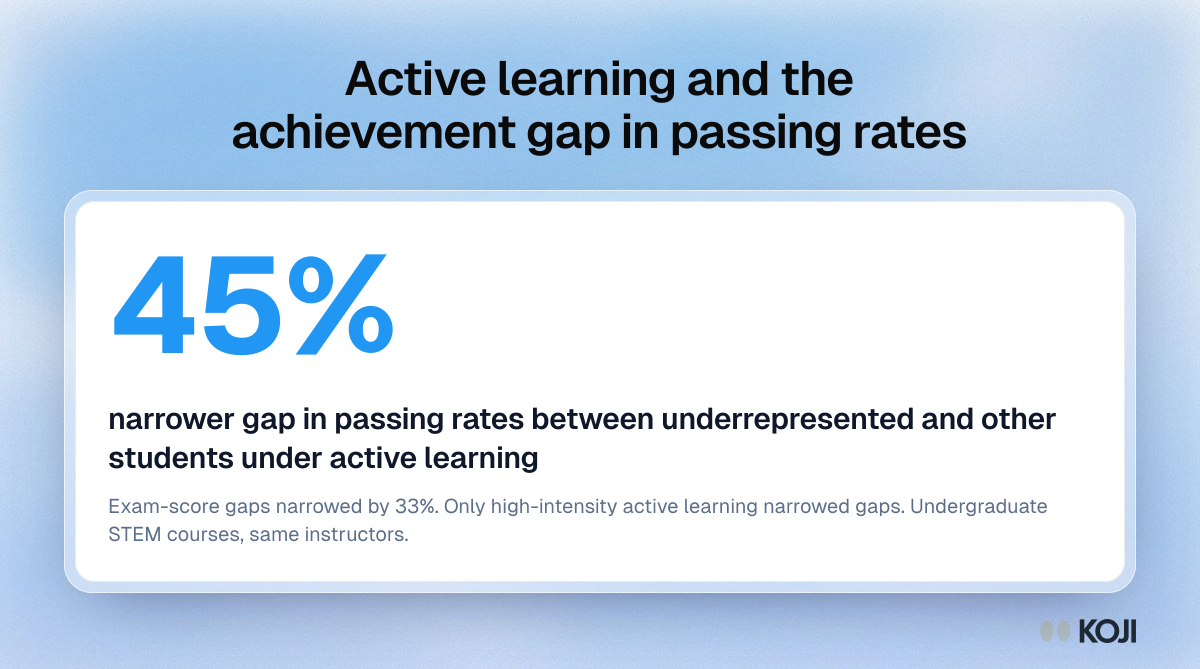
Key figure from Theobald and colleagues (PNAS, 2020), who pooled studies in which the same instructor taught undergraduate STEM courses with and without active learning. On average active learning narrowed the gap in passing rates between underrepresented and other students by 45% and the gap in exam scores by 33%, and only high-intensity active learning narrowed gaps. Useful for anyone evaluating a teaching redesign by who benefits, not only by the cohort average.
What's in this key figure
45% narrower gap in passing rates between underrepresented and other students under active learningExam-score gaps narrowed by 33%. Only high-intensity active learning narrowed gaps. Undergraduate STEM courses, same instructors.
Use this image
Free to use in your docs, decks and posts under CC BY 4.0, as long as you credit Koji with a link to this page. To embed it, paste this into your page:
<a href="https://www.koji.so/visuals/active-learning-achievement-gap-passing-rates-stat"><img src="https://www.koji.so/visuals/active-learning-achievement-gap-passing-rates-stat/active-learning-achievement-gap-passing-rates-stat.png" alt="Stat card: active learning narrowed the gap in passing rates between underrepresented and other STEM students by 45 percent." width="1200" height="669" /></a>
<p>Source: <a href="https://www.koji.so/visuals/active-learning-achievement-gap-passing-rates-stat">Active learning and the achievement gap in passing rates</a>, Koji</p>