Framework
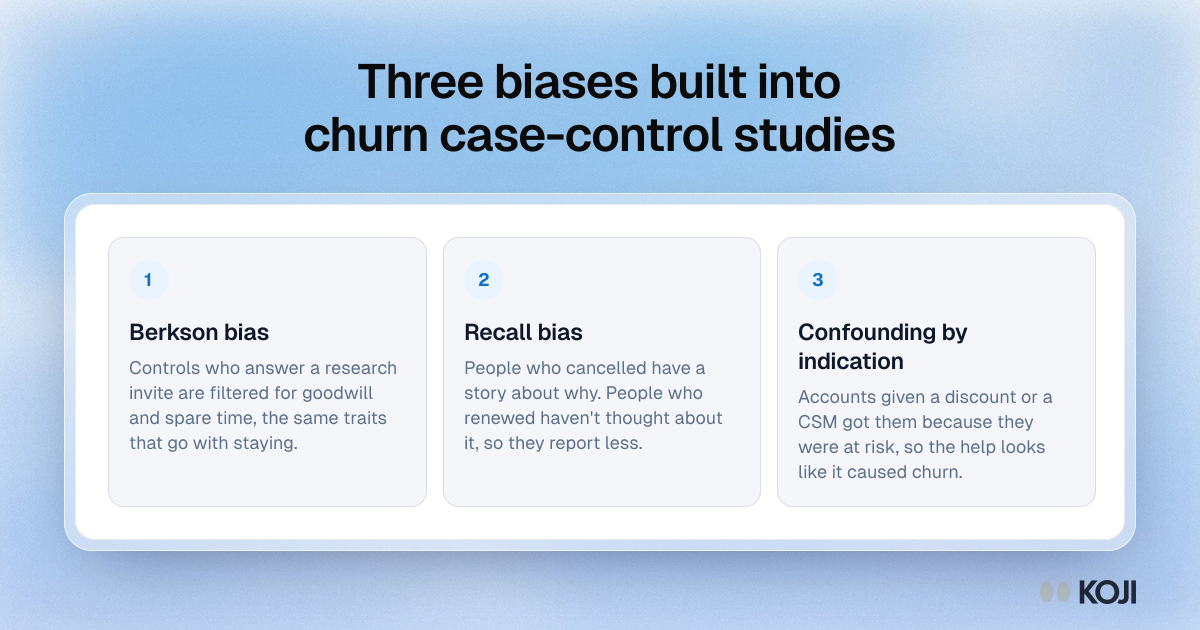
Three biases built into churn case-control studies
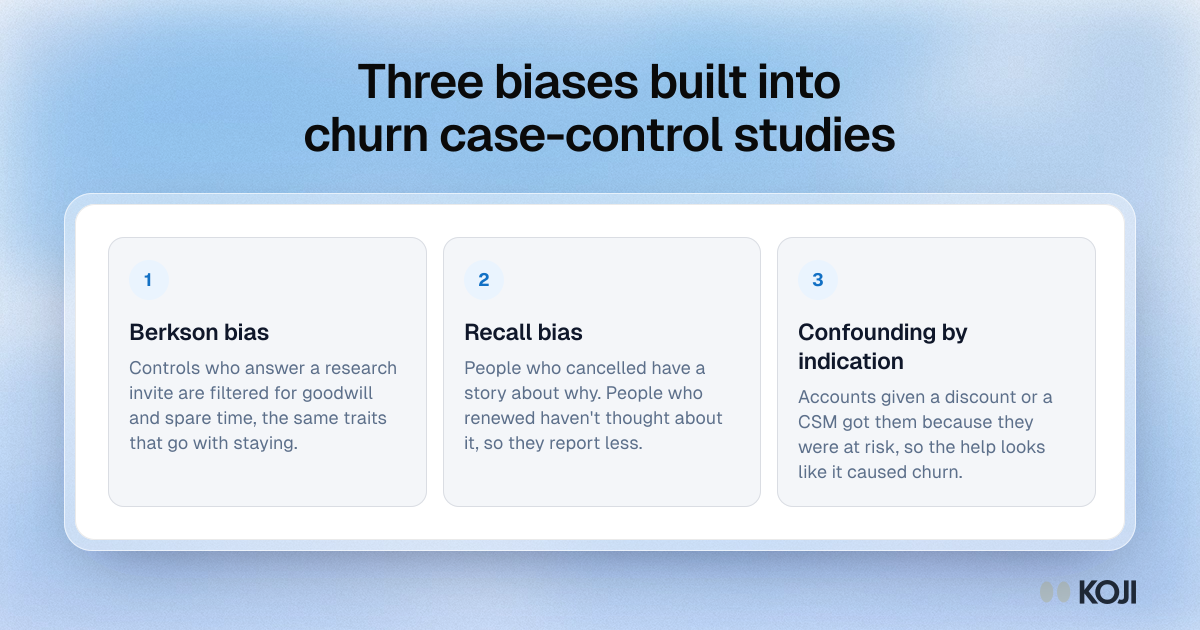
Three biases that come with any churn or win-loss study comparing people who left with people who stayed. Berkson bias appears when controls are people who answered a research invite. Recall bias appears because leavers have a story about their decision and stayers don't. Confounding by indication makes discounts or a customer success manager look harmful, because at-risk accounts got them first.
Where this appears
What's in this framework
- Berkson bias: Controls who answer a research invite are filtered for goodwill and spare time, the same traits that go with staying.
- Recall bias: People who cancelled have a story about why. People who renewed haven't thought about it, so they report less.
- Confounding by indication: Accounts given a discount or a CSM got them because they were at risk, so the help looks like it caused churn.
Use this image
Free to use in your docs, decks and posts under CC BY 4.0, as long as you credit Koji with a link to this page. To embed it, paste this into your page:
html
<a href="https://www.koji.so/visuals/case-control-study-biases-churn-research"><img src="https://www.koji.so/visuals/case-control-study-biases-churn-research/case-control-study-biases-churn-research.png" alt="Framework of three biases in churn case-control research: Berkson bias from who answers invites, recall bias, and confounding by indication." width="1200" height="630" /></a>
<p>Source: <a href="https://www.koji.so/visuals/case-control-study-biases-churn-research">Three biases built into churn case-control studies</a>, Koji</p>