Reference table
Red flags in compliance survey results
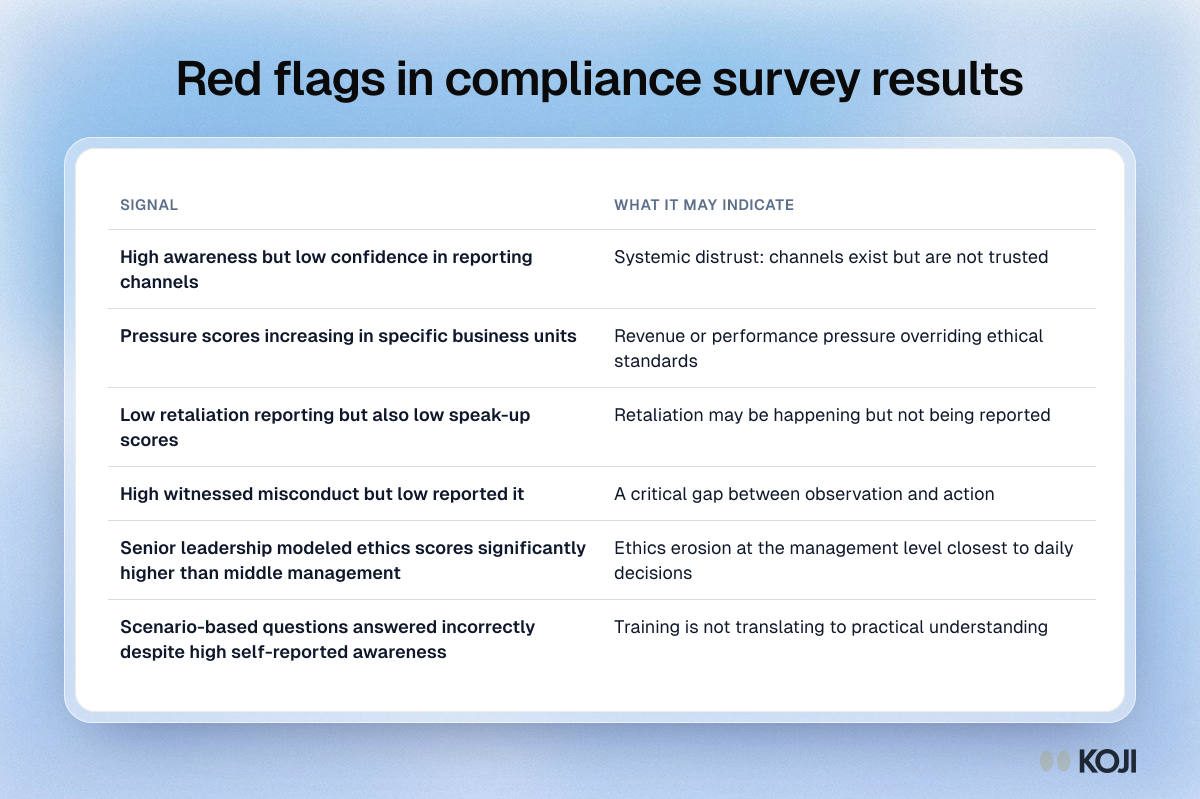
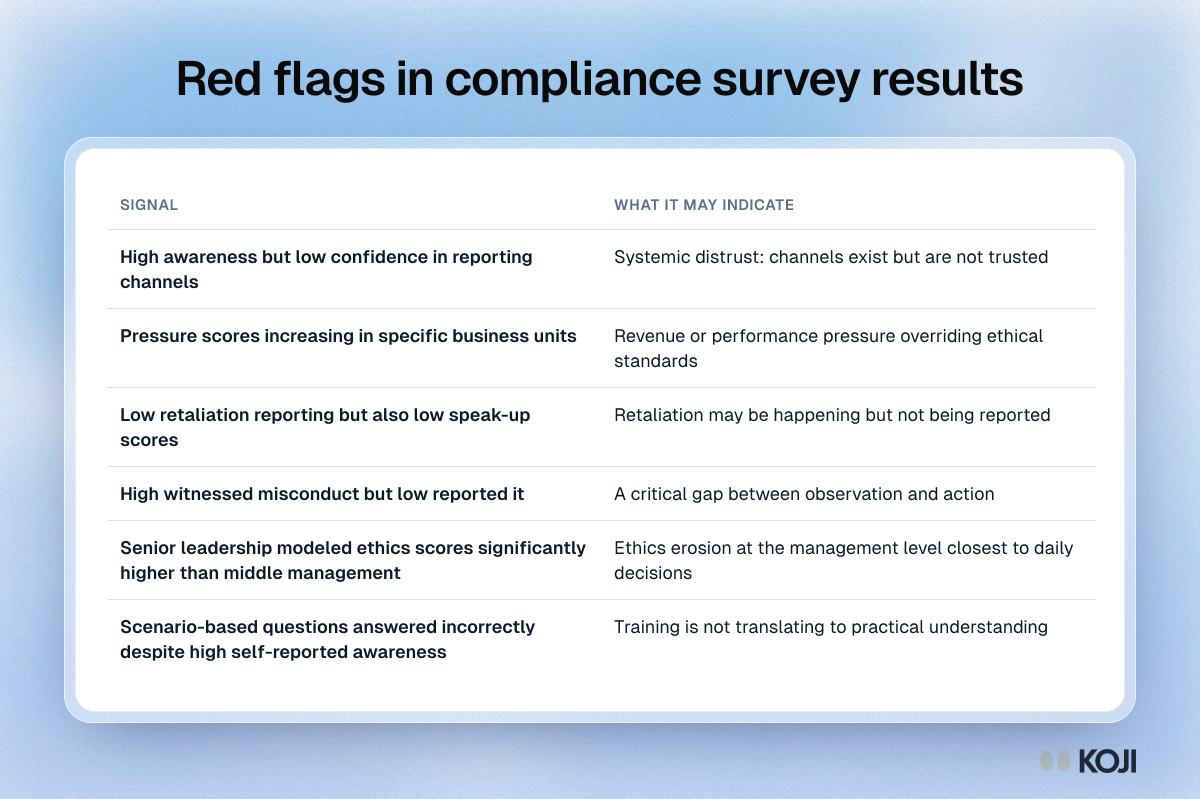
A reference table of six patterns to look for in compliance and ethics survey results, each paired with what it may indicate. Examples include high awareness of reporting channels with low trust in them, many people who saw misconduct but few who reported it, and wrong answers to scenario questions despite high self-rated awareness. Compliance teams can use it to decide which results need a closer look, a follow-up conversation or an investigation.
Where this appears
What's in this reference table
| Signal | What it may indicate |
|---|---|
| High awareness but low confidence in reporting channels | Systemic distrust: channels exist but are not trusted |
| Pressure scores increasing in specific business units | Revenue or performance pressure overriding ethical standards |
| Low retaliation reporting but also low speak-up scores | Retaliation may be happening but not being reported |
| High witnessed misconduct but low reported it | A critical gap between observation and action |
| Senior leadership modeled ethics scores significantly higher than middle management | Ethics erosion at the management level closest to daily decisions |
| Scenario-based questions answered incorrectly despite high self-reported awareness | Training is not translating to practical understanding |
Use this image
Free to use in your docs, decks and posts under CC BY 4.0, as long as you credit Koji with a link to this page. To embed it, paste this into your page:
html
<a href="https://www.koji.so/visuals/compliance-survey-red-flag-patterns"><img src="https://www.koji.so/visuals/compliance-survey-red-flag-patterns/compliance-survey-red-flag-patterns.png" alt="Table of six red-flag patterns in compliance survey data, such as high awareness but low trust in reporting channels, and what each may indicate." width="1200" height="799" /></a>
<p>Source: <a href="https://www.koji.so/visuals/compliance-survey-red-flag-patterns">Red flags in compliance survey results</a>, Koji</p>