Reference table
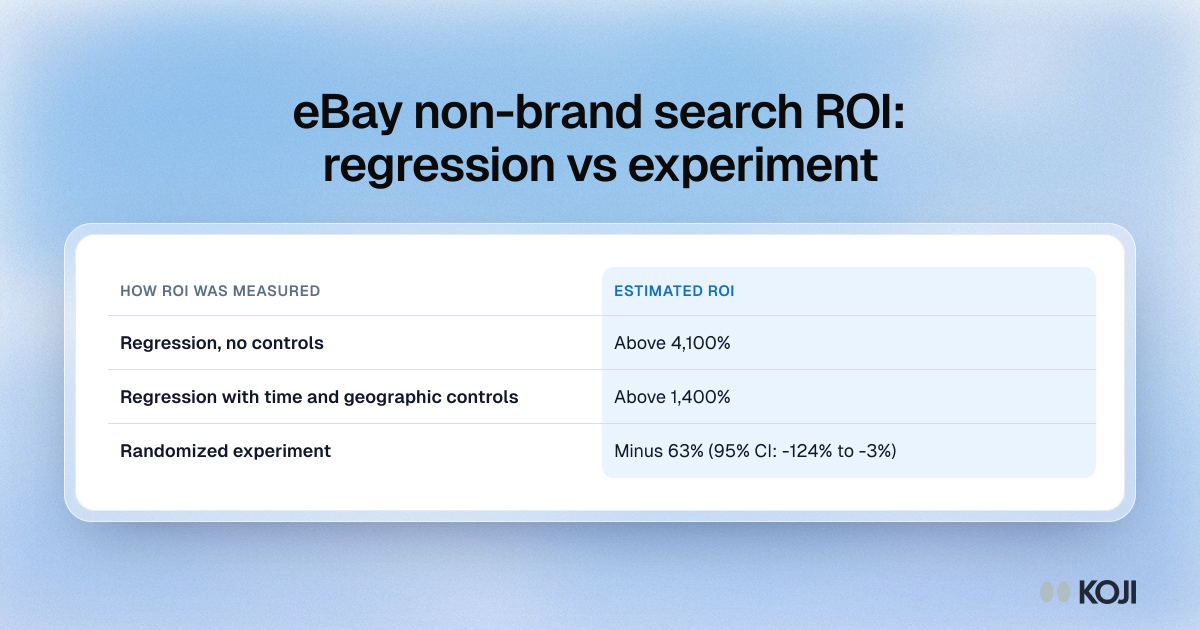
eBay non-brand search ROI: regression vs experiment
The same ad spend, measured three ways
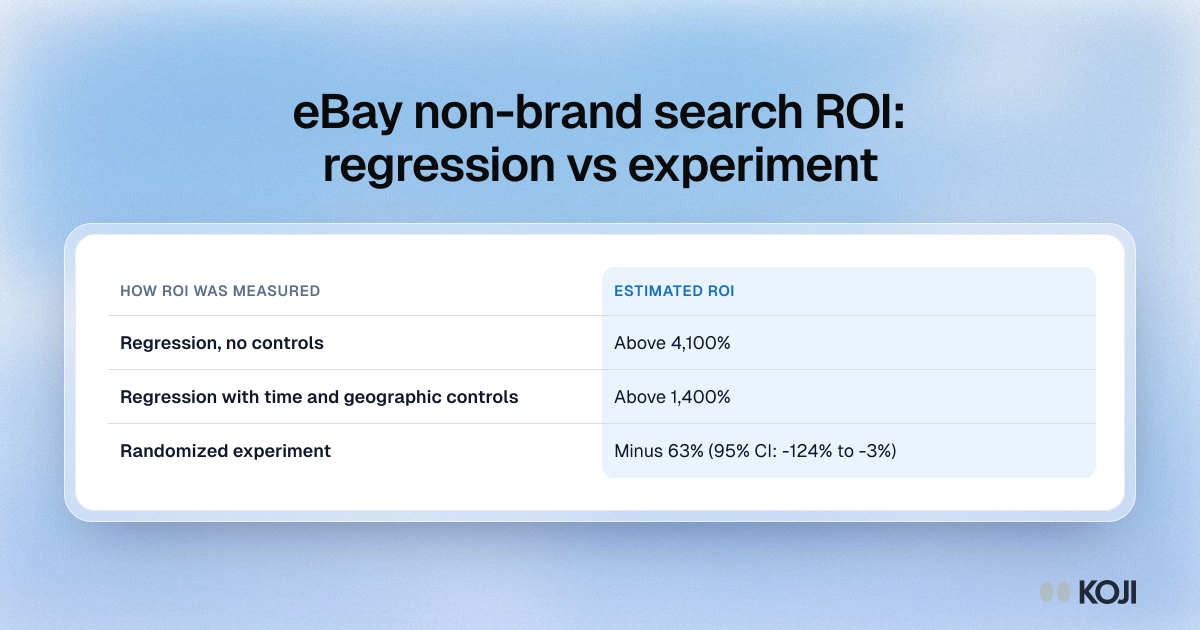
A table from the eBay paid search study by Blake, Nosko and Tadelis in Econometrica (2015). Regression with no controls put non-brand search ROI above 4,100 percent and regression with time and geographic controls above 1,400 percent, while the randomized experiment measured minus 63 percent, with a 95 percent confidence interval of minus 124 to minus 3 percent. Marketers can use it to explain why a retail media ROAS needs a holdout test before it goes into a budget.
Where this appears
What's in this reference table
| How ROI was measured | Estimated ROI |
|---|---|
| Regression, no controls | Above 4,100% |
| Regression with time and geographic controls | Above 1,400% |
| Randomized experiment | Minus 63% (95% CI: -124% to -3%) |
Use this image
Free to use in your docs, decks and posts under CC BY 4.0, as long as you credit Koji with a link to this page. To embed it, paste this into your page:
html
<a href="https://www.koji.so/visuals/ebay-paid-search-roi-regression-vs-experiment"><img src="https://www.koji.so/visuals/ebay-paid-search-roi-regression-vs-experiment/ebay-paid-search-roi-regression-vs-experiment.png" alt="Table of eBay non-brand paid search ROI by method: above 4,100% with no controls, above 1,400% with controls, minus 63% in a randomized experiment." width="1200" height="630" /></a>
<p>Source: <a href="https://www.koji.so/visuals/ebay-paid-search-roi-regression-vs-experiment">eBay non-brand search ROI: regression vs experiment</a>, Koji</p>