Reference table
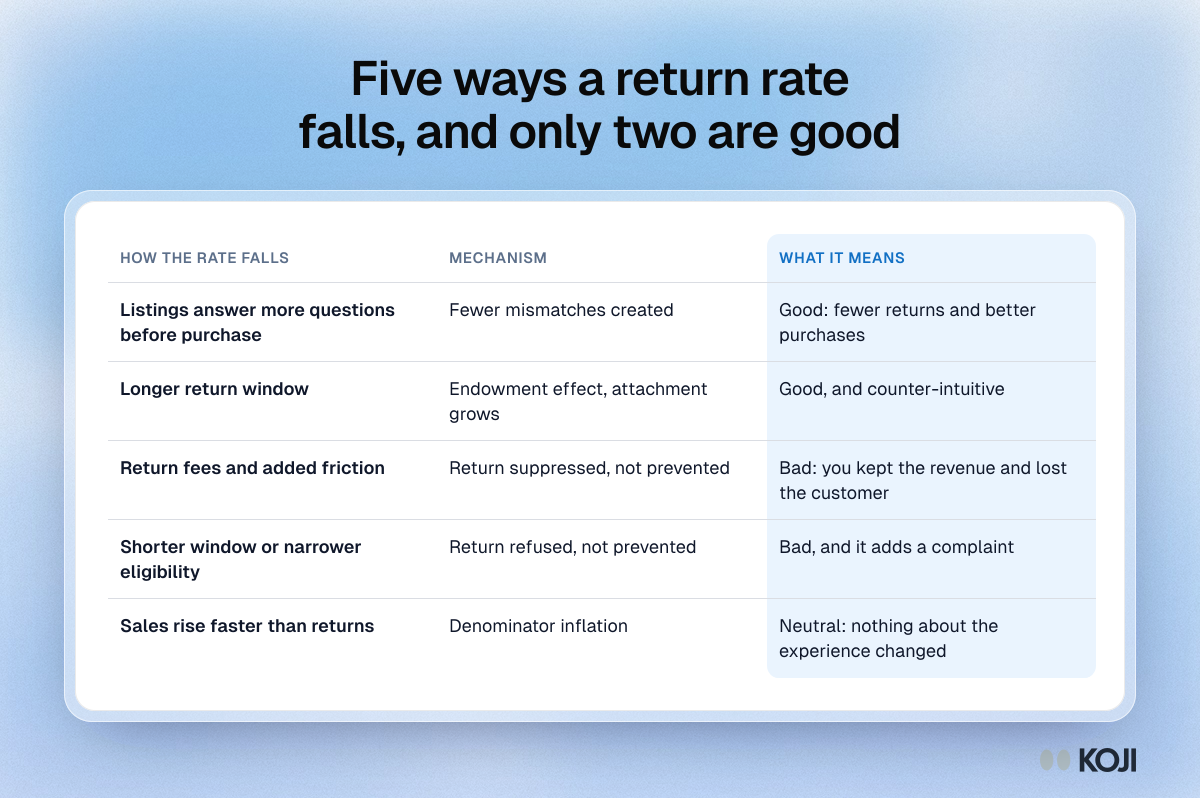
Five ways a return rate falls, and only two are good
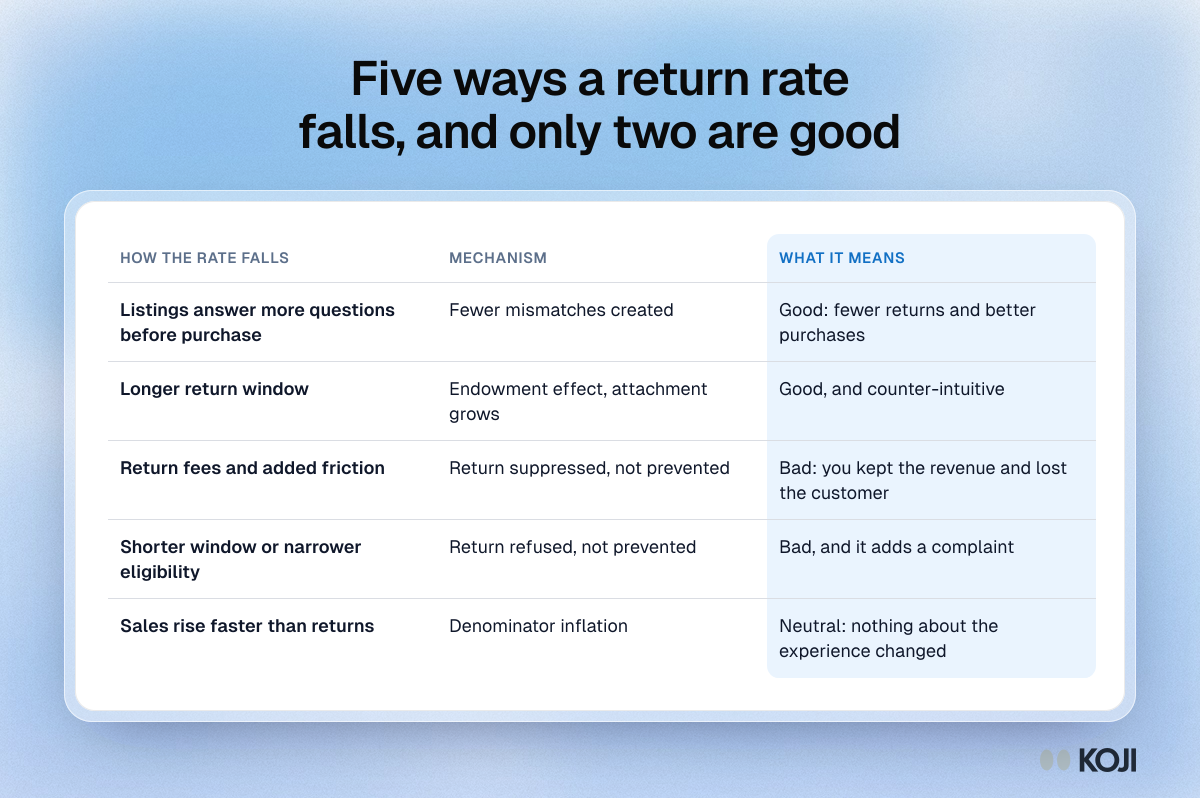
A table of the five mechanisms that lower a return rate (returns divided by sales) and what each means for the business. Better listings and a longer return window are real improvements. Fees and shorter windows suppress returns and cost customers, and rising sales only shrink the ratio. Use it to classify a returns programme before you report it as a win.
Where this appears
What's in this reference table
| How the rate falls | Mechanism | What it means |
|---|---|---|
| Listings answer more questions before purchase | Fewer mismatches created | Good: fewer returns and better purchases |
| Longer return window | Endowment effect, attachment grows | Good, and counter-intuitive |
| Return fees and added friction | Return suppressed, not prevented | Bad: you kept the revenue and lost the customer |
| Shorter window or narrower eligibility | Return refused, not prevented | Bad, and it adds a complaint |
| Sales rise faster than returns | Denominator inflation | Neutral: nothing about the experience changed |
Use this image
Free to use in your docs, decks and posts under CC BY 4.0, as long as you credit Koji with a link to this page. To embed it, paste this into your page:
html
<a href="https://www.koji.so/visuals/five-ways-a-return-rate-falls-table"><img src="https://www.koji.so/visuals/five-ways-a-return-rate-falls-table/five-ways-a-return-rate-falls-table.png" alt="Table of five ways a retail return rate can fall, from better listings and longer windows to return fees, shorter windows and sales growth." width="1200" height="798" /></a>
<p>Source: <a href="https://www.koji.so/visuals/five-ways-a-return-rate-falls-table">Five ways a return rate falls, and only two are good</a>, Koji</p>