Reference table
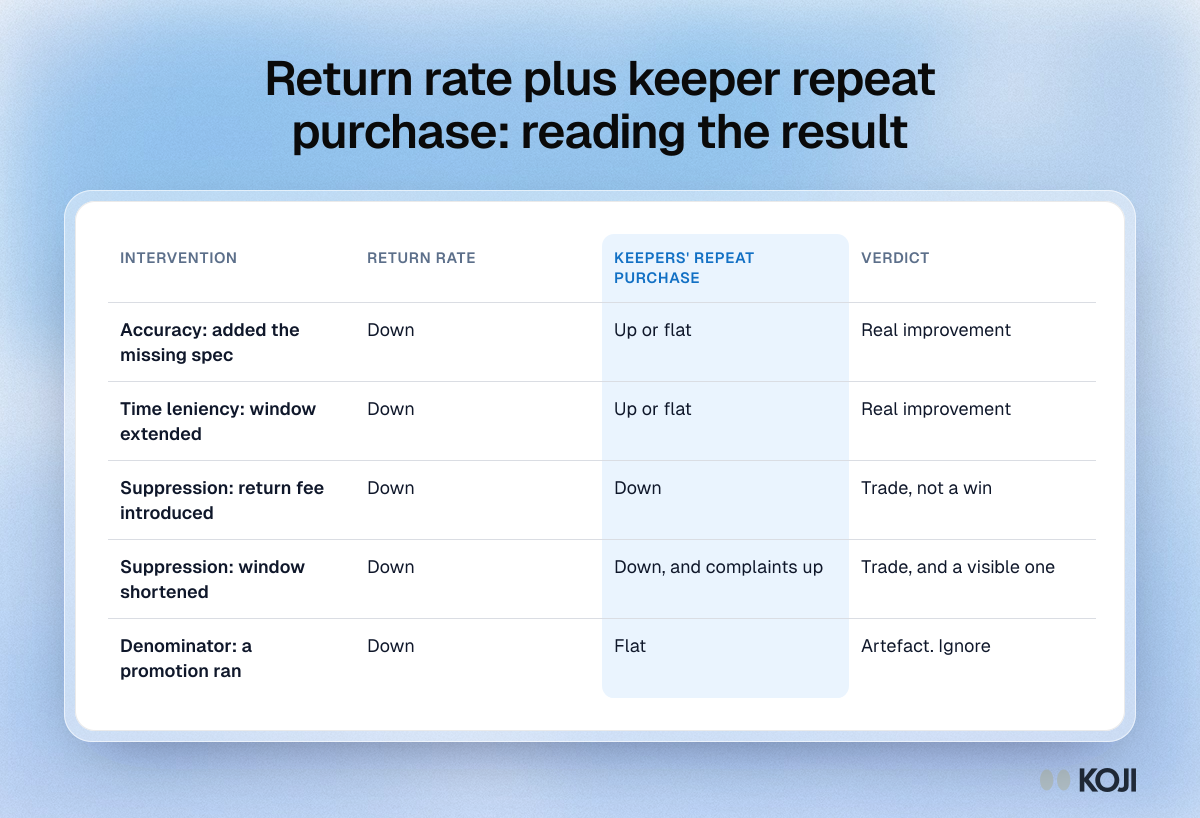
Return rate plus keeper repeat purchase: reading the result
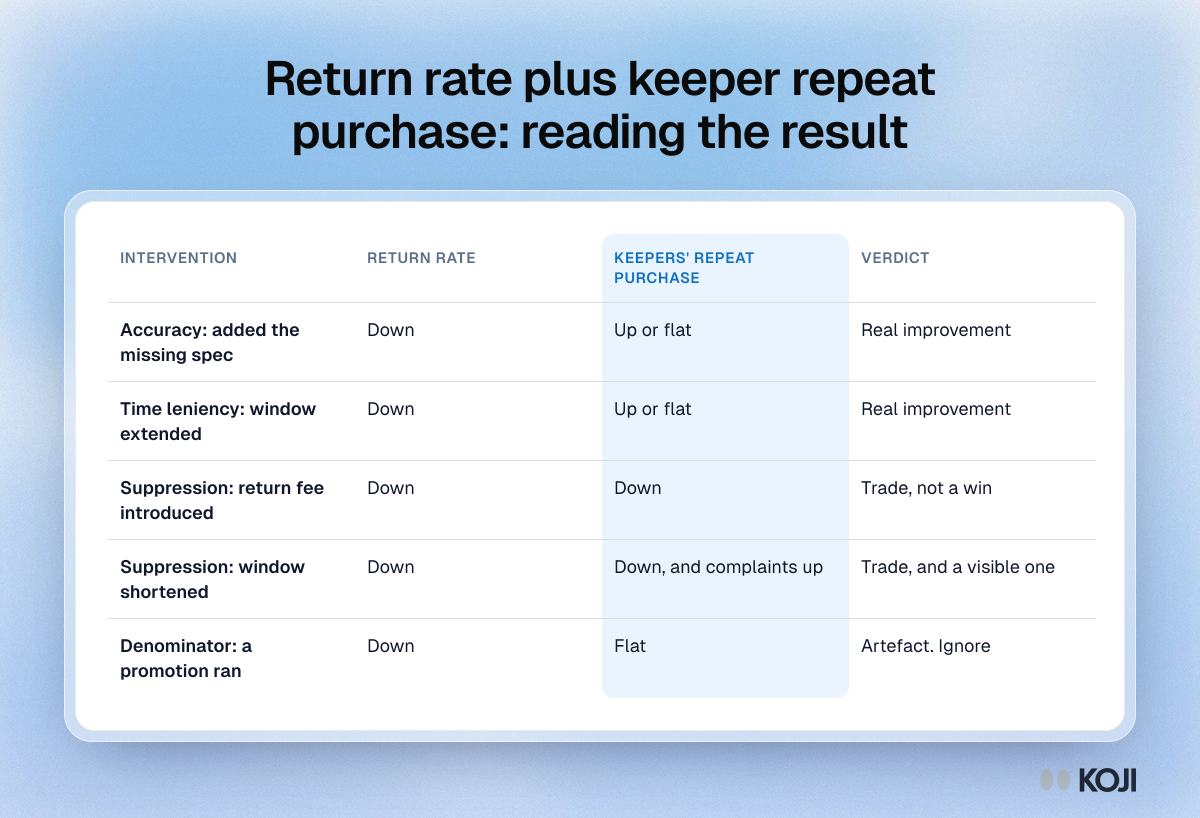
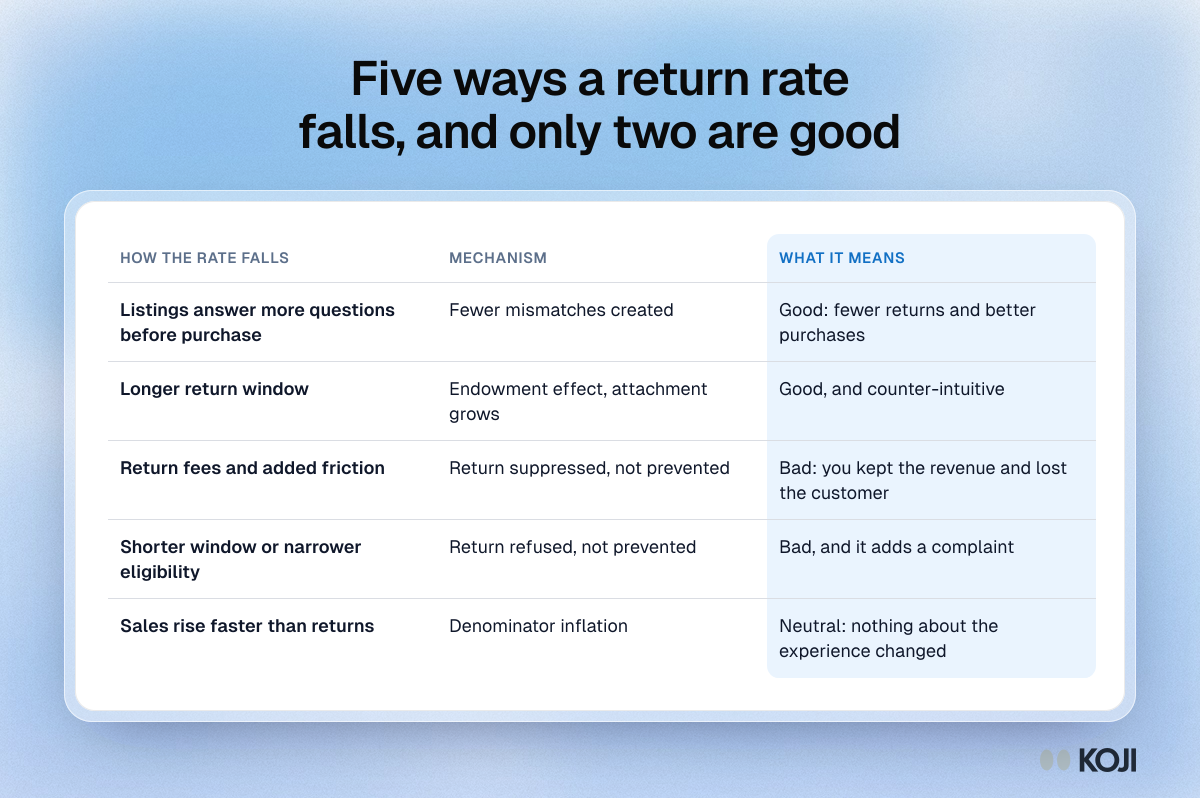
How to grade a returns reduction programme by pairing the return rate with the repeat purchase rate of customers who kept the item, measured at 90 and 180 days. Accuracy and a longer window keep that second number up or flat. Fees and shorter windows push it down. Koji can interview the keepers to find out which of them wanted to send the item back.
Where this appears
What's in this reference table
| Intervention | Return rate | Keepers' repeat purchase | Verdict |
|---|---|---|---|
| Accuracy: added the missing spec | Down | Up or flat | Real improvement |
| Time leniency: window extended | Down | Up or flat | Real improvement |
| Suppression: return fee introduced | Down | Down | Trade, not a win |
| Suppression: window shortened | Down | Down, and complaints up | Trade, and a visible one |
| Denominator: a promotion ran | Down | Flat | Artefact. Ignore |
Use this image
Free to use in your docs, decks and posts under CC BY 4.0, as long as you credit Koji with a link to this page. To embed it, paste this into your page:
html
<a href="https://www.koji.so/visuals/return-rate-vs-keeper-repeat-purchase-verdict"><img src="https://www.koji.so/visuals/return-rate-vs-keeper-repeat-purchase-verdict/return-rate-vs-keeper-repeat-purchase-verdict.png" alt="Table pairing return rate with the repeat purchase rate of customers who kept the item, showing which returns changes are real wins and which are suppression." width="1200" height="818" /></a>
<p>Source: <a href="https://www.koji.so/visuals/return-rate-vs-keeper-repeat-purchase-verdict">Return rate plus keeper repeat purchase: reading the result</a>, Koji</p>