Reference table
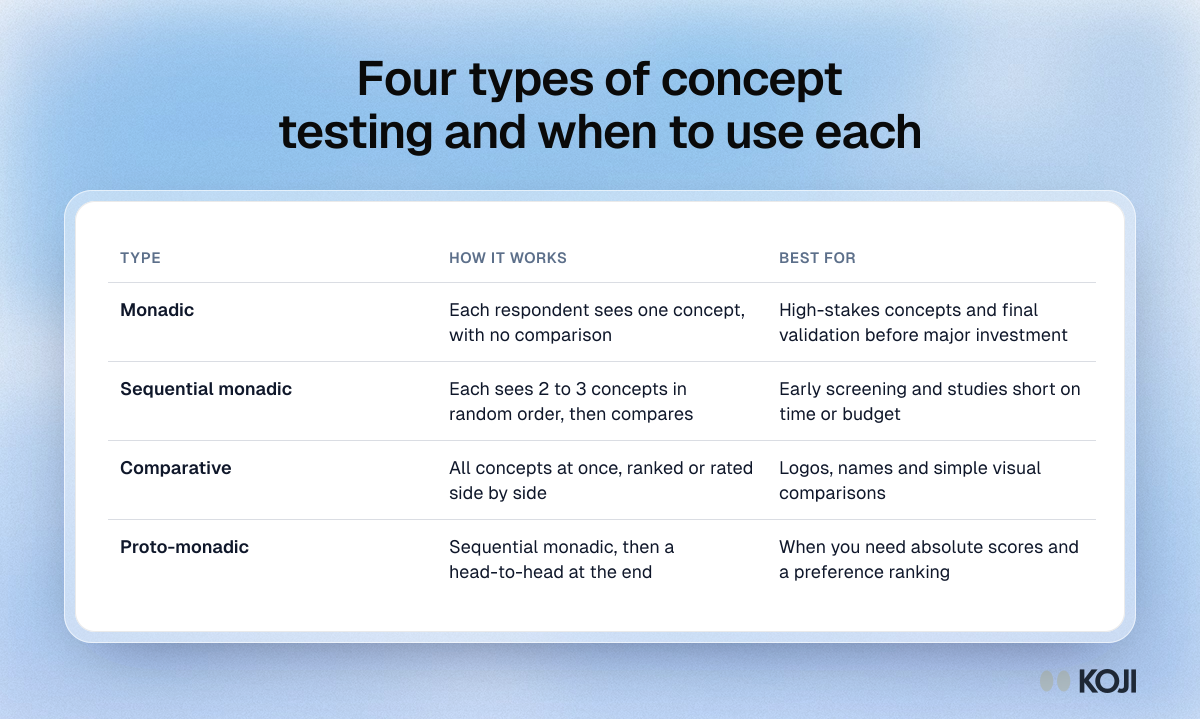
Four types of concept testing and when to use each
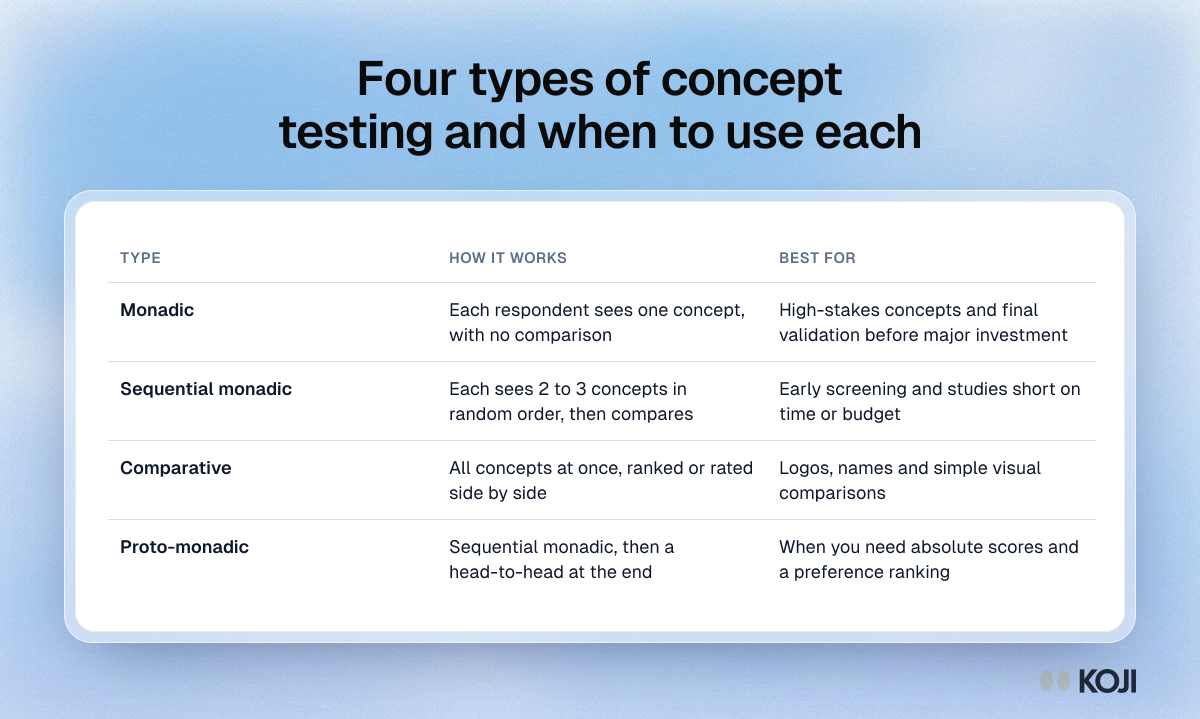
A comparison of the four common concept testing designs: monadic, sequential monadic, comparative and proto-monadic. It shows how each one presents concepts to respondents and the situations it fits, from final validation of a high-stakes idea to quick naming and logo tests. Use it to choose a design before you write the study. Koji can run any of them as AI-moderated interviews with structured questions.
Where this appears
What's in this reference table
| Type | How it works | Best for |
|---|---|---|
| Monadic | Each respondent sees one concept, with no comparison | High-stakes concepts and final validation before major investment |
| Sequential monadic | Each sees 2 to 3 concepts in random order, then compares | Early screening and studies short on time or budget |
| Comparative | All concepts at once, ranked or rated side by side | Logos, names and simple visual comparisons |
| Proto-monadic | Sequential monadic, then a head-to-head at the end | When you need absolute scores and a preference ranking |
Use this image
Free to use in your docs, decks and posts under CC BY 4.0, as long as you credit Koji with a link to this page. To embed it, paste this into your page:
html
<a href="https://www.koji.so/visuals/four-types-of-concept-testing-best-uses"><img src="https://www.koji.so/visuals/four-types-of-concept-testing-best-uses/four-types-of-concept-testing-best-uses.png" alt="Table of four concept testing types, monadic, sequential monadic, comparative and proto-monadic, with how each works and what it suits best." width="1200" height="719" /></a>
<p>Source: <a href="https://www.koji.so/visuals/four-types-of-concept-testing-best-uses">Four types of concept testing and when to use each</a>, Koji</p>