Comparison
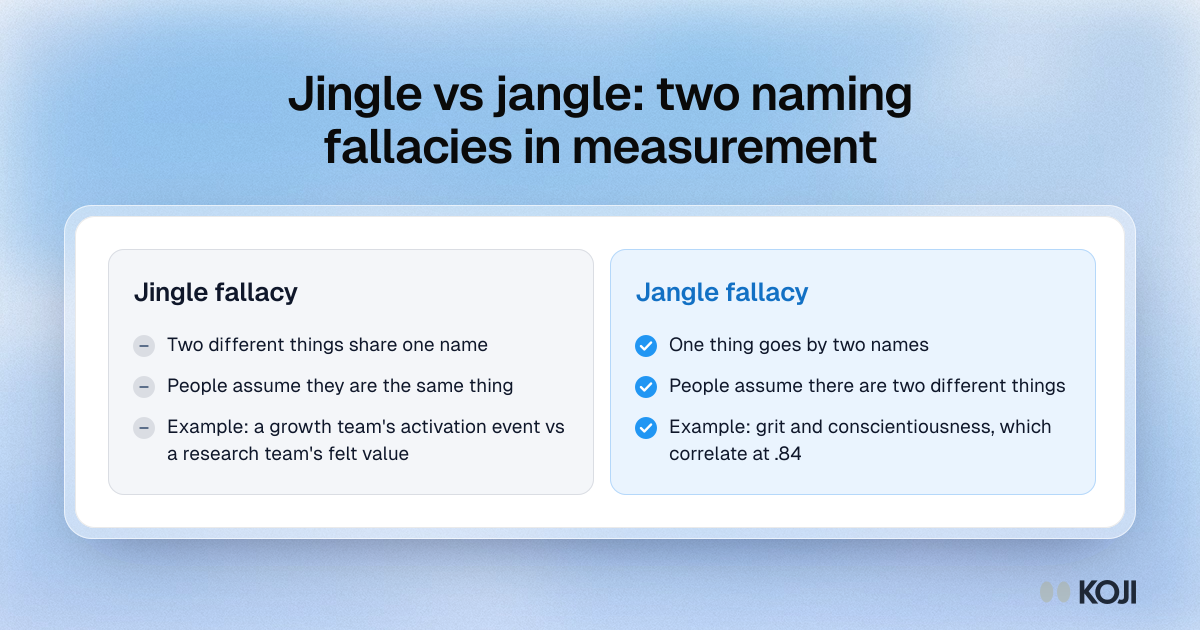
Jingle vs jangle: two naming fallacies in measurement
How metric names hide one construct, or merge two
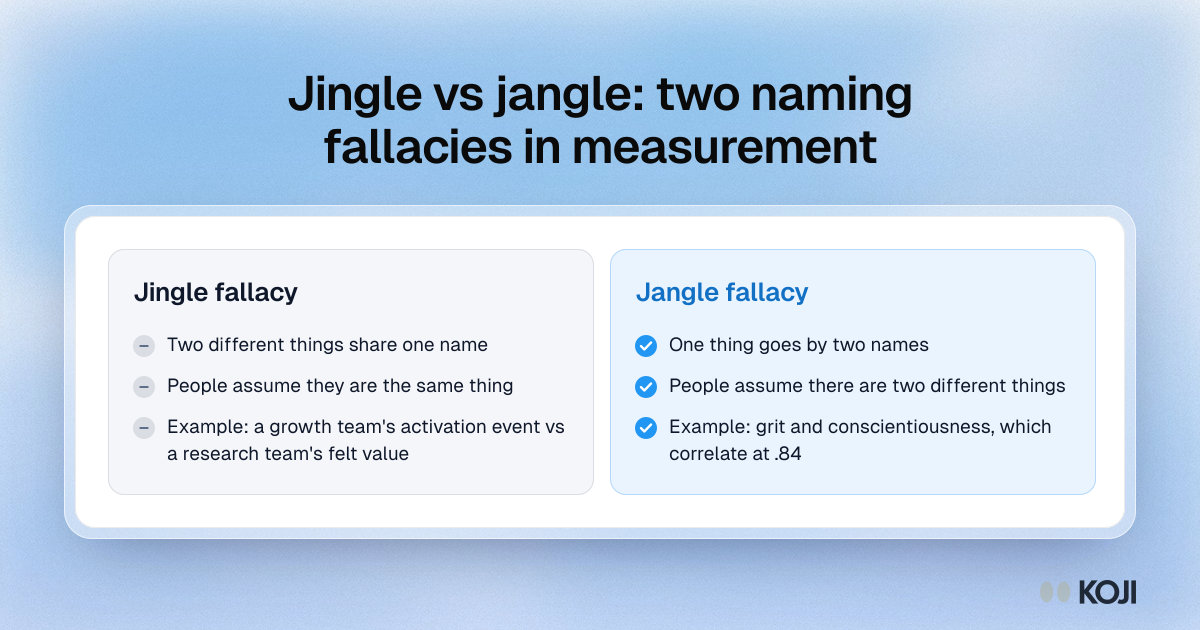
A side-by-side comparison of the two naming fallacies that break construct validity. The jingle fallacy is assuming two different measures are the same because they share a name, like two teams that both say activation. The jangle fallacy is assuming one thing is two because it has two names, as with grit and conscientiousness, which a meta-analysis found correlated at .84. For product, research and analytics teams who name metrics.
Where this appears
What's in this comparison
Jingle fallacy
- Two different things share one name
- People assume they are the same thing
- Example: a growth team's activation event vs a research team's felt value
Jangle fallacy
- One thing goes by two names
- People assume there are two different things
- Example: grit and conscientiousness, which correlate at .84
Use this image
Free to use in your docs, decks and posts under CC BY 4.0, as long as you credit Koji with a link to this page. To embed it, paste this into your page:
html
<a href="https://www.koji.so/visuals/jingle-vs-jangle-fallacy-comparison"><img src="https://www.koji.so/visuals/jingle-vs-jangle-fallacy-comparison/jingle-vs-jangle-fallacy-comparison.png" alt="Comparison of the jingle fallacy, two different things sharing a name, and the jangle fallacy, one thing with two names, with a product example of each." width="1200" height="630" /></a>
<p>Source: <a href="https://www.koji.so/visuals/jingle-vs-jangle-fallacy-comparison">Jingle vs jangle: two naming fallacies in measurement</a>, Koji</p>