Comparison
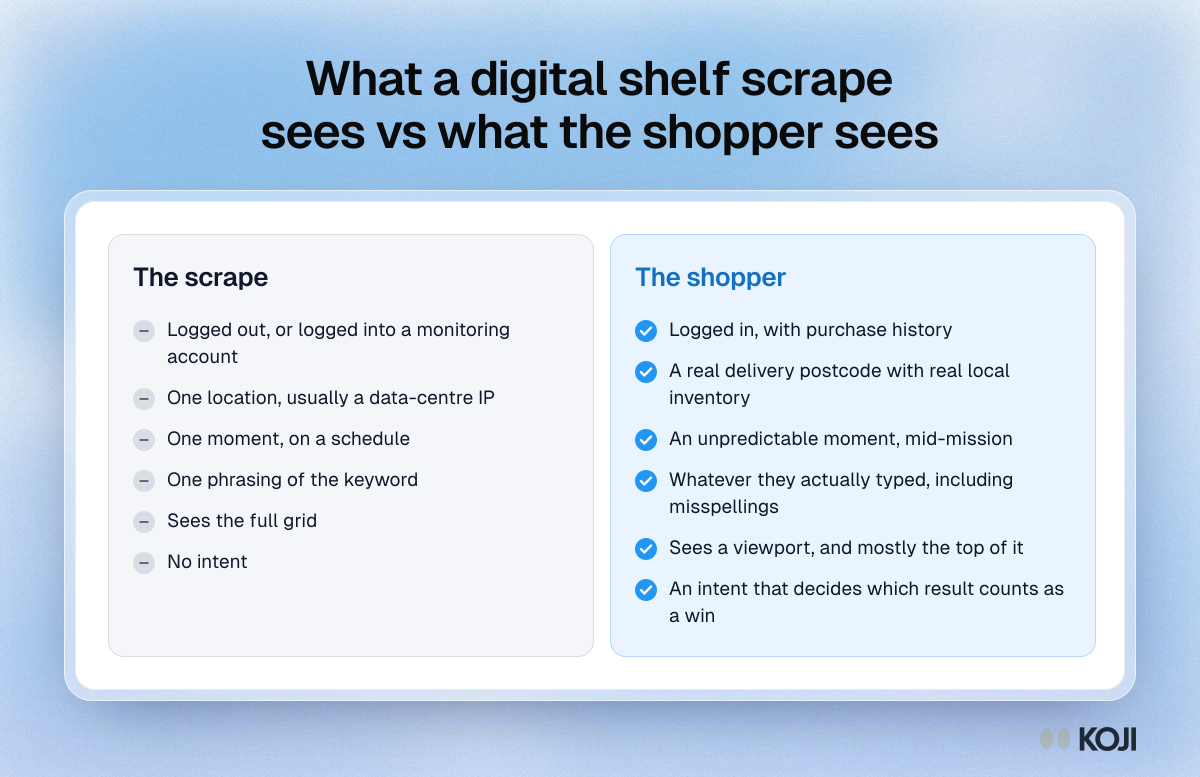
What a digital shelf scrape sees vs what the shopper sees
Why share of search measures a page, not a person
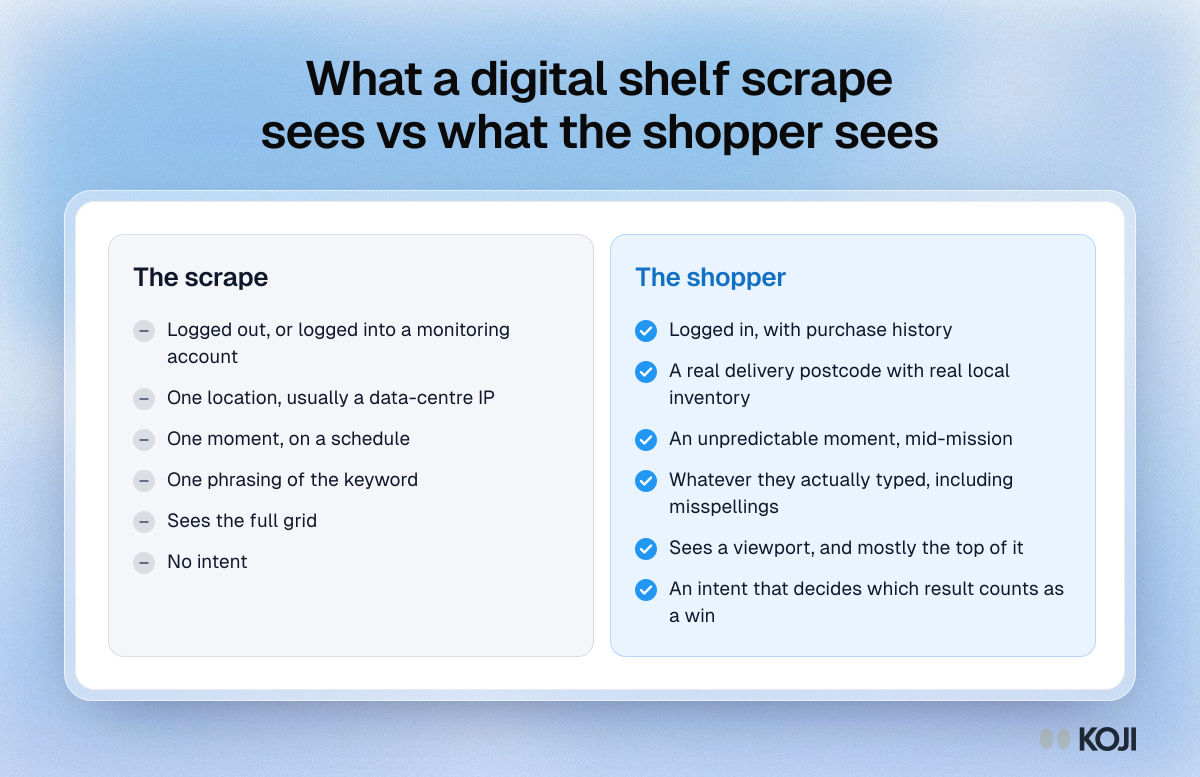
A side-by-side comparison of the automated scrape behind share of search and the shopper it is meant to stand for. The scrape is logged out, in one location, on a schedule, with one phrasing of the keyword and a view of the full grid. The shopper is logged in, has local inventory, types their own words, sees mostly the top of a viewport and has an intent. For ecommerce and digital shelf teams reading share of search reports.
Where this appears
What's in this comparison
The scrape
- Logged out, or logged into a monitoring account
- One location, usually a data-centre IP
- One moment, on a schedule
- One phrasing of the keyword
- Sees the full grid
- No intent
The shopper
- Logged in, with purchase history
- A real delivery postcode with real local inventory
- An unpredictable moment, mid-mission
- Whatever they actually typed, including misspellings
- Sees a viewport, and mostly the top of it
- An intent that decides which result counts as a win
Use this image
Free to use in your docs, decks and posts under CC BY 4.0, as long as you credit Koji with a link to this page. To embed it, paste this into your page:
html
<a href="https://www.koji.so/visuals/digital-shelf-scrape-vs-real-shopper"><img src="https://www.koji.so/visuals/digital-shelf-scrape-vs-real-shopper/digital-shelf-scrape-vs-real-shopper.png" alt="Comparison of a digital shelf scrape and a real shopper across login, location, timing, search phrasing, how much of the grid they see and intent." width="1200" height="777" /></a>
<p>Source: <a href="https://www.koji.so/visuals/digital-shelf-scrape-vs-real-shopper">What a digital shelf scrape sees vs what the shopper sees</a>, Koji</p>