Guide
Why share of search rises while sales stay flat
Six explanations a scrape cannot tell apart
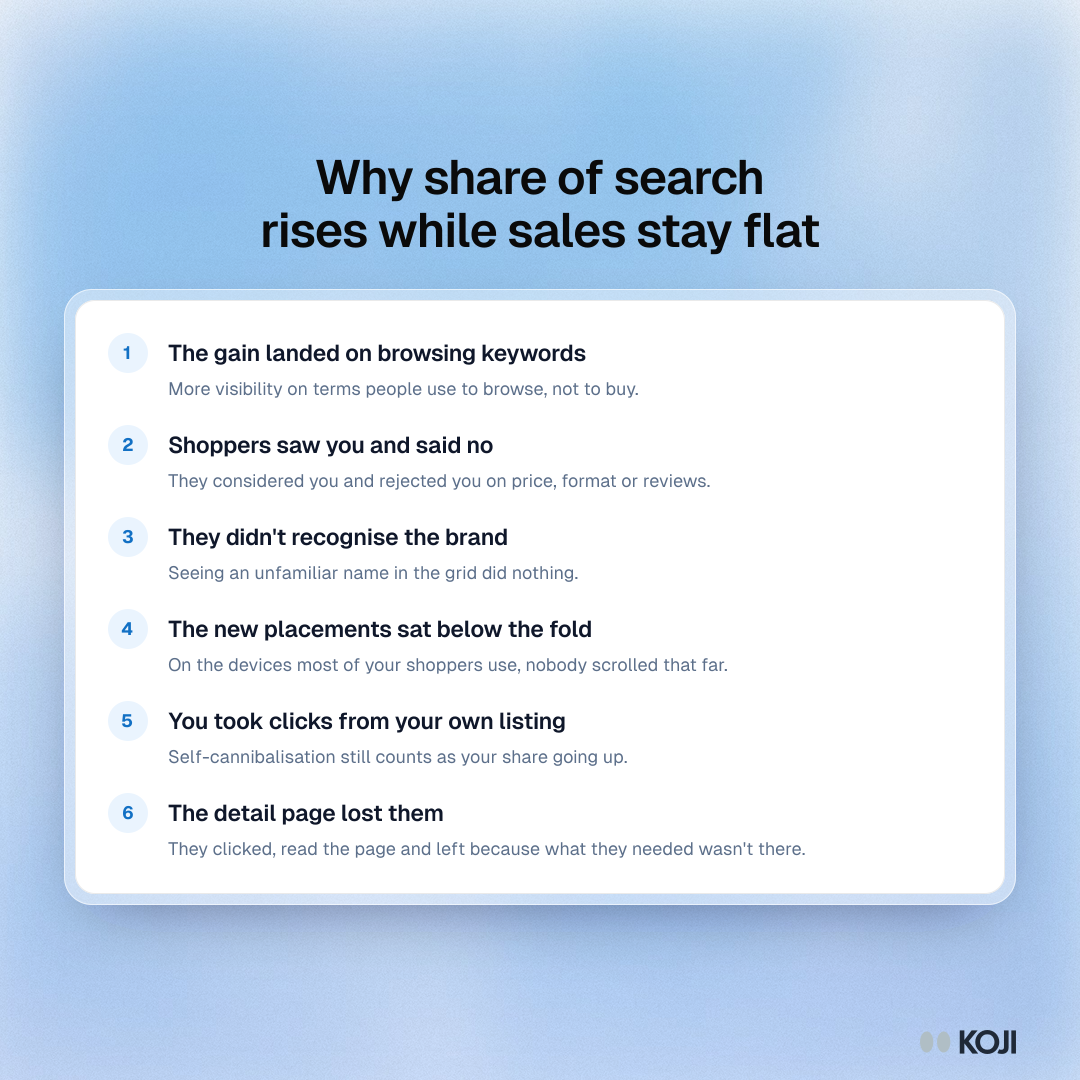
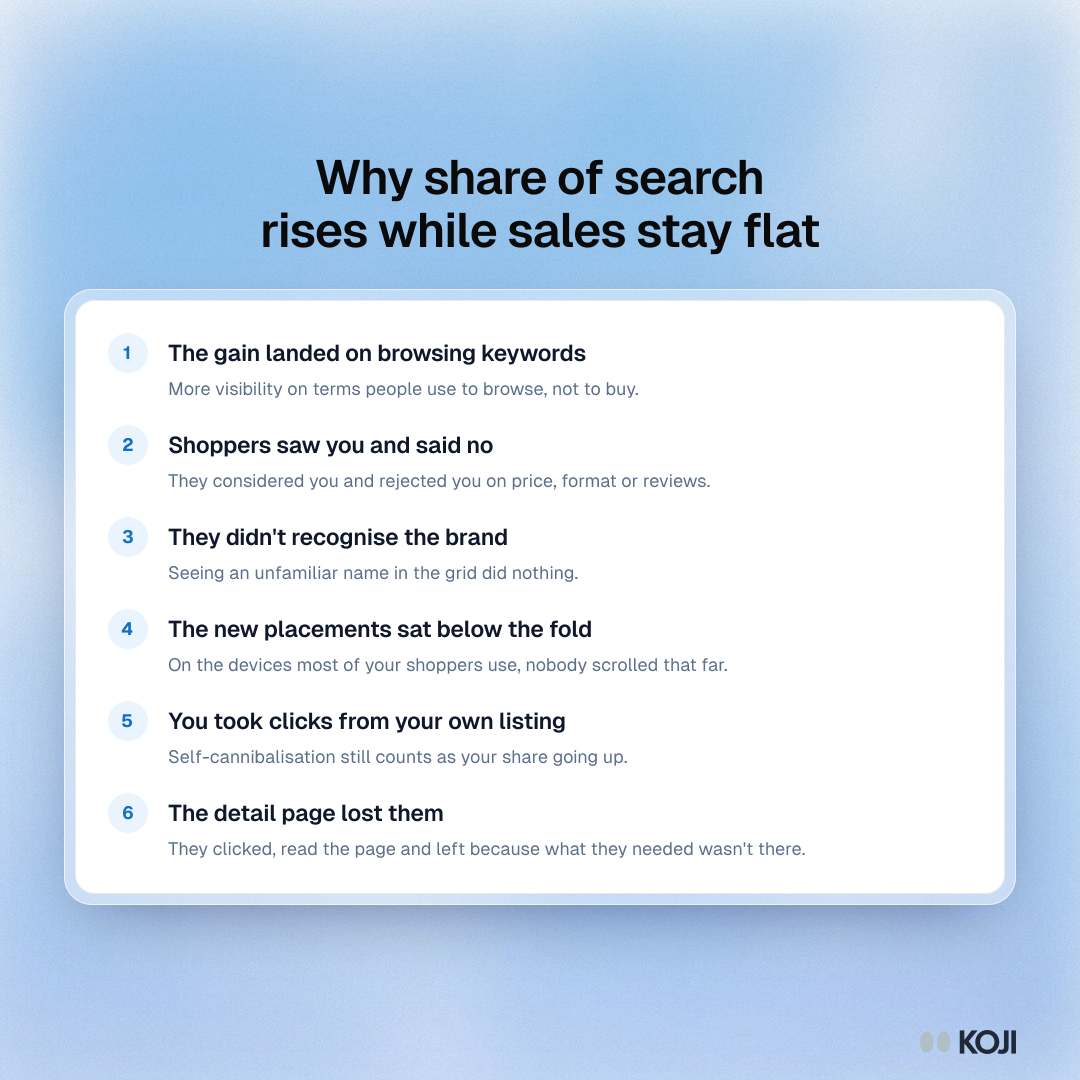
Six reasons a gain in digital shelf share of search may not turn into sales: the gain is on browsing keywords, shoppers reject you on price or format, the brand is unknown, placements sit below the fold, your own listings take each other's clicks, or the product page loses them. A scrape cannot tell these apart. Koji runs short shopper interviews that find which one you are dealing with.
Where this appears
What's in this guide
- The gain landed on browsing keywords: More visibility on terms people use to browse, not to buy.
- Shoppers saw you and said no: They considered you and rejected you on price, format or reviews.
- They didn't recognise the brand: Seeing an unfamiliar name in the grid did nothing.
- The new placements sat below the fold: On the devices most of your shoppers use, nobody scrolled that far.
- You took clicks from your own listing: Self-cannibalisation still counts as your share going up.
- The detail page lost them: They clicked, read the page and left because what they needed wasn't there.
Use this image
Free to use in your docs, decks and posts under CC BY 4.0, as long as you credit Koji with a link to this page. To embed it, paste this into your page:
html
<a href="https://www.koji.so/visuals/why-share-of-search-rises-sales-stay-flat"><img src="https://www.koji.so/visuals/why-share-of-search-rises-sales-stay-flat/why-share-of-search-rises-sales-stay-flat.png" alt="List of six reasons share of search can rise while sales stay flat, from browsing keywords to self-cannibalisation and a weak product page." width="1080" height="1080" /></a>
<p>Source: <a href="https://www.koji.so/visuals/why-share-of-search-rises-sales-stay-flat">Why share of search rises while sales stay flat</a>, Koji</p>