Comparison
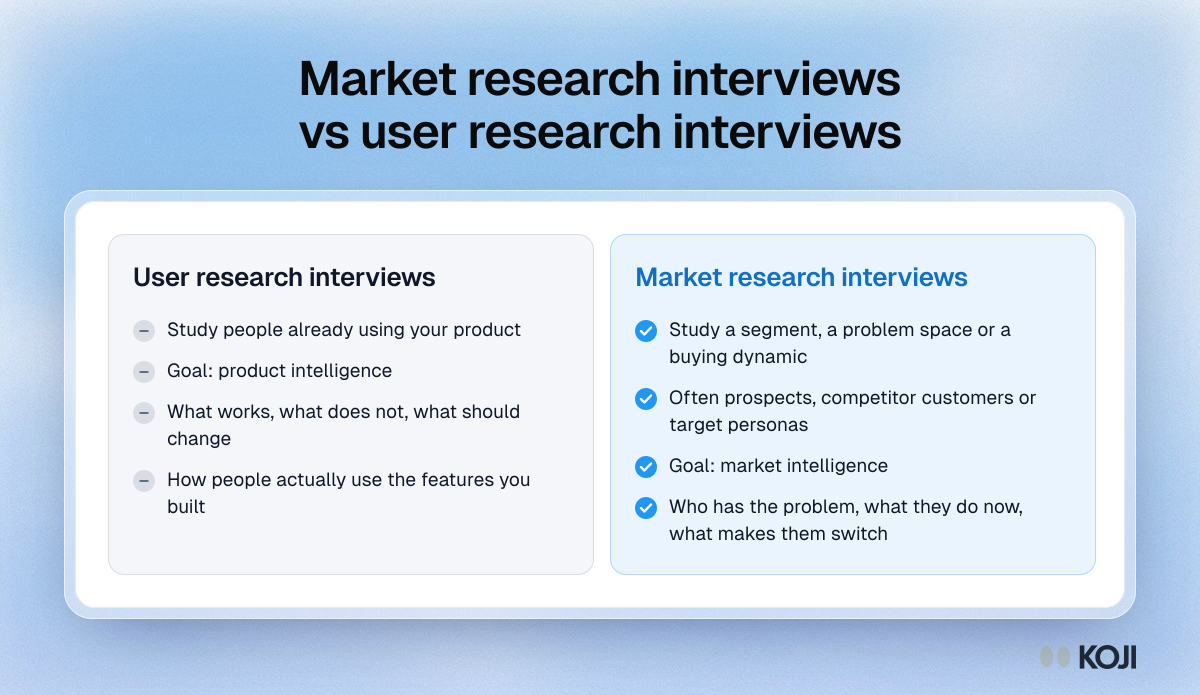
Market research interviews vs user research interviews
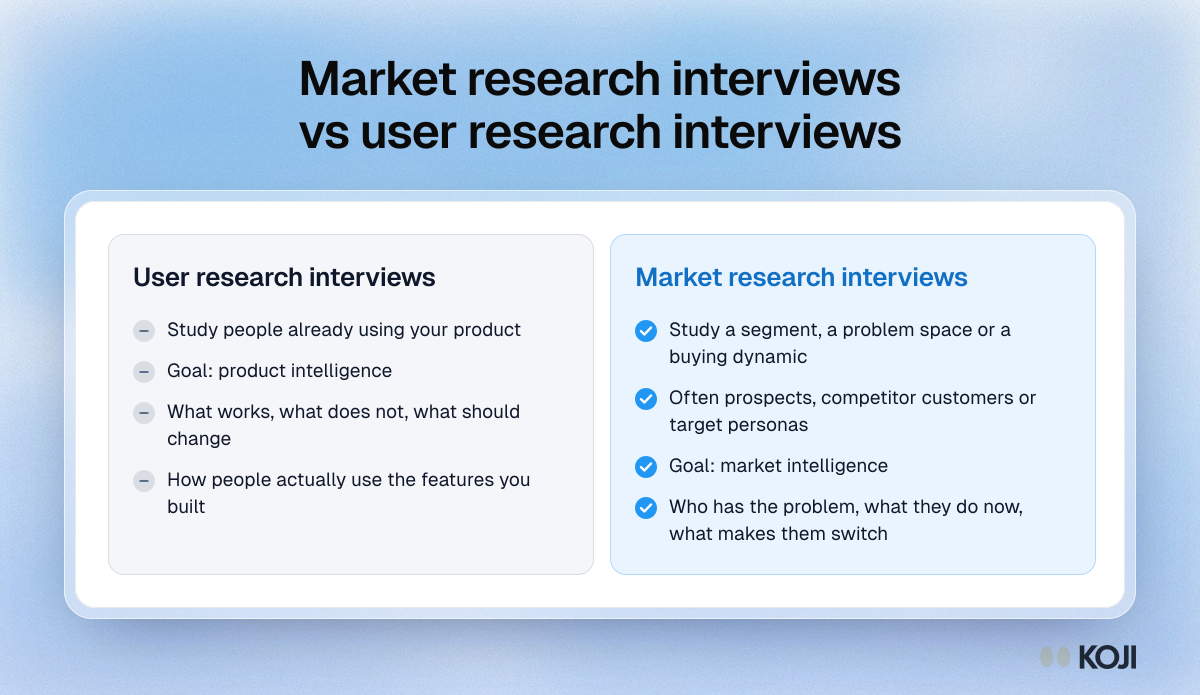
A side-by-side comparison of market research interviews and user research interviews. User research interviews talk to people already using a product to learn what works and what should change. Market research interviews talk to prospects, competitor customers and target personas to learn who has a problem, how they solve it today and what would make them switch. Use it to decide which study you are running before you recruit.
Where this appears
What's in this comparison
User research interviews
- Study people already using your product
- Goal: product intelligence
- What works, what does not, what should change
- How people actually use the features you built
Market research interviews
- Study a segment, a problem space or a buying dynamic
- Often prospects, competitor customers or target personas
- Goal: market intelligence
- Who has the problem, what they do now, what makes them switch
Use this image
Free to use in your docs, decks and posts under CC BY 4.0, as long as you credit Koji with a link to this page. To embed it, paste this into your page:
html
<a href="https://www.koji.so/visuals/market-research-interviews-vs-user-research-interviews"><img src="https://www.koji.so/visuals/market-research-interviews-vs-user-research-interviews/market-research-interviews-vs-user-research-interviews.png" alt="Comparison of user research interviews, which study current users and the product, with market research interviews, which study a market and its buyers." width="1200" height="695" /></a>
<p>Source: <a href="https://www.koji.so/visuals/market-research-interviews-vs-user-research-interviews">Market research interviews vs user research interviews</a>, Koji</p>