Checklist
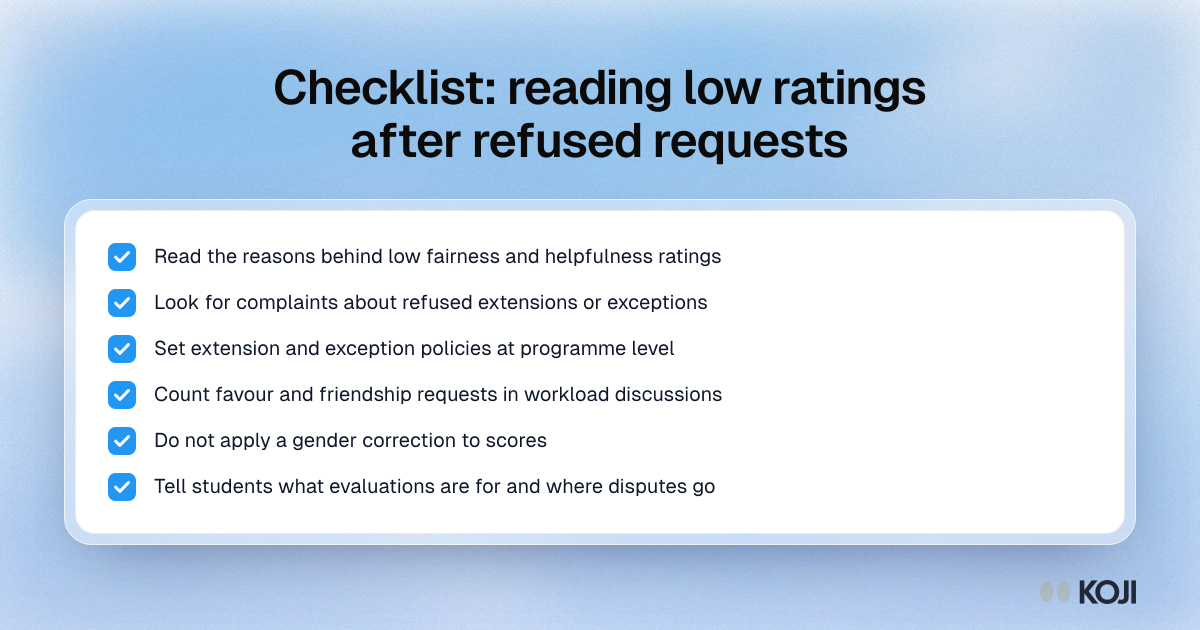
Checklist: reading low ratings after refused requests
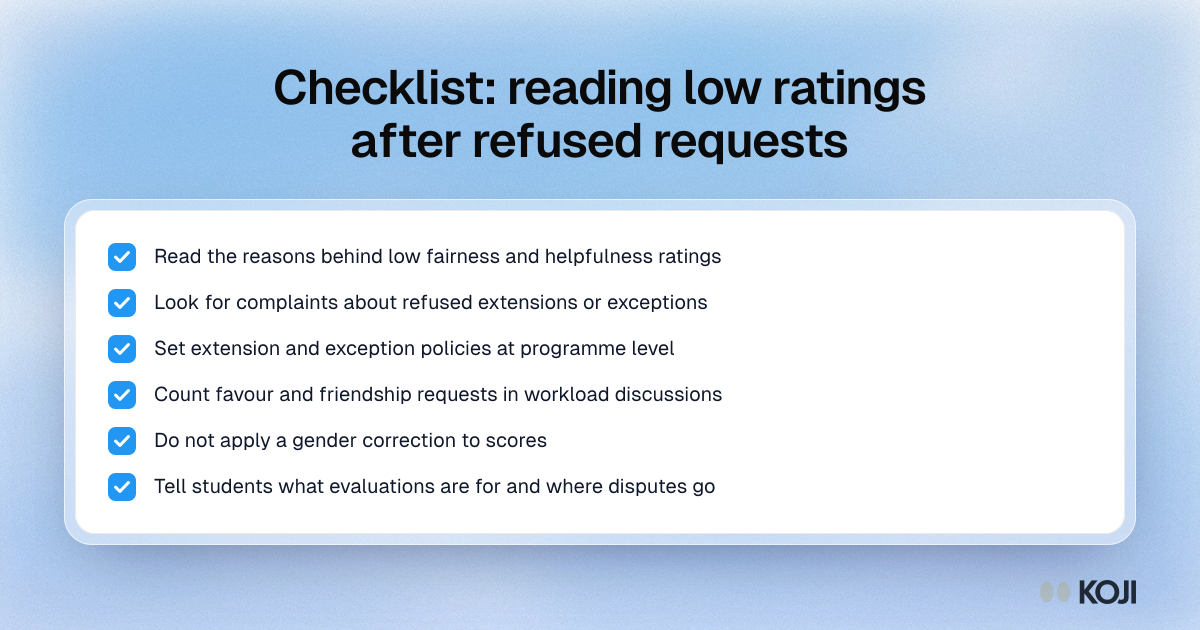
A checklist for QA staff and evaluation committees who read course evaluation results. It draws on research showing that women professors receive more requests for special favours, and that academically entitled students expect women to grant those requests more often. The steps help separate complaints about refused requests from complaints about teaching. Koji keeps the reason behind each rating attached to it, which makes this kind of reading possible.
What's in this checklist
- Read the reasons behind low fairness and helpfulness ratings
- Look for complaints about refused extensions or exceptions
- Set extension and exception policies at programme level
- Count favour and friendship requests in workload discussions
- Do not apply a gender correction to scores
- Tell students what evaluations are for and where disputes go
Use this image
Free to use in your docs, decks and posts under CC BY 4.0, as long as you credit Koji with a link to this page. To embed it, paste this into your page:
html
<a href="https://www.koji.so/visuals/reading-low-ratings-refused-student-requests-checklist"><img src="https://www.koji.so/visuals/reading-low-ratings-refused-student-requests-checklist/reading-low-ratings-refused-student-requests-checklist.png" alt="Checklist of six steps for reading low course evaluation ratings that may reflect refused student requests rather than teaching quality." width="1200" height="630" /></a>
<p>Source: <a href="https://www.koji.so/visuals/reading-low-ratings-refused-student-requests-checklist">Checklist: reading low ratings after refused requests</a>, Koji</p>