Checklist
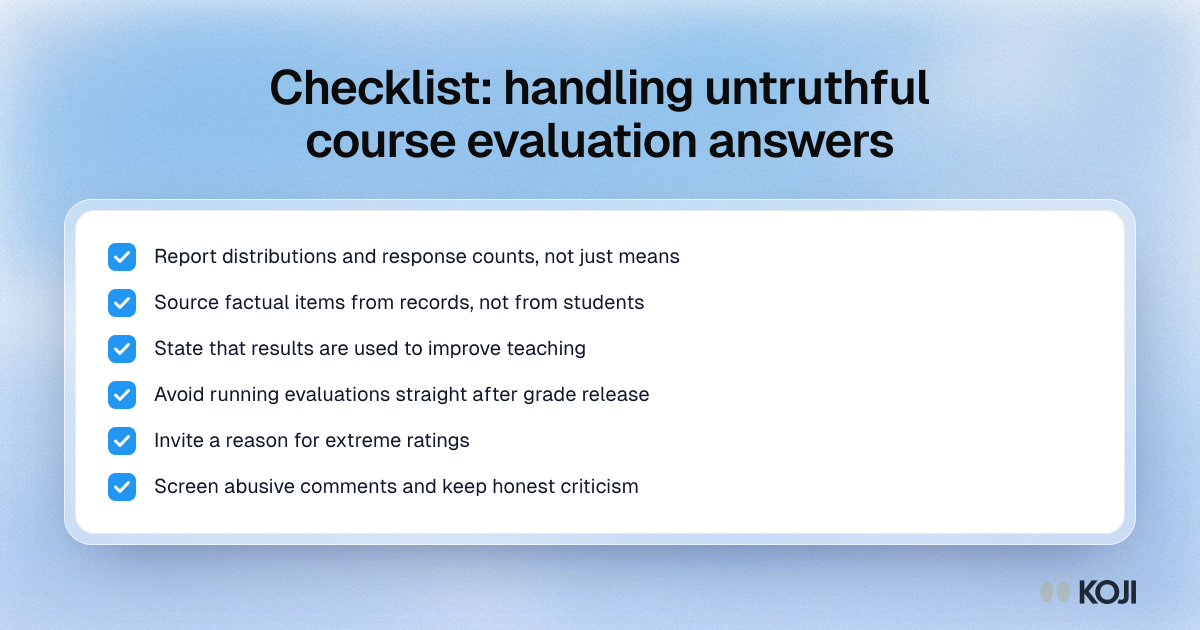
Checklist: handling untruthful course evaluation answers
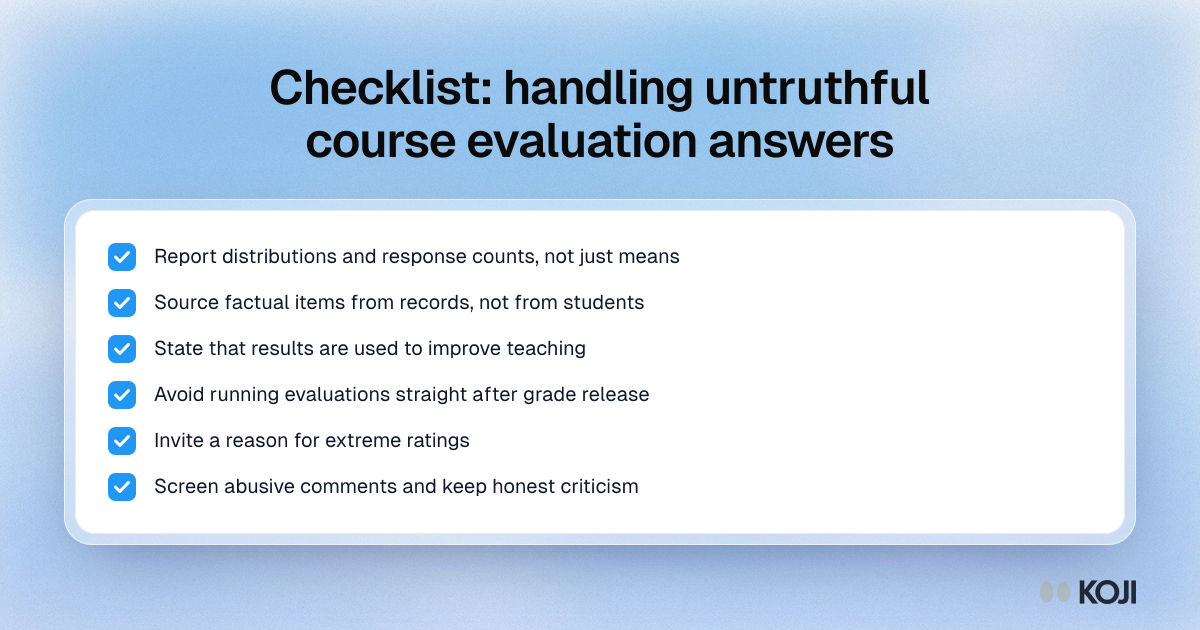
A checklist for evaluation committees and QA staff based on research into how honest students are on course evaluations. It covers reporting distributions and response counts, taking factual items from records, stating the purpose, timing the survey away from grade release, asking for reasons behind extreme ratings and screening abusive comments. Koji follow-ups ask students for specifics, which supports the reasons step.
What's in this checklist
- Report distributions and response counts, not just means
- Source factual items from records, not from students
- State that results are used to improve teaching
- Avoid running evaluations straight after grade release
- Invite a reason for extreme ratings
- Screen abusive comments and keep honest criticism
Use this image
Free to use in your docs, decks and posts under CC BY 4.0, as long as you credit Koji with a link to this page. To embed it, paste this into your page:
html
<a href="https://www.koji.so/visuals/reading-untruthful-course-evaluation-answers-checklist"><img src="https://www.koji.so/visuals/reading-untruthful-course-evaluation-answers-checklist/reading-untruthful-course-evaluation-answers-checklist.png" alt="Checklist of six steps for reducing and reading untruthful answers in course evaluations, from reporting distributions to asking for reasons." width="1200" height="630" /></a>
<p>Source: <a href="https://www.koji.so/visuals/reading-untruthful-course-evaluation-answers-checklist">Checklist: handling untruthful course evaluation answers</a>, Koji</p>