Process
Ripple effects mapping for programme evaluation
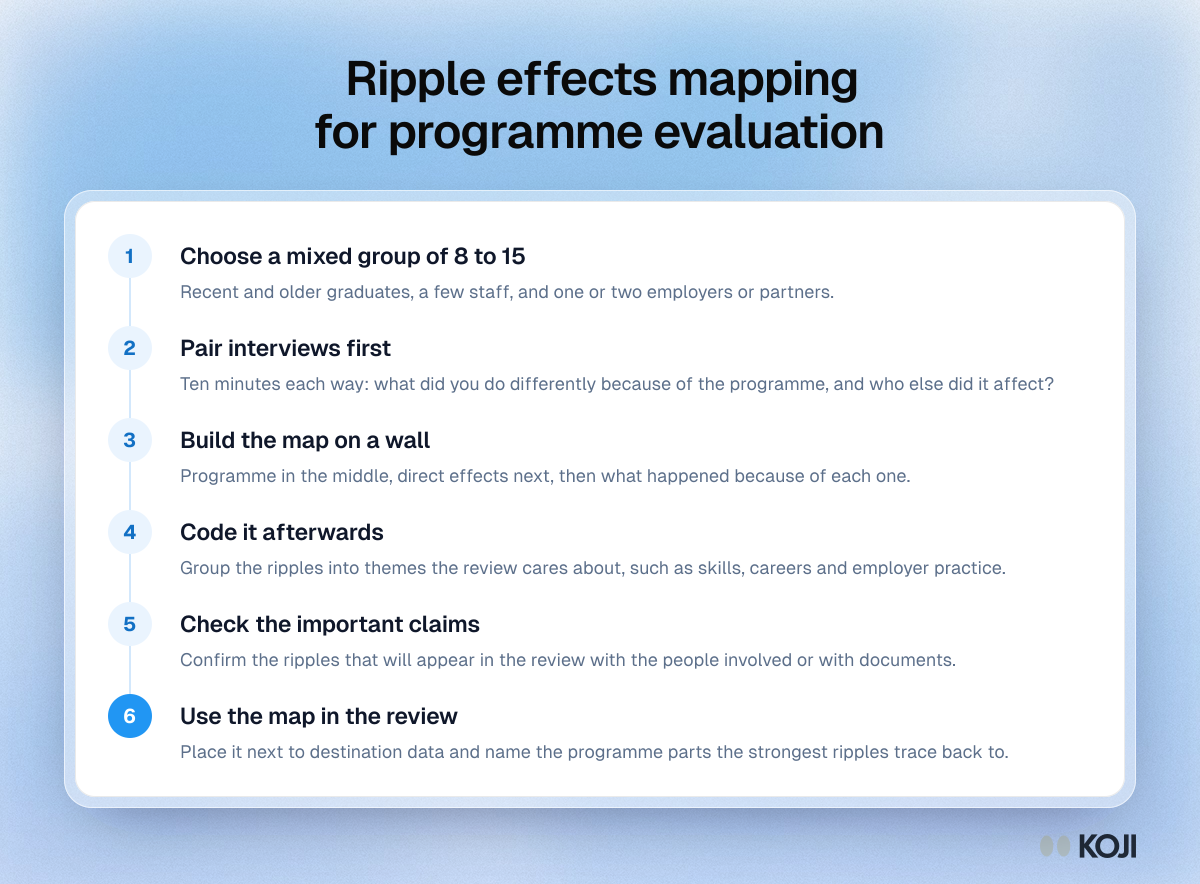
Six steps to find what a programme set in motion
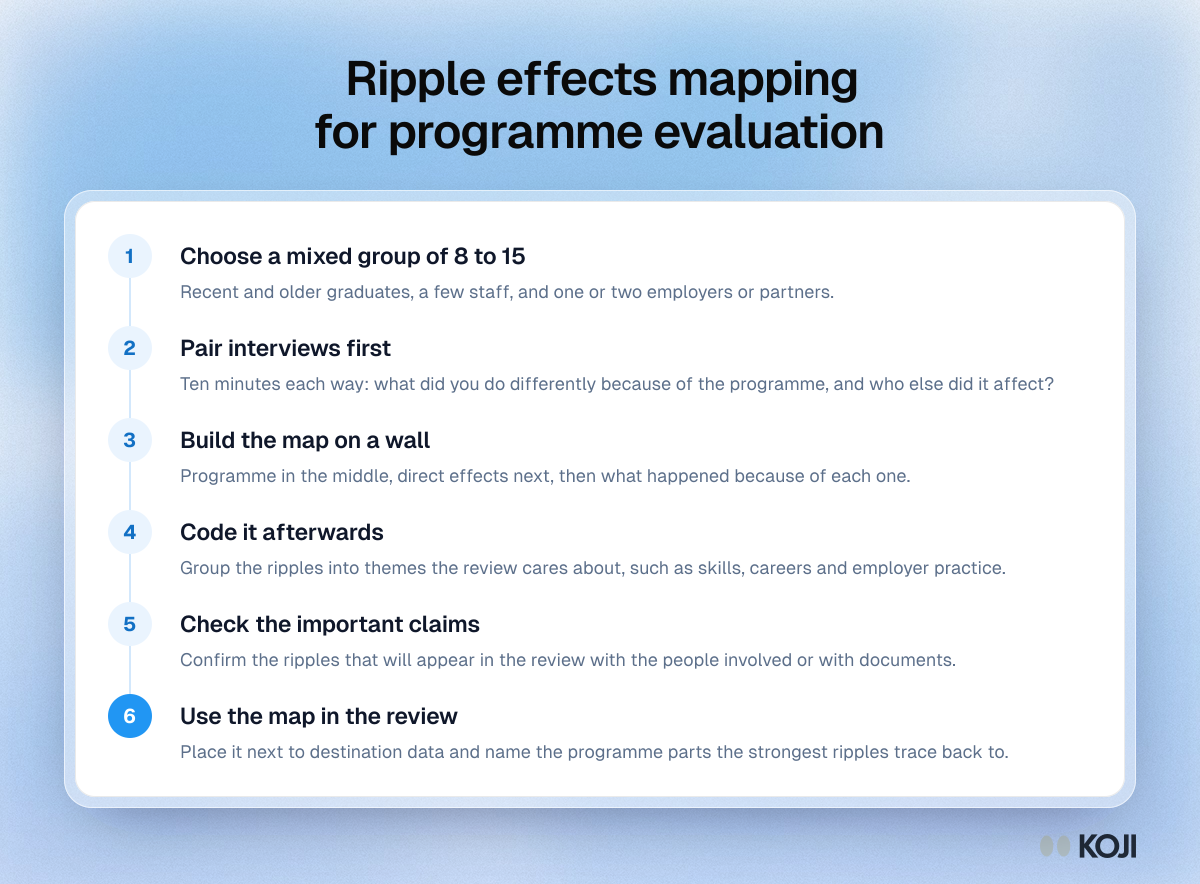
Six steps for running ripple effects mapping as part of a university programme review. Graduates, staff and partners interview each other in pairs, build a shared map of the effects the programme set going, and the evaluator codes and checks it. Programme directors and quality staff can use it to show contribution beyond graduate destination figures. Koji can test the main branches of the map with the wider alumni base through AI interviews.
What's in this process
- Choose a mixed group of 8 to 15: Recent and older graduates, a few staff, and one or two employers or partners.
- Pair interviews first: Ten minutes each way: what did you do differently because of the programme, and who else did it affect?
- Build the map on a wall: Programme in the middle, direct effects next, then what happened because of each one.
- Code it afterwards: Group the ripples into themes the review cares about, such as skills, careers and employer practice.
- Check the important claims: Confirm the ripples that will appear in the review with the people involved or with documents.
- Use the map in the review: Place it next to destination data and name the programme parts the strongest ripples trace back to.
Use this image
Free to use in your docs, decks and posts under CC BY 4.0, as long as you credit Koji with a link to this page. To embed it, paste this into your page:
html
<a href="https://www.koji.so/visuals/ripple-effects-mapping-programme-evaluation-steps"><img src="https://www.koji.so/visuals/ripple-effects-mapping-programme-evaluation-steps/ripple-effects-mapping-programme-evaluation-steps.png" alt="Process diagram of six ripple effects mapping steps for programme evaluation, from a mixed group and paired interviews to coding and using the map." width="1200" height="884" /></a>
<p>Source: <a href="https://www.koji.so/visuals/ripple-effects-mapping-programme-evaluation-steps">Ripple effects mapping for programme evaluation</a>, Koji</p>