Guide
Six rules for choice and ranking questions
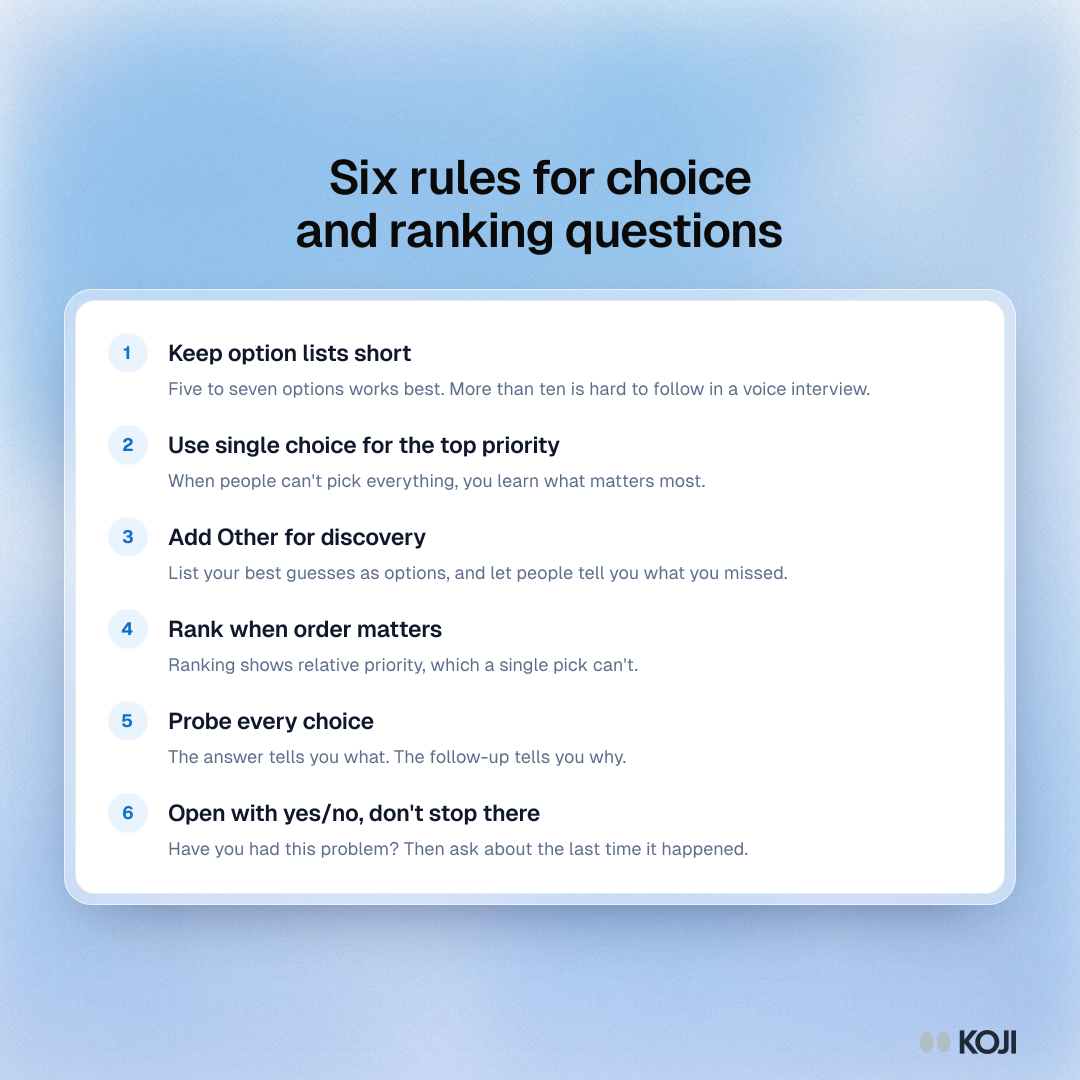
Six practical rules for single choice, multiple choice, ranking and yes/no questions in surveys and customer interviews. Keep lists to five to seven options, use single choice to force a priority, add an Other option when you are still discovering, rank only when order matters, follow every choice with a why question and treat yes/no as a way into a story. Koji lets you add a follow-up to every choice question.
Where this appears
What's in this guide
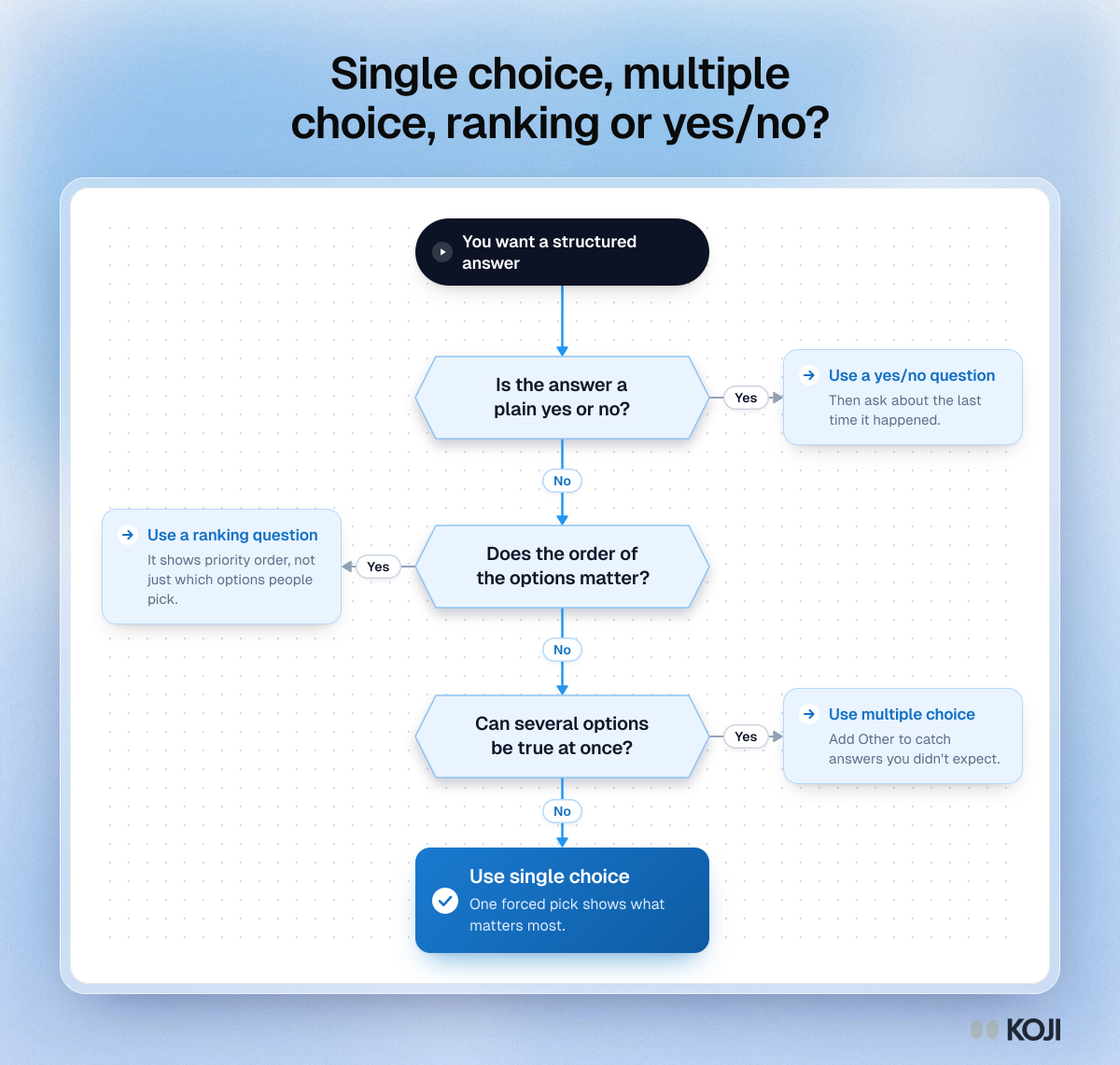
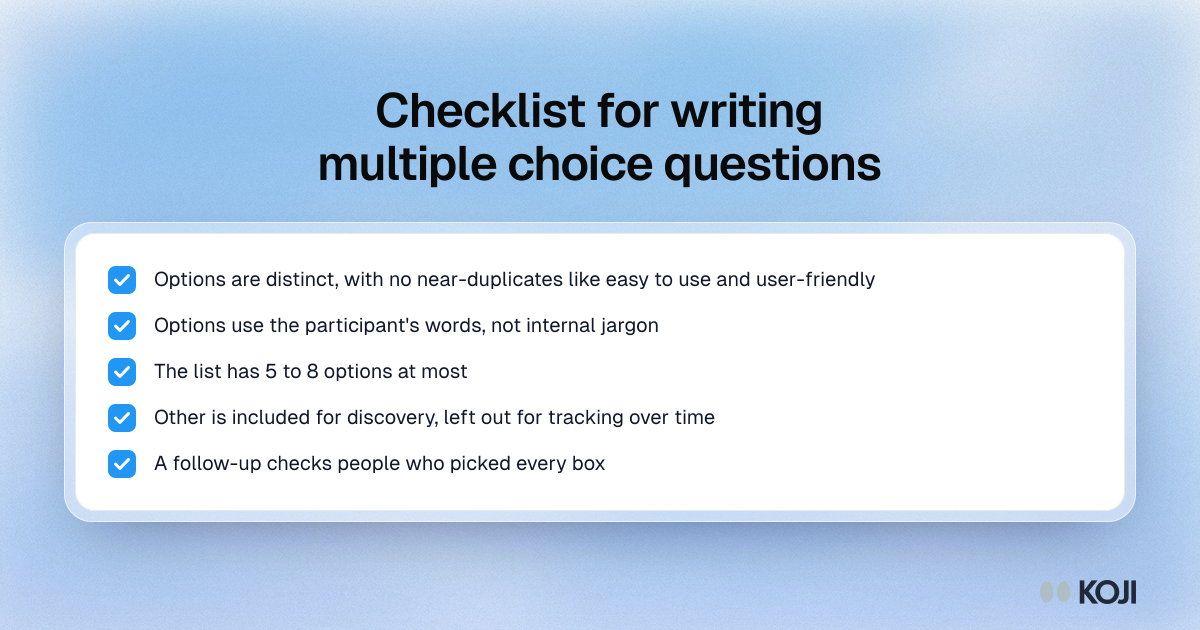
- Keep option lists short: Five to seven options works best. More than ten is hard to follow in a voice interview.
- Use single choice for the top priority: When people can't pick everything, you learn what matters most.
- Add Other for discovery: List your best guesses as options, and let people tell you what you missed.
- Rank when order matters: Ranking shows relative priority, which a single pick can't.
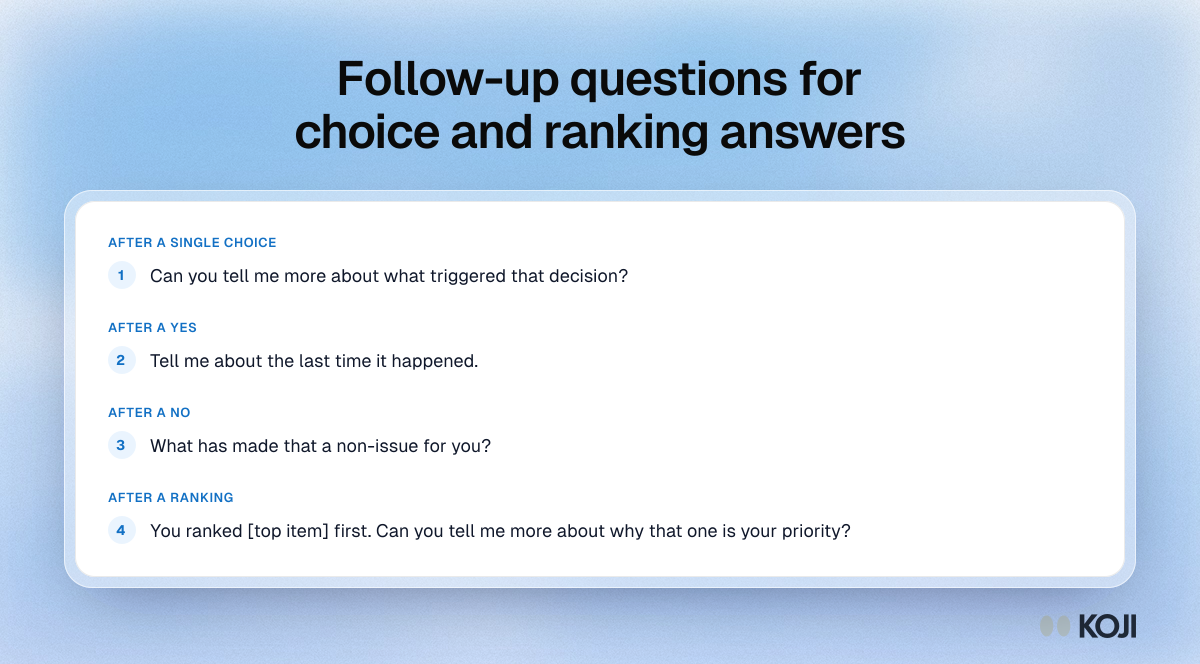
- Probe every choice: The answer tells you what. The follow-up tells you why.
- Open with yes/no, don't stop there: Have you had this problem? Then ask about the last time it happened.
Use this image
Free to use in your docs, decks and posts under CC BY 4.0, as long as you credit Koji with a link to this page. To embed it, paste this into your page:
html
<a href="https://www.koji.so/visuals/six-rules-for-choice-and-ranking-questions"><img src="https://www.koji.so/visuals/six-rules-for-choice-and-ranking-questions/six-rules-for-choice-and-ranking-questions.png" alt="List of six rules for choice and ranking questions, from keeping option lists short to probing every answer and following up on yes/no." width="1080" height="1080" /></a>
<p>Source: <a href="https://www.koji.so/visuals/six-rules-for-choice-and-ranking-questions">Six rules for choice and ranking questions</a>, Koji</p>