Guide
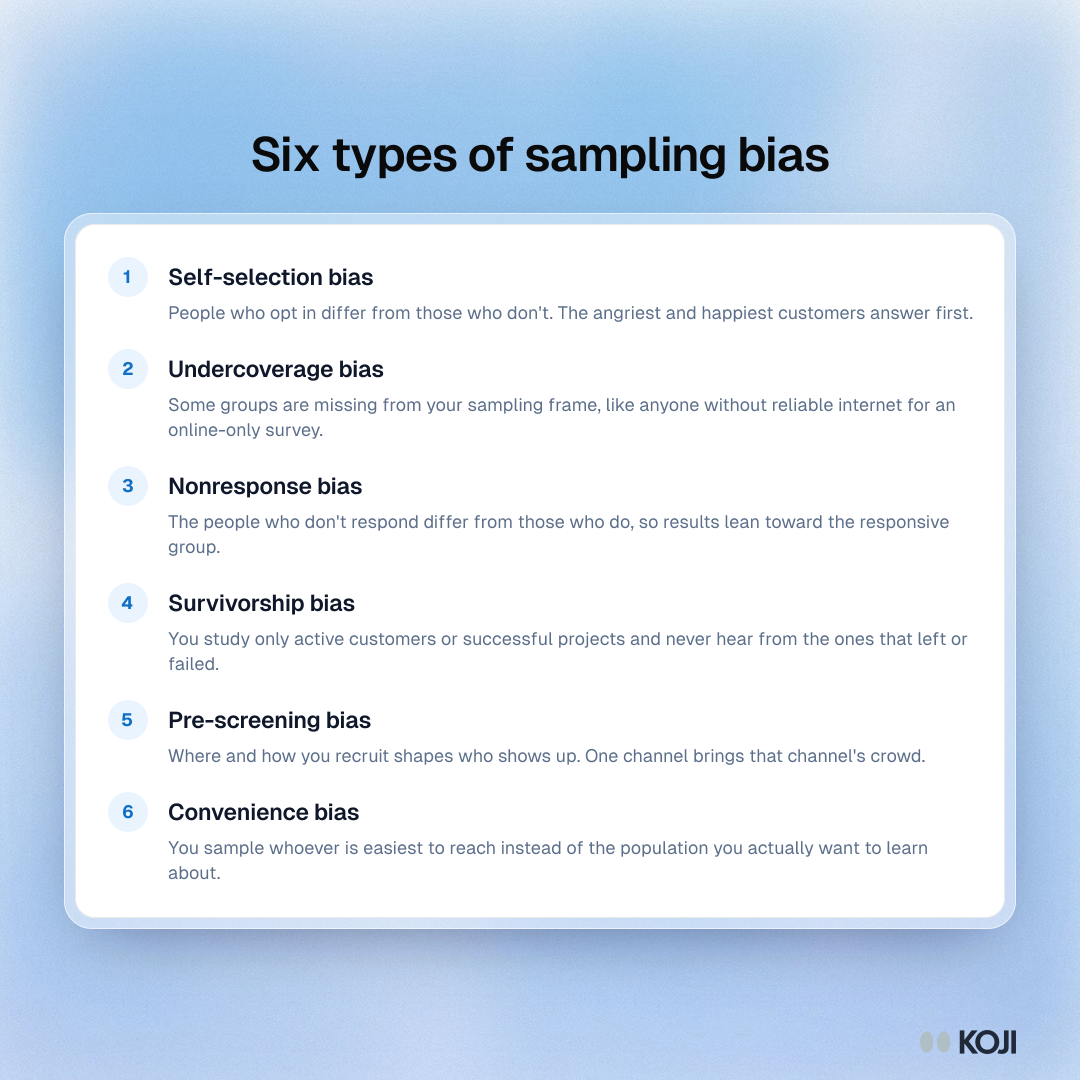
Six types of sampling bias
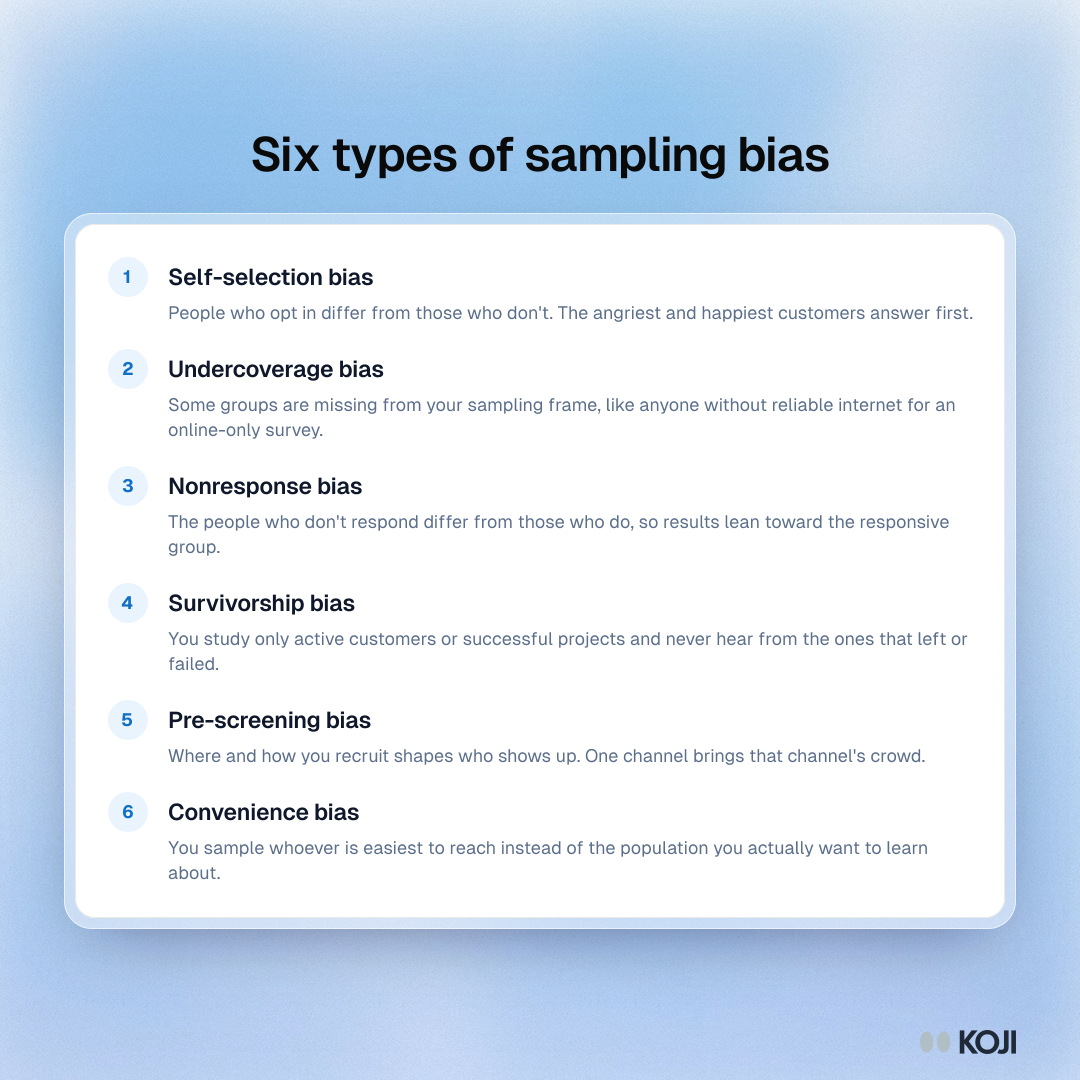
The six most common types of sampling bias in research, each with a short example: self-selection, undercoverage, nonresponse, survivorship, pre-screening or advertising bias, and convenience bias. It is for product and UX teams who recruit their own participants and want to know who their sample leaves out. Koji runs interviews that people take in their own time, which helps you reach more than the people willing to book a call.
Where this appears
What's in this guide
- Self-selection bias: People who opt in differ from those who don't. The angriest and happiest customers answer first.
- Undercoverage bias: Some groups are missing from your sampling frame, like anyone without reliable internet for an online-only survey.
- Nonresponse bias: The people who don't respond differ from those who do, so results lean toward the responsive group.
- Survivorship bias: You study only active customers or successful projects and never hear from the ones that left or failed.
- Pre-screening bias: Where and how you recruit shapes who shows up. One channel brings that channel's crowd.
- Convenience bias: You sample whoever is easiest to reach instead of the population you actually want to learn about.
Use this image
Free to use in your docs, decks and posts under CC BY 4.0, as long as you credit Koji with a link to this page. To embed it, paste this into your page:
html
<a href="https://www.koji.so/visuals/six-types-of-sampling-bias"><img src="https://www.koji.so/visuals/six-types-of-sampling-bias/six-types-of-sampling-bias.png" alt="List of six types of sampling bias: self-selection, undercoverage, nonresponse, survivorship, pre-screening and convenience, each with a short example." width="1080" height="1080" /></a>
<p>Source: <a href="https://www.koji.so/visuals/six-types-of-sampling-bias">Six types of sampling bias</a>, Koji</p>