Framework
Three traits of a good open-ended question
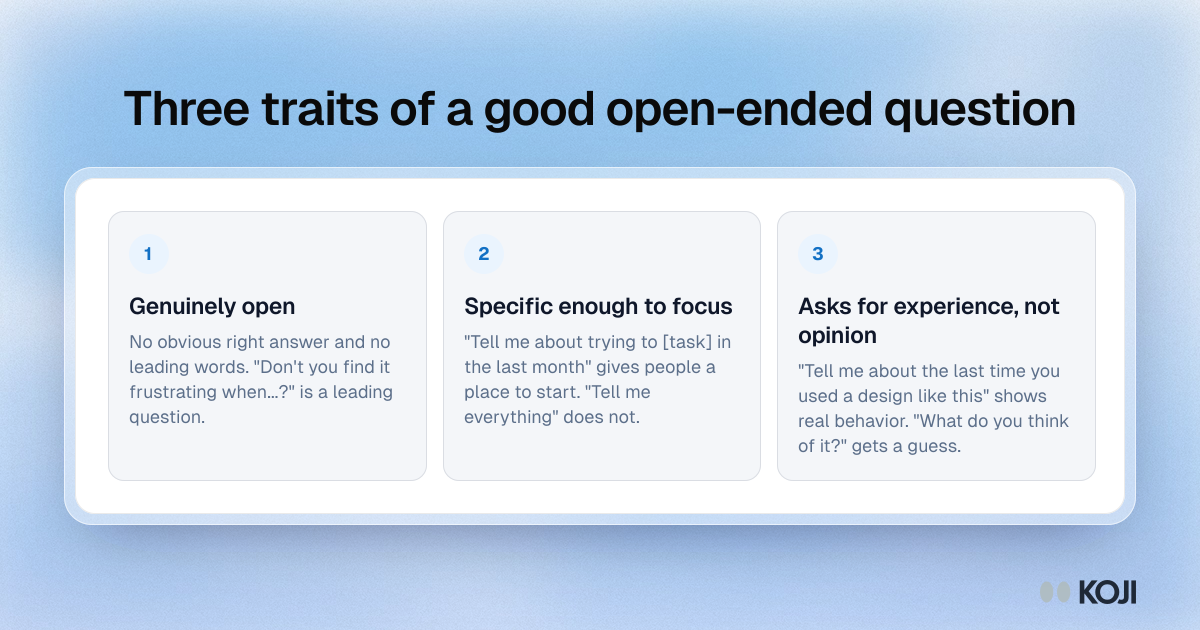
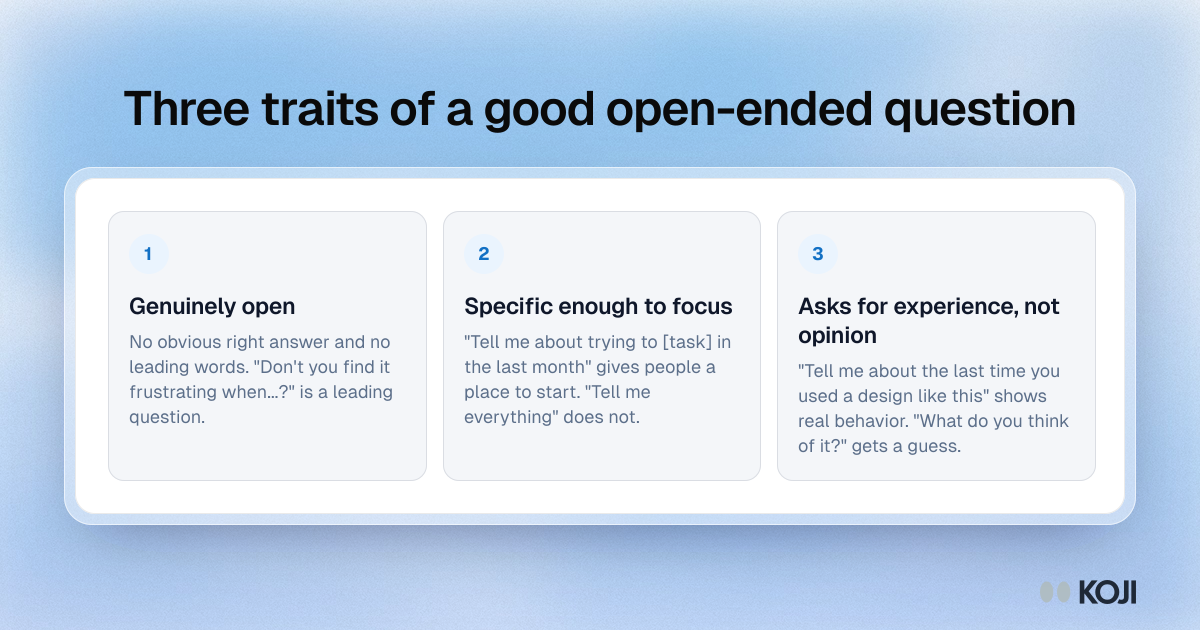
A short framework for writing open-ended interview questions. A good one has no obvious right answer, is narrow enough that people know what to talk about, and asks about something that happened rather than what someone thinks. Use it to check a discussion guide before your first interview. Koji then asks the questions in AI interviews and probes each answer.
Where this appears
What's in this framework
- Genuinely open: No obvious right answer and no leading words. "Don't you find it frustrating when...?" is a leading question.
- Specific enough to focus: "Tell me about trying to [task] in the last month" gives people a place to start. "Tell me everything" does not.
- Asks for experience, not opinion: "Tell me about the last time you used a design like this" shows real behavior. "What do you think of it?" gets a guess.
Use this image
Free to use in your docs, decks and posts under CC BY 4.0, as long as you credit Koji with a link to this page. To embed it, paste this into your page:
<a href="https://www.koji.so/visuals/three-traits-of-good-open-ended-questions"><img src="https://www.koji.so/visuals/three-traits-of-good-open-ended-questions/three-traits-of-good-open-ended-questions.png" alt="Framework of three traits of a good open-ended interview question: genuinely open, specific enough to focus, and asking for experience rather than opinion." width="1200" height="630" /></a>
<p>Source: <a href="https://www.koji.so/visuals/three-traits-of-good-open-ended-questions">Three traits of a good open-ended question</a>, Koji</p>
Related
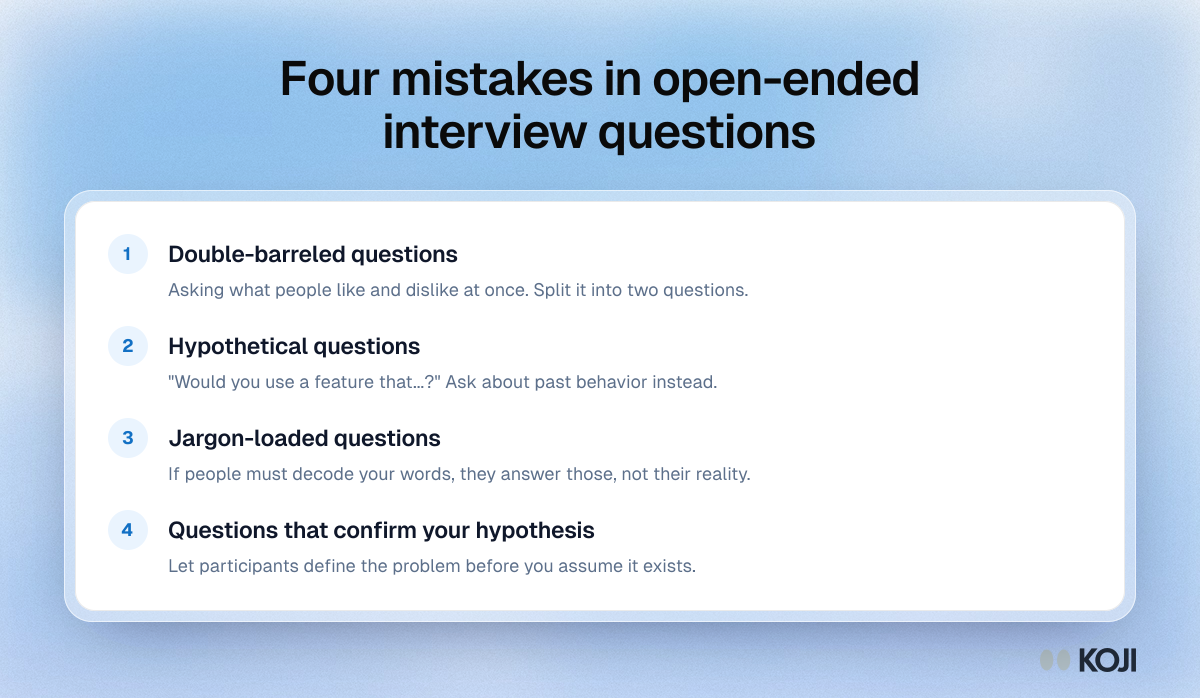
Four mistakes in open-ended interview questions
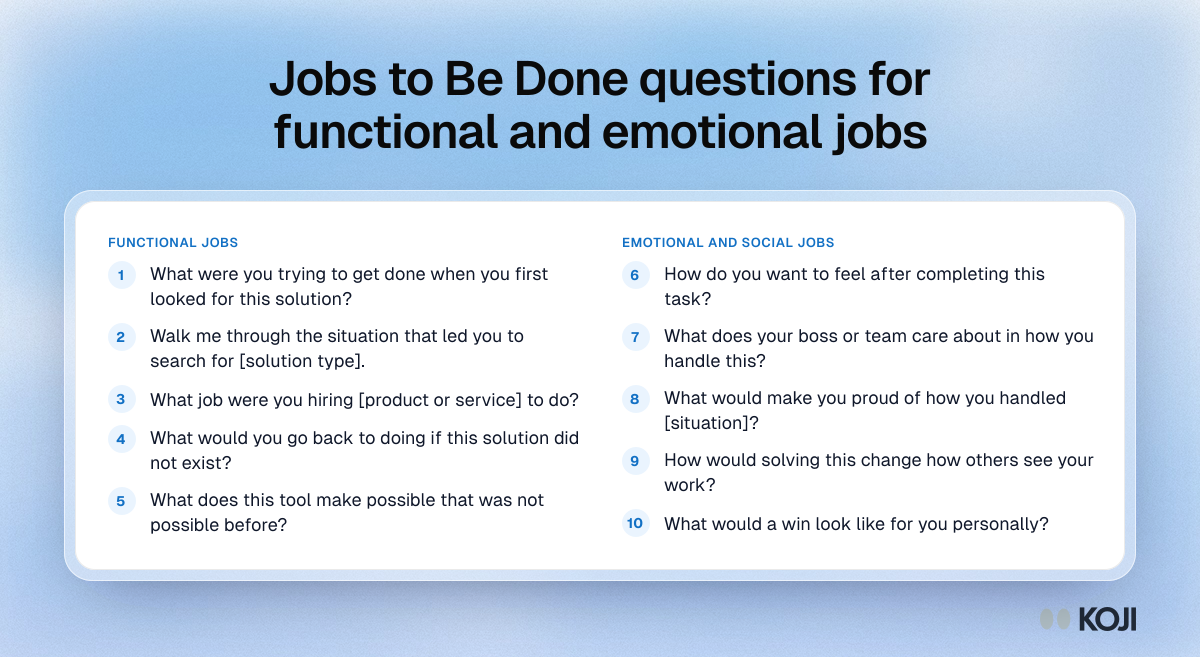
Jobs to Be Done questions for functional and emotional jobs
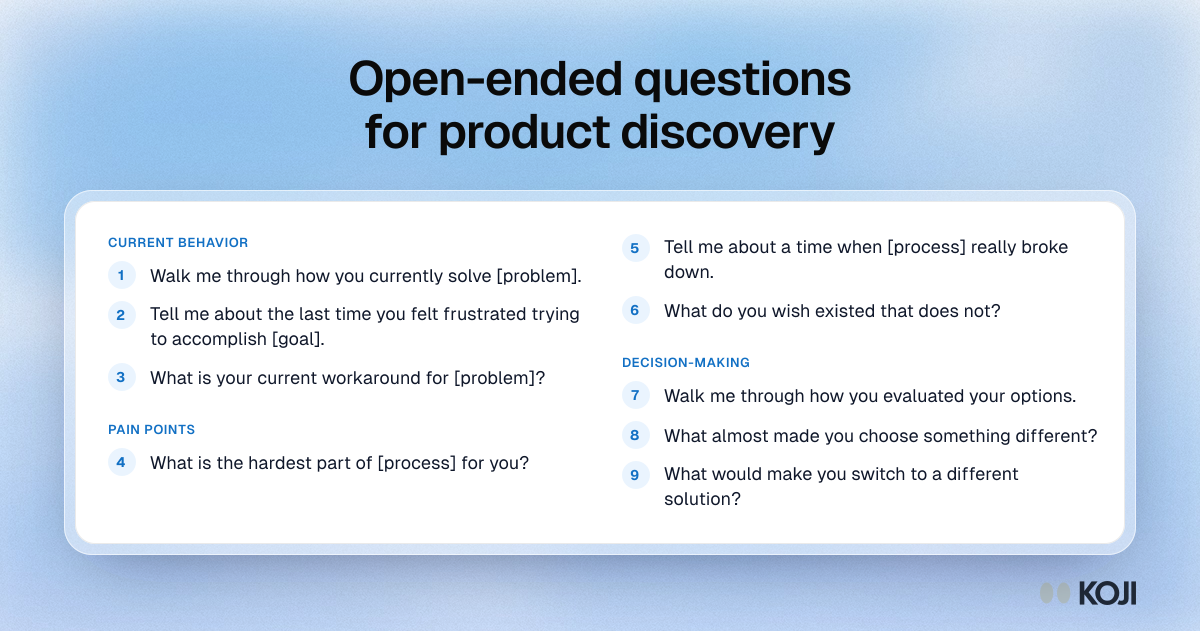
Open-ended questions for product discovery
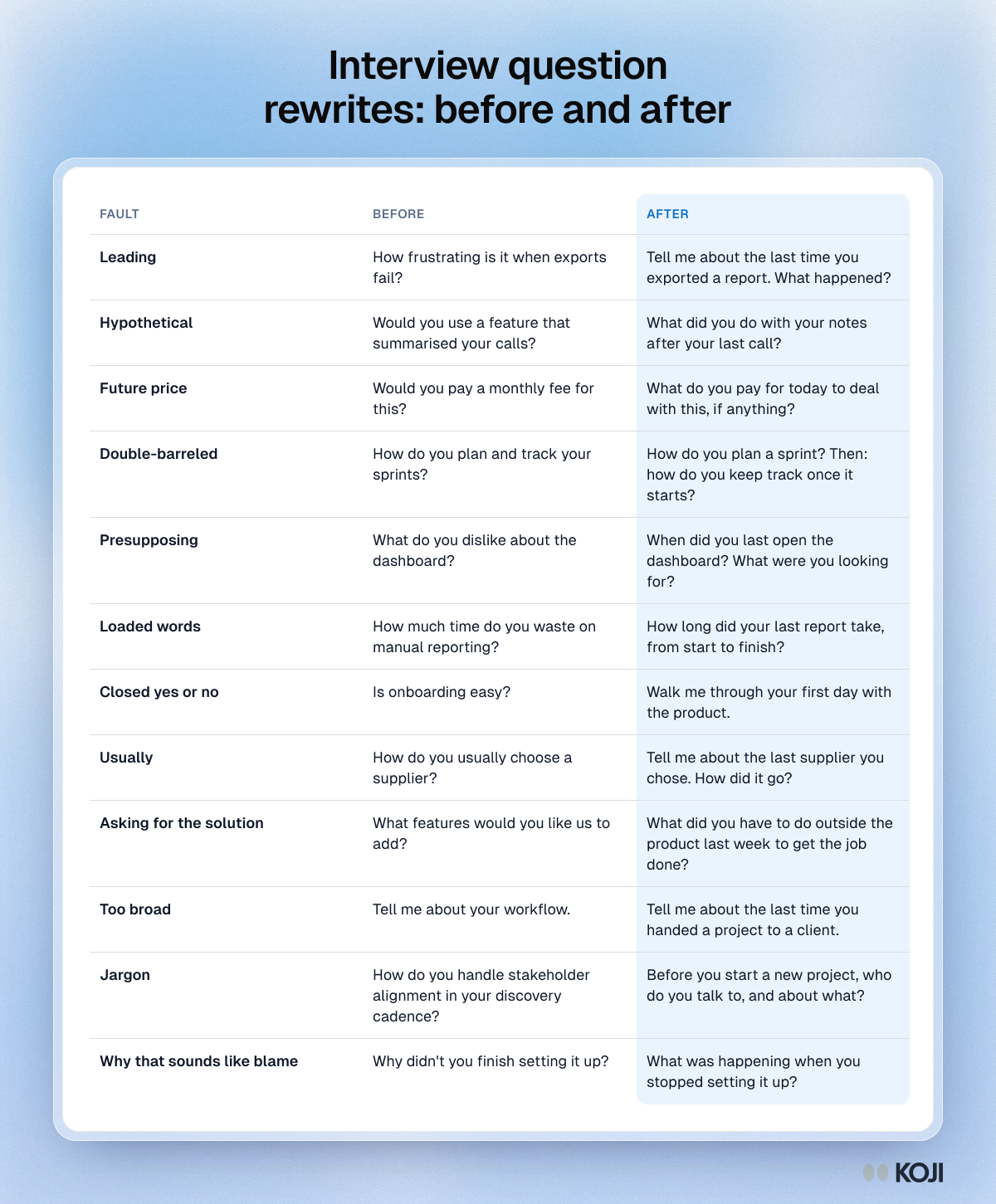
Interview question rewrites: before and after
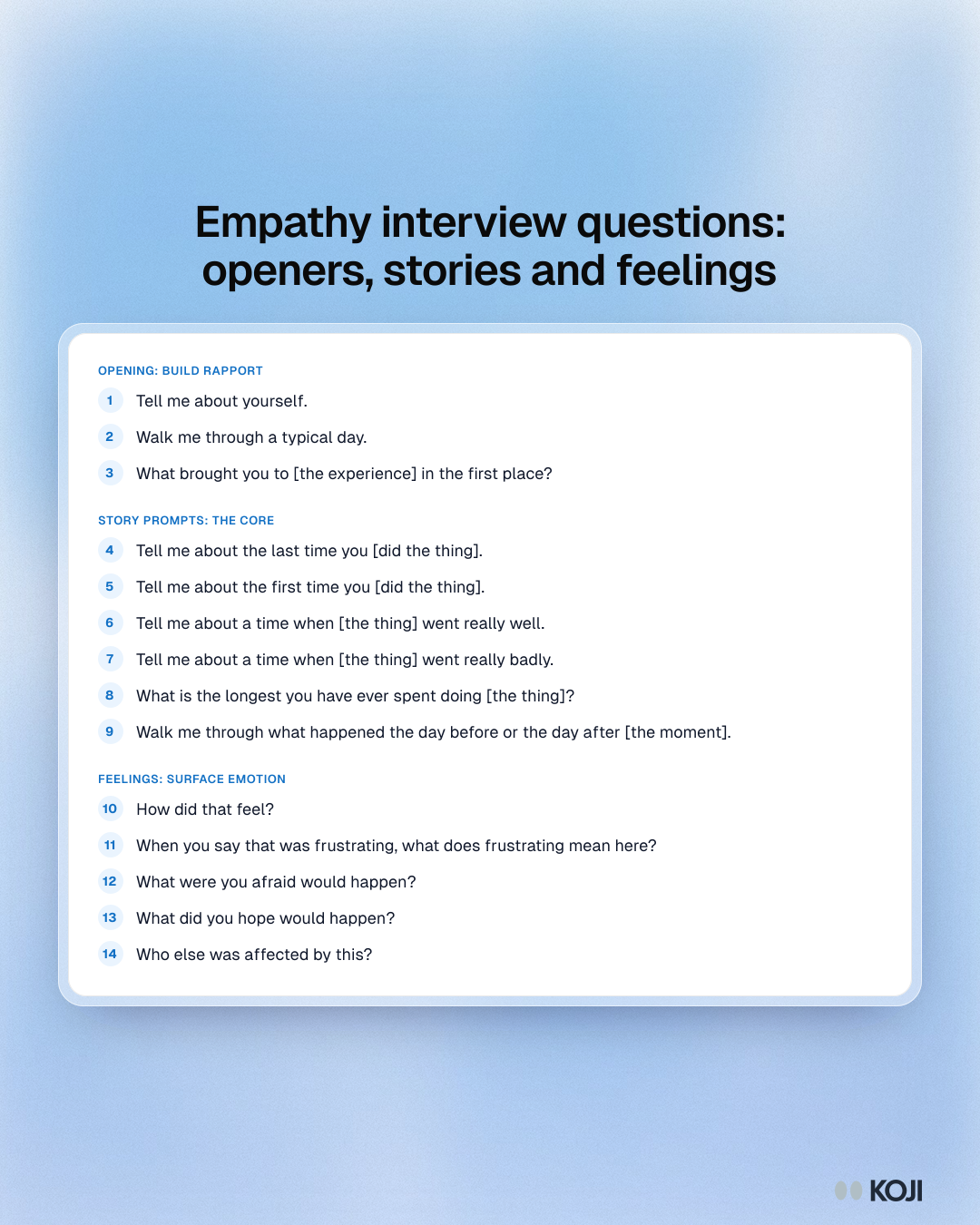
Empathy interview questions: openers, stories and feelings
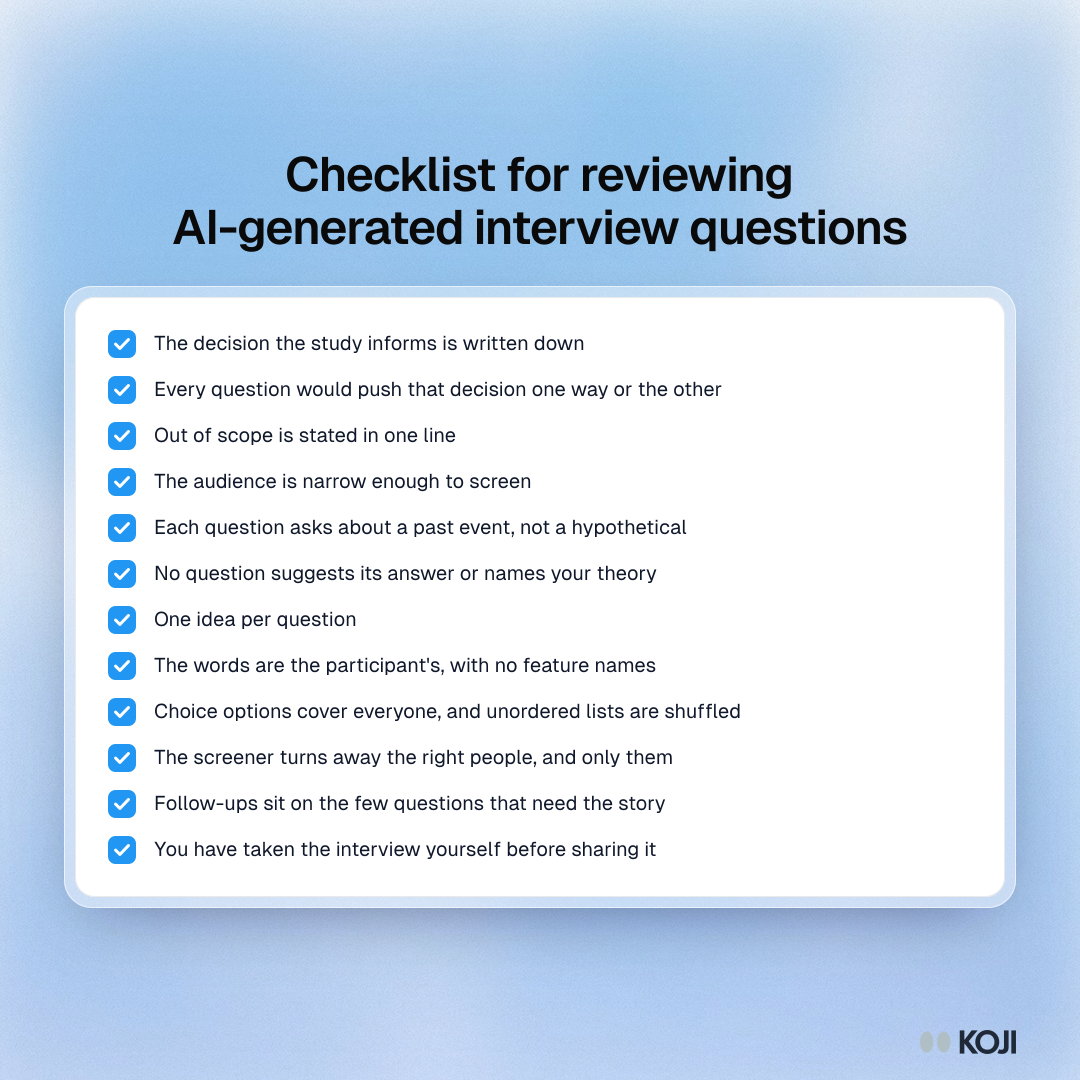
Checklist for reviewing AI-generated interview questions