Matrix
The importance and proficiency matrix for training needs
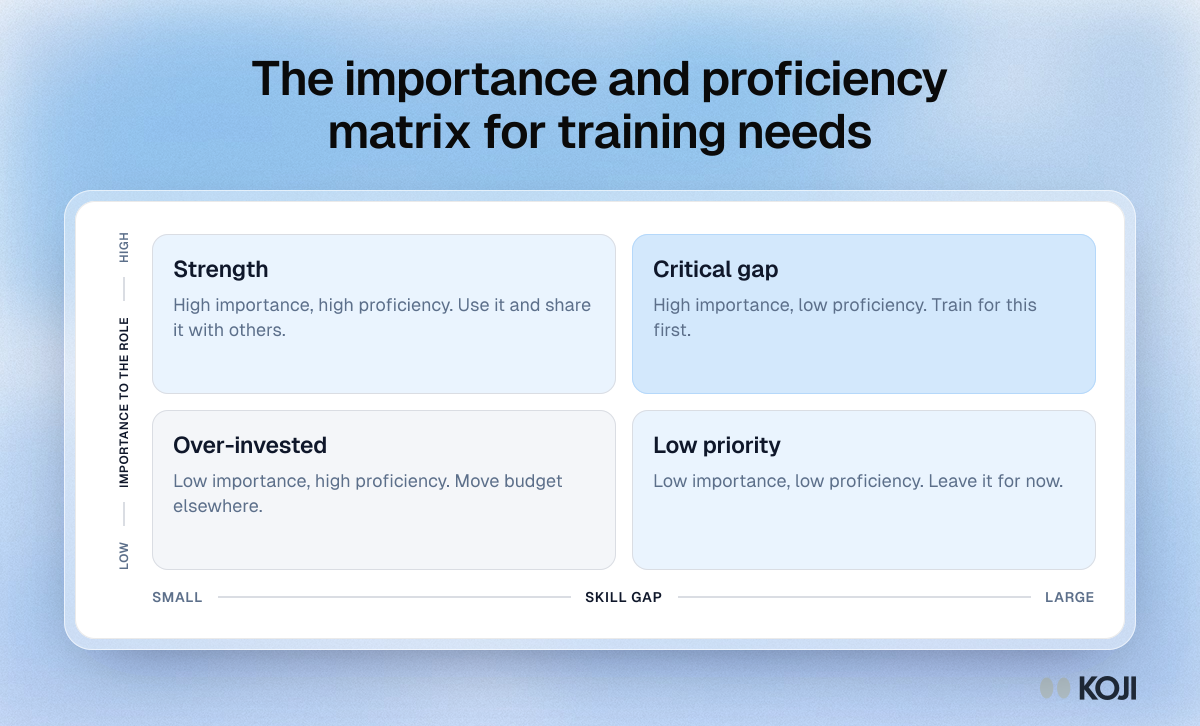
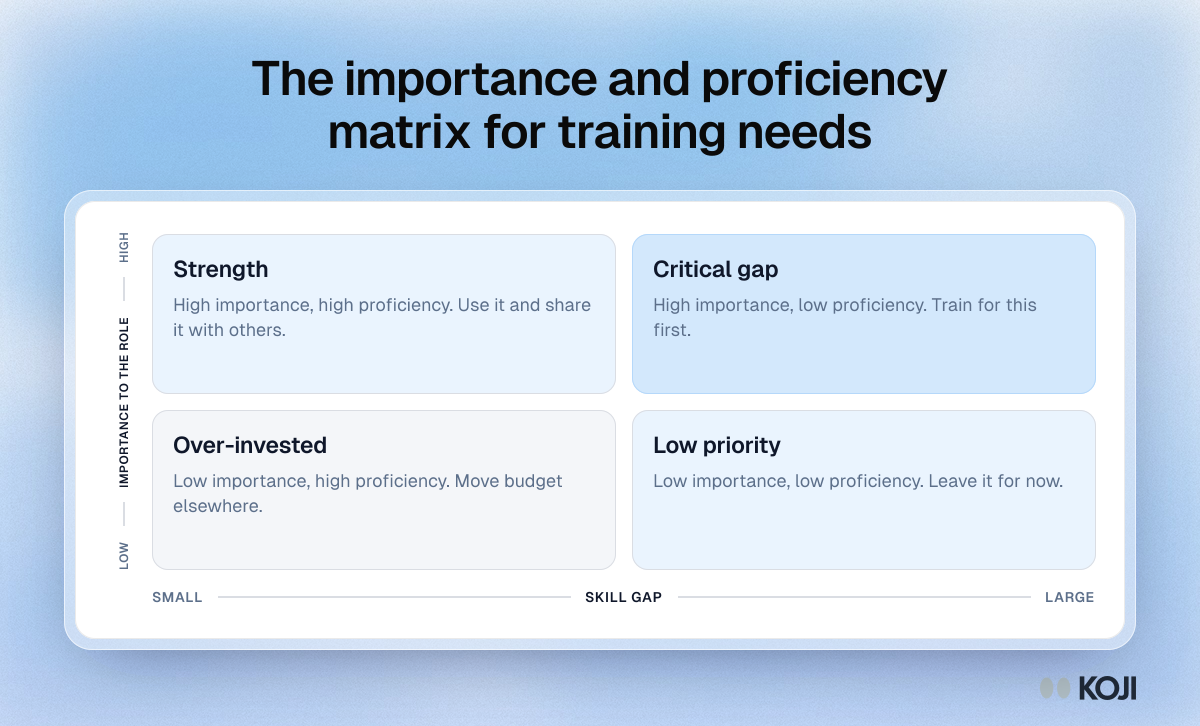
A 2x2 matrix for prioritizing training from a needs assessment survey. Employees rate how important each competency is to their role and how proficient they are. High importance with low proficiency is a critical gap to train first, high importance with high proficiency is a strength to share, and low importance skills are either over-invested or low priority. Useful for L&D and HR teams planning training budgets.
Where this appears
What's in this matrix
Vertical axis: Importance to the role (Low to High). Horizontal axis: Skill gap (Small to Large).
- Strength (High importance to the role, Small skill gap): High importance, high proficiency. Use it and share it with others.
- Critical gap (High importance to the role, Large skill gap): High importance, low proficiency. Train for this first.
- Over-invested (Low importance to the role, Small skill gap): Low importance, high proficiency. Move budget elsewhere.
- Low priority (Low importance to the role, Large skill gap): Low importance, low proficiency. Leave it for now.
Use this image
Free to use in your docs, decks and posts under CC BY 4.0, as long as you credit Koji with a link to this page. To embed it, paste this into your page:
<a href="https://www.koji.so/visuals/training-needs-importance-proficiency-matrix"><img src="https://www.koji.so/visuals/training-needs-importance-proficiency-matrix/training-needs-importance-proficiency-matrix.png" alt="Matrix of training needs by importance and skill gap: critical gaps to train first, strengths to share, over-invested skills and low priorities." width="1200" height="726" /></a>
<p>Source: <a href="https://www.koji.so/visuals/training-needs-importance-proficiency-matrix">The importance and proficiency matrix for training needs</a>, Koji</p>
Related
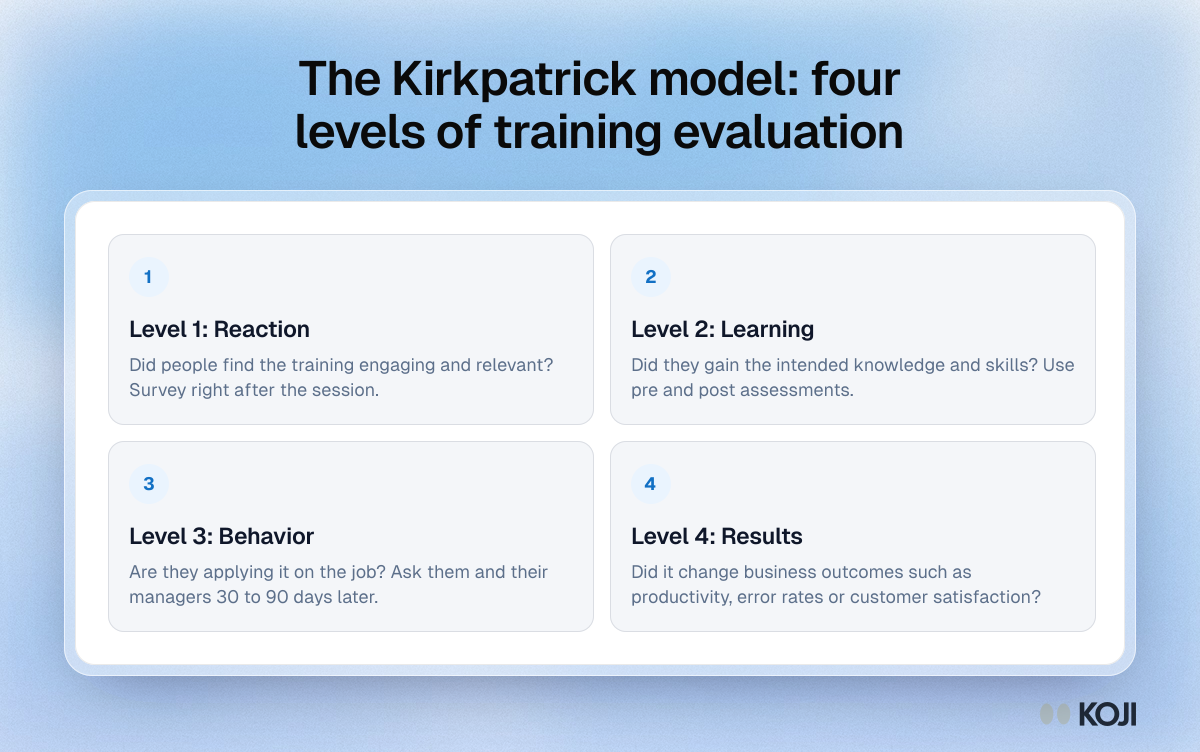
The Kirkpatrick model: four levels of training evaluation
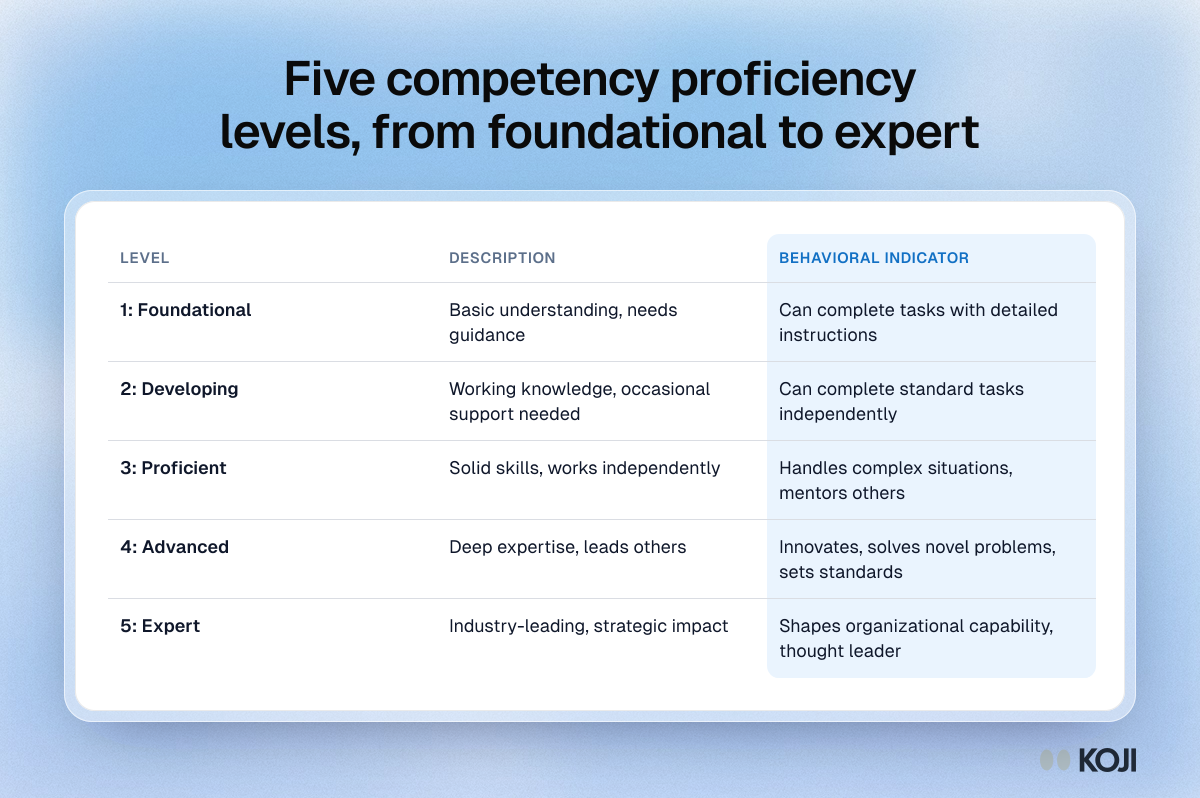
Five competency proficiency levels, from foundational to expert
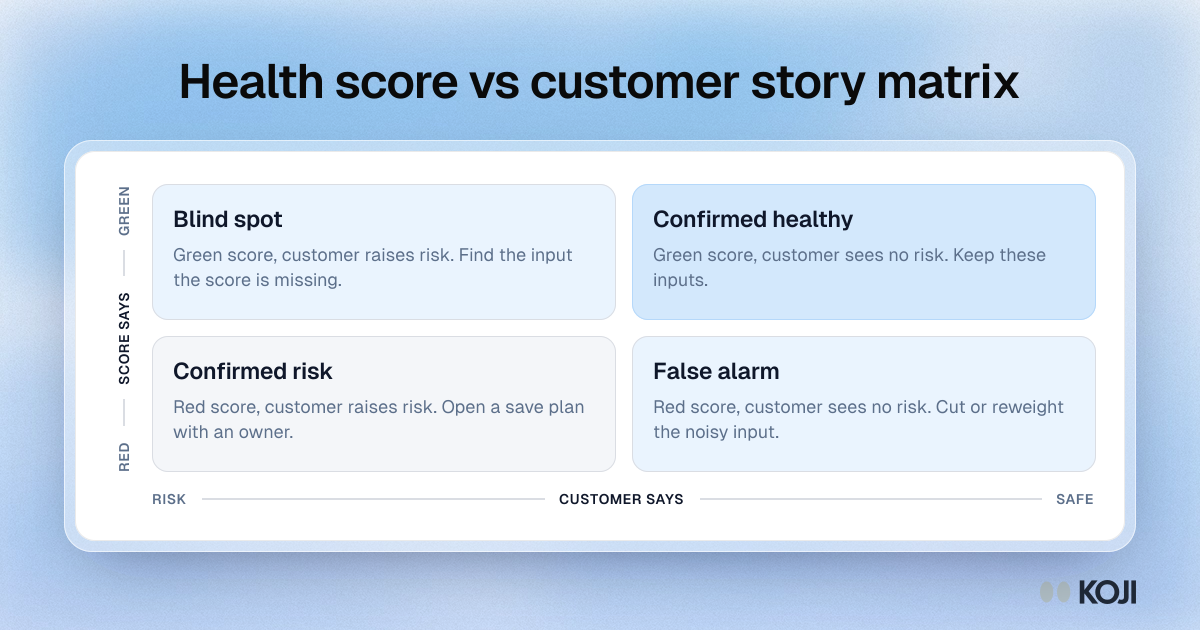
Health score vs customer story matrix
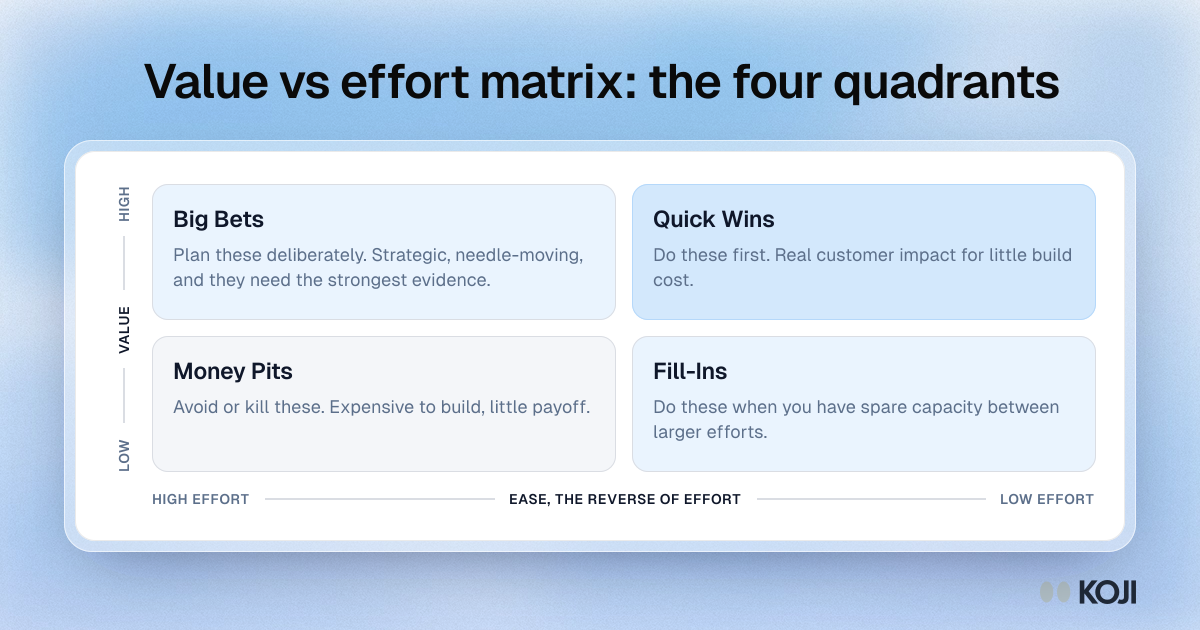
Value vs effort matrix: the four quadrants
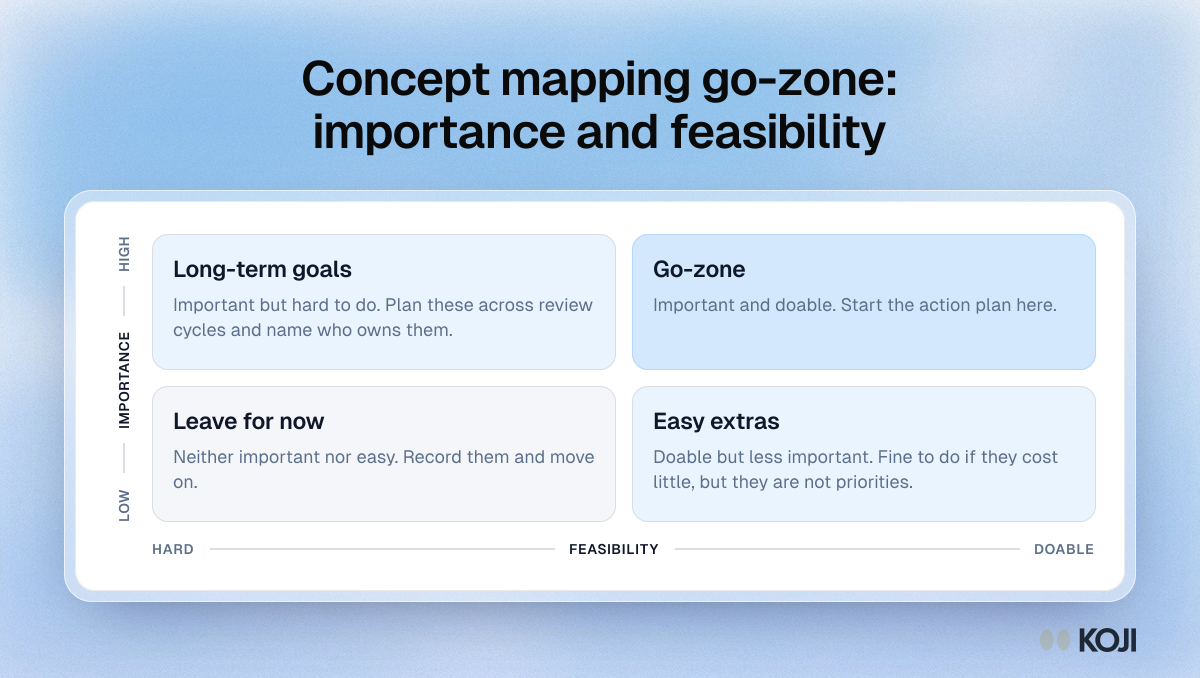
Concept mapping go-zone: importance and feasibility
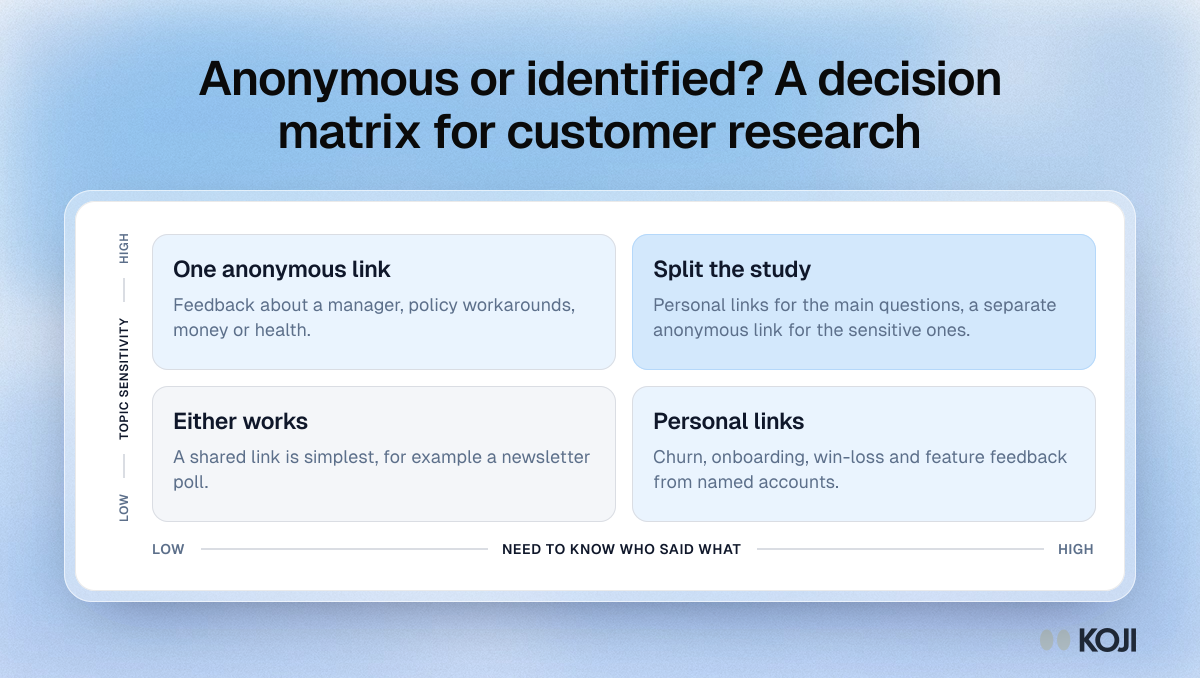
Anonymous or identified? A decision matrix for customer research