Comparison
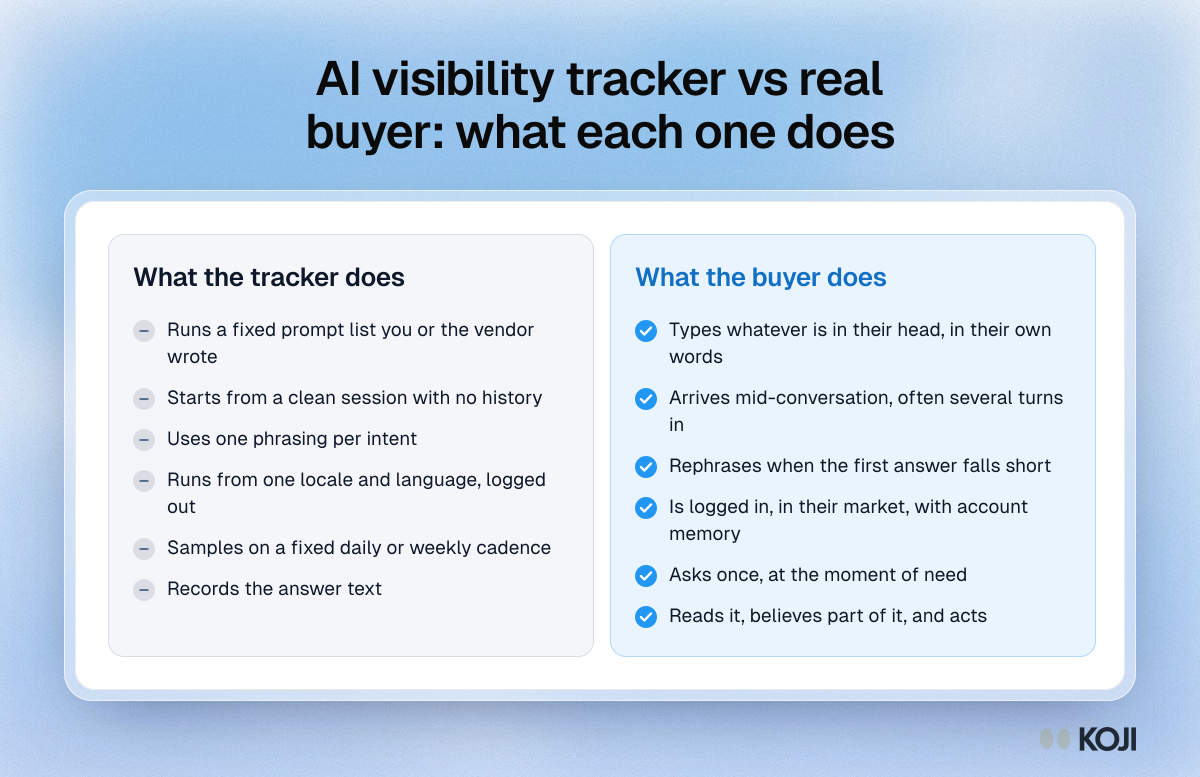
AI visibility tracker vs real buyer: what each one does
Why an AI visibility score is a weather station, not a census
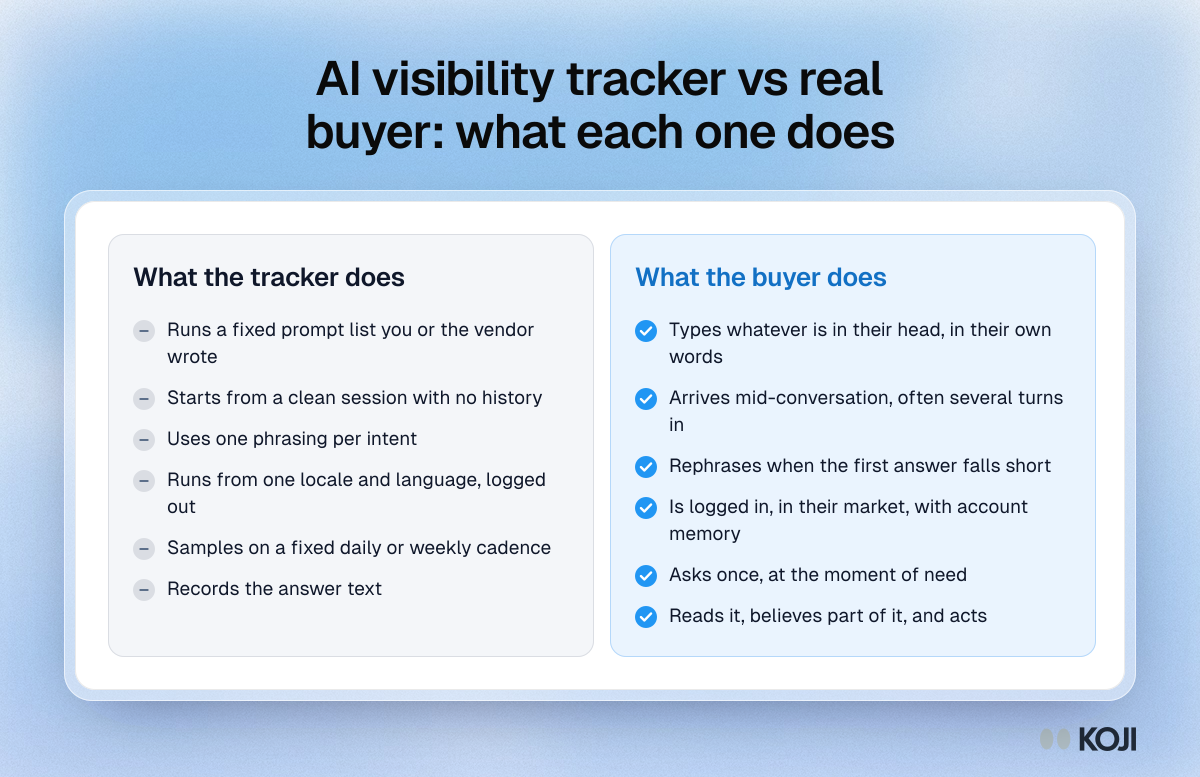
A side-by-side comparison of how AI visibility tracking tools sample answers and how real buyers use AI assistants. Trackers run a fixed prompt list from clean, logged-out sessions on a schedule, while buyers type their own words mid-conversation and act on part of the answer. Use it to set expectations before reporting an AI visibility score to leadership. Koji interviews with buyers can check your prompt list against the words they actually typed.
Where this appears
What's in this comparison
What the tracker does
- Runs a fixed prompt list you or the vendor wrote
- Starts from a clean session with no history
- Uses one phrasing per intent
- Runs from one locale and language, logged out
- Samples on a fixed daily or weekly cadence
- Records the answer text
What the buyer does
- Types whatever is in their head, in their own words
- Arrives mid-conversation, often several turns in
- Rephrases when the first answer falls short
- Is logged in, in their market, with account memory
- Asks once, at the moment of need
- Reads it, believes part of it, and acts
Use this image
Free to use in your docs, decks and posts under CC BY 4.0, as long as you credit Koji with a link to this page. To embed it, paste this into your page:
html
<a href="https://www.koji.so/visuals/ai-visibility-tracker-vs-real-buyer-prompts"><img src="https://www.koji.so/visuals/ai-visibility-tracker-vs-real-buyer-prompts/ai-visibility-tracker-vs-real-buyer-prompts.png" alt="Comparison of an AI visibility tracker and a real buyer: fixed prompts, clean sessions and one phrasing against free text, history and rephrasing." width="1200" height="777" /></a>
<p>Source: <a href="https://www.koji.so/visuals/ai-visibility-tracker-vs-real-buyer-prompts">AI visibility tracker vs real buyer: what each one does</a>, Koji</p>