Framework
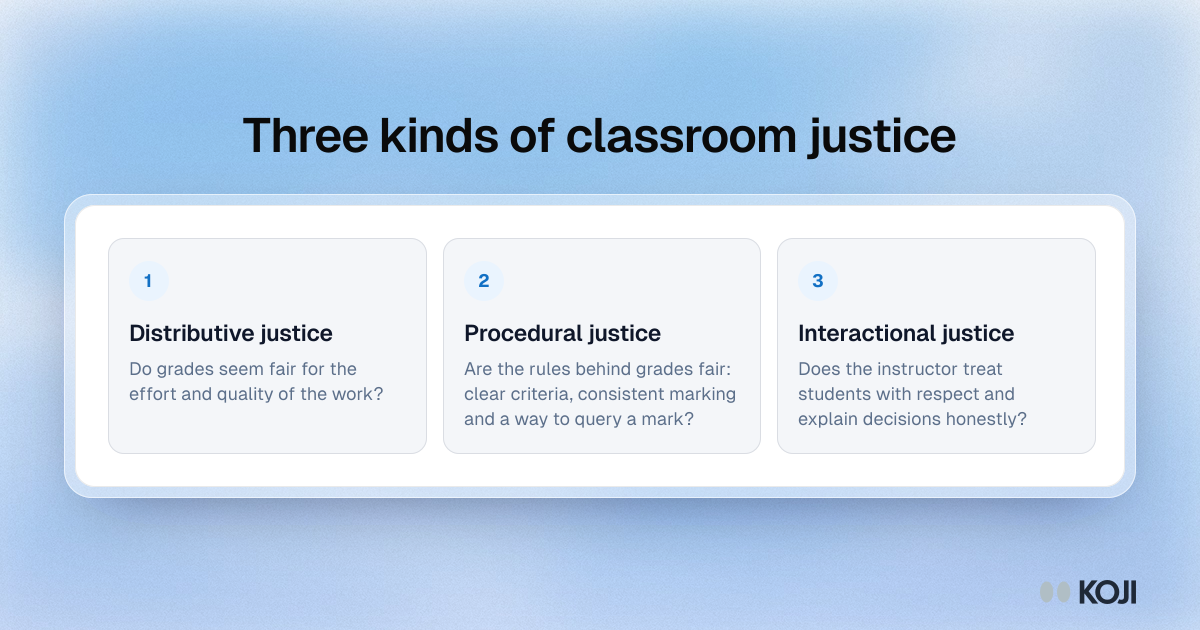
Three kinds of classroom justice
How students judge fairness in a course, and why it matters for course evaluation
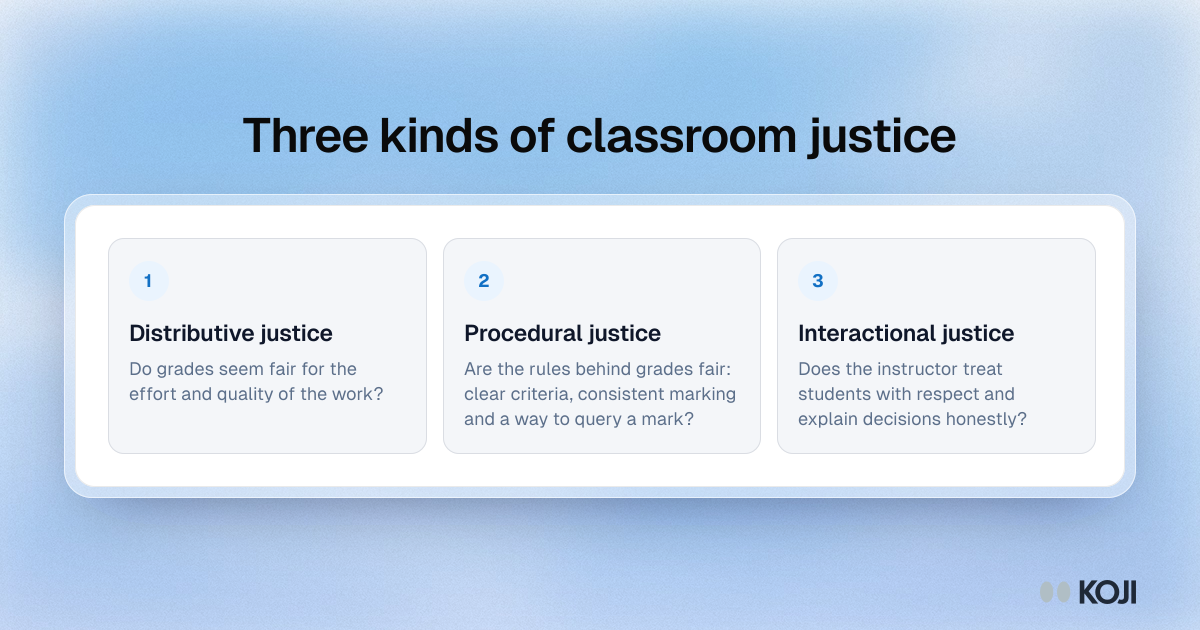
A framework for programme teams and quality officers on how students judge fairness in a course: the fairness of grades, of the procedures behind them, and of how the instructor treats them. Research on classroom justice links these perceptions to motivation and to ratings of instructors, and suggests fair procedures weaken the pull of grades on evaluations. Use it to write evaluation items about specific procedures. Koji interviews can probe a fairness complaint to find which part of the process it is about.
What's in this framework
- Distributive justice: Do grades seem fair for the effort and quality of the work?
- Procedural justice: Are the rules behind grades fair: clear criteria, consistent marking and a way to query a mark?
- Interactional justice: Does the instructor treat students with respect and explain decisions honestly?
Use this image
Free to use in your docs, decks and posts under CC BY 4.0, as long as you credit Koji with a link to this page. To embed it, paste this into your page:
<a href="https://www.koji.so/visuals/classroom-justice-three-dimensions-course-evaluation"><img src="https://www.koji.so/visuals/classroom-justice-three-dimensions-course-evaluation/classroom-justice-three-dimensions-course-evaluation.png" alt="Framework of the three kinds of classroom justice students judge: fair grades, fair grading procedures and fair treatment by the instructor." width="1200" height="630" /></a>
<p>Source: <a href="https://www.koji.so/visuals/classroom-justice-three-dimensions-course-evaluation">Three kinds of classroom justice</a>, Koji</p>