Framework
The means-end chain behind laddering
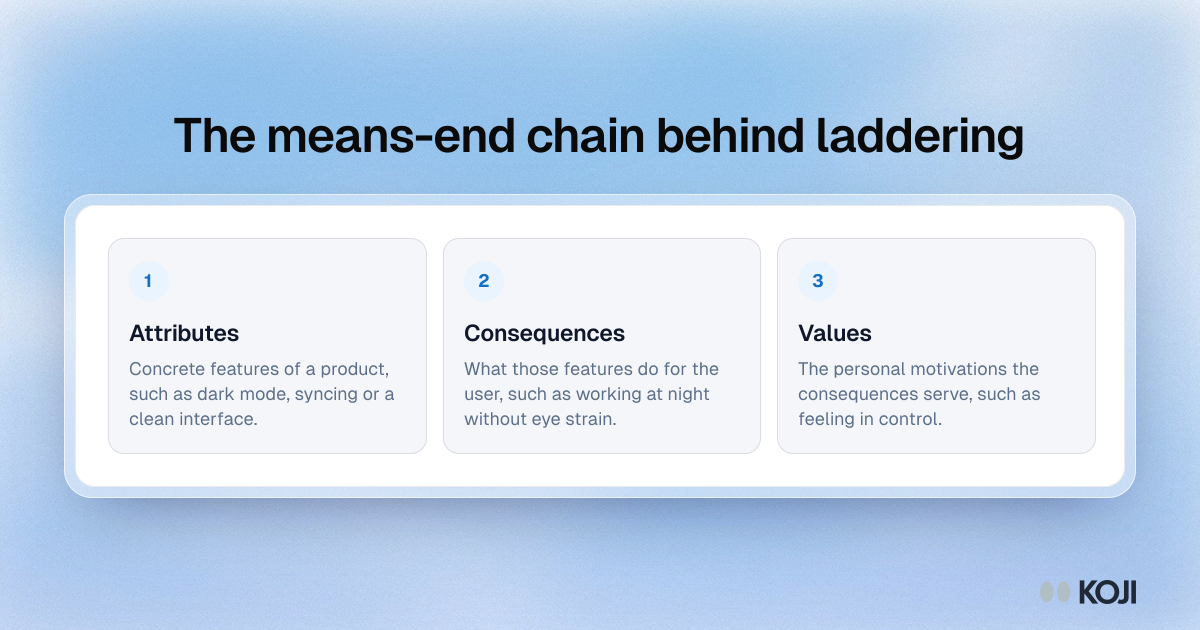
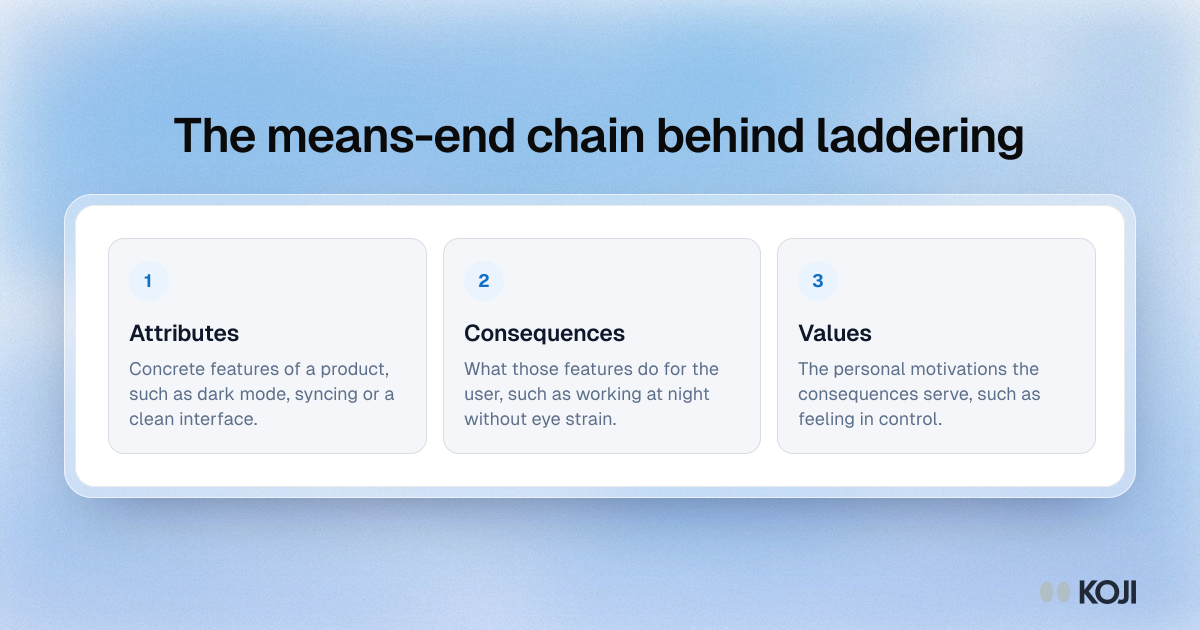
Means-end chain theory says people see products as a means to valued ends. Laddering interviews climb that chain in three levels: the attributes of a product, the consequences those attributes have for the user, and the personal values the consequences serve. Researchers use it to get past surface answers to the motivation behind a choice.
Where this appears
What's in this framework
- Attributes: Concrete features of a product, such as dark mode, syncing or a clean interface.
- Consequences: What those features do for the user, such as working at night without eye strain.
- Values: The personal motivations the consequences serve, such as feeling in control.
Use this image
Free to use in your docs, decks and posts under CC BY 4.0, as long as you credit Koji with a link to this page. To embed it, paste this into your page:
html
<a href="https://www.koji.so/visuals/laddering-means-end-chain-framework"><img src="https://www.koji.so/visuals/laddering-means-end-chain-framework/laddering-means-end-chain-framework.png" alt="Framework showing the three levels of the means-end chain used in laddering interviews: attributes, consequences and values." width="1200" height="630" /></a>
<p>Source: <a href="https://www.koji.so/visuals/laddering-means-end-chain-framework">The means-end chain behind laddering</a>, Koji</p>