Process
Deductive coding in six steps
How to code interviews with a start list without missing what the list leaves out
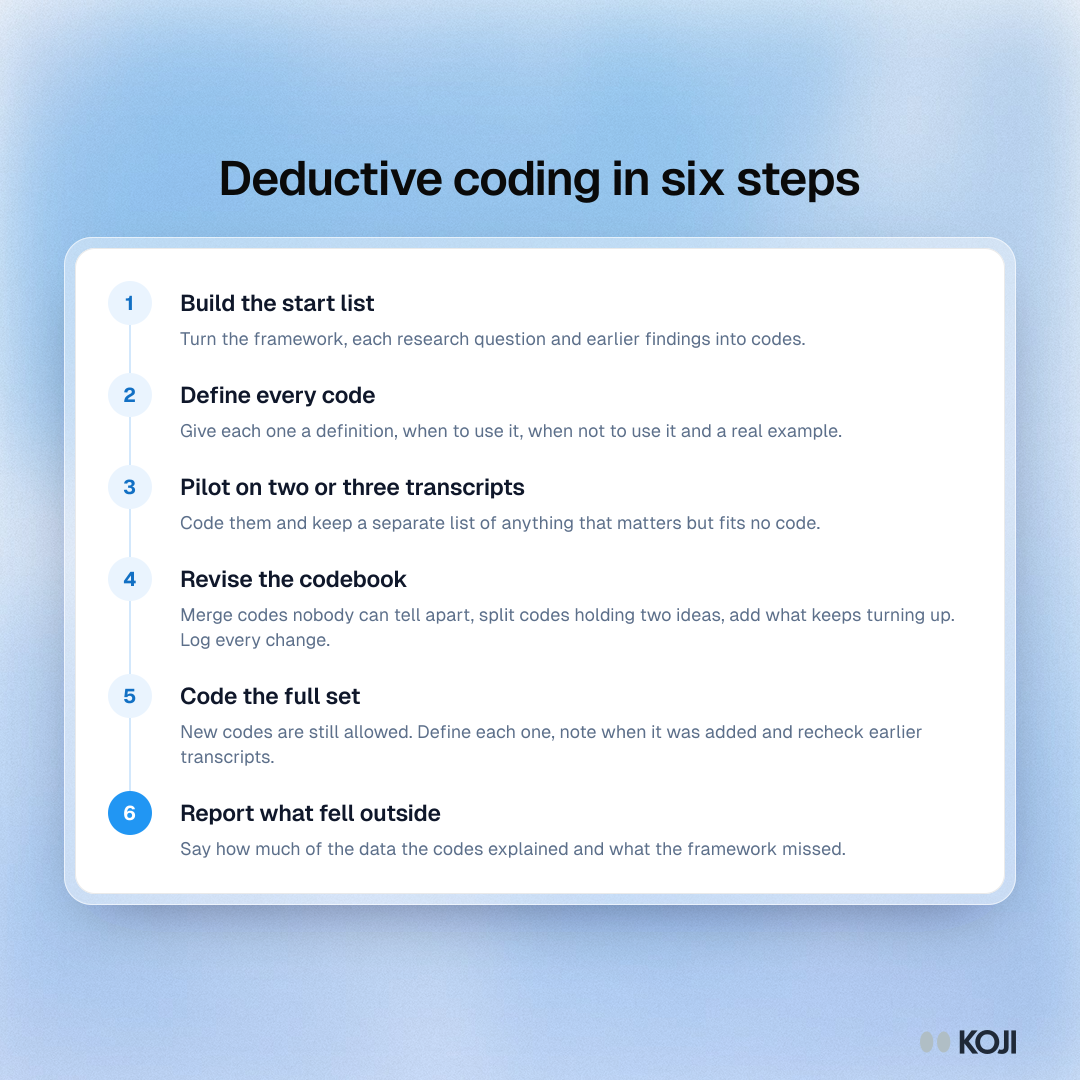
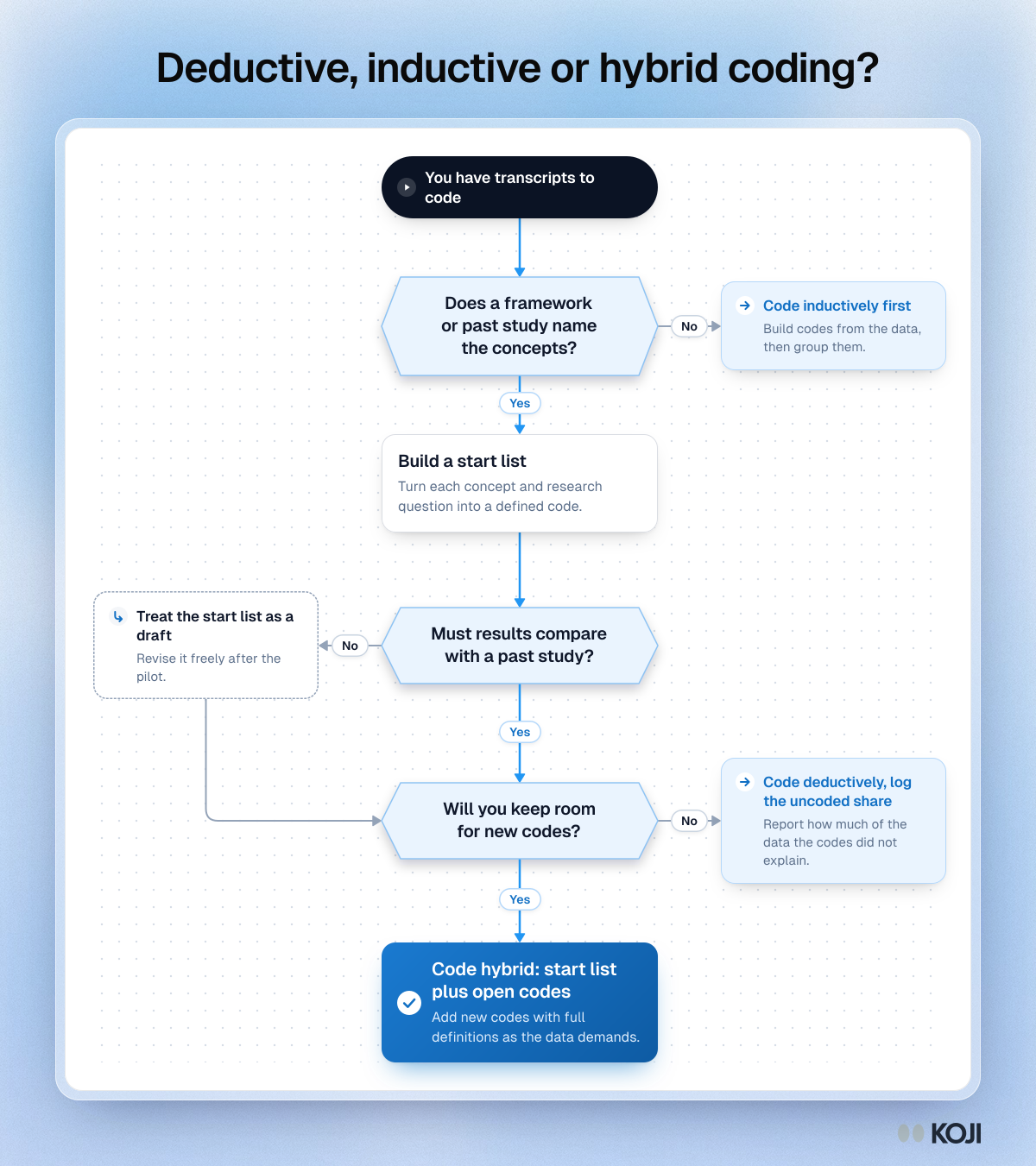
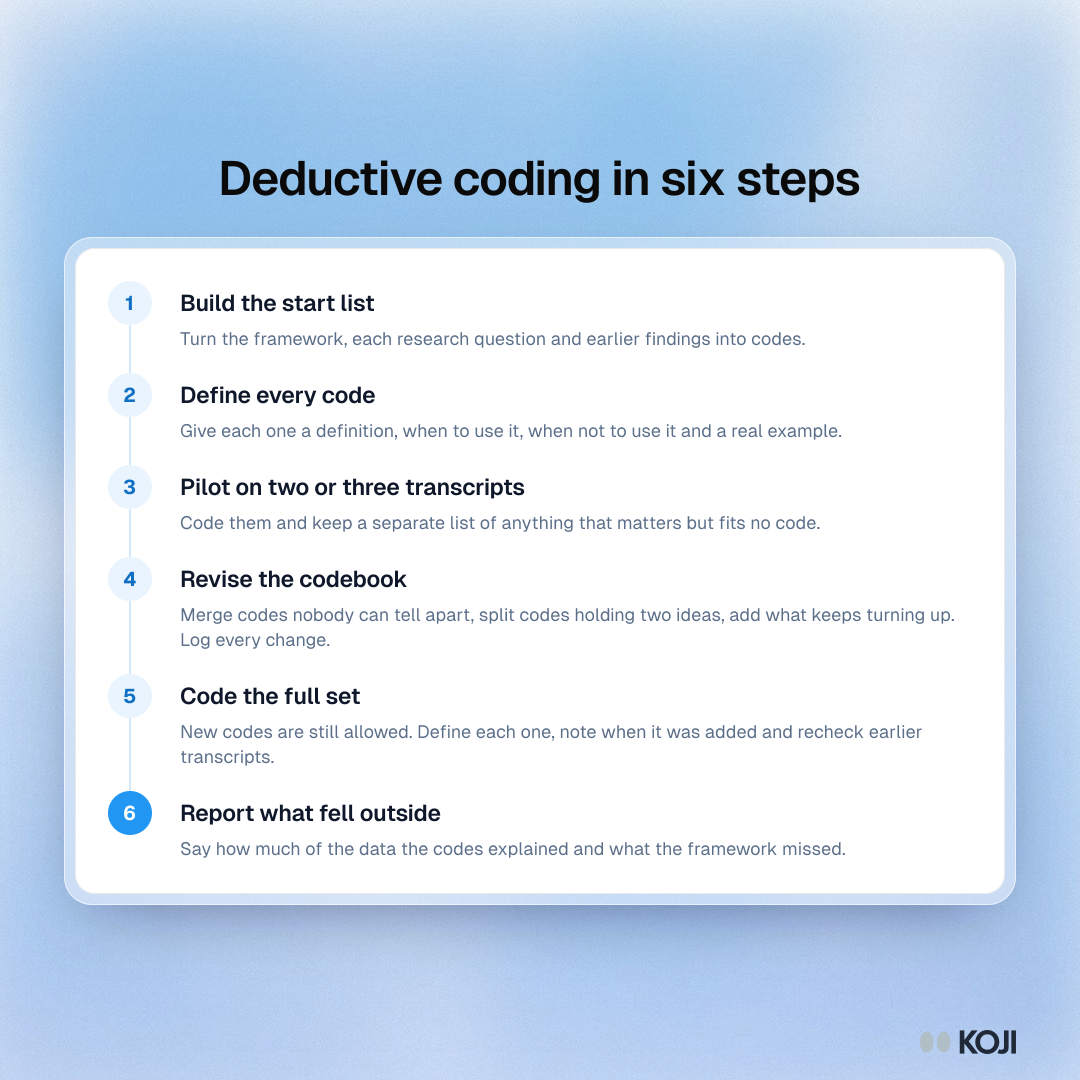
The six steps of deductive, or provisional, coding for interview and open-ended data. It starts from a list of codes written before analysis, tests them on a few transcripts, revises the codebook and finishes by reporting what the codes did not explain. Researchers, product managers and designers can use it as a checklist for a coding session. It follows the hybrid approach of Fereday and Muir-Cochrane and the codebook revision rounds described by Hruschka and colleagues.
Where this appears
What's in this process
- Build the start list: Turn the framework, each research question and earlier findings into codes.
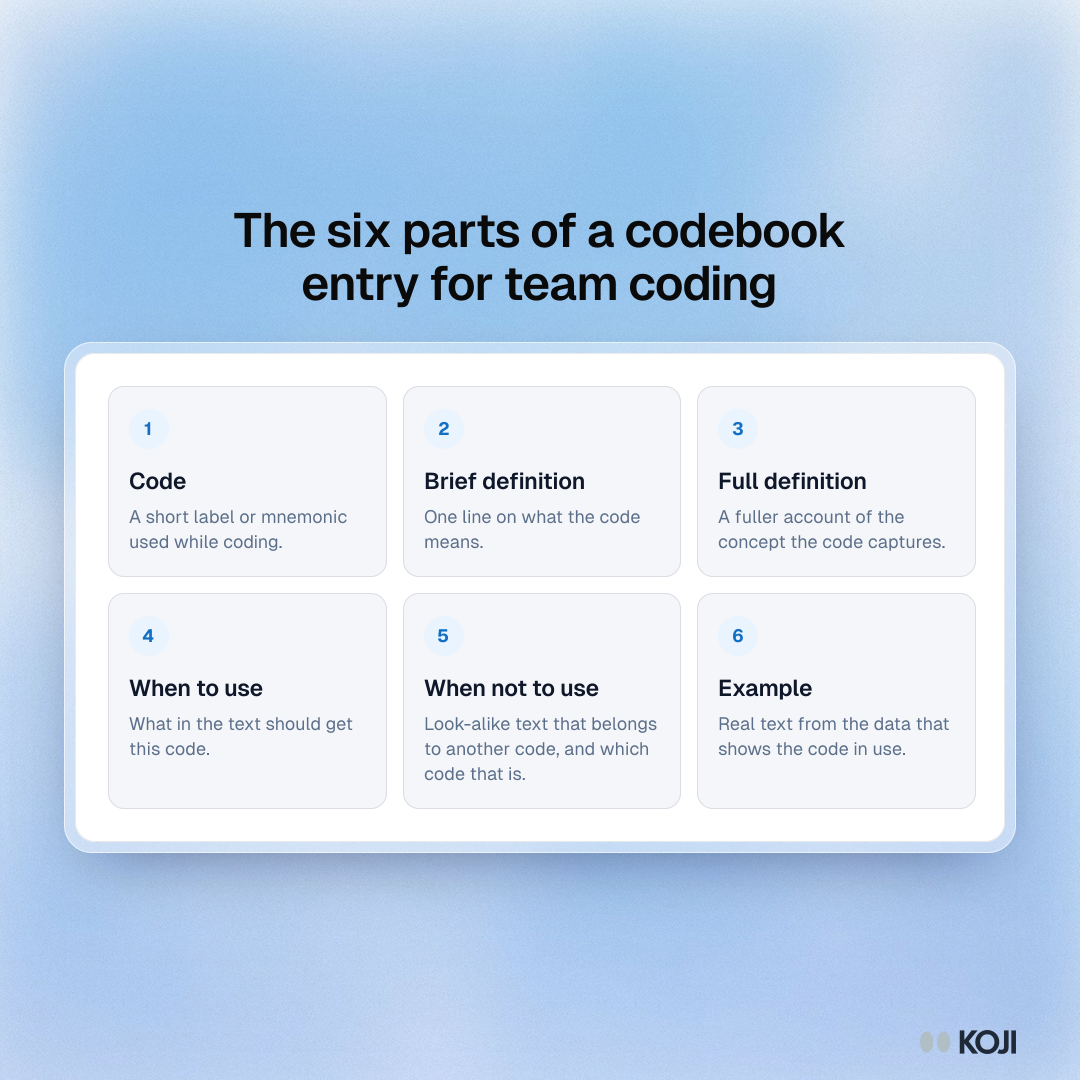
- Define every code: Give each one a definition, when to use it, when not to use it and a real example.
- Pilot on two or three transcripts: Code them and keep a separate list of anything that matters but fits no code.
- Revise the codebook: Merge codes nobody can tell apart, split codes holding two ideas, add what keeps turning up. Log every change.
- Code the full set: New codes are still allowed. Define each one, note when it was added and recheck earlier transcripts.
- Report what fell outside: Say how much of the data the codes explained and what the framework missed.
Use this image
Free to use in your docs, decks and posts under CC BY 4.0, as long as you credit Koji with a link to this page. To embed it, paste this into your page:
html
<a href="https://www.koji.so/visuals/deductive-coding-process-six-steps"><img src="https://www.koji.so/visuals/deductive-coding-process-six-steps/deductive-coding-process-six-steps.png" alt="Process of deductive coding in six steps: build a start list, define codes, pilot, revise, code the full set and report what fell outside." width="1080" height="1080" /></a>
<p>Source: <a href="https://www.koji.so/visuals/deductive-coding-process-six-steps">Deductive coding in six steps</a>, Koji</p>