Framework
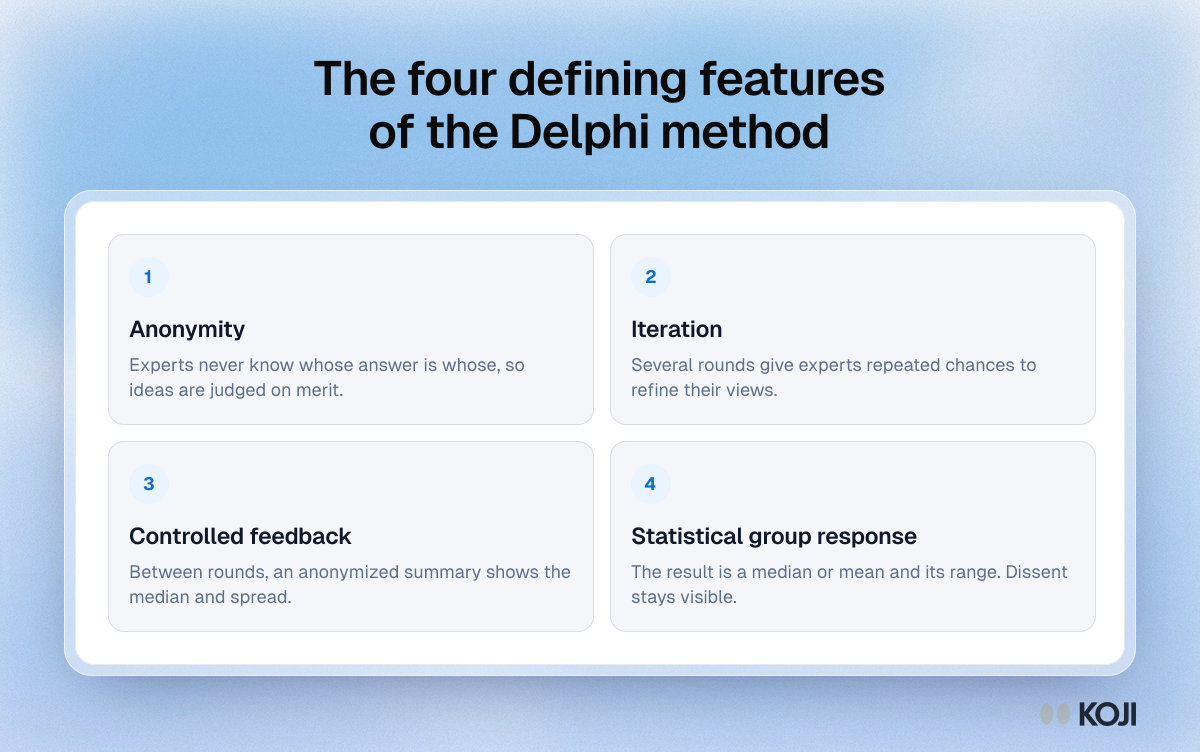
The four defining features of the Delphi method
What separates a true Delphi study from asking some experts
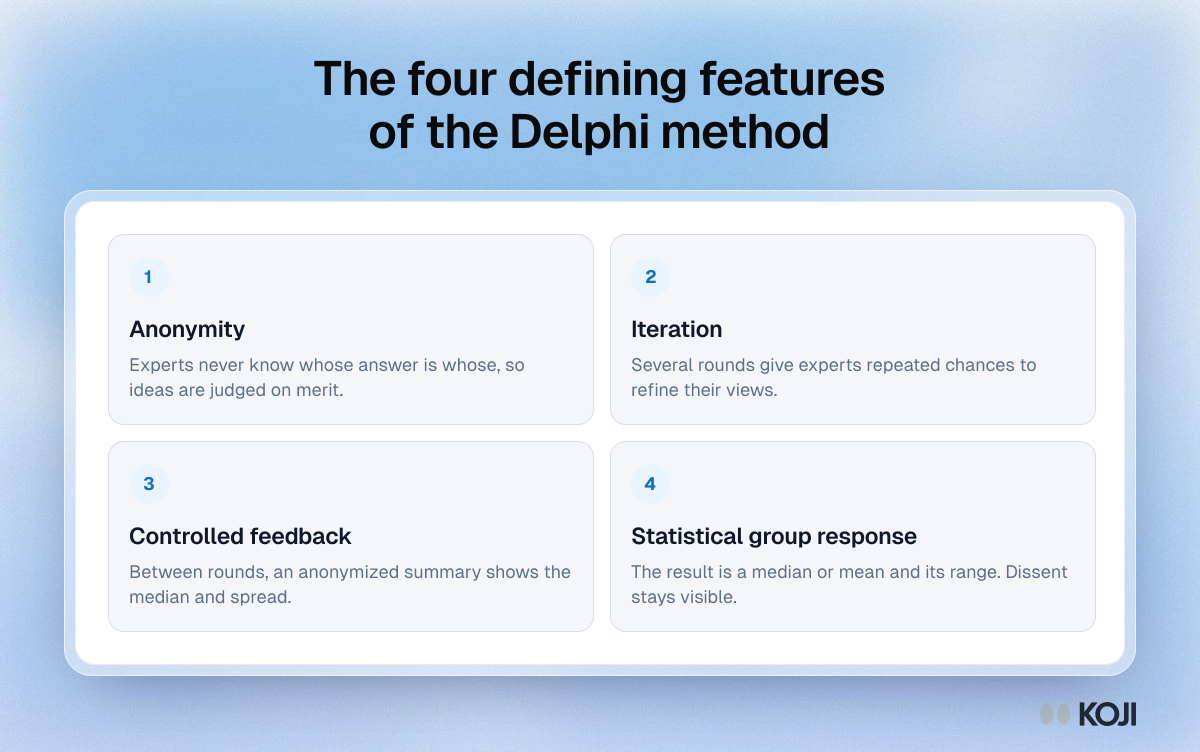
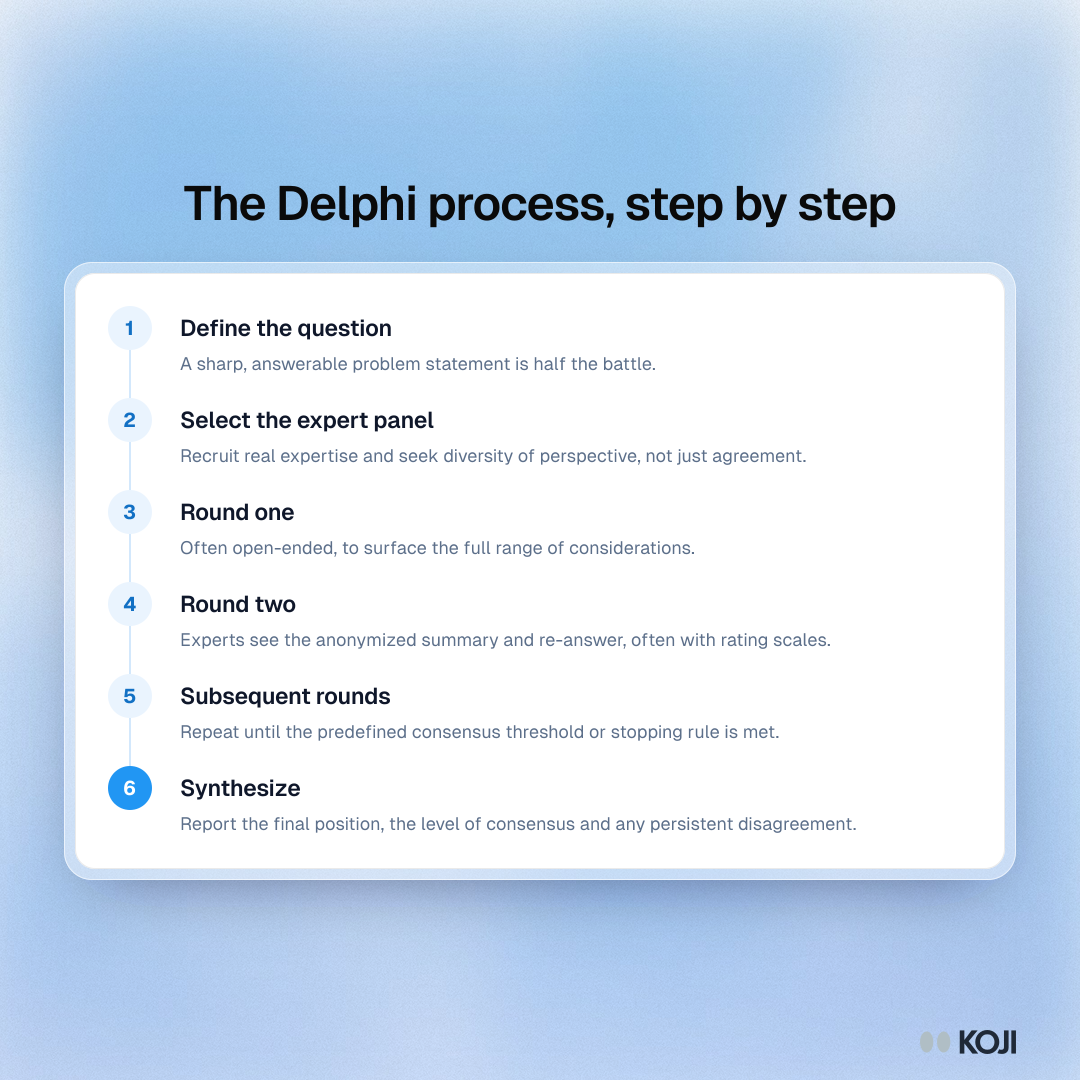
The Delphi method is a structured way to reach expert consensus, developed at the RAND Corporation in the 1950s. Four structural features set it apart from simply asking experts what they think: anonymity, iteration, controlled feedback and a statistical group response. Use this as a checklist when you design a panel study or judge one you are reading.
Where this appears
What's in this framework
- Anonymity: Experts never know whose answer is whose, so ideas are judged on merit.
- Iteration: Several rounds give experts repeated chances to refine their views.
- Controlled feedback: Between rounds, an anonymized summary shows the median and spread.
- Statistical group response: The result is a median or mean and its range. Dissent stays visible.
Use this image
Free to use in your docs, decks and posts under CC BY 4.0, as long as you credit Koji with a link to this page. To embed it, paste this into your page:
html
<a href="https://www.koji.so/visuals/delphi-method-four-defining-features"><img src="https://www.koji.so/visuals/delphi-method-four-defining-features/delphi-method-four-defining-features.png" alt="Framework showing the four defining features of the Delphi method: anonymity, iteration, controlled feedback and statistical group response." width="1200" height="752" /></a>
<p>Source: <a href="https://www.koji.so/visuals/delphi-method-four-defining-features">The four defining features of the Delphi method</a>, Koji</p>