Process
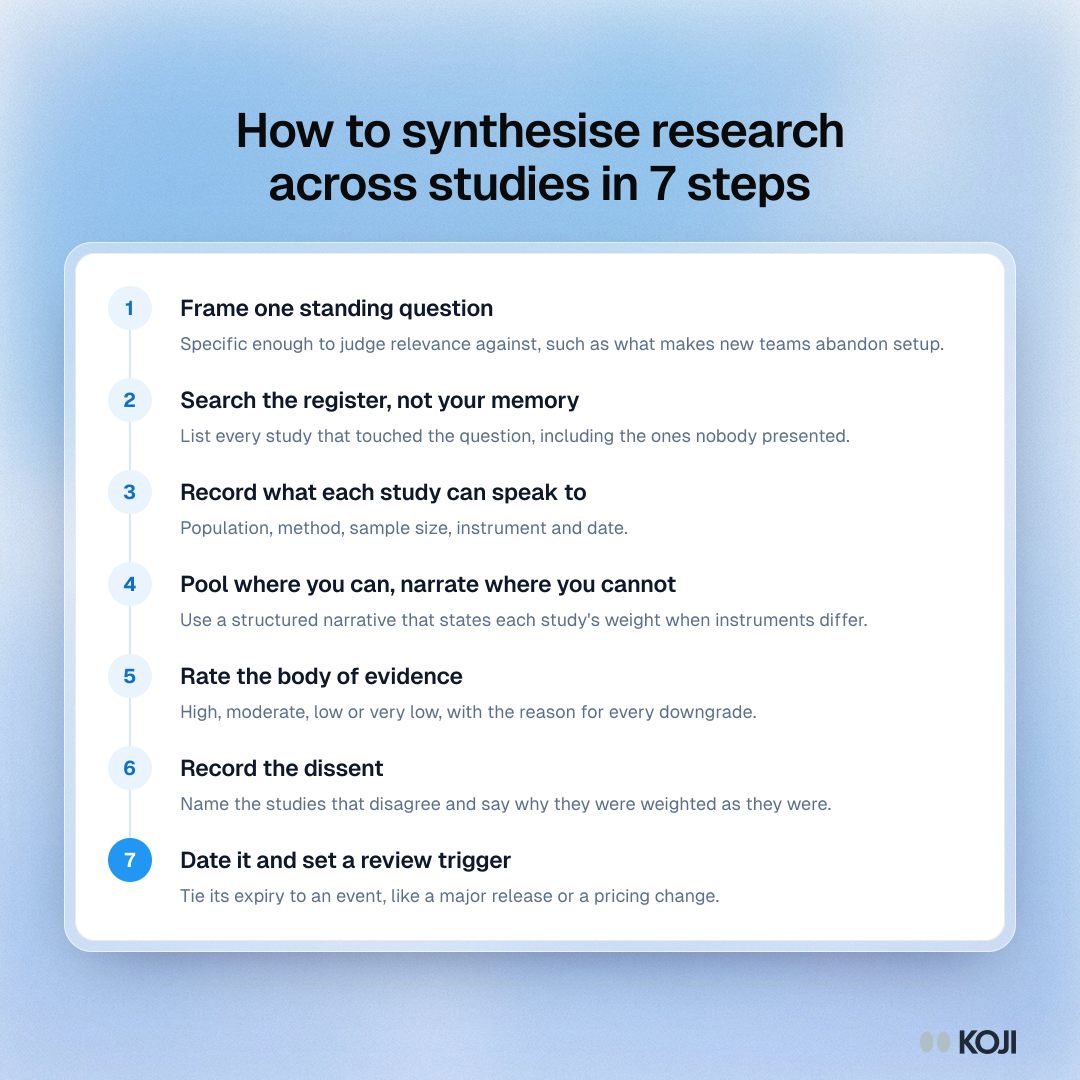
How to synthesise research across studies in 7 steps
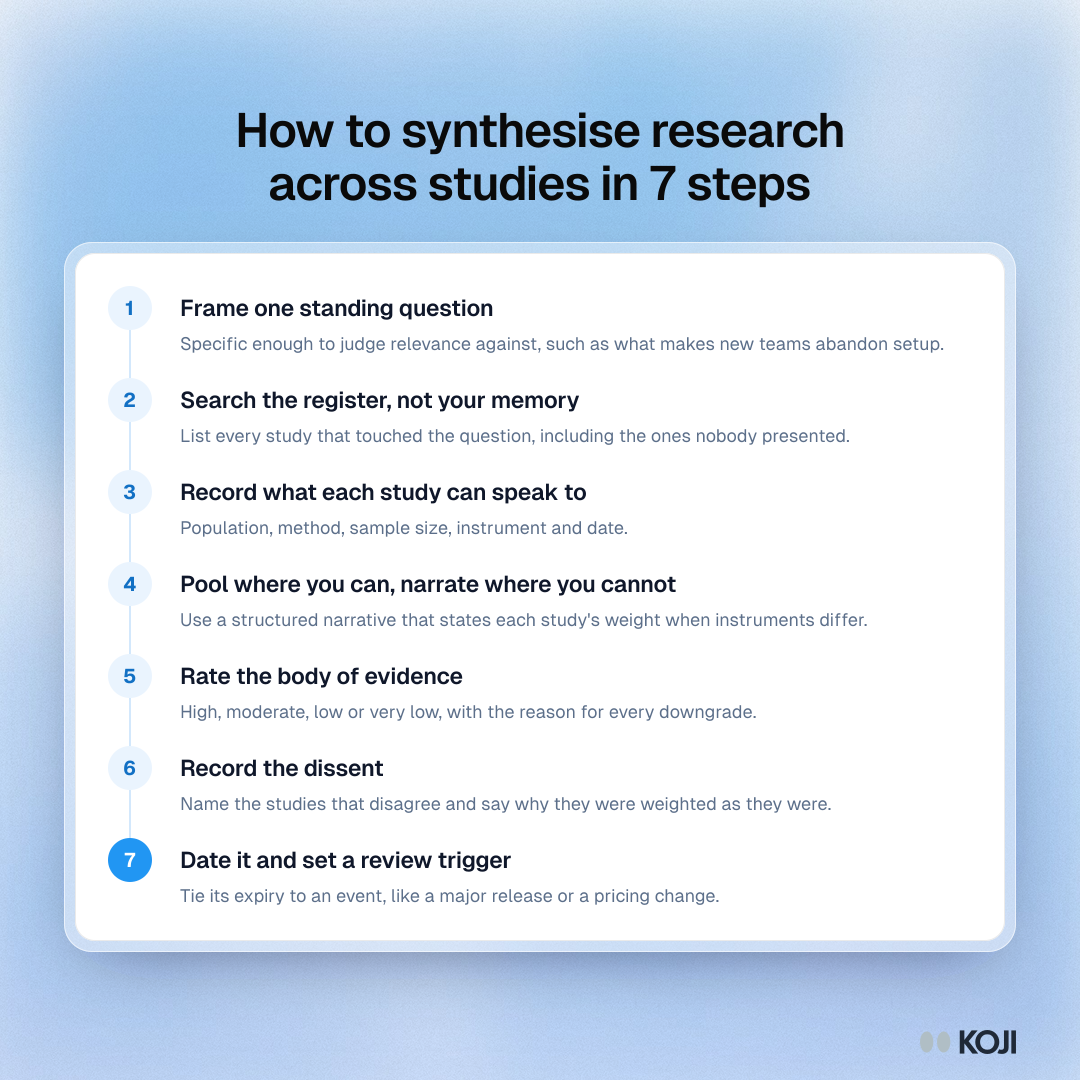
A seven-step procedure for combining findings from many internal studies into one conclusion with a stated confidence level. It borrows the core of systematic review and the GRADE certainty levels and scales them down for product teams: one question, a full search of the study register, pooling or narrative, a rating, the dissenting studies and an expiry trigger.
Where this appears
What's in this process
- Frame one standing question: Specific enough to judge relevance against, such as what makes new teams abandon setup.
- Search the register, not your memory: List every study that touched the question, including the ones nobody presented.
- Record what each study can speak to: Population, method, sample size, instrument and date.
- Pool where you can, narrate where you cannot: Use a structured narrative that states each study's weight when instruments differ.
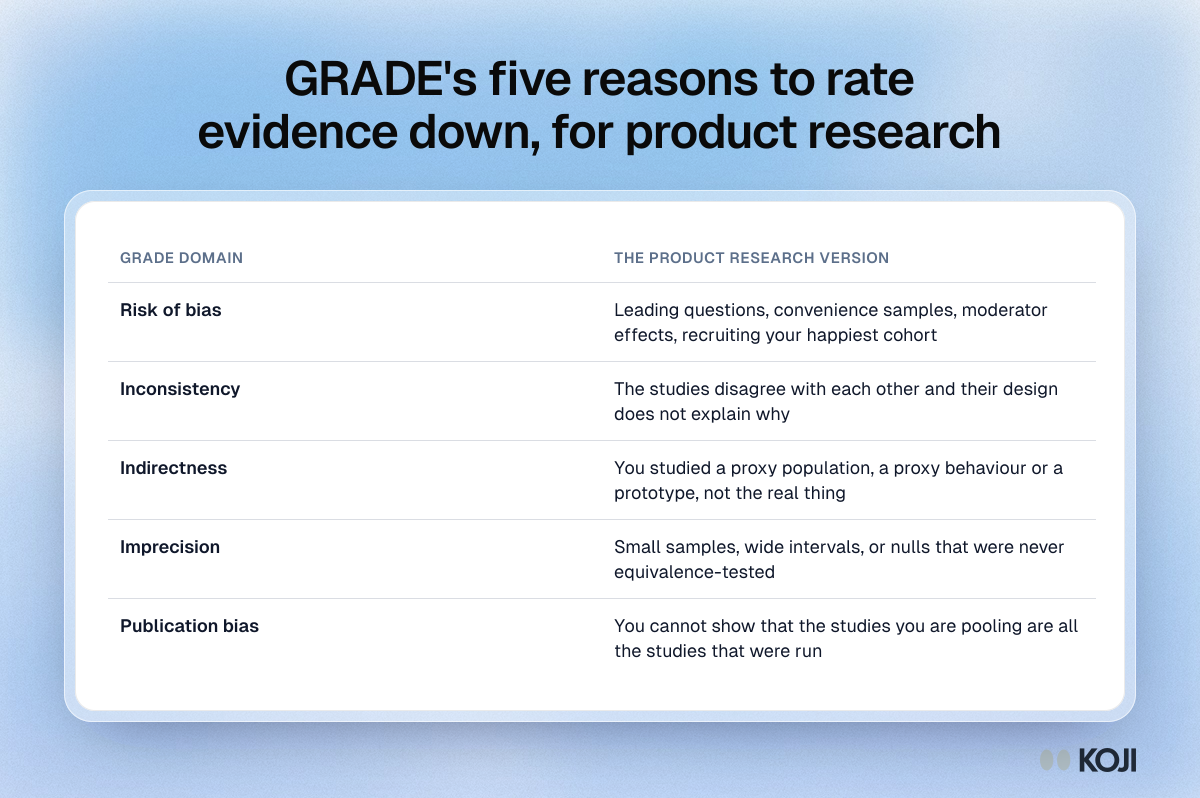
- Rate the body of evidence: High, moderate, low or very low, with the reason for every downgrade.
- Record the dissent: Name the studies that disagree and say why they were weighted as they were.
- Date it and set a review trigger: Tie its expiry to an event, like a major release or a pricing change.
Use this image
Free to use in your docs, decks and posts under CC BY 4.0, as long as you credit Koji with a link to this page. To embed it, paste this into your page:
html
<a href="https://www.koji.so/visuals/evidence-synthesis-seven-step-procedure"><img src="https://www.koji.so/visuals/evidence-synthesis-seven-step-procedure/evidence-synthesis-seven-step-procedure.png" alt="Process of seven steps for synthesising research across studies, from framing one standing question to dating it with a review trigger." width="1080" height="1080" /></a>
<p>Source: <a href="https://www.koji.so/visuals/evidence-synthesis-seven-step-procedure">How to synthesise research across studies in 7 steps</a>, Koji</p>