Guide
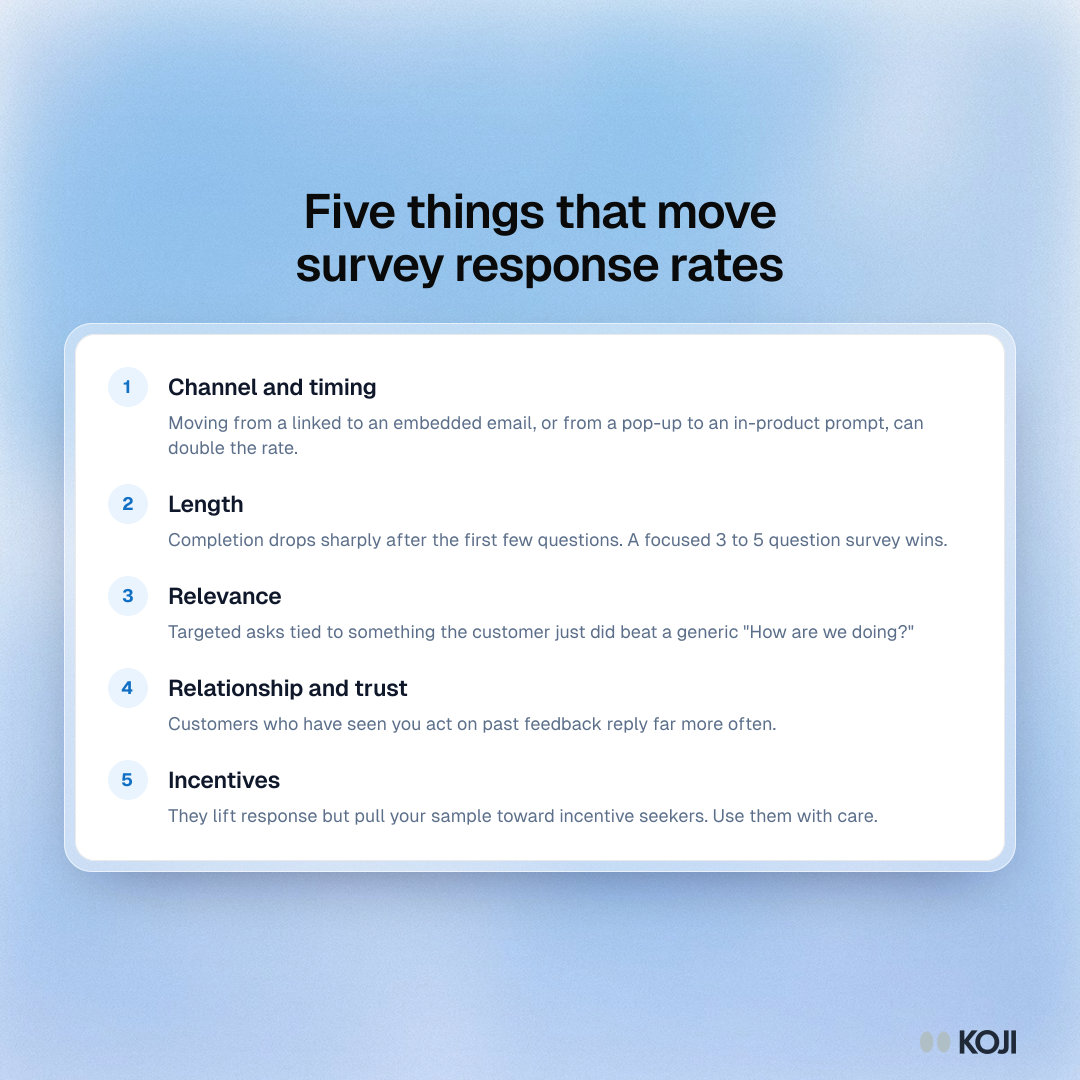
Five things that move survey response rates
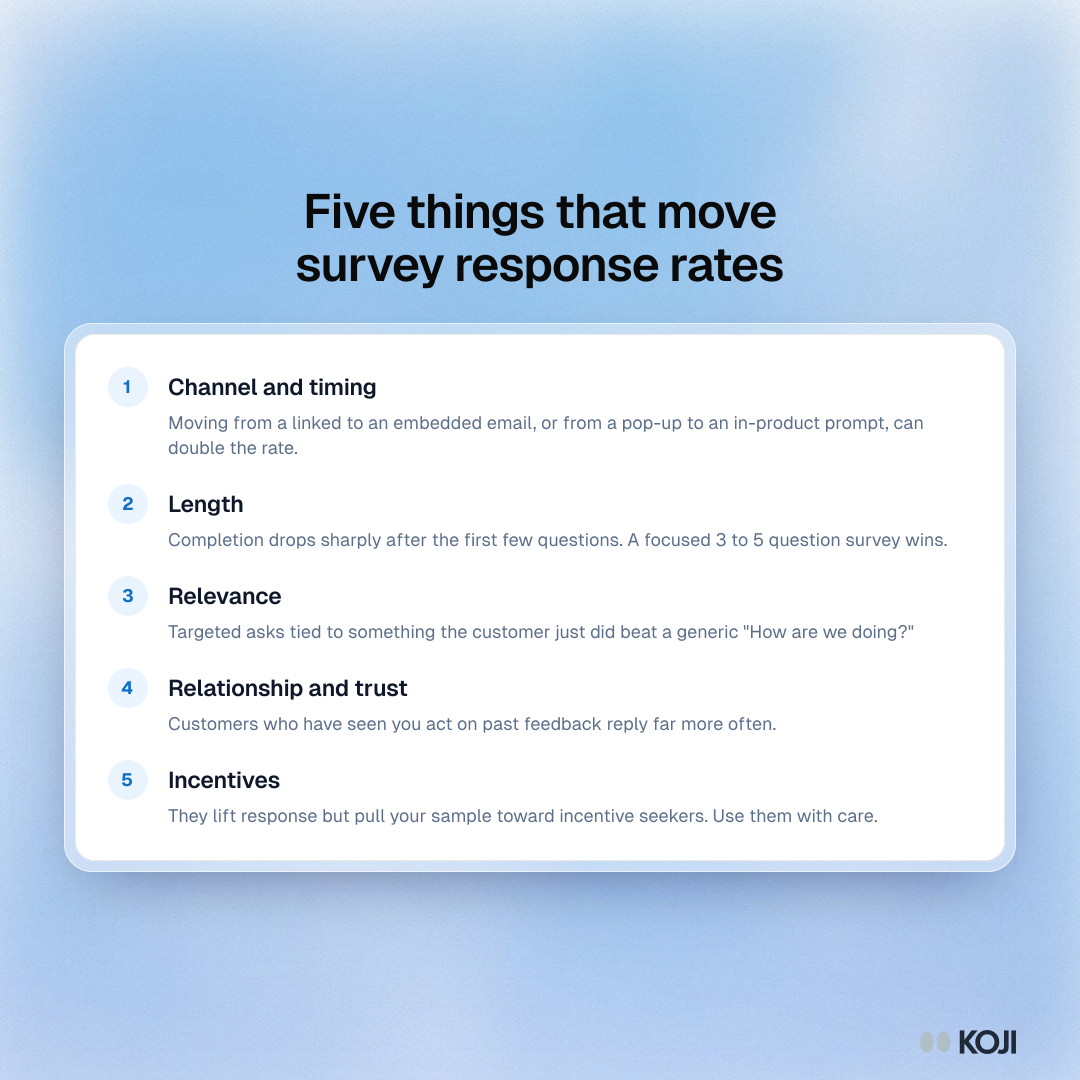
The five levers that change a survey response rate, in rough order of impact: channel and timing, length, relevance, relationship and trust, and incentives. It is for teams whose response rates keep slipping and who want to know which change to try first. Start at the top of the list. Koji replaces the form with an AI interview when the rate is not the real problem.
Where this appears
What's in this guide
- Channel and timing: Moving from a linked to an embedded email, or from a pop-up to an in-product prompt, can double the rate.
- Length: Completion drops sharply after the first few questions. A focused 3 to 5 question survey wins.
- Relevance: Targeted asks tied to something the customer just did beat a generic "How are we doing?"
- Relationship and trust: Customers who have seen you act on past feedback reply far more often.
- Incentives: They lift response but pull your sample toward incentive seekers. Use them with care.
Use this image
Free to use in your docs, decks and posts under CC BY 4.0, as long as you credit Koji with a link to this page. To embed it, paste this into your page:
html
<a href="https://www.koji.so/visuals/five-things-that-move-survey-response-rates"><img src="https://www.koji.so/visuals/five-things-that-move-survey-response-rates/five-things-that-move-survey-response-rates.png" alt="List of five drivers of survey response rates, in rough order of impact: channel and timing, length, relevance, trust and incentives." width="1080" height="1080" /></a>
<p>Source: <a href="https://www.koji.so/visuals/five-things-that-move-survey-response-rates">Five things that move survey response rates</a>, Koji</p>