Comparison
Generative vs evaluative user research
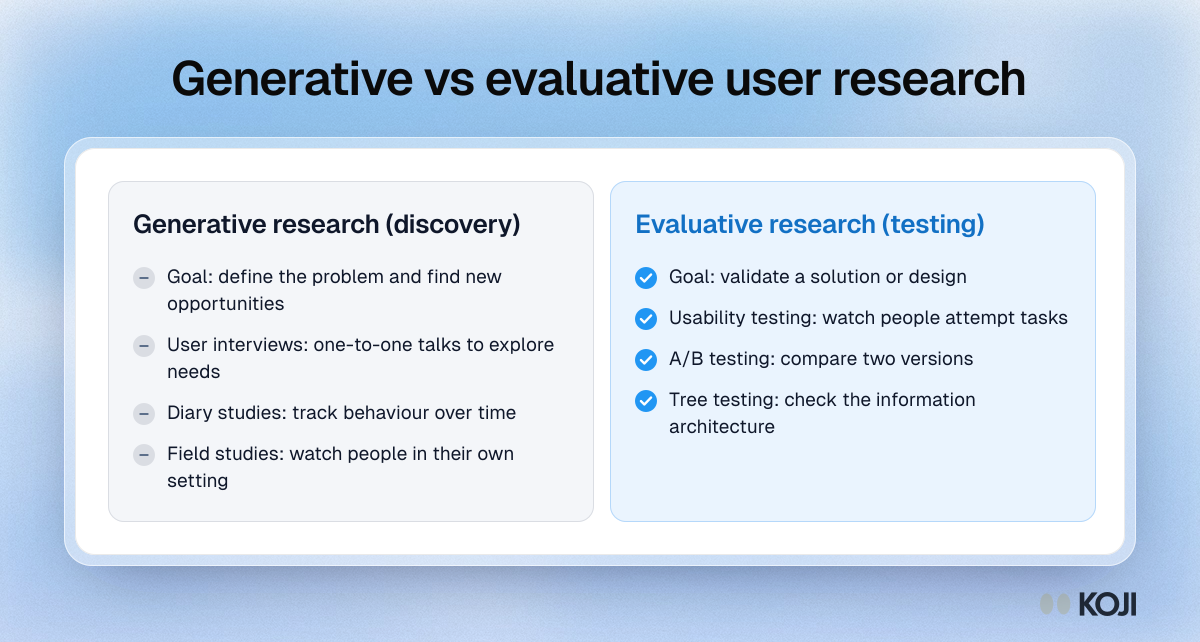
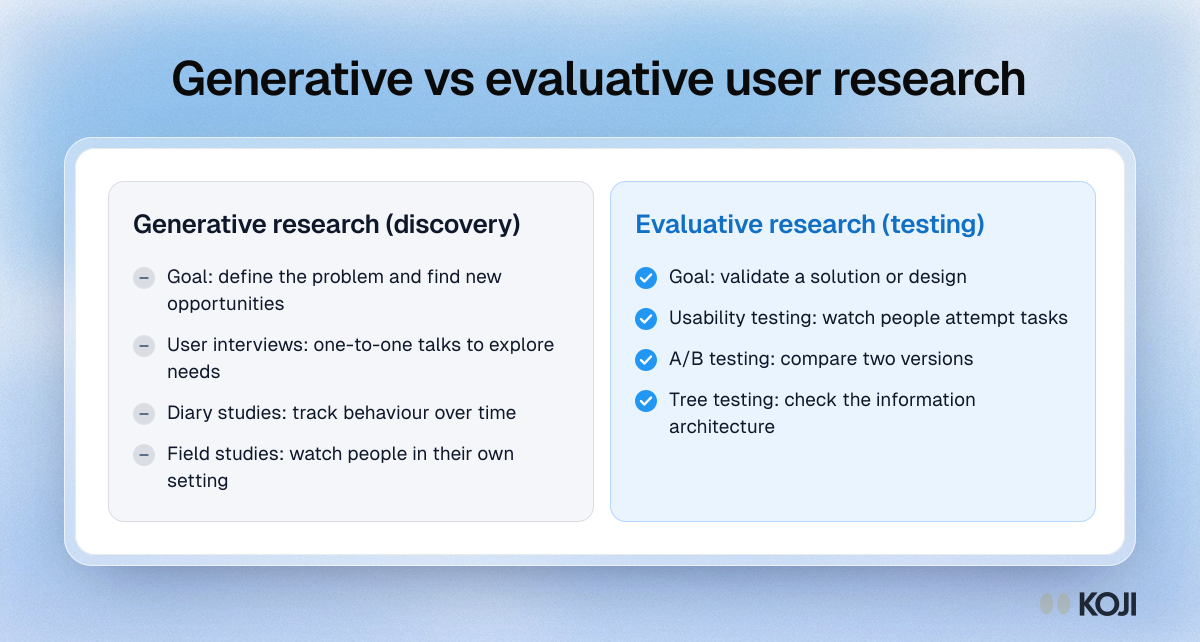
A side-by-side view of the two goals of user research. Generative, or discovery, research defines the problem and finds opportunities through user interviews, diary studies and field studies. Evaluative research tests a solution or design with usability testing, A/B testing and tree testing. Product teams can use it to pick a method that matches the question they have right now. Koji runs AI-moderated user interviews for the generative side, with follow-up questions and automatic analysis.
What's in this comparison
Generative research (discovery)
- Goal: define the problem and find new opportunities
- User interviews: one-to-one talks to explore needs
- Diary studies: track behaviour over time
- Field studies: watch people in their own setting
Evaluative research (testing)
- Goal: validate a solution or design
- Usability testing: watch people attempt tasks
- A/B testing: compare two versions
- Tree testing: check the information architecture
Use this image
Free to use in your docs, decks and posts under CC BY 4.0, as long as you credit Koji with a link to this page. To embed it, paste this into your page:
html
<a href="https://www.koji.so/visuals/generative-vs-evaluative-user-research"><img src="https://www.koji.so/visuals/generative-vs-evaluative-user-research/generative-vs-evaluative-user-research.png" alt="Comparison of generative user research, which finds problems through interviews, diaries and field studies, and evaluative research, which tests solutions." width="1200" height="642" /></a>
<p>Source: <a href="https://www.koji.so/visuals/generative-vs-evaluative-user-research">Generative vs evaluative user research</a>, Koji</p>