Guide
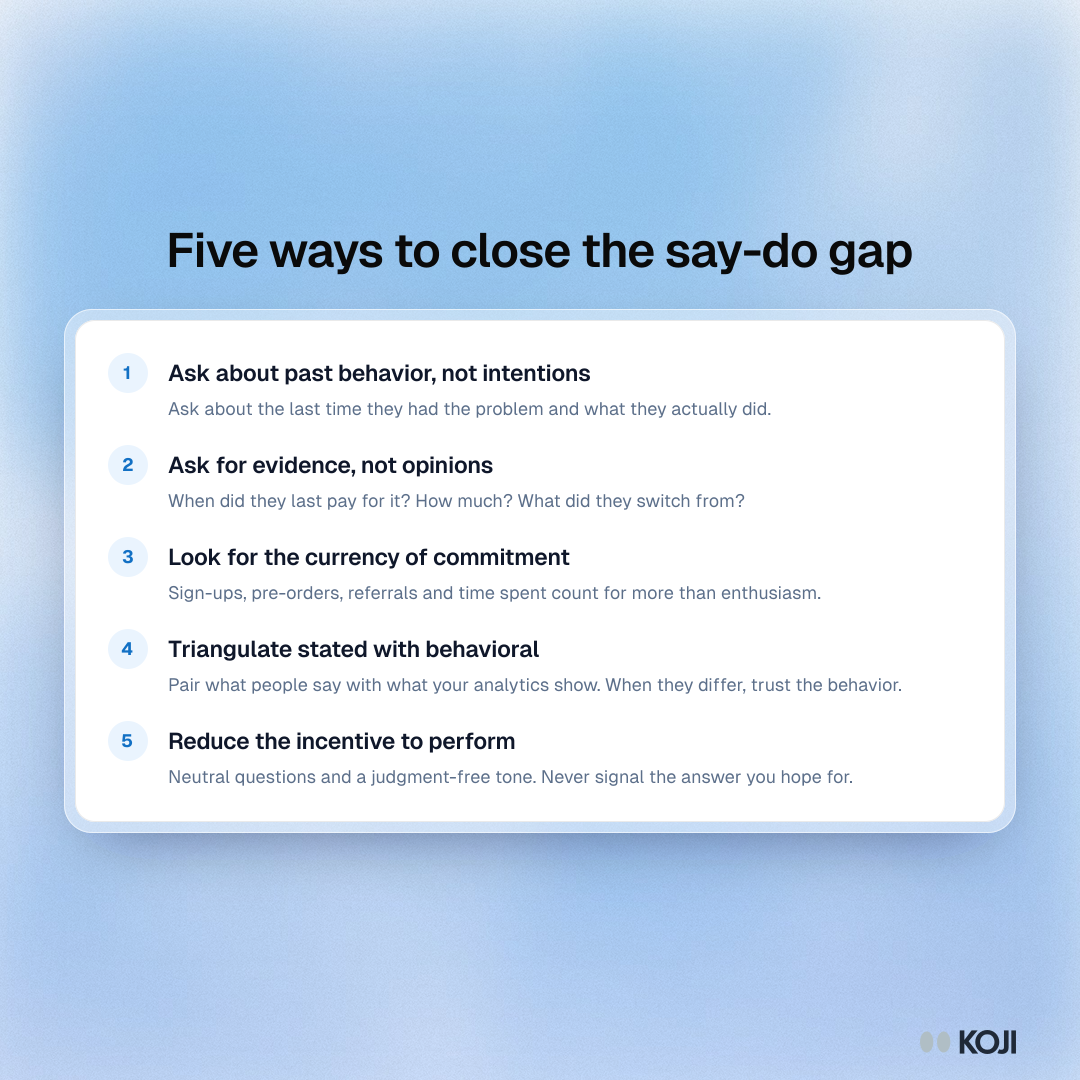
Five ways to close the say-do gap
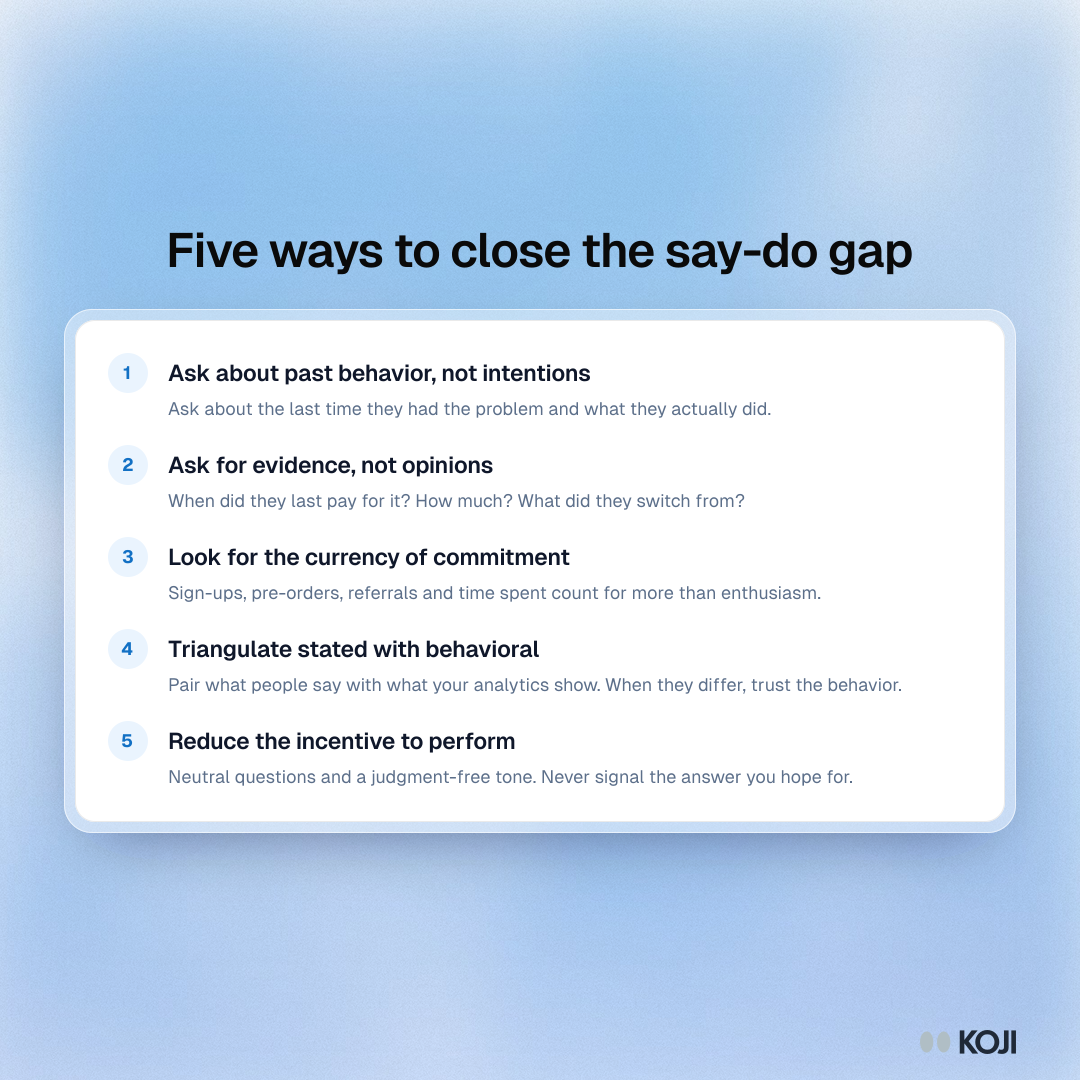
Five interview and research habits that narrow the gap between what customers say and what they do: ask about past behavior, ask for evidence, weigh commitments over enthusiasm, check answers against product analytics, and take away the pressure to give a good answer. Use it as a checklist when you write an interview guide or review a survey.
Where this appears
What's in this guide
- Ask about past behavior, not intentions: Ask about the last time they had the problem and what they actually did.
- Ask for evidence, not opinions: When did they last pay for it? How much? What did they switch from?
- Look for the currency of commitment: Sign-ups, pre-orders, referrals and time spent count for more than enthusiasm.
- Triangulate stated with behavioral: Pair what people say with what your analytics show. When they differ, trust the behavior.
- Reduce the incentive to perform: Neutral questions and a judgment-free tone. Never signal the answer you hope for.
Use this image
Free to use in your docs, decks and posts under CC BY 4.0, as long as you credit Koji with a link to this page. To embed it, paste this into your page:
html
<a href="https://www.koji.so/visuals/how-to-close-the-say-do-gap-five-ways"><img src="https://www.koji.so/visuals/how-to-close-the-say-do-gap-five-ways/how-to-close-the-say-do-gap-five-ways.png" alt="List of five ways to close the say-do gap in research, from asking about past behavior to triangulating answers with analytics." width="1080" height="1080" /></a>
<p>Source: <a href="https://www.koji.so/visuals/how-to-close-the-say-do-gap-five-ways">Five ways to close the say-do gap</a>, Koji</p>