Process
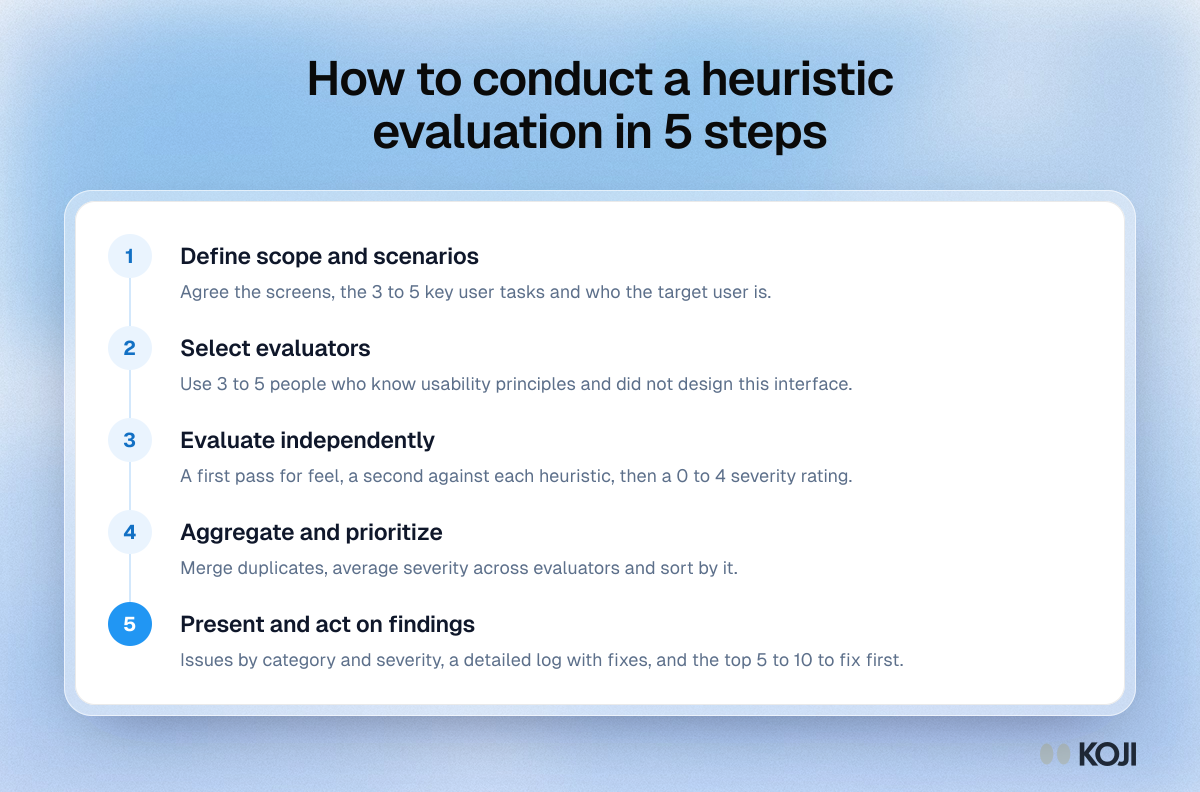
How to conduct a heuristic evaluation in 5 steps
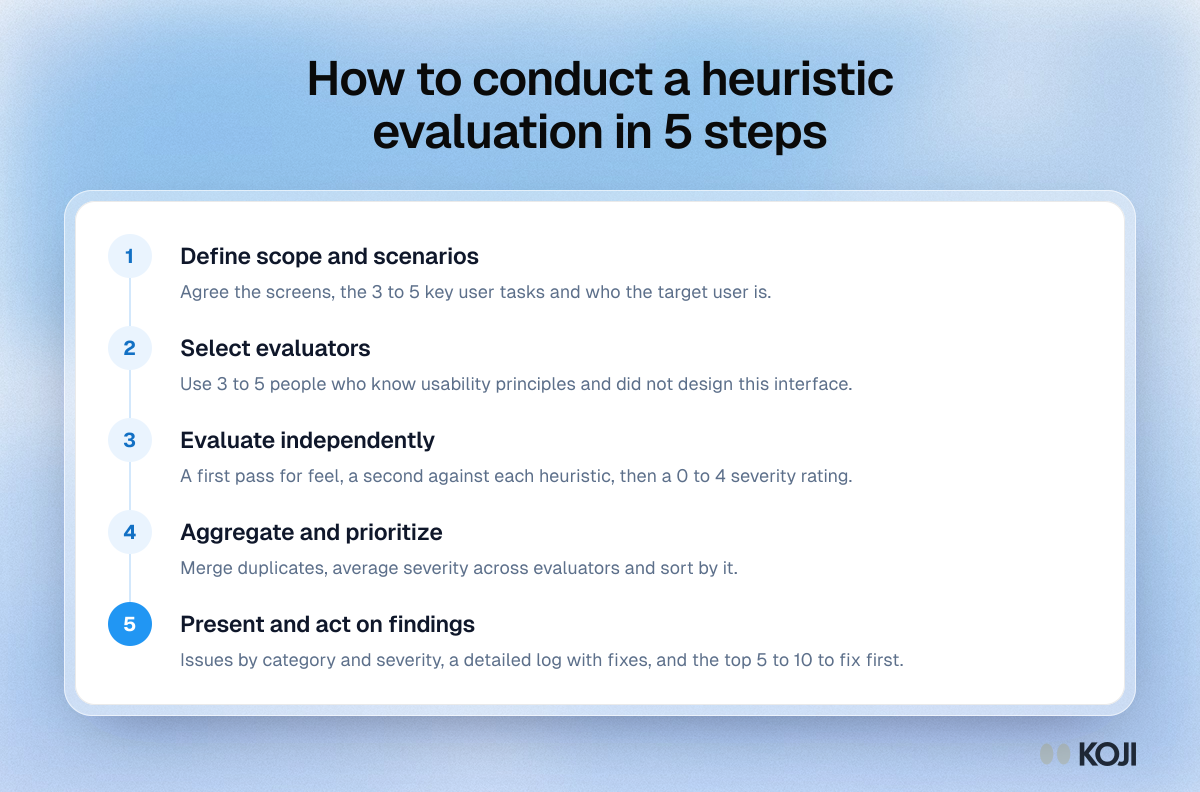
A five-step process for running a heuristic evaluation: define the scope and key tasks, select three to five evaluators who did not design the interface, evaluate independently in two passes with severity ratings, aggregate and prioritize the findings, then present them with recommended fixes. It is for UX designers and researchers running an expert review. Koji can follow up with AI-moderated interviews to test whether real users hit the problems found.
Where this appears
What's in this process
- Define scope and scenarios: Agree the screens, the 3 to 5 key user tasks and who the target user is.
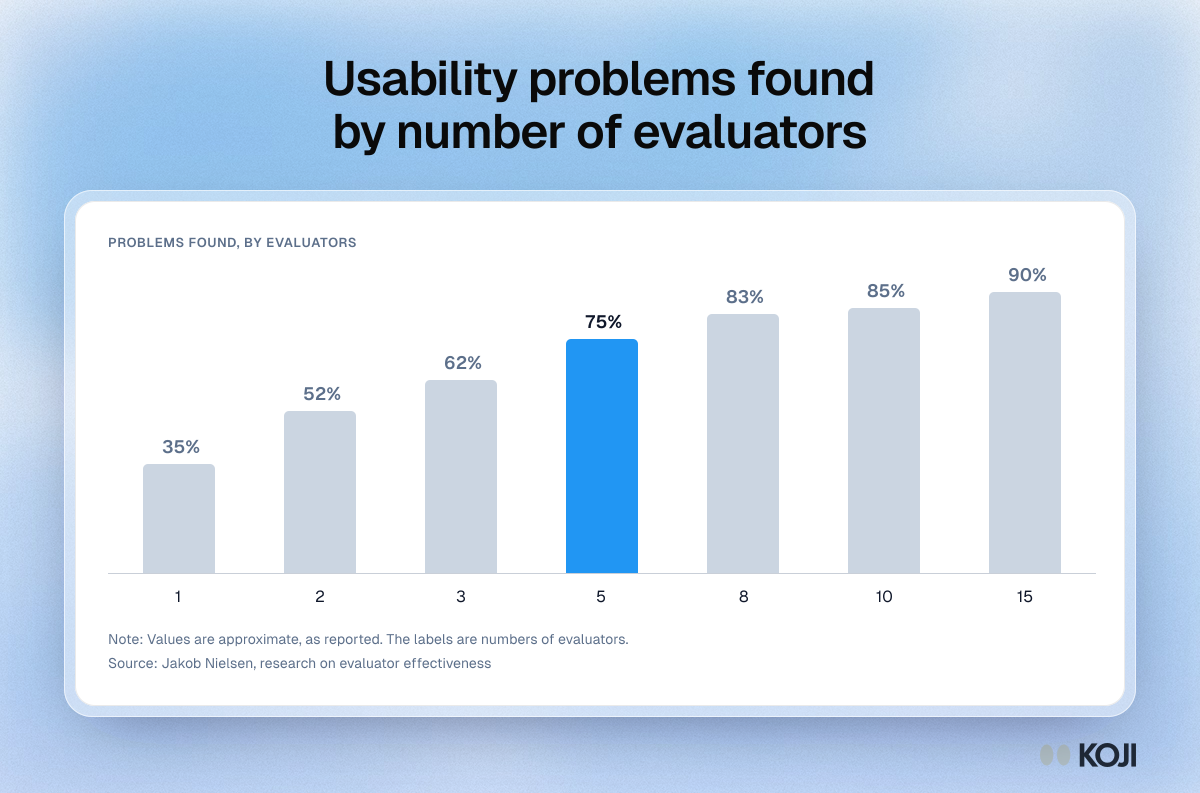
- Select evaluators: Use 3 to 5 people who know usability principles and did not design this interface.
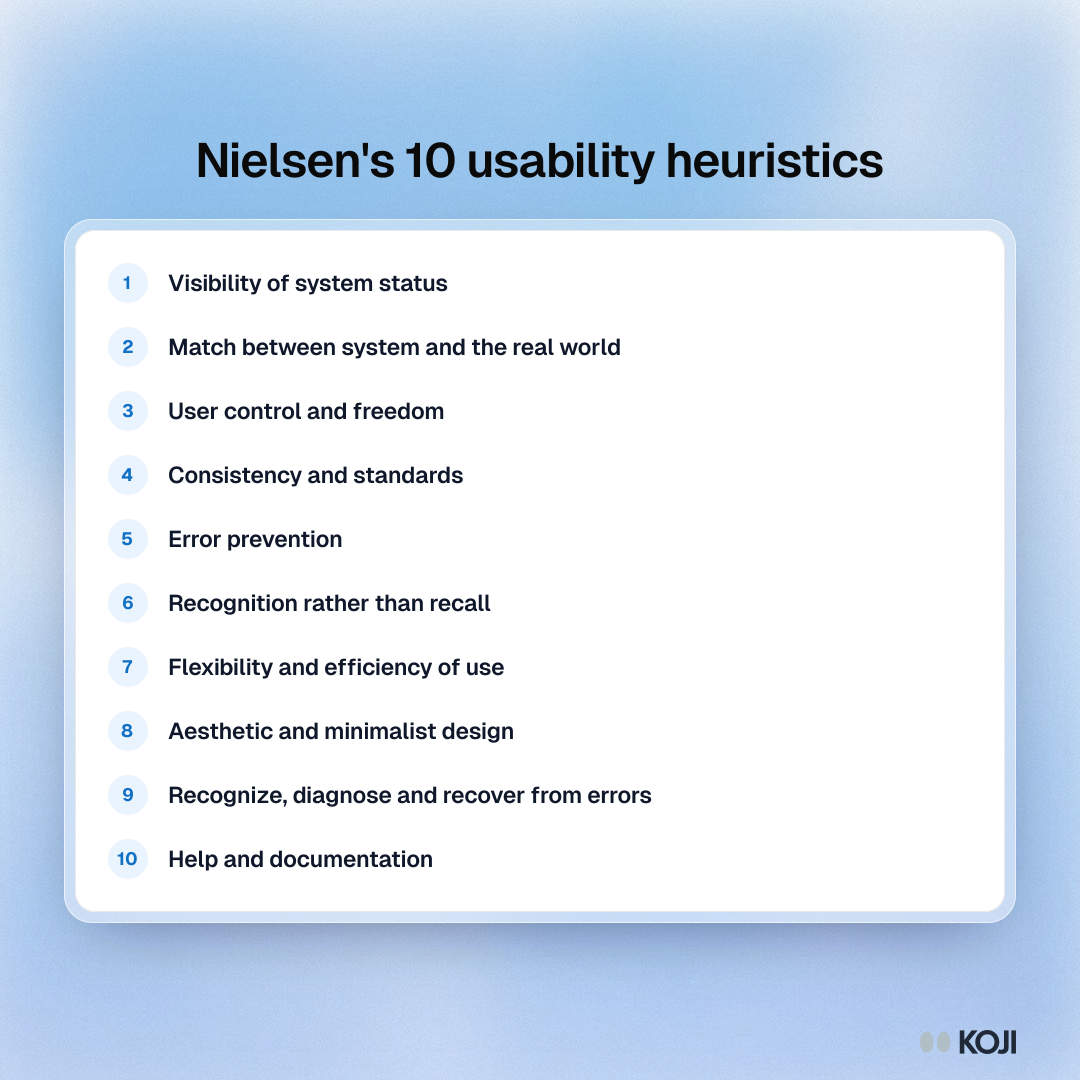
- Evaluate independently: A first pass for feel, a second against each heuristic, then a 0 to 4 severity rating.
- Aggregate and prioritize: Merge duplicates, average severity across evaluators and sort by it.
- Present and act on findings: Issues by category and severity, a detailed log with fixes, and the top 5 to 10 to fix first.
Use this image
Free to use in your docs, decks and posts under CC BY 4.0, as long as you credit Koji with a link to this page. To embed it, paste this into your page:
html
<a href="https://www.koji.so/visuals/how-to-conduct-a-heuristic-evaluation-five-steps"><img src="https://www.koji.so/visuals/how-to-conduct-a-heuristic-evaluation-five-steps/how-to-conduct-a-heuristic-evaluation-five-steps.png" alt="Process showing five steps of a heuristic evaluation: define scope, select 3 to 5 evaluators, evaluate independently, aggregate findings and present fixes." width="1200" height="792" /></a>
<p>Source: <a href="https://www.koji.so/visuals/how-to-conduct-a-heuristic-evaluation-five-steps">How to conduct a heuristic evaluation in 5 steps</a>, Koji</p>