Reference table
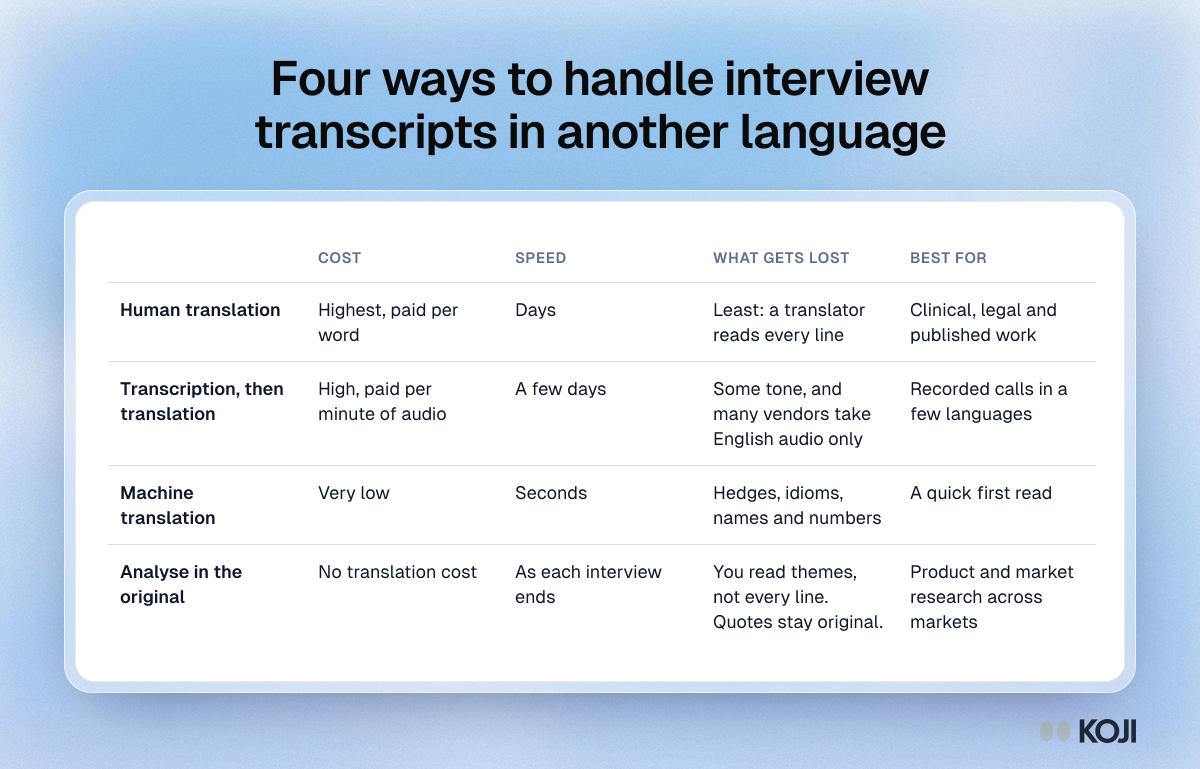
Four ways to handle interview transcripts in another language
Human translation, transcription plus translation, machine translation, or analysing in the original
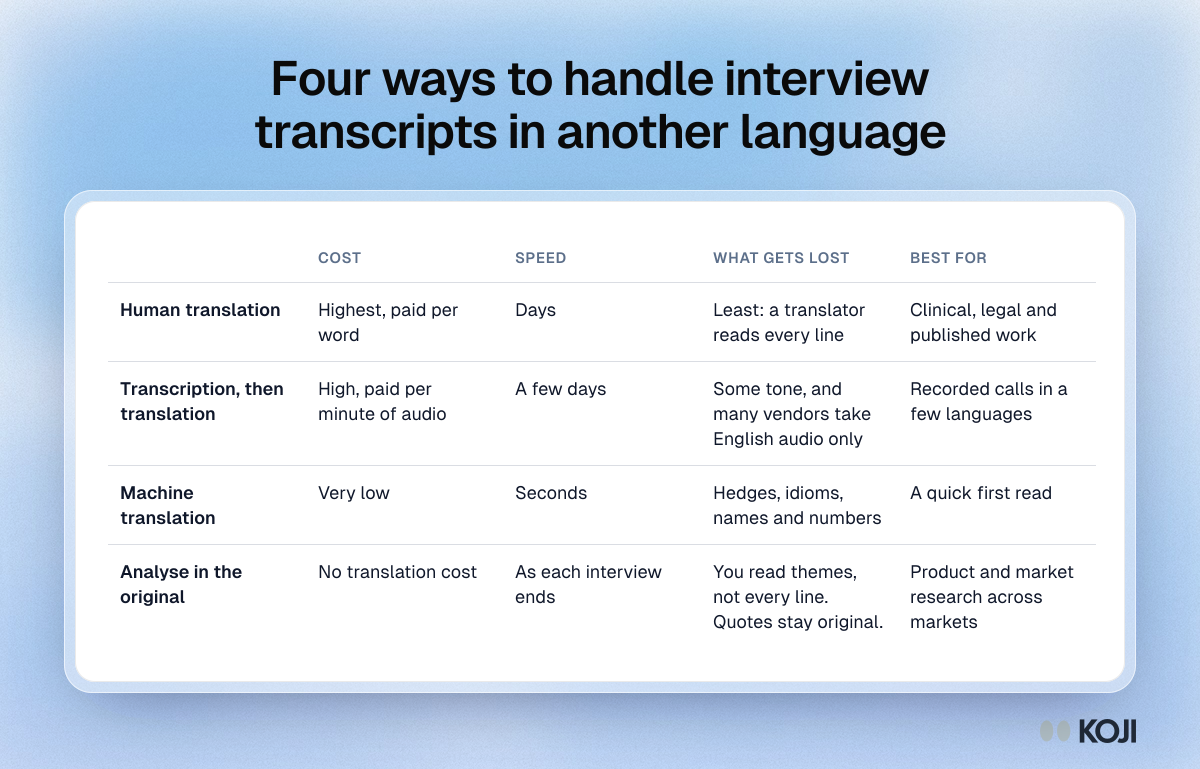
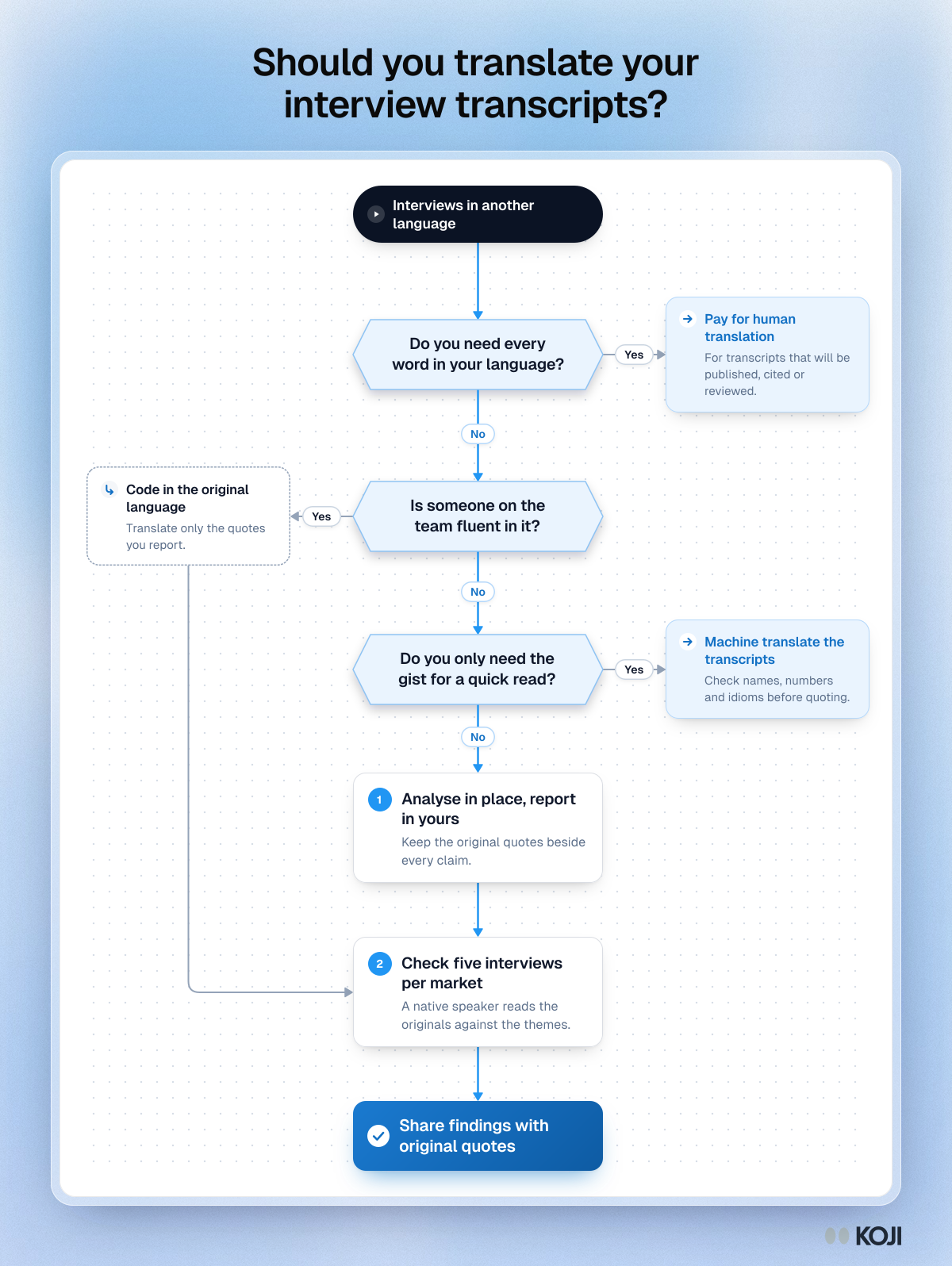
A comparison of the four ways research teams handle interview transcripts recorded in another language, by cost, speed, what gets lost and who each suits. Use it to pick a route before fieldwork starts, so you pay only for the translation your study actually needs. Koji takes the fourth route: interviews run in the participant language and the report is written in yours, with quotes kept in the original.
Where this appears
What's in this reference table
| Cost | Speed | What gets lost | Best for | |
|---|---|---|---|---|
| Human translation | Highest, paid per word | Days | Least: a translator reads every line | Clinical, legal and published work |
| Transcription, then translation | High, paid per minute of audio | A few days | Some tone, and many vendors take English audio only | Recorded calls in a few languages |
| Machine translation | Very low | Seconds | Hedges, idioms, names and numbers | A quick first read |
| Analyse in the original | No translation cost | As each interview ends | You read themes, not every line. Quotes stay original. | Product and market research across markets |
Use this image
Free to use in your docs, decks and posts under CC BY 4.0, as long as you credit Koji with a link to this page. To embed it, paste this into your page:
html
<a href="https://www.koji.so/visuals/interview-transcript-translation-routes-compared"><img src="https://www.koji.so/visuals/interview-transcript-translation-routes-compared/interview-transcript-translation-routes-compared.png" alt="Table comparing four ways to handle interview transcripts in another language by cost, speed, what gets lost and who each suits." width="1200" height="769" /></a>
<p>Source: <a href="https://www.koji.so/visuals/interview-transcript-translation-routes-compared">Four ways to handle interview transcripts in another language</a>, Koji</p>