Reference table
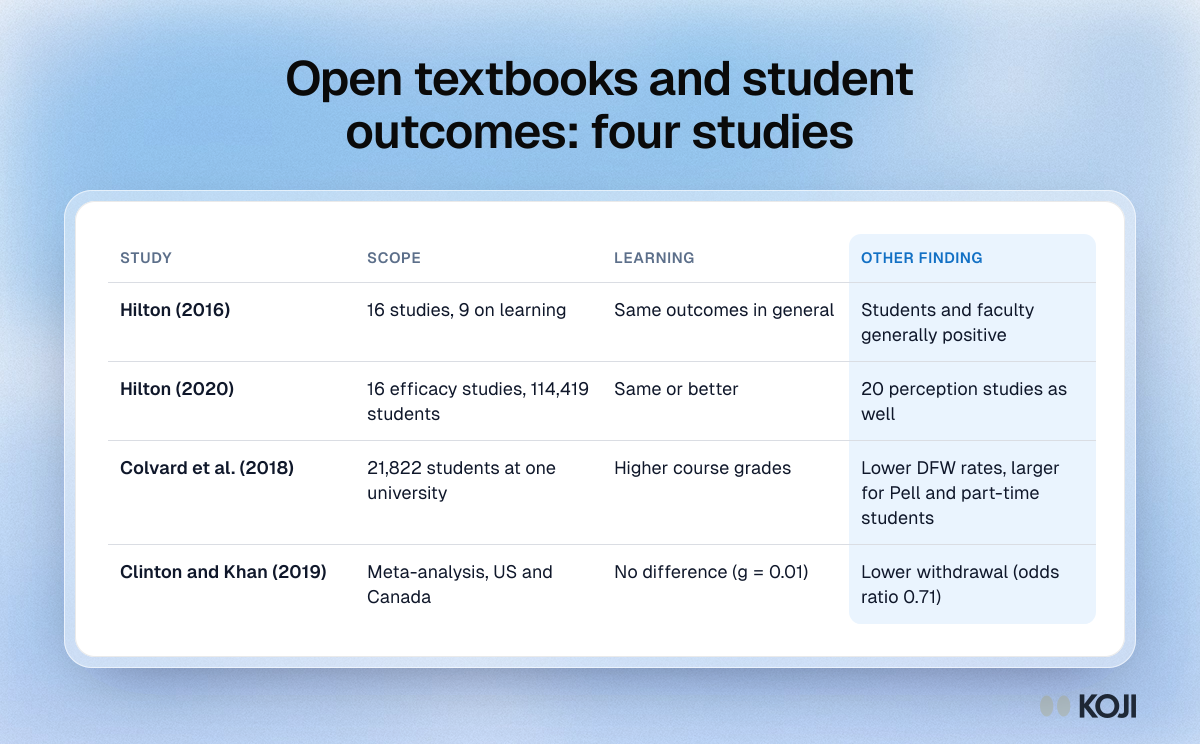
Open textbooks and student outcomes: four studies
What the main syntheses found on learning, grades and withdrawal after switching to open textbooks
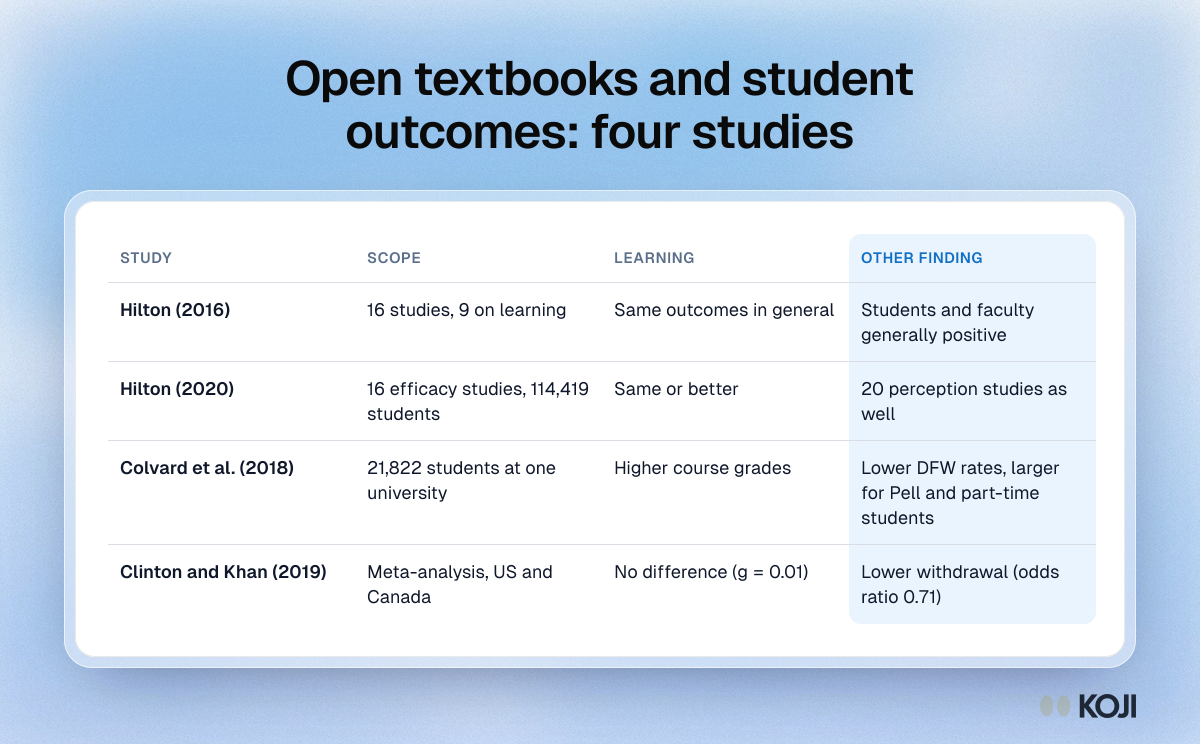
A table of four widely cited studies on open textbooks in higher education: Hilton (2016, 2020), Colvard, Watson and Park (2018) and the Clinton and Khan (2019) meta-analysis. It shows the scope of each and what it found for learning and for withdrawal or DFW rates. Quality and programme leads can use it to set realistic expectations before evaluating an open textbook adoption. Koji can collect the student side, such as access to the text and reasons for nearly leaving, through short course evaluation interviews.
What's in this reference table
| Study | Scope | Learning | Other finding |
|---|---|---|---|
| Hilton (2016) | 16 studies, 9 on learning | Same outcomes in general | Students and faculty generally positive |
| Hilton (2020) | 16 efficacy studies, 114,419 students | Same or better | 20 perception studies as well |
| Colvard et al. (2018) | 21,822 students at one university | Higher course grades | Lower DFW rates, larger for Pell and part-time students |
| Clinton and Khan (2019) | Meta-analysis, US and Canada | No difference (g = 0.01) | Lower withdrawal (odds ratio 0.71) |
Use this image
Free to use in your docs, decks and posts under CC BY 4.0, as long as you credit Koji with a link to this page. To embed it, paste this into your page:
<a href="https://www.koji.so/visuals/open-textbook-research-syntheses-compared"><img src="https://www.koji.so/visuals/open-textbook-research-syntheses-compared/open-textbook-research-syntheses-compared.png" alt="Table comparing four studies of open textbooks: learning stays about the same, while withdrawal and DFW rates fall after adoption." width="1200" height="744" /></a>
<p>Source: <a href="https://www.koji.so/visuals/open-textbook-research-syntheses-compared">Open textbooks and student outcomes: four studies</a>, Koji</p>