Reference table
Qualitative sampling methods compared
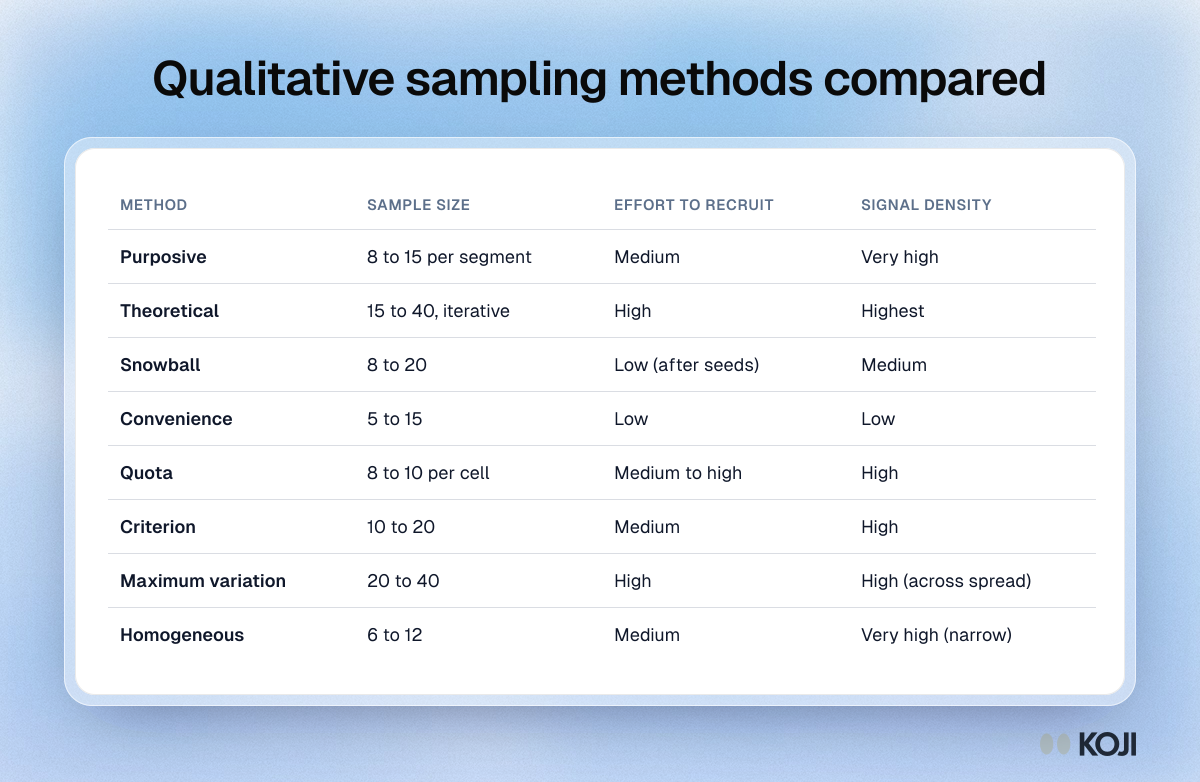
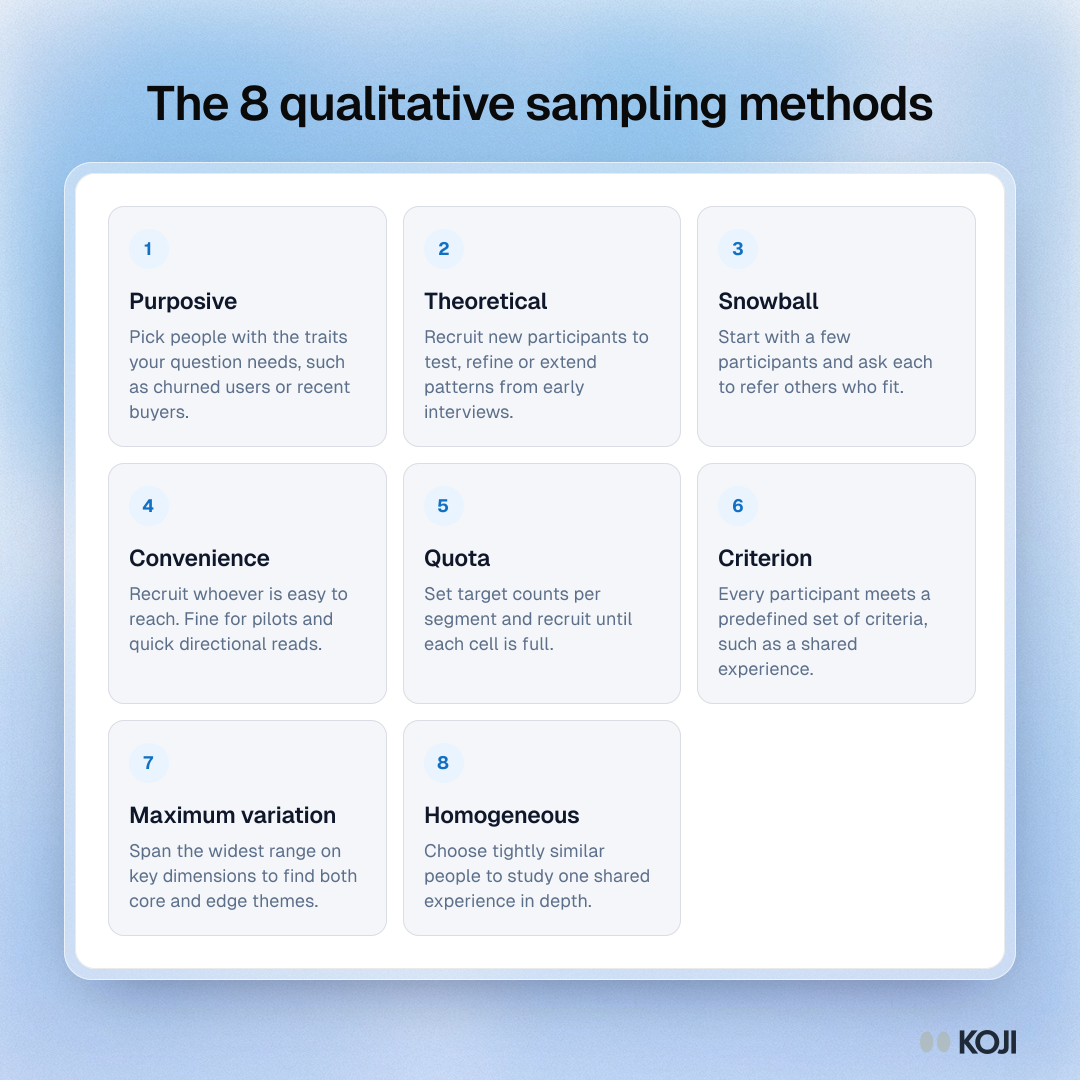
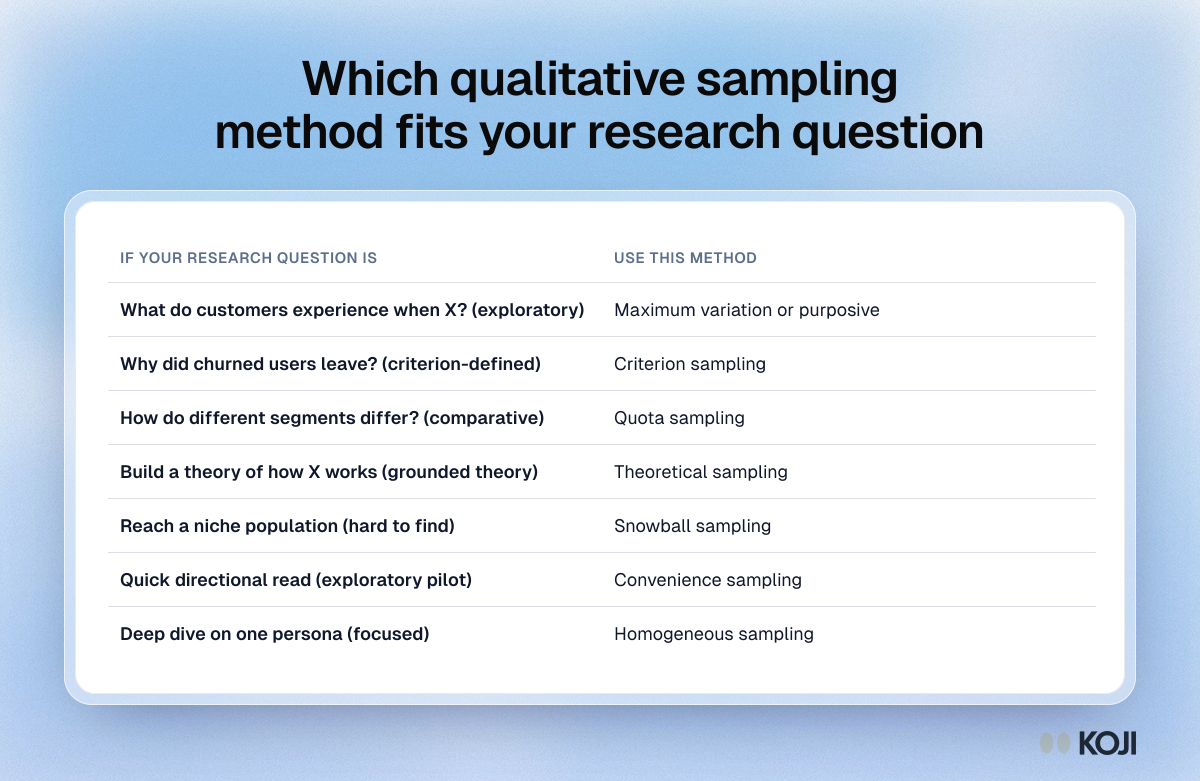
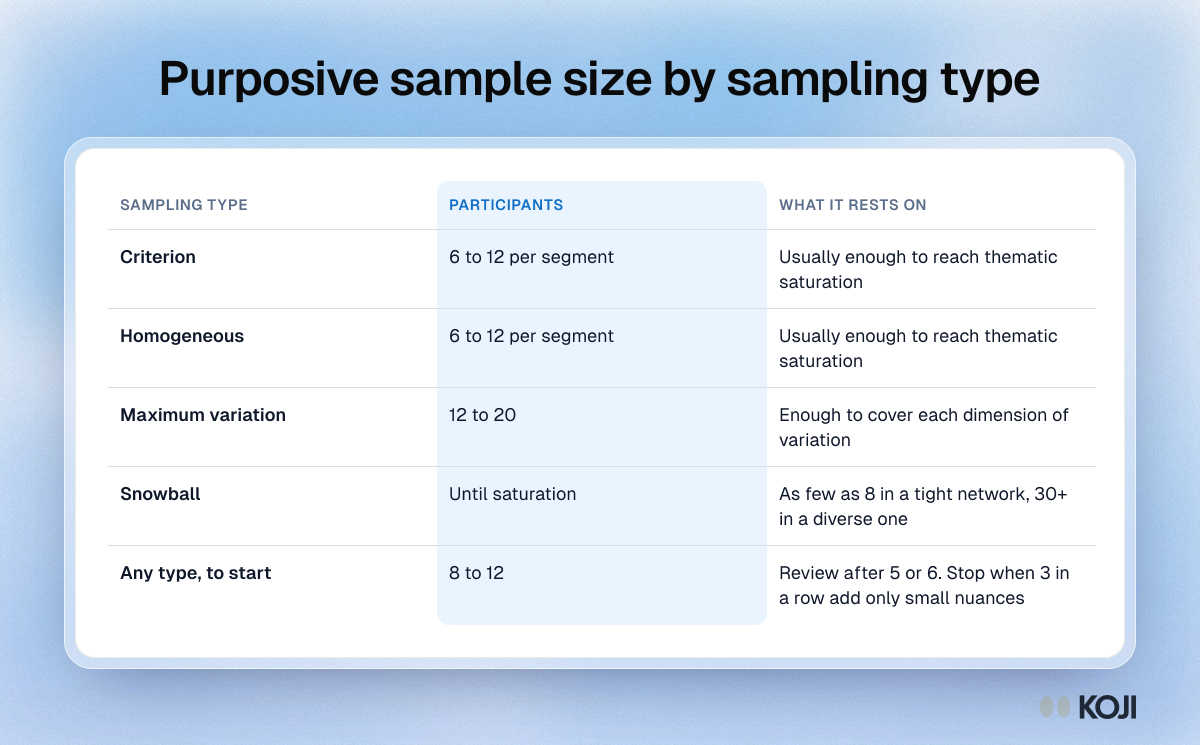
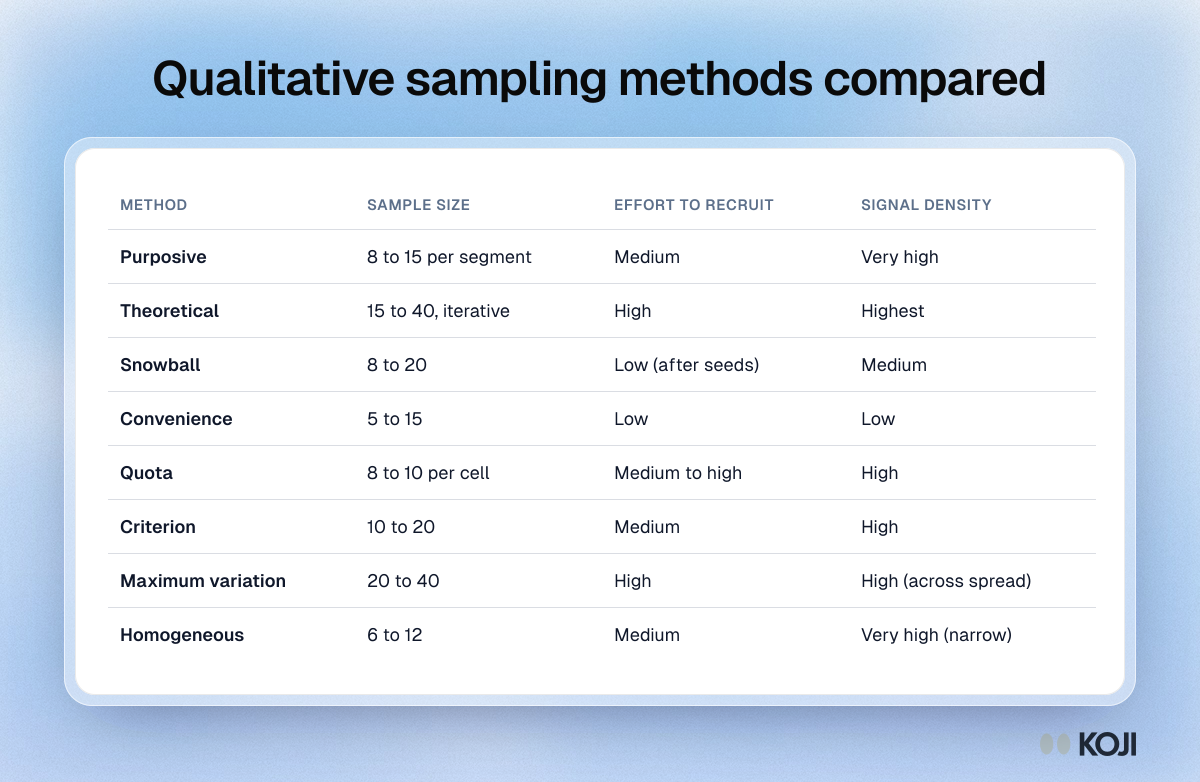
A quick reference for eight qualitative sampling methods with their typical sample size, how hard each is to recruit for and how much useful signal each interview tends to carry. Purposive and homogeneous samples are small and dense, while theoretical sampling needs 15 to 40 people and maximum variation 20 to 40. Treat the ranges as planning guides and stop when new interviews stop producing new themes.
Where this appears
What's in this reference table
| Method | Sample size | Effort to recruit | Signal density |
|---|---|---|---|
| Purposive | 8 to 15 per segment | Medium | Very high |
| Theoretical | 15 to 40, iterative | High | Highest |
| Snowball | 8 to 20 | Low (after seeds) | Medium |
| Convenience | 5 to 15 | Low | Low |
| Quota | 8 to 10 per cell | Medium to high | High |
| Criterion | 10 to 20 | Medium | High |
| Maximum variation | 20 to 40 | High | High (across spread) |
| Homogeneous | 6 to 12 | Medium | Very high (narrow) |
Use this image
Free to use in your docs, decks and posts under CC BY 4.0, as long as you credit Koji with a link to this page. To embed it, paste this into your page:
html
<a href="https://www.koji.so/visuals/qualitative-sampling-methods-comparison-table"><img src="https://www.koji.so/visuals/qualitative-sampling-methods-comparison-table/qualitative-sampling-methods-comparison-table.png" alt="Table comparing eight qualitative sampling methods by typical sample size, effort to recruit and signal density, from purposive to homogeneous." width="1200" height="782" /></a>
<p>Source: <a href="https://www.koji.so/visuals/qualitative-sampling-methods-comparison-table">Qualitative sampling methods compared</a>, Koji</p>