Flowchart
How to read a problem ranking
Four checks before you pick what to build
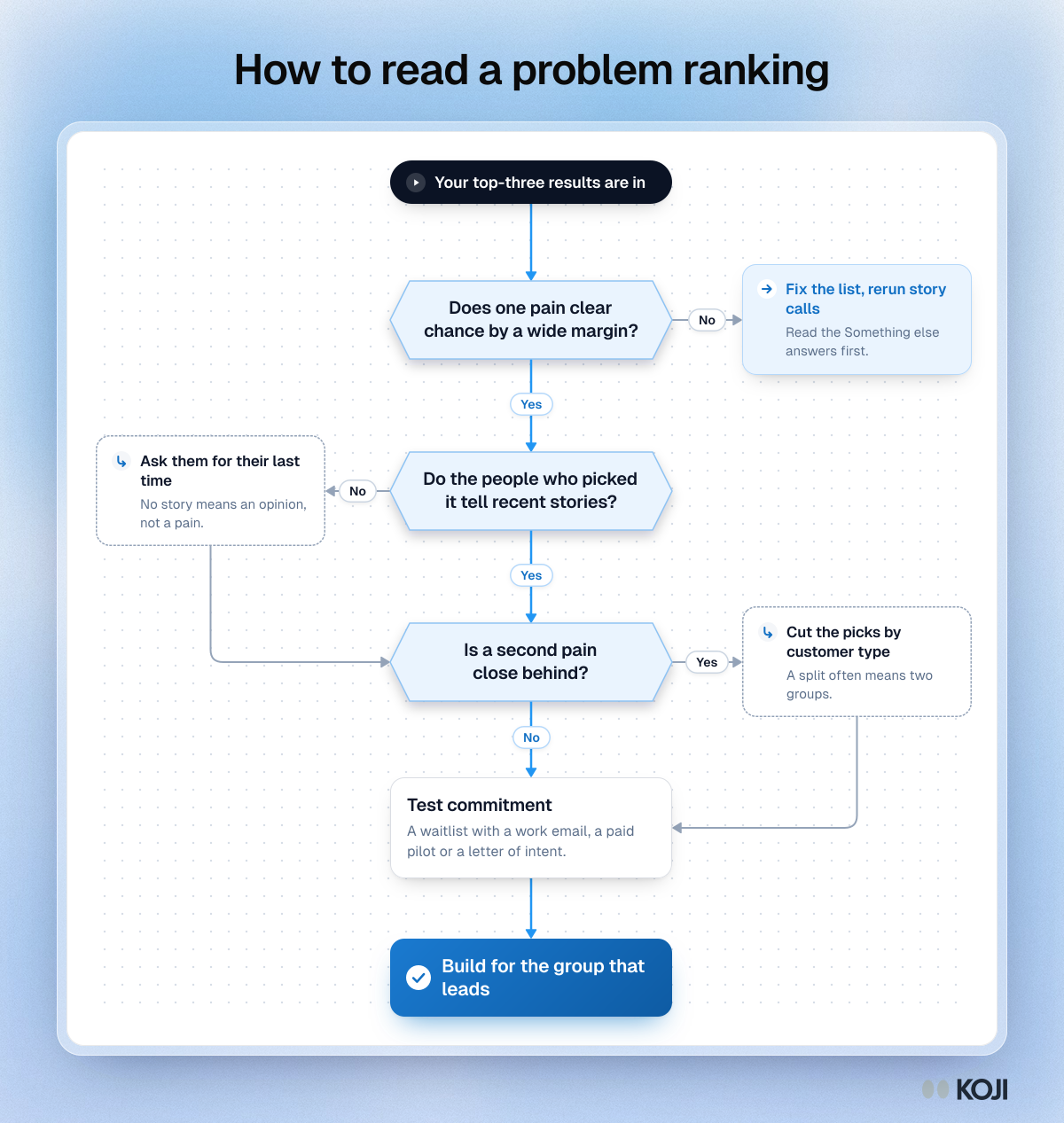
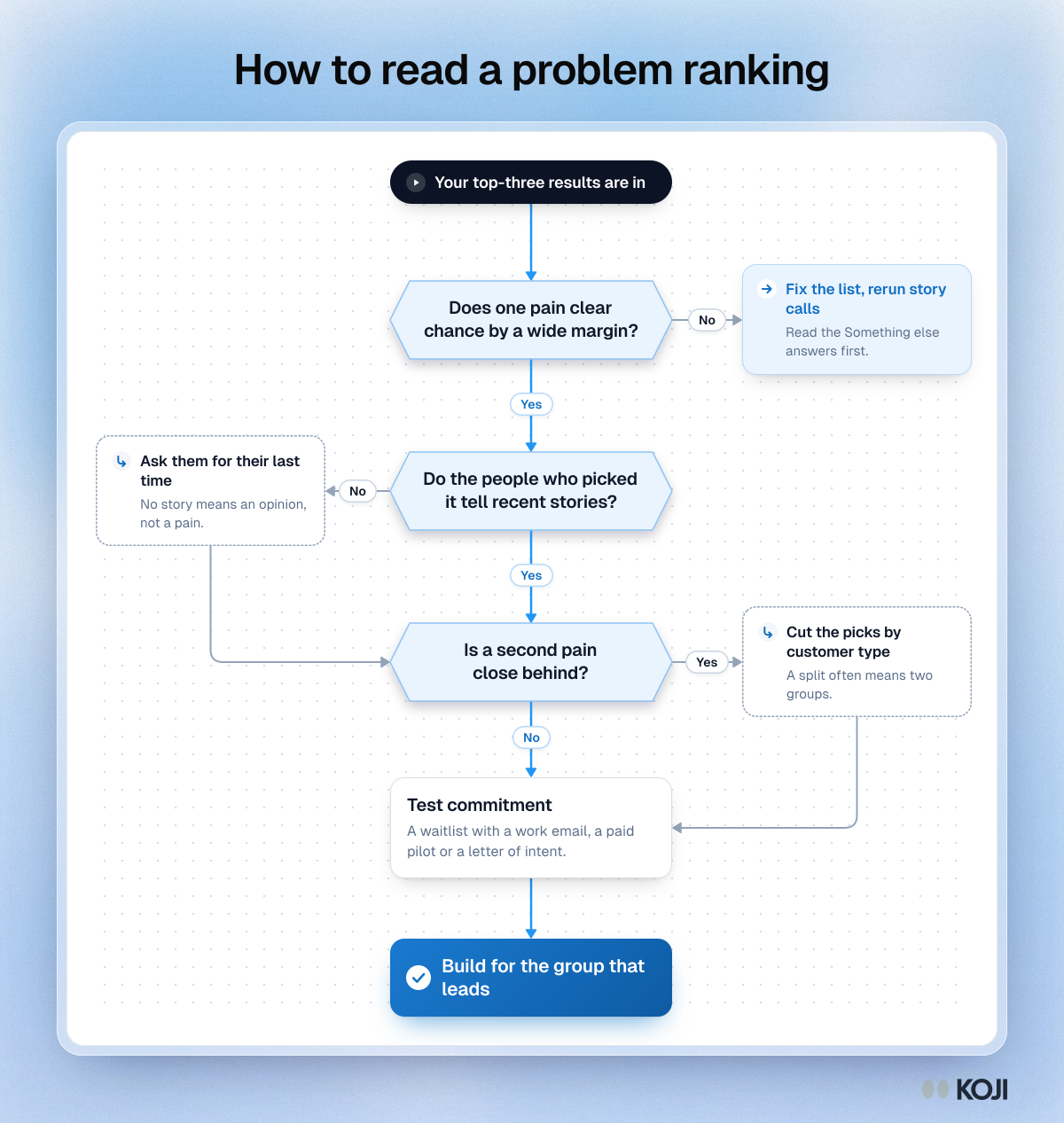
A decision path for founders who have run a top-three pick on customer problems. It checks the leader against chance, asks whether the people who picked it can tell a recent story, splits close results by customer type and ends with a commitment test. Use it after 15 to 30 people have answered.
Where this appears
What's in this flowchart
Start: Your top-three results are in
- Does one pain clear chance by a wide margin?
- Yes: go to 2.
- No: Fix the list, rerun story calls. Read the Something else answers first.
- Do the people who picked it tell recent stories?
- Yes: go to 3.
- No: Ask them for their last time. No story means an opinion, not a pain. Then go to 3.
- Is a second pain close behind?
- No: go to 4.
- Yes: Cut the picks by customer type. A split often means two groups. Then go to 4.
- Test commitment. A waitlist with a work email, a paid pilot or a letter of intent.
- Finish: Build for the group that leads.
Use this image
Free to use in your docs, decks and posts under CC BY 4.0, as long as you credit Koji with a link to this page. To embed it, paste this into your page:
html
<a href="https://www.koji.so/visuals/read-customer-problem-ranking-flowchart"><img src="https://www.koji.so/visuals/read-customer-problem-ranking-flowchart/read-customer-problem-ranking-flowchart.png" alt="Flowchart for reading a top-three problem ranking: compare with chance, check the stories, split close results by customer type, then test commitment." width="1200" height="1267" /></a>
<p>Source: <a href="https://www.koji.so/visuals/read-customer-problem-ranking-flowchart">How to read a problem ranking</a>, Koji</p>